Artwork
Two Ruins (Huys te Kleef near Haarlem)
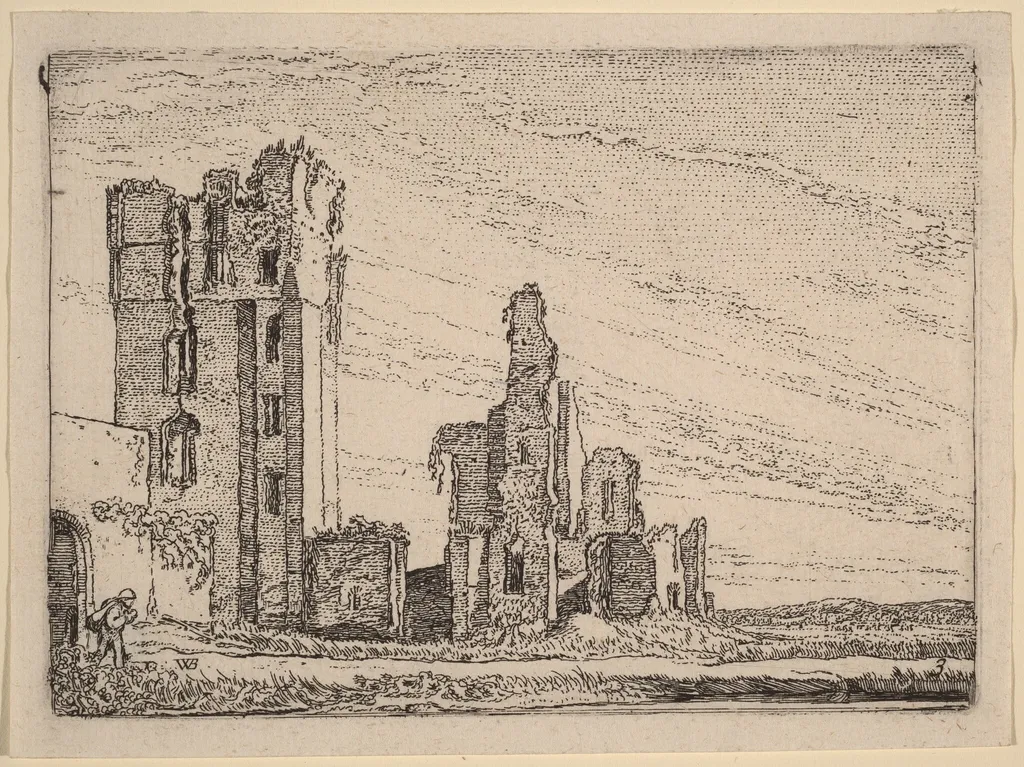
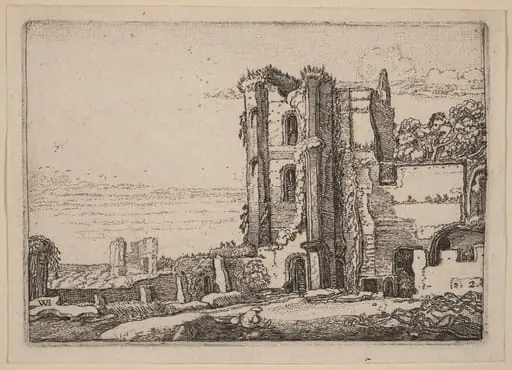
Two Ruins (Huys te Kleef near Haarlem) is an ink print by the Baroque artist Willem Buytewech. It dates from 1621 and is held in the collection of the National Gallery of Art.
About this work
Overview
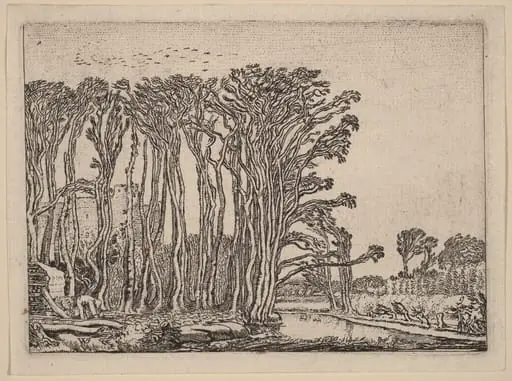
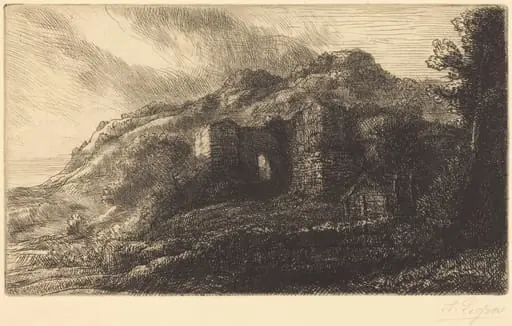
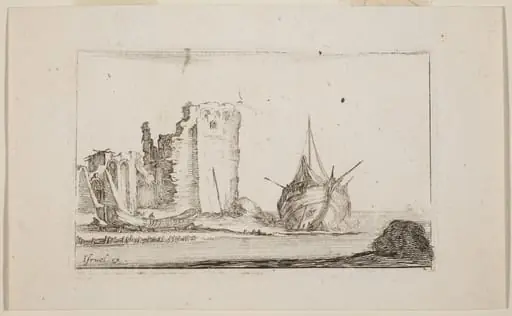
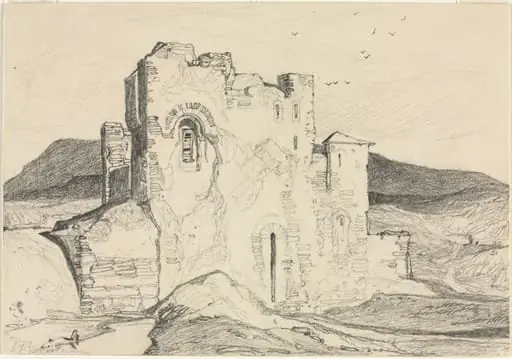
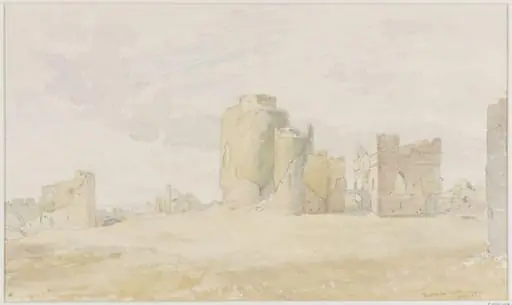
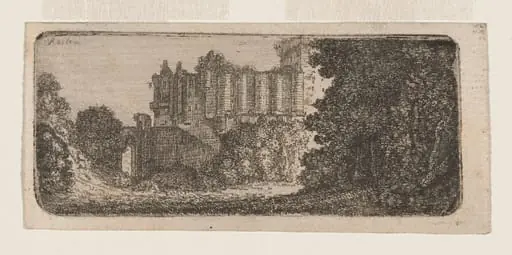
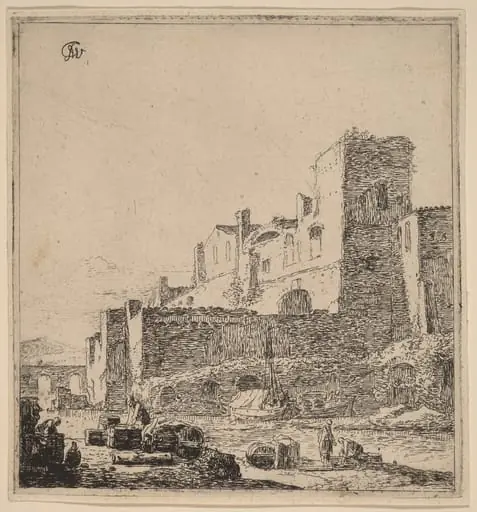
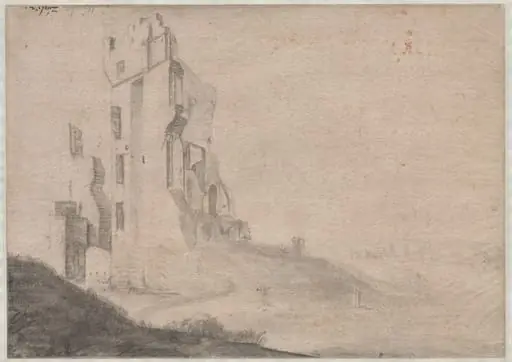
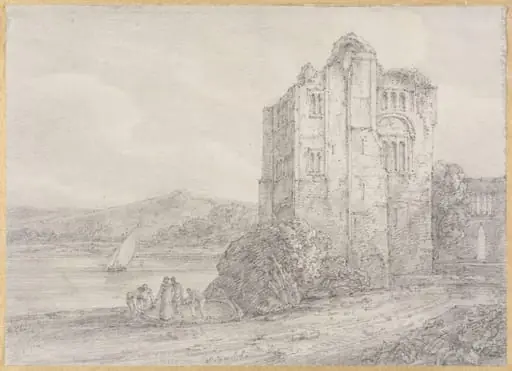
Willem Buytewech’s 1621 etching titled *Two Ruins (Huys te Kleef near Haarlem)* presents a desolate architectural landscape. The composition is dominated by two crumbling stone towers on the left, accompanied by partially collapsed structures on the right, set against an uneven ground strewn with a solitary tree and a lone wanderer. A lightly stippled sky adds a sense of atmospheric distance.
Subject & Meaning
The work depicts the decay of a former manor, identified as Huys te Kleef, near Haarlem, suggesting themes of transience and the passage of time. The solitary figure traversing the site underscores human presence amid ruin, inviting contemplation of the fleeting nature of power and the persistence of memory within a changing landscape.
Technique & Style
Executed in etching, Buytewech employed fine, incised lines to render the weathered stone surfaces, emphasizing cracks and fissures that convey age. The delicate stippling in the sky creates a subtle gradation of tone, a common approach in early‑17th‑century Dutch printmaking that balances detail with atmospheric suggestion.
History & Provenance
Created in 1621, the print belongs to Buytewech’s relatively small output of landscape etchings. While specific ownership records are scarce, the image has appeared in several early modern print collections, reflecting its circulation among connoisseurs of Dutch topographical imagery during the period.
Own this work as a print
Artist & collection