Artwork
The Meadow
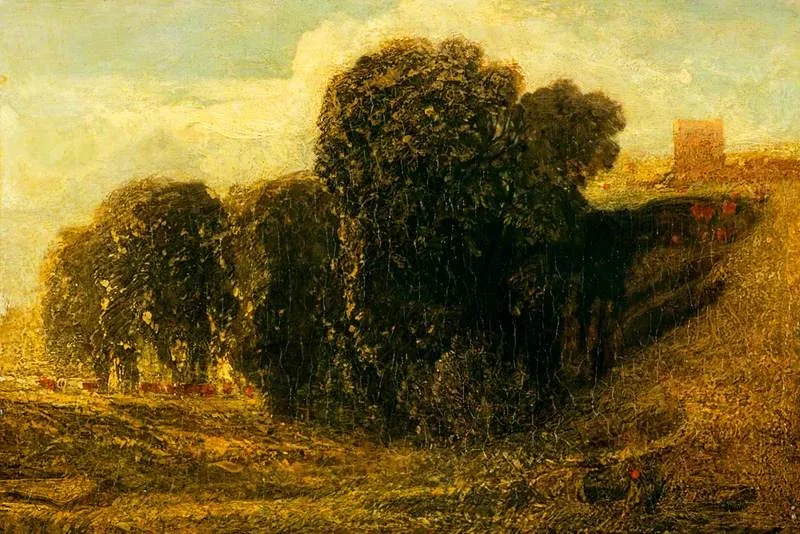
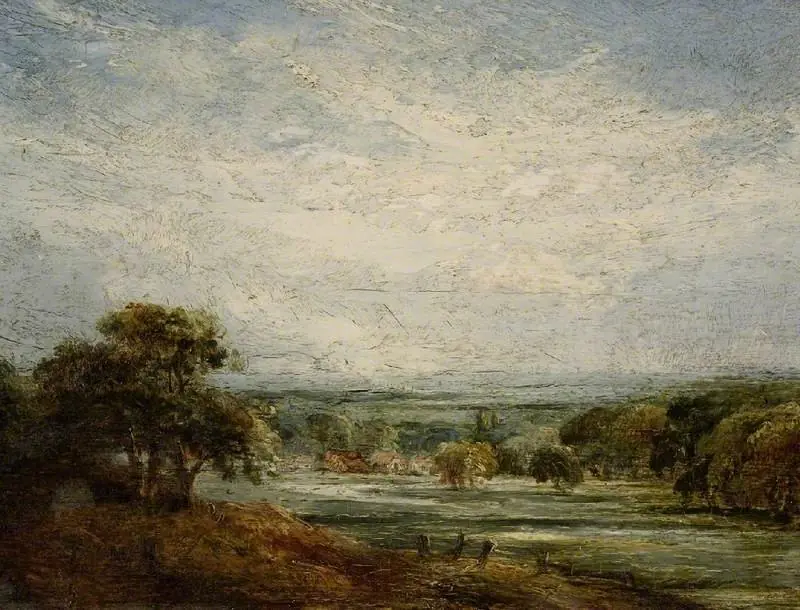
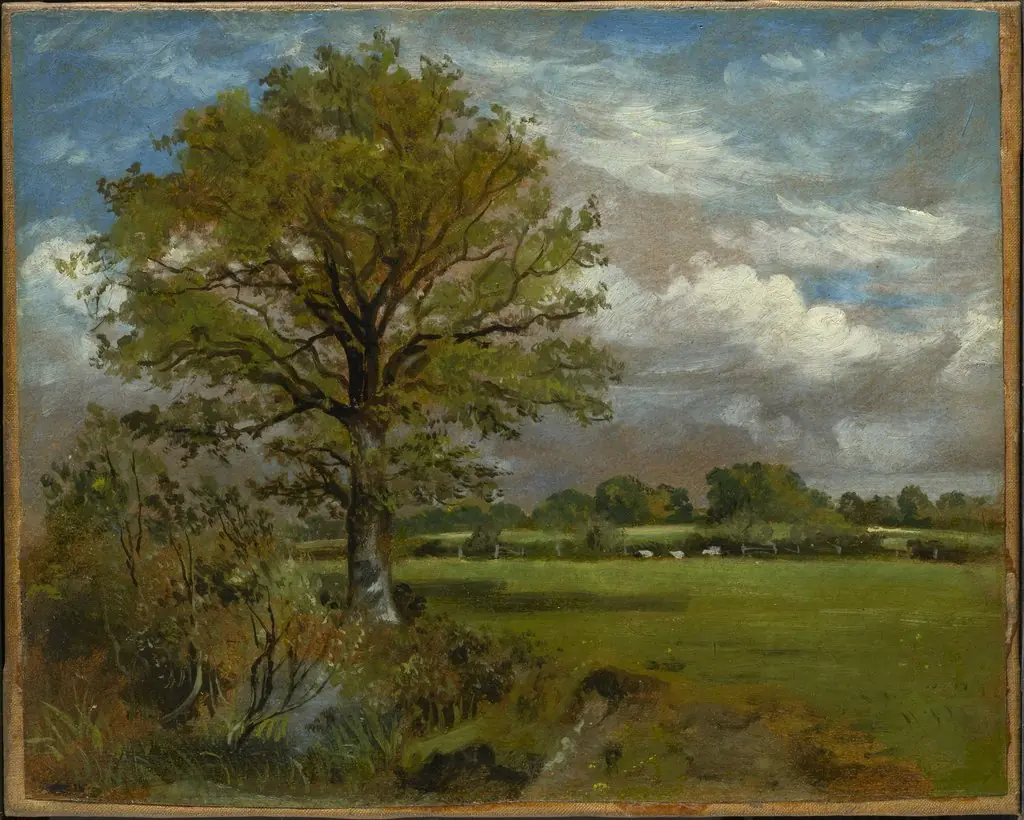
The Meadow is an oil painting by the British Romanticist artist John Sell Cotman. It dates from 1840 and is held in the collection of the National Galleries Scotland.
About this work
A notable detail is the use of chiaroscuro, a technique that creates a strong contrast between light and dark areas, adding depth to the scene.
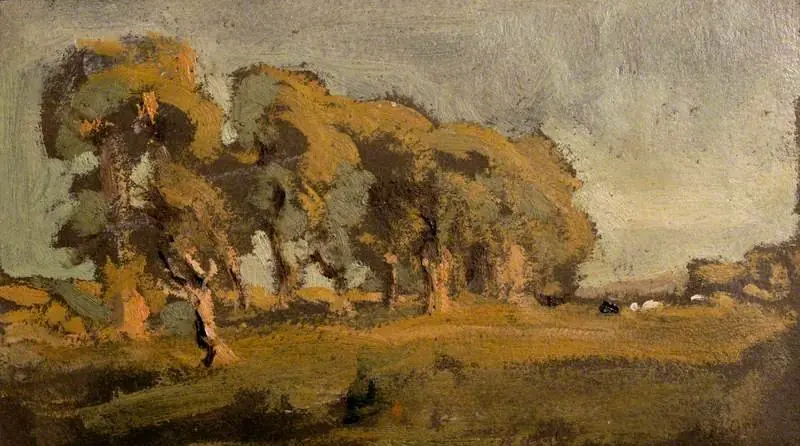
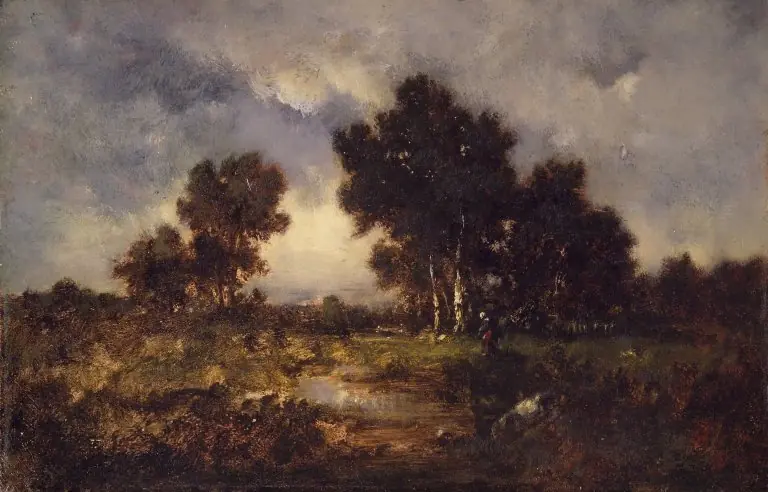
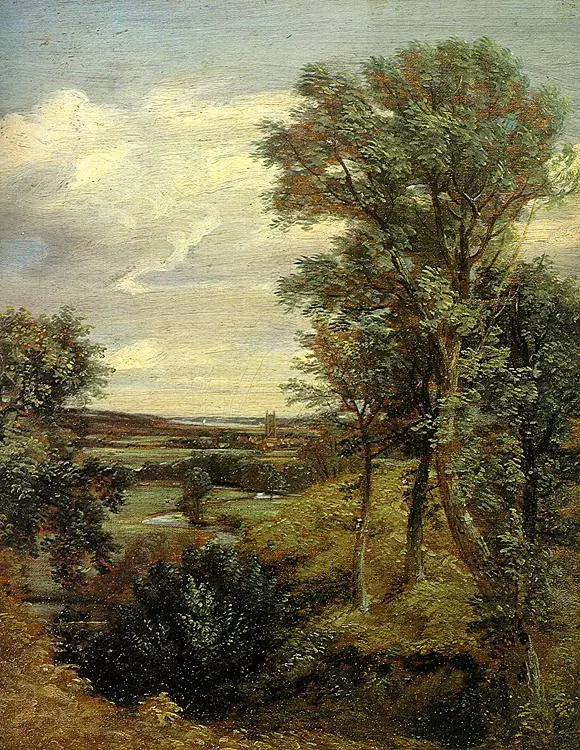
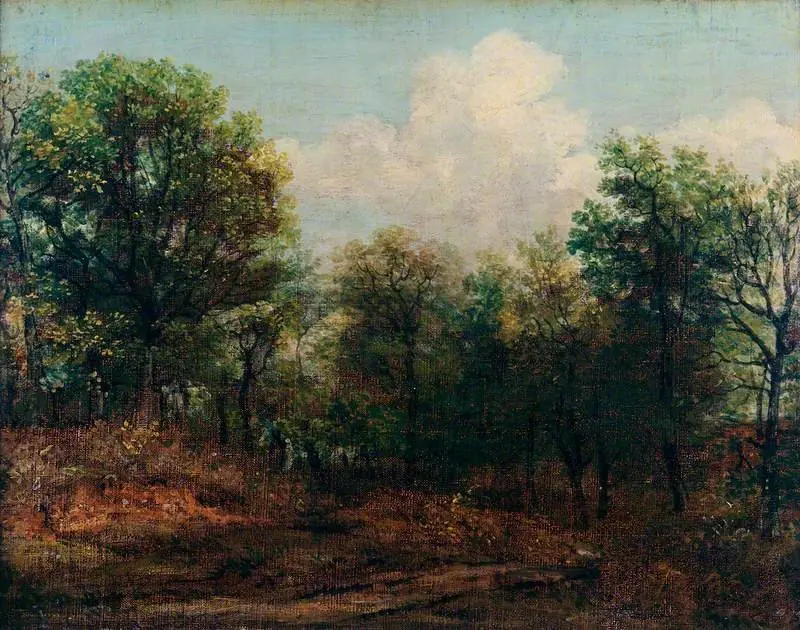
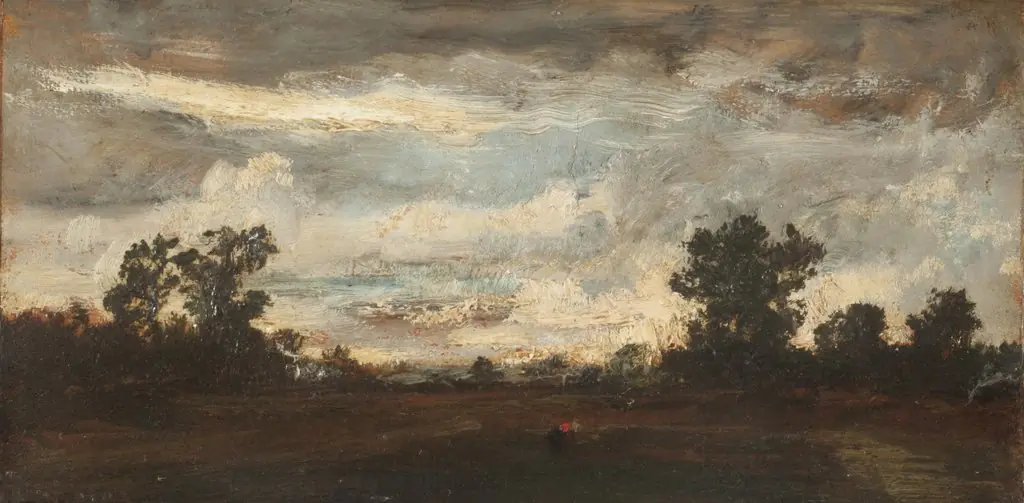
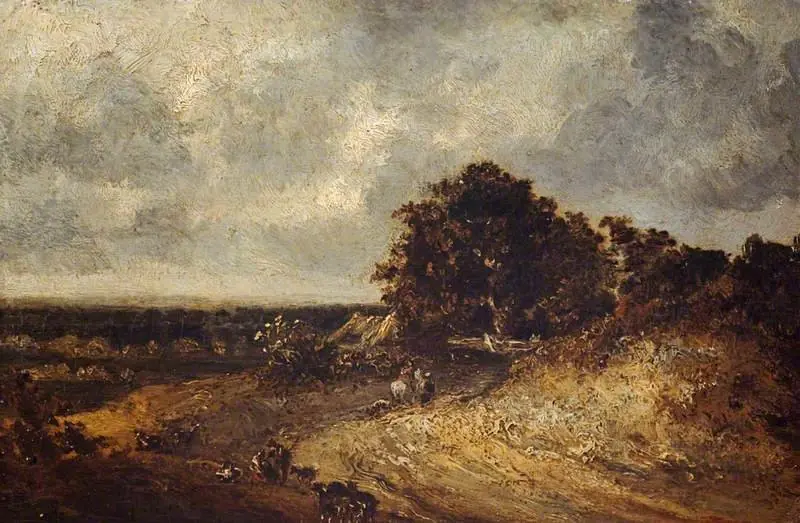
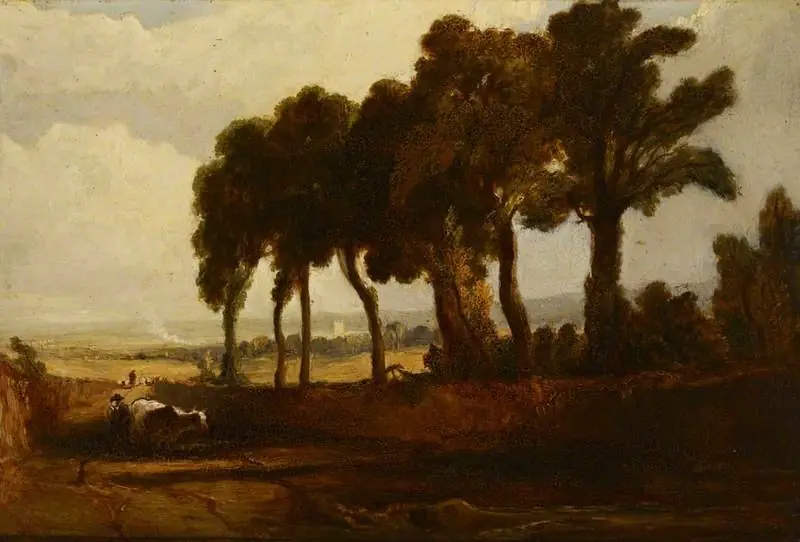
This painting, titled "The Meadow," is a landscape by John Sell Cotman, created in 1840. The scene depicts a serene meadow with trees and a building in the background, set against a light blue sky with white clouds. The dominant colors are shades of green, yellow, and brown, with touches of red.
A notable detail is the use of chiaroscuro, a technique that creates a strong contrast between light and dark areas, adding depth to the scene. The brushstrokes are visible, giving the painting a textured appearance.
For more information on the artist's use of chiaroscuro, look up the technique.
Overview
John Sell Cotman painted *The Meadow* in 1840, a landscape executed in oil that reflects his mature style. Though best known for watercolors, this work demonstrates his engagement with oil paint later in his career. It belongs to the Norwich School, a regional group focused on naturalistic British scenery. The painting is now part of the Scottish National Gallery’s collection, where it represents Cotman’s quiet, observant approach to the English countryside.
Subject & Meaning
The scene portrays a tranquil meadow under a soft sky, with scattered trees and a distant building suggesting human presence without intrusion. There is no narrative or dramatic event—only the stillness of rural life. The composition invites contemplation, emphasizing harmony between land and atmosphere. Cotman’s choice of ordinary subject matter aligns with Romanticism’s reverence for unembellished nature, rejecting grandeur in favor of quiet authenticity.
Technique & Style
Cotman employed visible, deliberate brushwork to build texture across the meadow and foliage, avoiding smooth finishes. He used chiaroscuro to model forms through subtle shifts in light and shadow, particularly in the tree trunks and ground. The palette—dominated by muted greens, ochres, and browns—is enlivened by brief accents of red, likely from roof tiles or flowers. These choices convey a sense of naturalism, grounded in direct observation rather than idealization.
History & Provenance
Painted in 1840, *The Meadow* dates from the final decade of Cotman’s life, after he had returned to Norwich from London. Though he began his career in the capital and associated with figures like Turner, his later work remained rooted in East Anglian landscapes. The painting entered the Scottish National Gallery’s collection in the 19th century, likely through acquisition or bequest, preserving its connection to British regional art traditions.
Context
In the 1840s, British landscape painting was shifting toward greater realism and personal expression. Cotman’s work stood apart from the theatricality of some Romantic painters, favoring restrained observation. The Norwich School, though less prominent than London-based circles, cultivated a distinct regional identity. *The Meadow* reflects this ethos—attentive to local topography and atmospheric nuance, it resists grand spectacle in favor of intimate, enduring detail.
Legacy
Cotman’s later oil paintings, including *The Meadow*, reveal a quiet evolution from his earlier watercolor precision. Though not widely celebrated in his time, his focus on everyday landscapes influenced later generations of British naturalists. The work endures as a testament to his commitment to seeing the ordinary with clarity and care, contributing to a broader appreciation of regional British art beyond metropolitan centers.
Artist & collection
Artist
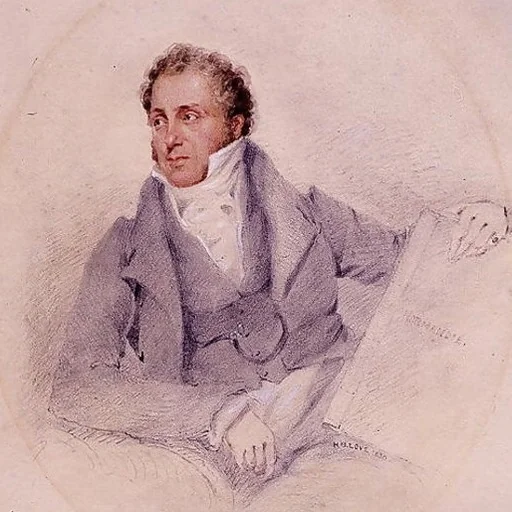
John Sell Cotman (16 May 1782 – 24 July 1842) was an English marine and landscape painter, etcher, illustrator, and a leading member of the Norwich School of painters.