Artwork
Albanian Olive Gatherers
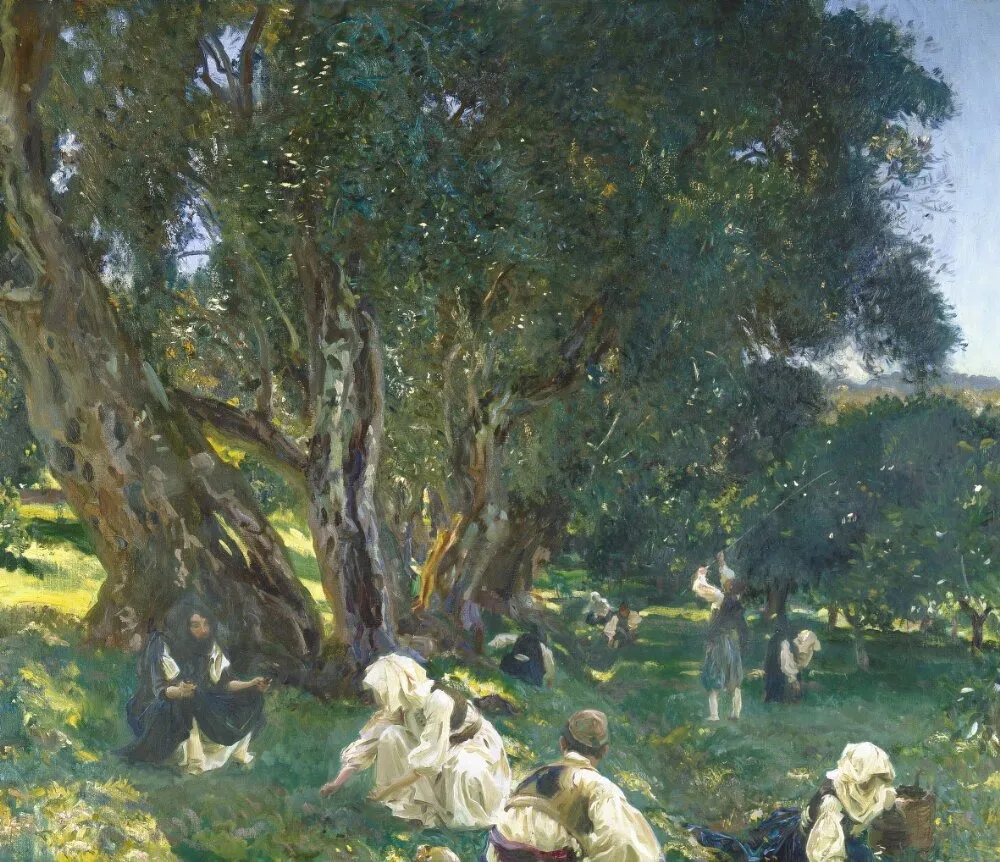
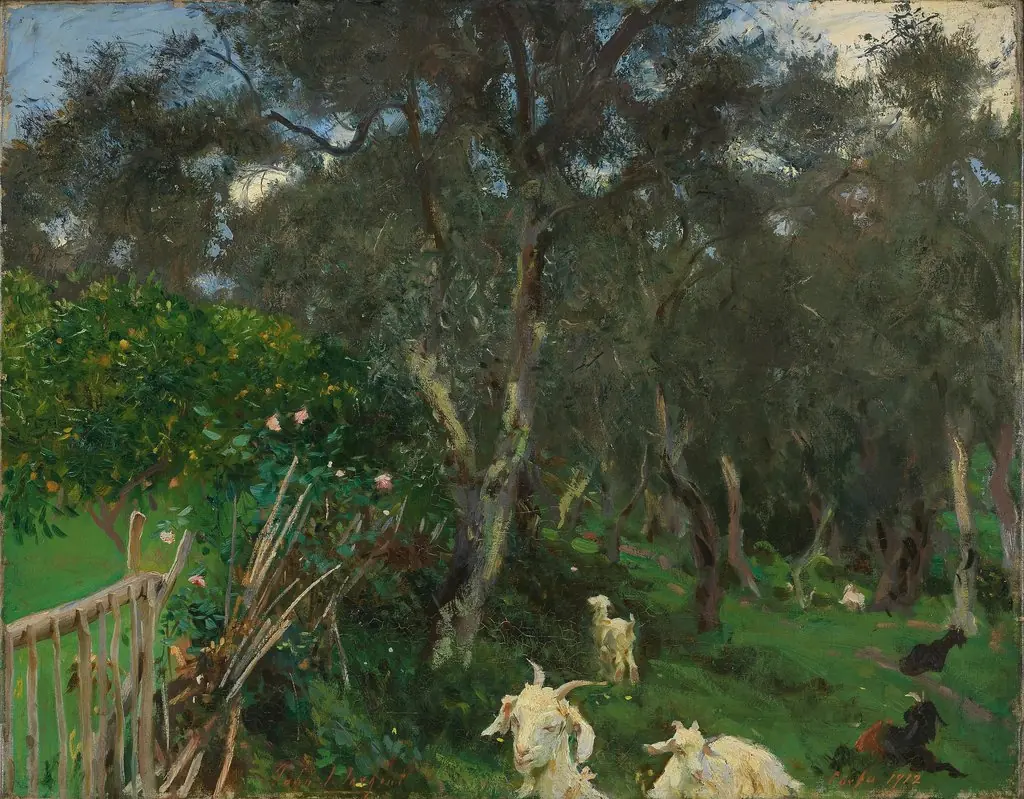
Albanian Olive Gatherers is an oil painting by the Impressionist artist John Singer Sargent. It dates from 1909 and is held in the collection of the Manchester Art Gallery.
About this work
Overview
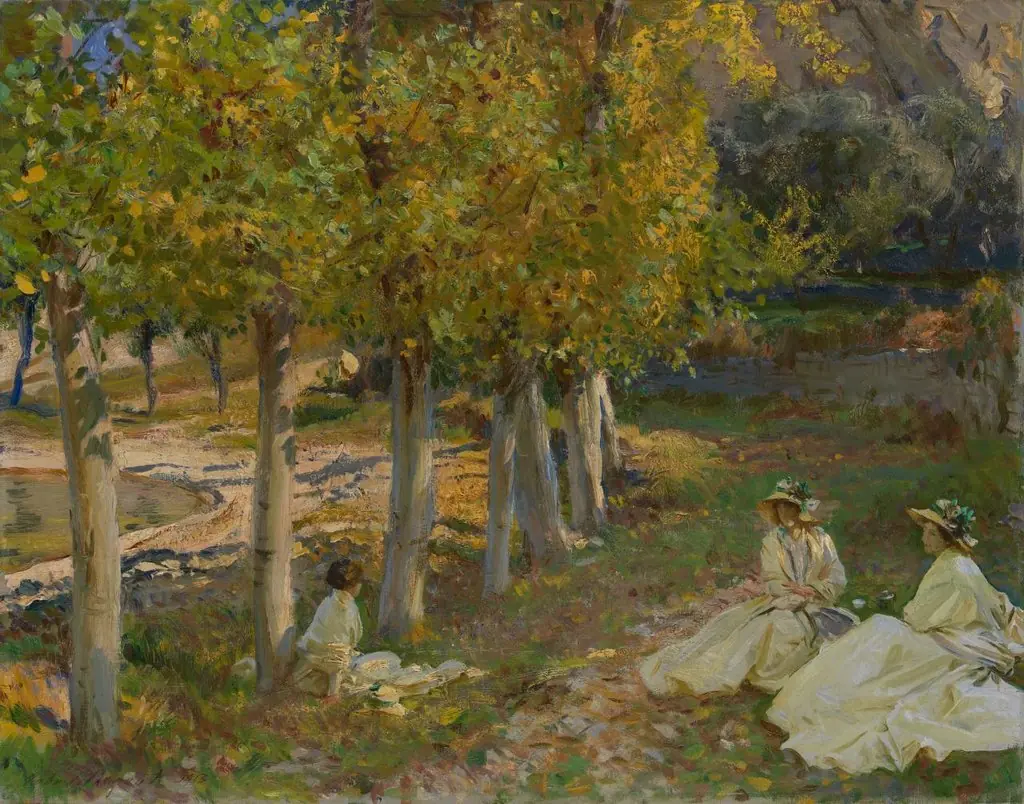
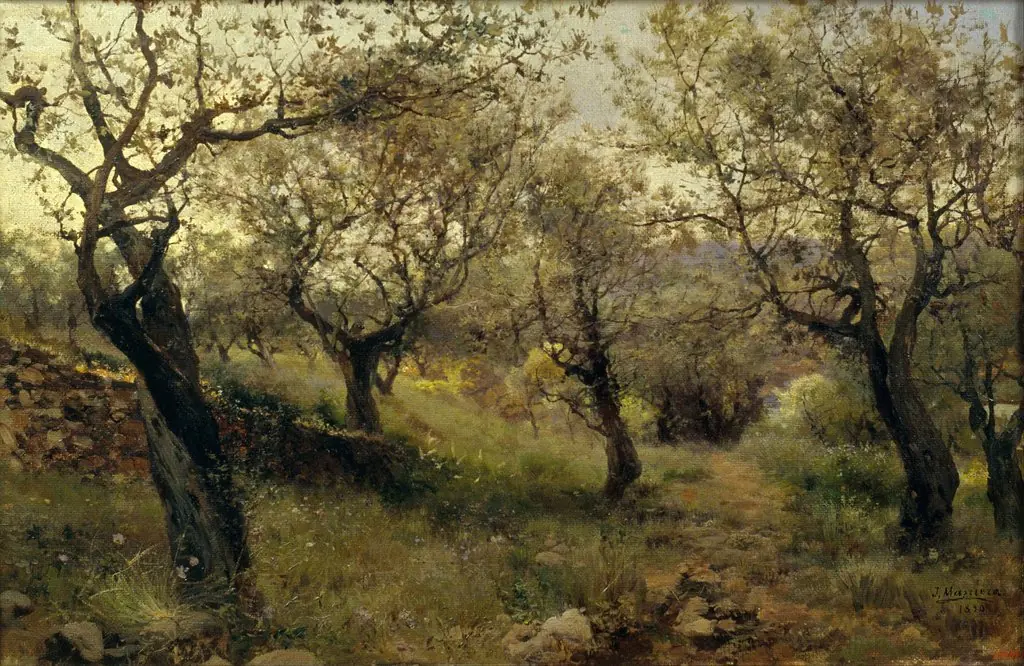
John Singer Sargent’s 1909 oil painting *Albanian Olive Gatherers* records a group of workers harvesting olives in a sun‑lit Albanian field. The canvas captures a bright, open landscape with twisted trees, a distant hill, and a pale blue sky, rendered in a loose, textured manner characteristic of Sargent’s later, more impressionistic approach.
Subject & Meaning
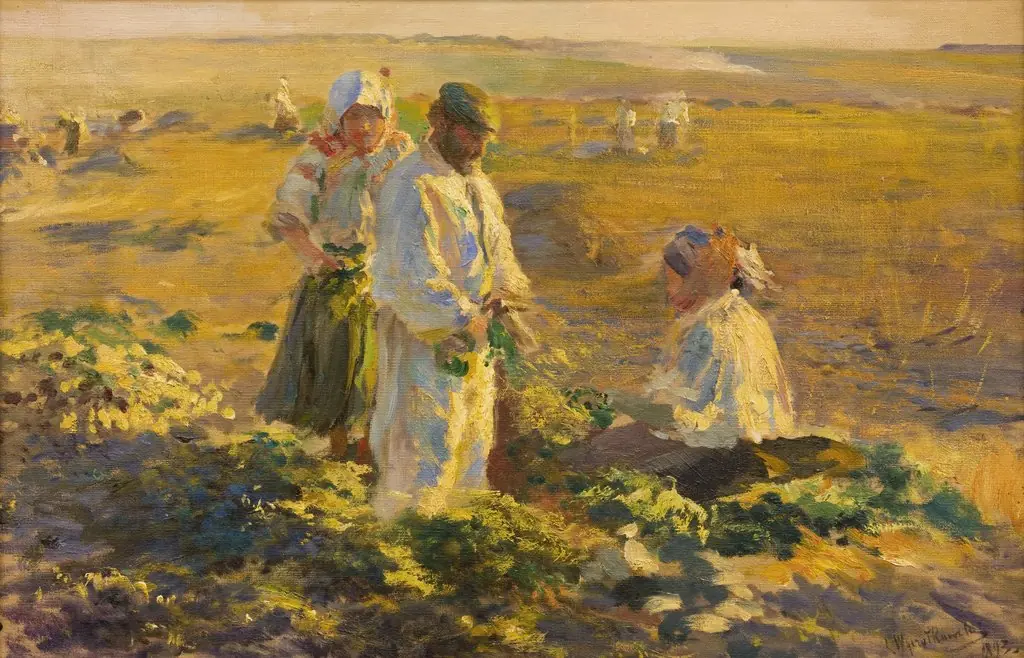
The composition focuses on laborers in light, loosely draped garments and headscarves, some seated, others standing, collectively engaged in the seasonal task of olive picking. By portraying ordinary rural activity, Sargent expands his repertoire beyond aristocratic portraiture, showing an interest in everyday life across different cultures.
Technique & Style
Executed in oil, the work employs thick, visible brushstrokes that give the foliage, clothing and ground a palpable texture. A palette of greens, browns and muted whites creates a naturalistic yet atmospheric effect, aligning the piece with the impressionist tendencies Sargent adopted during his extensive travels.
History & Provenance
Created during Sargent’s itinerant period, the painting entered the collection of Sweden’s Nationalmuseum, where it remains on display. It is one of roughly 900 oil paintings produced by the artist, complementing his extensive output of watercolors and travel sketches.
Context
The early twentieth century saw many Western artists turning to the Balkans for inspiration, attracted by its distinctive light and rural customs. Sargent’s visit to Albania and his decision to depict olive harvesters reflect this broader artistic curiosity about peripheral European societies.
Artist & collection
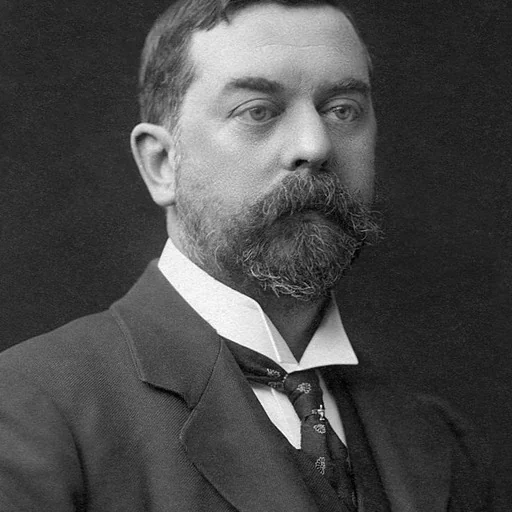
Artist
John Singer Sargent (; January 12, 1856 – April 15, 1925) was an American expatriate artist, considered the "leading portrait painter of his generation" for his evocations of Belle Époque and Edwardian-era luxury.