Artwork
London Nomades
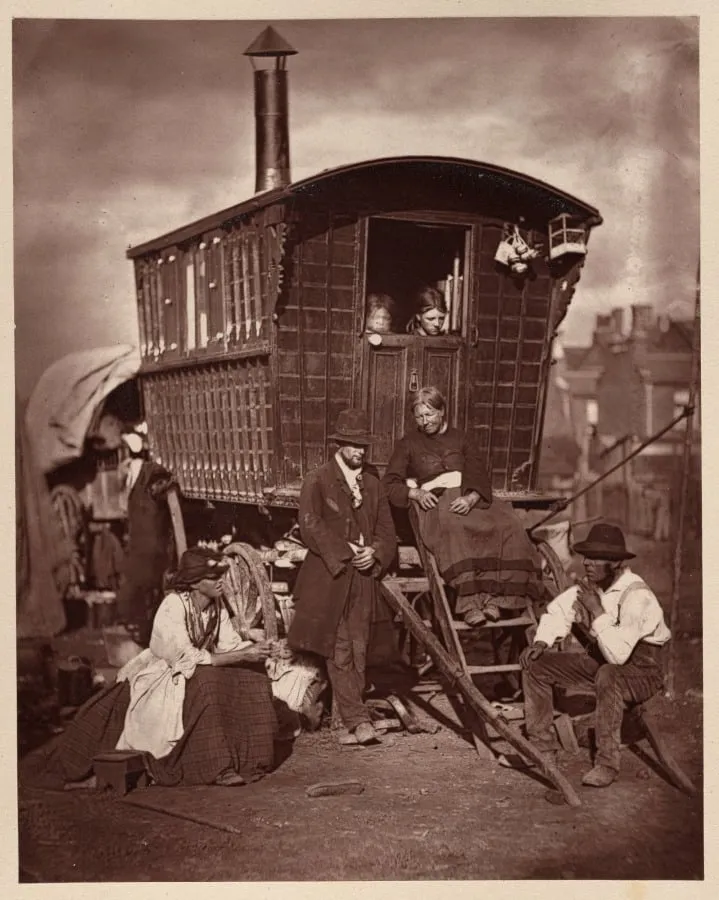
London Nomades is a photography by the Impressionist artist John Thomson. It dates from 1877 and is held in the collection of the Cleveland Museum of Art. The image captures a family positioned beside a wooden wagon set in a grassy area near London.
About this work
These weren’t gypsies but working-class Londoners who lived on the move, selling goods or taking seasonal jobs.
You see a family sitting outside a wooden wagon in a grassy field near London. Kids play, a woman sews, and a man smokes a pipe—all in soft, natural light.
These weren’t gypsies but working-class Londoners who lived on the move, selling goods or taking seasonal jobs. Thomson photographed them first, then turned the photos into paintings. It’s rare to see poor city people shown with this much care in 1877.
To see more quiet scenes of 19th-century England, look up *england, 19th century*.
Overview
The image captures a family positioned beside a wooden wagon set in a grassy area near London. The scene is bathed in soft, natural light, revealing children at play, a woman engaged in sewing, and a man smoking a pipe. The composition reflects a moment of everyday life among itinerant workers in the late nineteenth century.
Subject & Meaning
The figures represent a segment of the working class who, unlike settled residents, lived a mobile existence, moving from place to place in wagons. Their livelihood depended on seasonal employment and the sale of inexpensive goods at markets or door‑to‑door. The photograph documents their domestic routine, emphasizing the humanity of a group often overlooked in contemporary visual records.
Technique & Style
Photographer John Thomson employed natural lighting to render the scene with a gentle tonal range, allowing details such as the texture of the wagon wood and the delicate activity of sewing to emerge clearly. The image’s composition balances the figures within the open field, creating a quiet, intimate atmosphere that departs from the more formal studio portraiture of the period.
History & Provenance
Taken in 1877, the photograph was later used by Thomson as a basis for painted versions of the same subject. The work was described by Adolphe Smith, Thomson’s collaborator, who noted the presence of nomadic groups in London who lived in wagons and pursued temporary work. The image remains a rare visual record of itinerant urban poor from that era.
Context
During the late nineteenth century, rapid industrialization and urban growth in London generated a class of itinerant laborers who moved in search of work. While often associated with Romani groups, these families were distinct, belonging to the broader working class. Their portrayal in visual media was uncommon, making Thomson’s documentation a valuable insight into the social fabric of the time.
Artist & collection
Artist
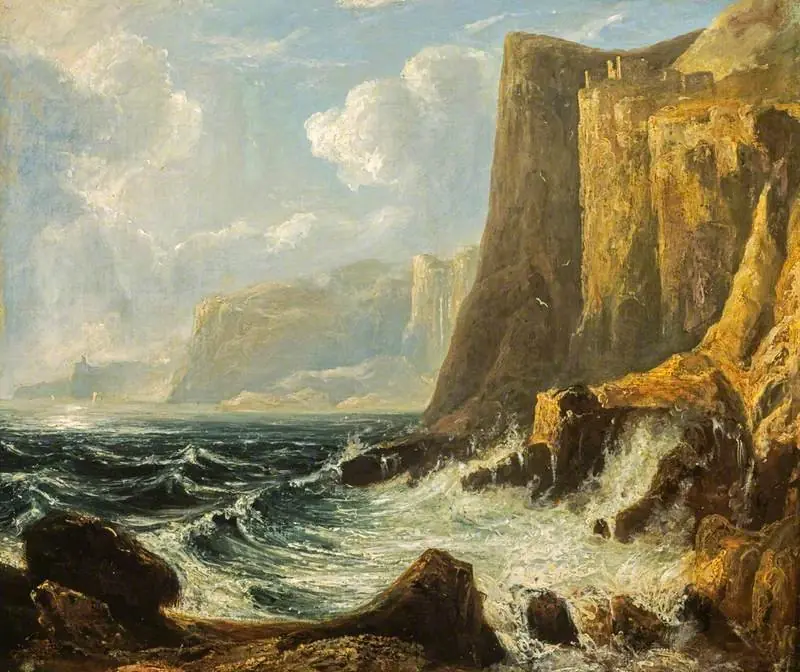
John Thomson painted Scottish landscapes in oil, focusing on the rugged terrain around the Trossachs and Selkirkshire.

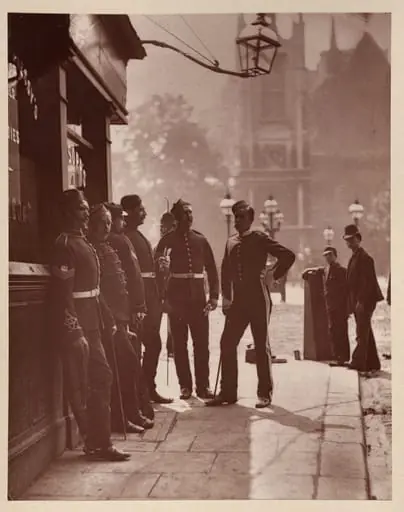 Recruiting Sergeants at Westminster
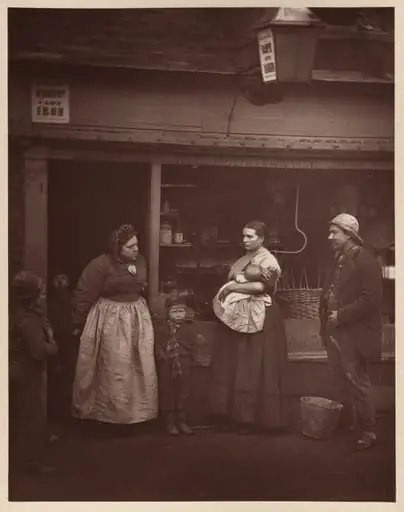 Sufferers from the Floods
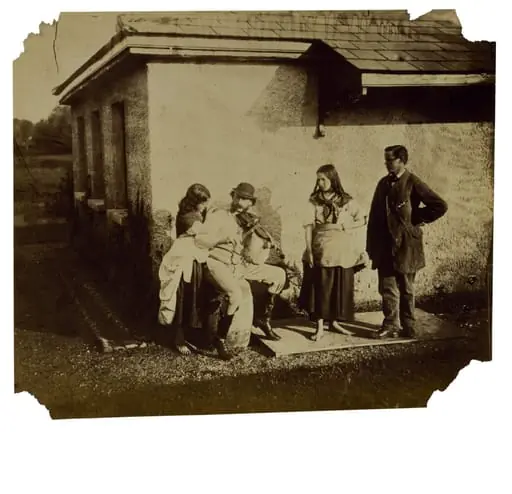 Florence Elizabeth Maude, Cornwallis Hawarden, Clementina Maude and unidentified man, Togge House, Dundrum
 Richardson's Show: A Flying Wagon
 The Auction House: The Dealers
 The Mall, Kensington Gravel Pits
 At the Fair St. Jean de Mont
 Our Brilliant Failure
 A Convict's Home