Artwork
At the Fair St. Jean de Mont
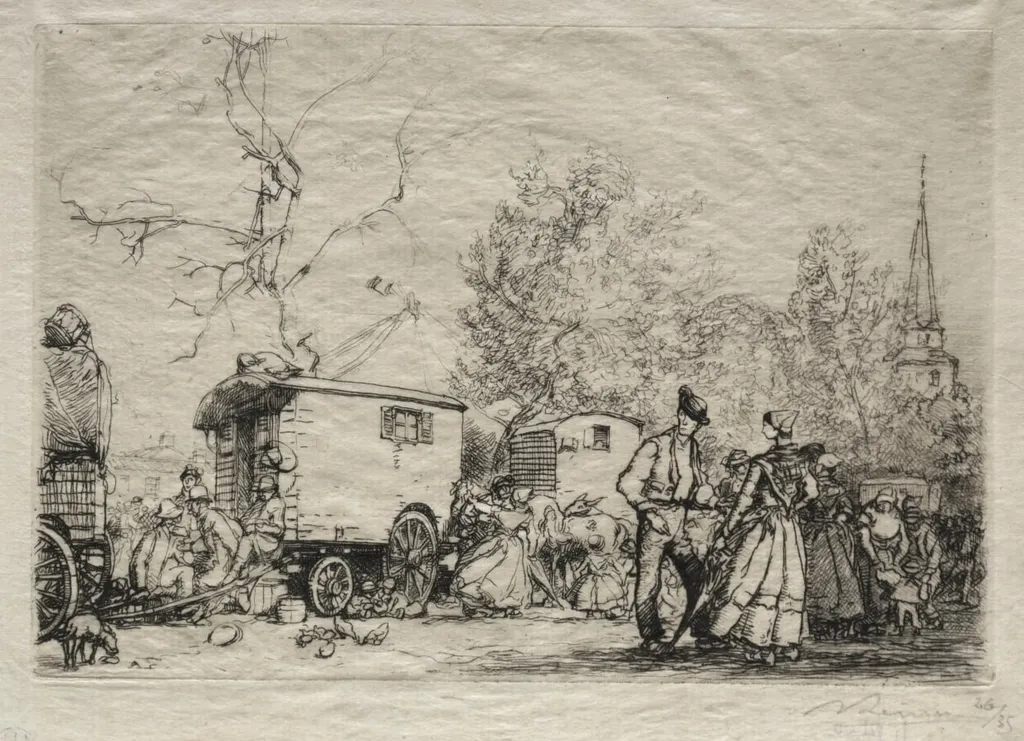
At the Fair St. Jean de Mont is a print by Auguste Lepère. It dates from 1906 and is held in the collection of the Cleveland Museum of Art. Created in 1906 by Auguste Louis Lepère, this wood engraving is part of a late 19th- and early 20th-century revival of the medium in Europe.
About this work
Overview
Created in 1906 by Auguste Louis Lepère, this wood engraving is part of a late 19th- and early 20th-century revival of the medium in Europe.
Created in 1906 by Auguste Louis Lepère, this wood engraving is part of a late 19th- and early 20th-century revival of the medium in Europe. Lepère, primarily known as a printmaker, used the technique to explore scenes of ordinary life with precision and nuance. The work belongs to the collection of The Cleveland Museum of Art, where it represents his contribution to the reinvigoration of graphic arts during a time of technical experimentation.
Subject & Meaning
The scene portrays a bustling fairground at Saint-Jean-de-Mont, capturing fleeting moments of public leisure. Figures move through a crowded space, their gestures and attire suggesting seasonal festivity and routine amusement. Lepère avoids idealization, instead focusing on the quiet rhythm of daily gatherings, reflecting a broader interest in realism and the dignity of common experiences within urban and rural festivities.
Technique & Style
Lepère employed wood engraving, a labor-intensive method involving incised lines on end-grain wood blocks, to achieve fine detail and tonal variation. His use of cross-hatching and delicate line work conveys texture and movement without reliance on wash or color. The composition is tightly controlled, with attention to spatial depth and individual figures, characteristic of his commitment to the craft’s traditional potential.
History & Provenance
The print was produced in 1906 during the final phase of Lepère’s career, when he was actively promoting wood engraving as a serious artistic medium. It entered the collection of The Cleveland Museum of Art through documented acquisition, likely as part of broader efforts in the early 20th century to preserve European graphic works. Its preservation reflects institutional recognition of his role in the printmaking revival.
Context
Lepère worked alongside contemporaries who sought to elevate printmaking beyond reproductive functions, aligning with the broader Arts and Crafts movement and Japanese print influences. His focus on contemporary life mirrored the interests of Realist painters, yet his medium allowed for a distinct intimacy and tactile quality. This piece situates him within a transnational dialogue on artisanal printmaking in the modern era.
Legacy
Though less widely known than his painterly peers, Lepère’s technical rigor influenced later generations of printmakers committed to handcrafted imagery. His dedication to wood engraving helped sustain its relevance amid rising photographic and industrial reproduction methods. *At the Fair St. Jean de Mont* remains a testament to his belief in print as a vehicle for quiet, observational artistry.
Artist & collection
Artist
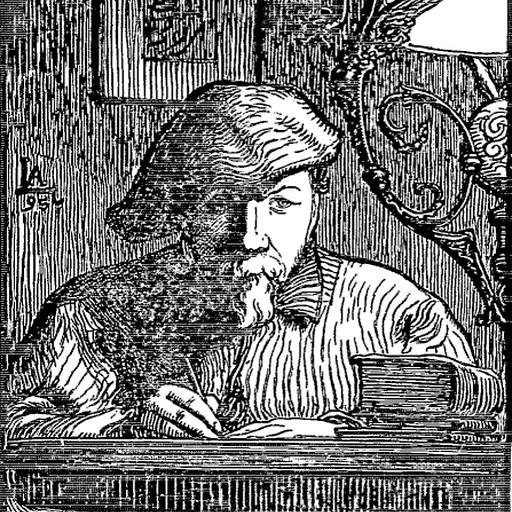
Louis-Auguste Lepère (30 November 1849 – 20 November 1918) was a French painter and etcher. Lepère is also considered a leader in the creative revival of wood engraving in Europe.

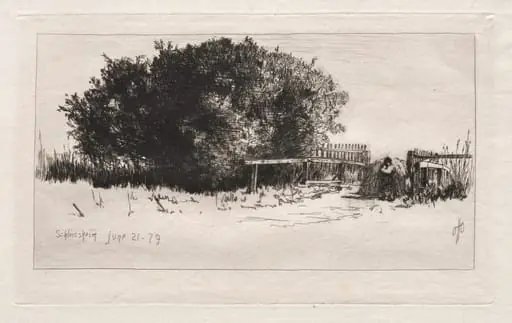 The Gate, Schleissheim
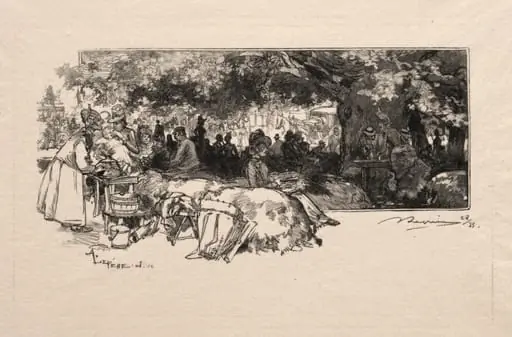 Cantine de la Mère Pichard
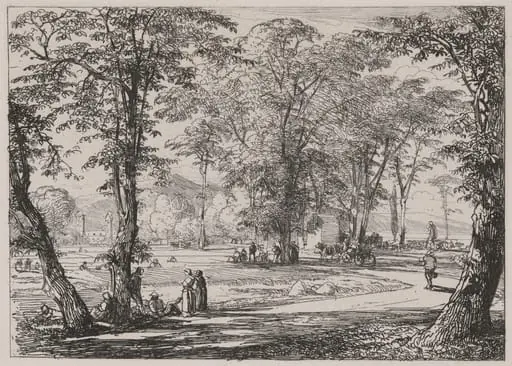 Village Scene with Workers in a Field and at Rest
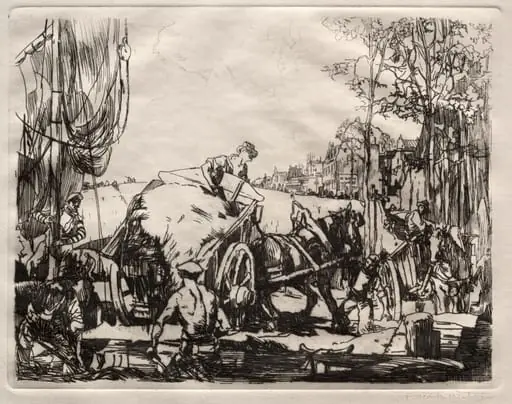 Port at Low Tide
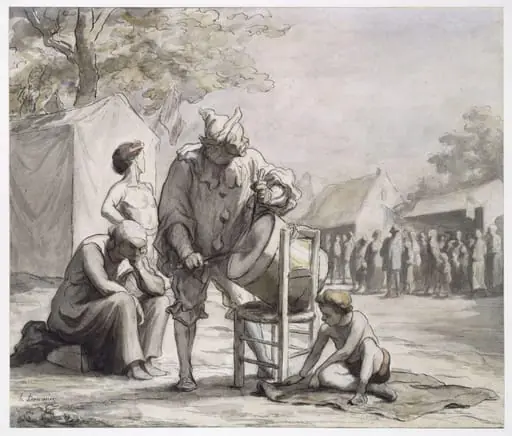 Les Saltimbanques
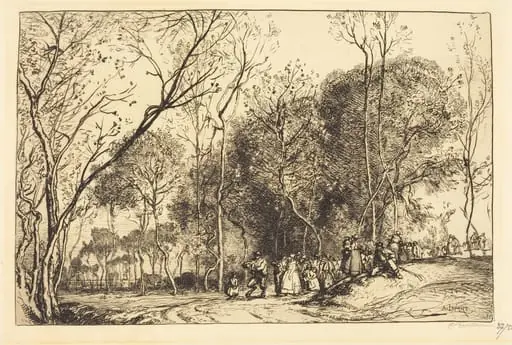 Summer in Saint-Martin, the Past Nuptials (Ete de la Saint-Martin, la noce qui passe)
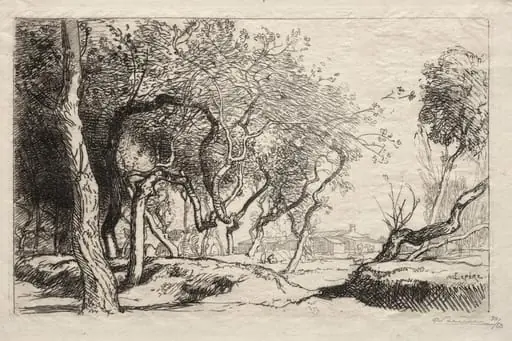 The Twisted Tree
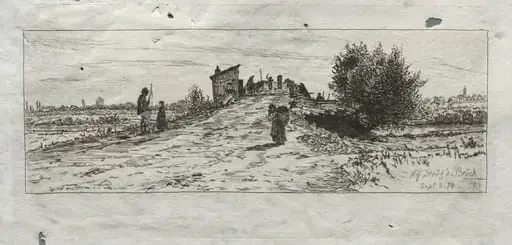 Auf Stauf a-Bruck
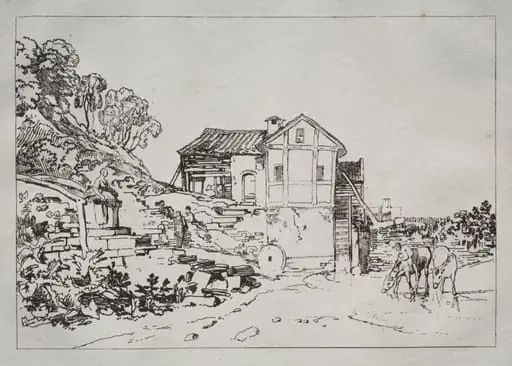 Liber Studiorum: Watermill
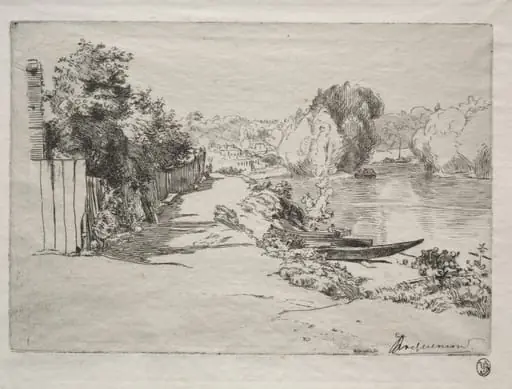 The Seine at Bas-Meudon
 The Dozing Fishmonger (Le marchand de poissons endormie)
 Retour du Marché de St. Jean-de-Mont