Artwork
Recruiting Sergeants at Westminster
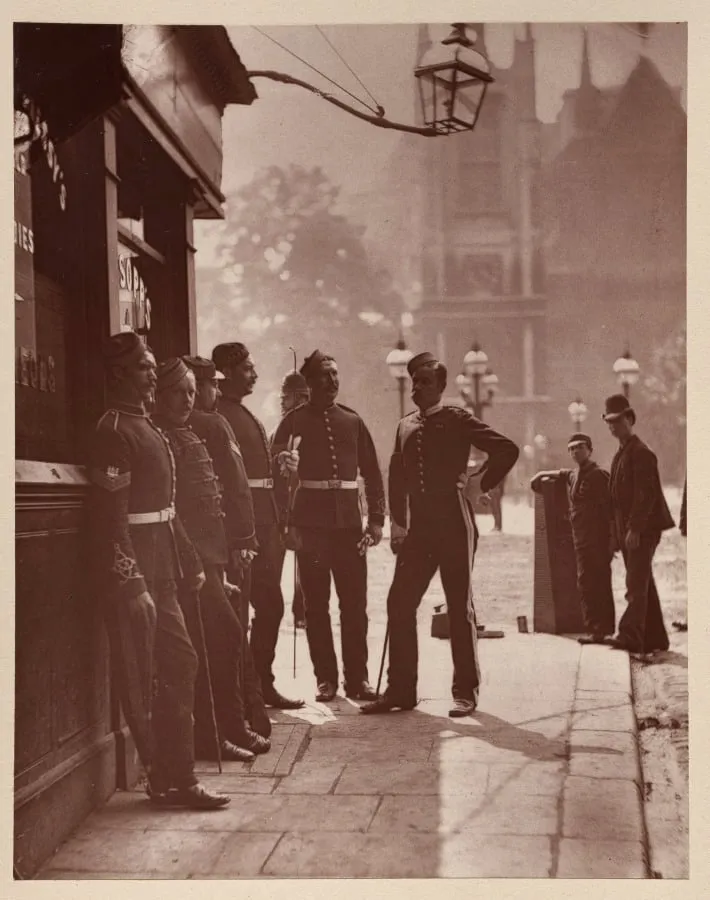
Recruiting Sergeants at Westminster is a photography by the Impressionist artist John Thomson. It dates from 1877 and is held in the collection of the Cleveland Museum of Art. This photograph captures two British Army recruiters in red coats engaging a young man outside a London pub during the late 19th century.
About this work
You see two red-coated army recruiters chatting with a young man outside a London pub.
These sergeants earned about £1 for every man they signed up—just enough to cover the new soldier’s shilling and the “bringers” who dragged in fresh faces. By 1875, London supplied over 3,600 recruits a year.
For more scenes of 19th-century England, look up the subject: england, 19th century.
Overview
This photograph captures two British Army recruiters in red coats engaging a young man outside a London pub during the late 19th century.
This photograph captures two British Army recruiters in red coats engaging a young man outside a London pub during the late 19th century. The scene reflects the informal, localized system of military recruitment that operated in urban centers, where sergeants relied on personal networks and small payments to attract enlistees. The setting suggests a routine, almost mundane interaction, masking the economic pressures behind the process.
Subject & Meaning
The recruiters, long-established figures in their roles, functioned as both officers and entrepreneurs. Their income depended entirely on the number of men they enlisted, creating a system where persuasion and incentive outweighed official authority. The young man represents the working-class individuals often targeted, lured by modest cash payments and the promise of stability, despite the risks of military service.
Technique & Style
The photograph employs natural lighting and a candid composition, typical of documentary practices of the era. The figures are positioned informally, emphasizing realism over staged formality. The red coats stand out against the muted tones of the pub’s exterior, drawing attention to the recruiters’ role without overt dramatization. The image prioritizes observation over commentary, aligning with the era’s growing interest in social documentation.
History & Provenance
Taken in the 1870s, the image corresponds with official records showing 3,605 recruits enlisted from London that year. The system of paying recruiters per enlistee, along with fees to intermediaries known as 'bringers,' was a widely acknowledged, if unofficial, practice. These arrangements persisted despite criticism for exploiting poverty, and the photograph likely originated from a private or journalistic archive documenting urban life.
Context
In mid-Victorian Britain, the army relied heavily on voluntary enlistment, especially in cities where unemployment and economic hardship made recruitment easier. Public houses served as informal recruitment hubs, and recruiters operated with minimal oversight. The shilling given to each new soldier was both a gesture of goodwill and a required expense, reflecting the thin line between state service and street-level commerce.
Legacy
This image contributes to historical understanding of how military recruitment functioned at the grassroots level before centralized conscription. It reveals the human economy beneath institutional structures, where personal relationships and small transactions shaped national defense. Such photographs remain valuable for studying class, labor, and state power in 19th-century urban England.
Artist & collection
Artist
John Thomson painted Scottish landscapes in oil, focusing on the rugged terrain around the Trossachs and Selkirkshire.