Artwork
Frognal, Hampstead
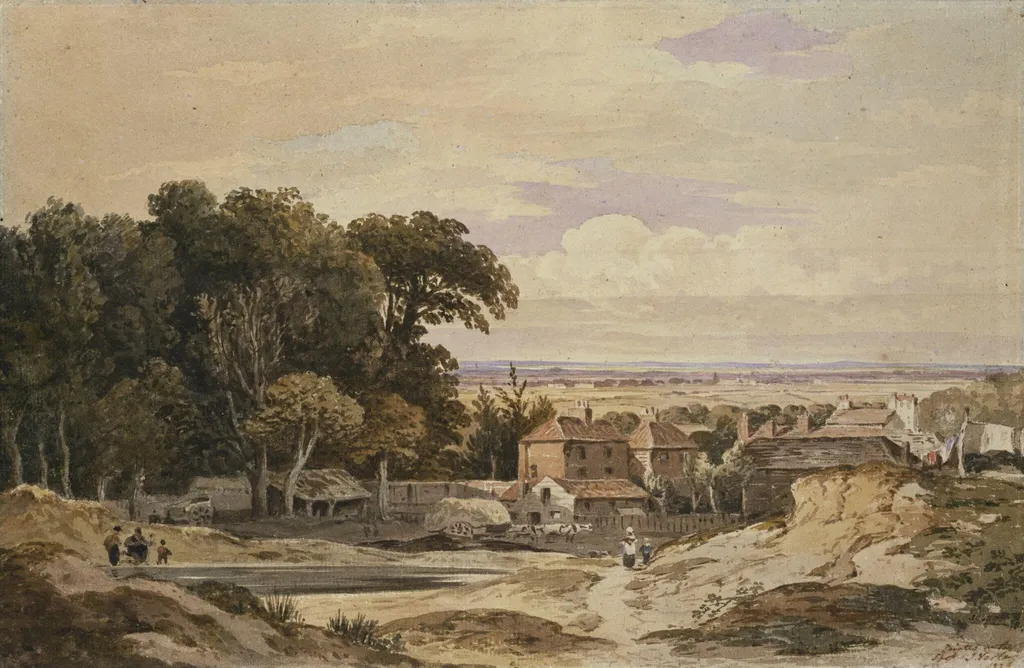
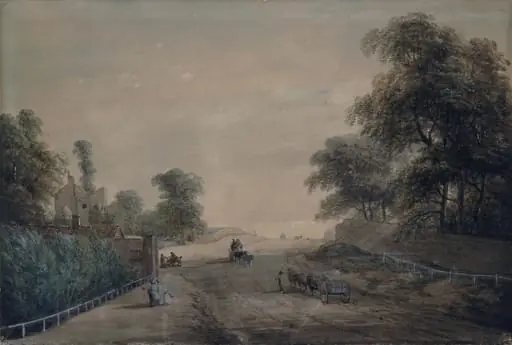
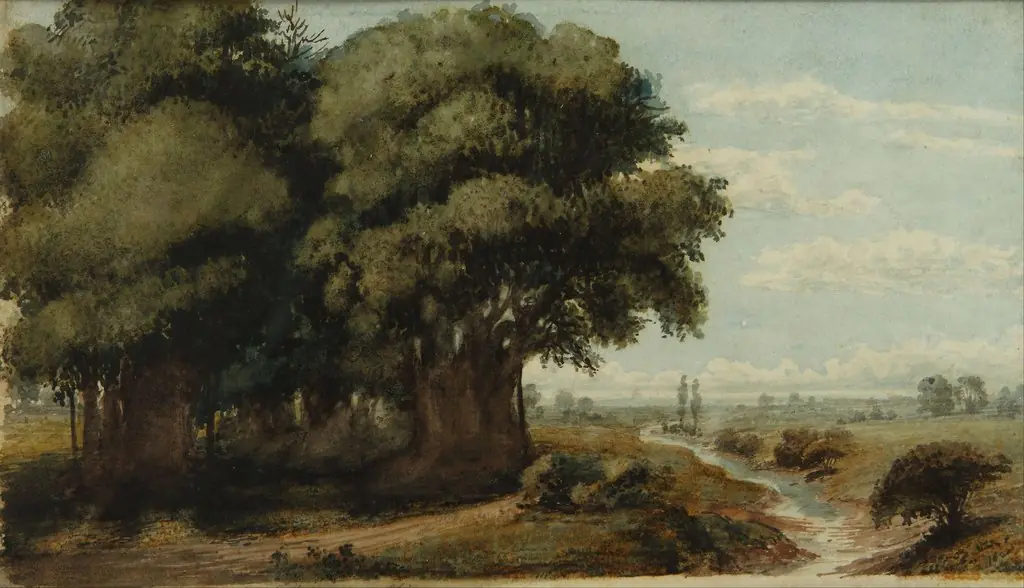
Frognal, Hampstead is a watercolor work on paper by the Romanticist artist John Varley. It dates from 1826 and is held in the collection of the Victoria and Albert Museum.
About this work
Overview
Rendered with quiet precision, the scene conveys a moment of stillness, avoiding dramatic flair in favor of observed everyday life amid natural surroundings.
John Varley’s 1826 watercolour captures the rural outskirts of Hampstead, specifically the Frognal area, in delicate washes of transparent pigment. The work is signed and dated by the artist, affirming its place within his late-period output. Rendered with quiet precision, the scene conveys a moment of stillness, avoiding dramatic flair in favor of observed everyday life amid natural surroundings.
Subject & Meaning
The composition presents modest cottages nestled among trees, with figures moving subtly along a path—likely local residents going about daily routines. The large foreground tree, casting soft shadow, anchors the scene and suggests a harmony between human habitation and the landscape. There is no narrative climax; instead, the painting invites contemplation of quiet rural existence, aligned with Romantic ideals of nature as a grounding force.
Technique & Style
Varley employs light, layered watercolour washes to suggest atmosphere and texture without heavy detail. The sky is rendered with pale, diffused tones, while the foliage is indicated through loose, fluid strokes that imply volume rather than define individual leaves. Buildings are simplified into forms with minimal architectural detail, emphasizing mood over precision. The overall handling reflects a sensitivity to light and transient effects, characteristic of his mature style.
History & Provenance
Created in 1826, this work belongs to Varley’s later years, when he frequently painted the Hampstead countryside near his home. It was likely made as a personal study or gift, rather than for public exhibition. Its survival in good condition suggests it remained in private hands, possibly within Varley’s circle, before entering institutional or collector ownership.
Context
In the 1820s, Hampstead was transitioning from village to suburban retreat, attracting artists and intellectuals seeking respite from London. Varley, a founding member of the Watercolour Society, often depicted such landscapes as both record and meditation. His work here reflects a broader trend among British artists to find poetic value in ordinary, unidealized rural scenes.
Legacy
This watercolour exemplifies Varley’s contribution to the British watercolour tradition, where intimacy and observation replaced grandeur. Though not widely exhibited in his lifetime, such works influenced later generations of landscape painters who valued subtle tonal harmony and quiet realism. It remains a quiet testament to the aesthetic of everyday nature in early 19th-century England.
Own this work as a print
Artist & collection
Artist
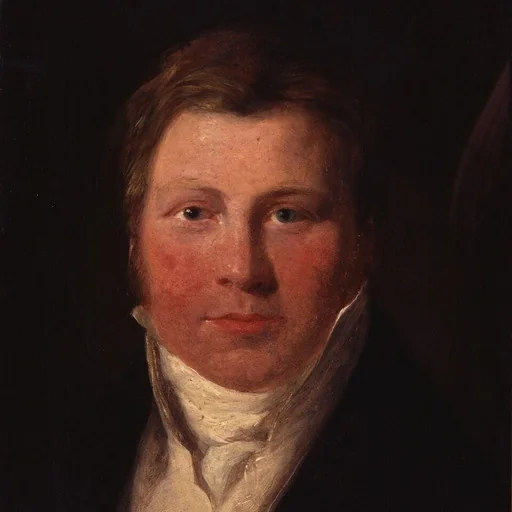
John Varley (17 August 1778 – 17 November 1842) was an English watercolour painter and astrologer, and a close friend of William Blake.

![Study of a Head in Profile [verso], by John Varley](https://artifactworldgallery.com/img/john-varley--study-of-a-head-in-profile-verso--3e16e84b6ceccae1-w320.webp)
![Two Studies of a Figure Holding a Basket [verso], by John Varley](https://artifactworldgallery.com/img/john-varley--two-studies-of-a-figure-holding-a-basket-verso--7e8aaeb3f643e9b3-w320.webp)