Artwork
View near Little Bushey
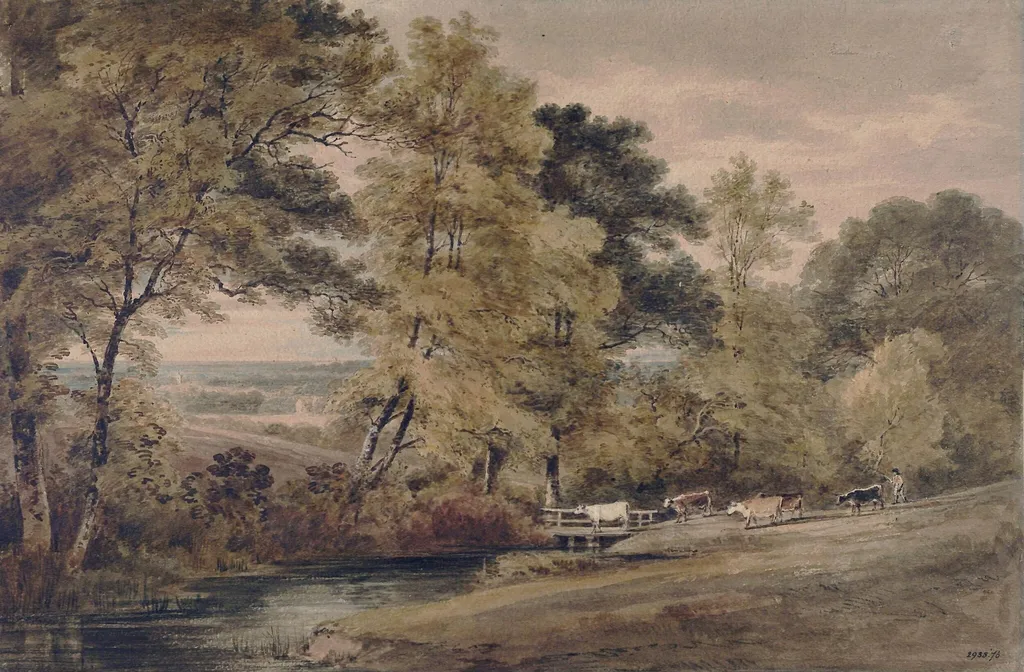
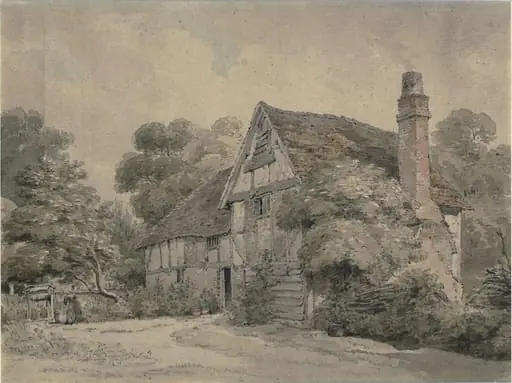
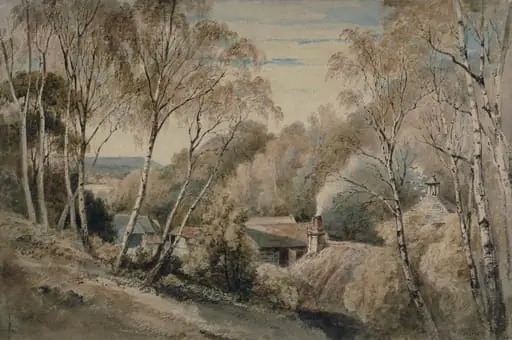
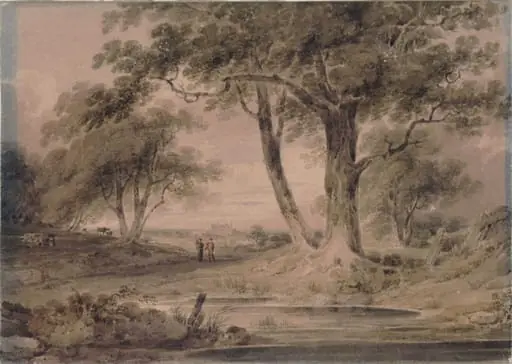
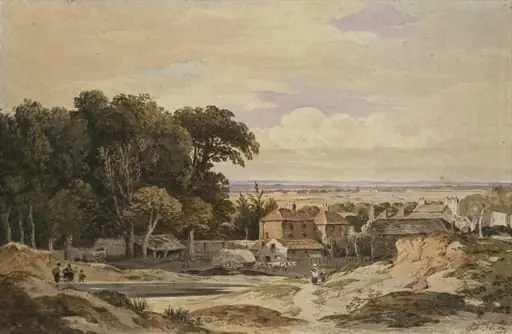
View near Little Bushey is a watercolor work on paper by the British Romanticist artist Henry RA Edridge. It dates from 1790 and is held in the collection of the Victoria and Albert Museum. Henry Edridge’s watercolour captures a quiet rural scene near Little Bushey, focusing on a winding path through wooded land.
About this work
Overview
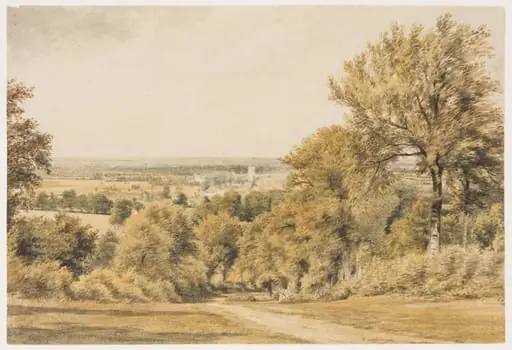
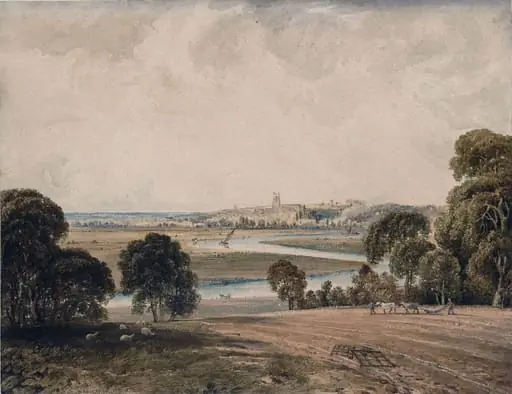
Henry Edridge’s watercolour captures a quiet rural scene near Little Bushey, focusing on a winding path through wooded land. The composition leads the eye toward St. Albans Cathedral in the distance, subtly anchoring the landscape in a recognizable location. Delicate washes of color and minimal detail evoke a sense of stillness, characteristic of early 19th-century topographical watercolours.
Subject & Meaning
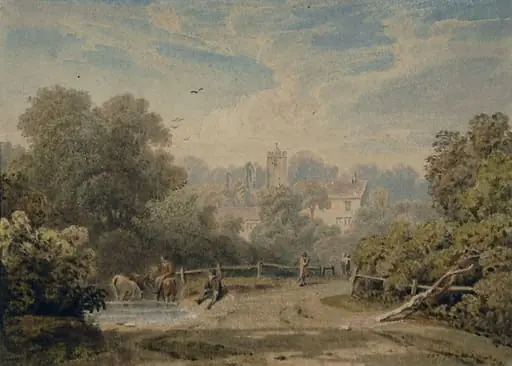
The painting presents an unremarkable rural moment—a horse-drawn wagon and a solitary walker on a forest path—elevated through careful framing and atmosphere. There is no narrative drama; instead, the work invites contemplation of everyday life in the English countryside. The cathedral, faint but present, suggests a spiritual or historical undercurrent without dominating the scene.
Technique & Style
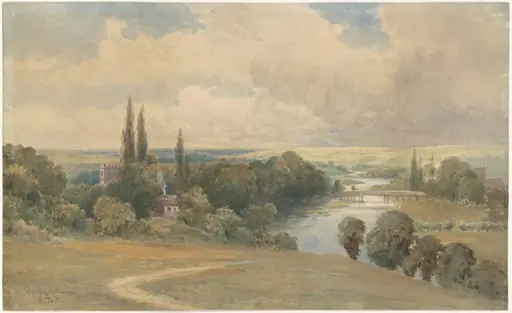
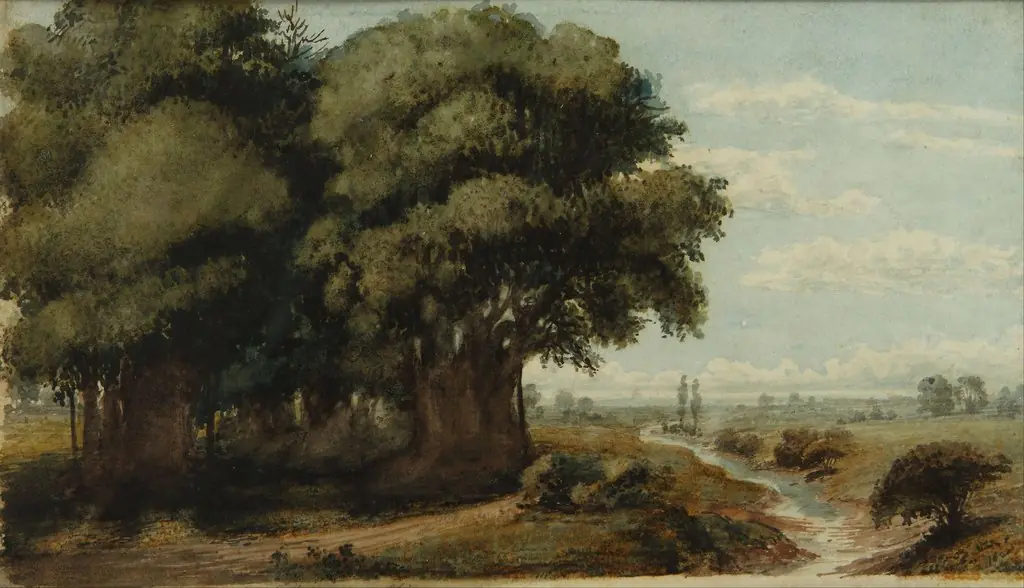
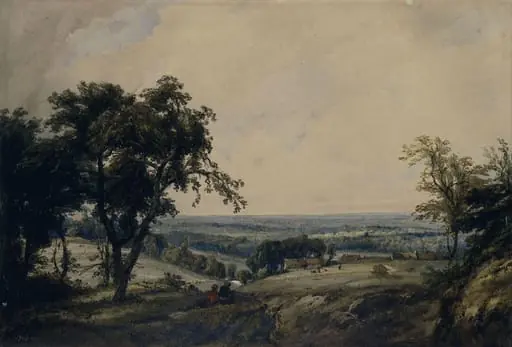
Edridge employed thin, layered watercolour washes to achieve a soft, atmospheric effect. The trees are rendered with muted greens and browns, their dark trunks contrasting gently with the pale sky. The river at the foreground reflects the surrounding tones, enhancing the sense of calm. The lack of sharp detail and the hazy transitions between elements reflect a preference for mood over precision.
History & Provenance
Created in the early 1800s, the work is part of a broader tradition of British watercolour landscape studies. It likely originated as a personal record or sketch, later preserved in institutional collections. The piece is held by the Victoria and Albert Museum, which has maintained a significant collection of Edridge’s topographical works since the 19th century.
Context
During Edridge’s time, watercolour was increasingly valued for its ability to capture transient light and natural detail, especially among amateur and professional artists documenting the British landscape. This piece aligns with the growing interest in local scenery and the quiet beauty of rural life, distinct from grander historical or romanticized landscapes of the period.
Legacy
Edridge’s work contributed to the development of watercolour as a serious medium for landscape observation. While not widely known today, his careful, restrained approach influenced later topographical artists and remains representative of a quiet, observational tradition in British art that prioritized authenticity over spectacle.
Own this work as a print
Artist & collection
Artist
A prolific watercolour artist working at the turn of the 19th century, Henry Edridge captured daily life in soft, detailed strokes.