Artwork
Bayswater Hill
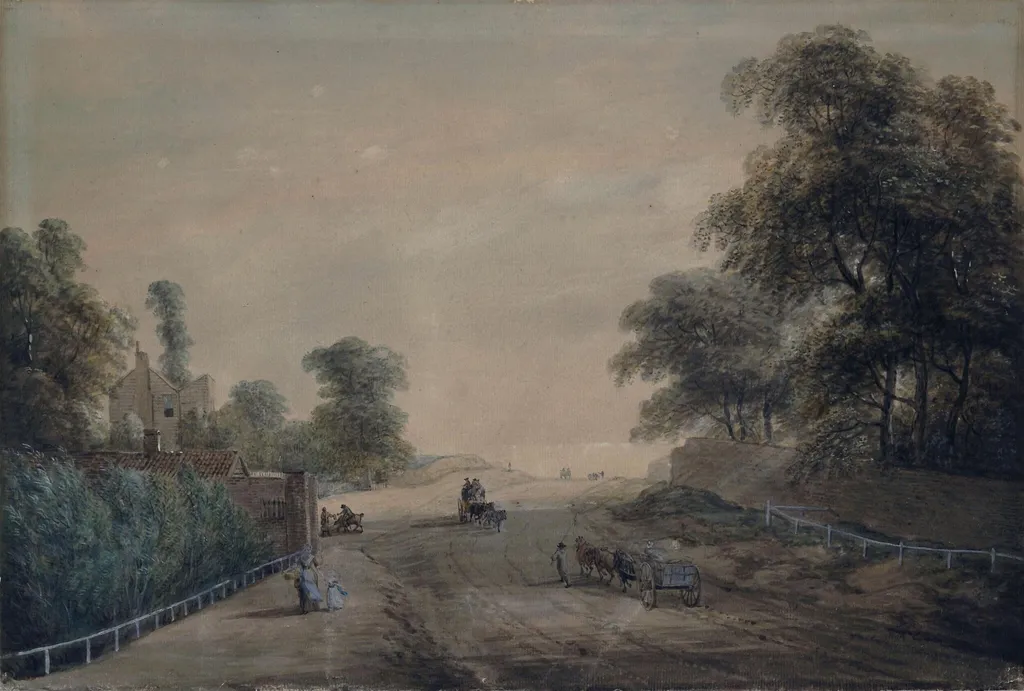
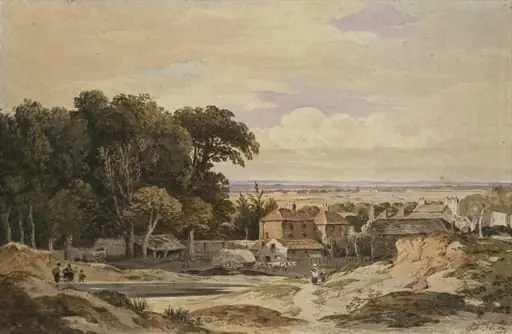
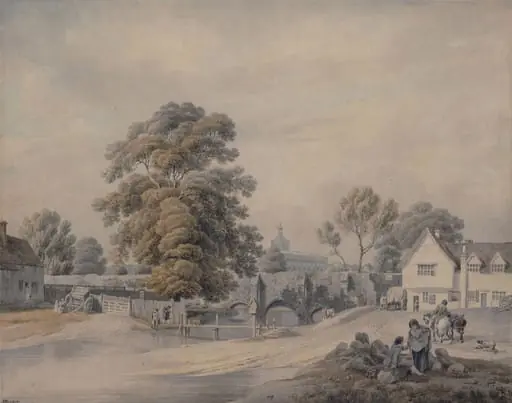
Bayswater Hill is a watercolor work on paper by the Rococo painting artist Paul RA Sandby. It dates from 1750 and is held in the collection of the Victoria and Albert Museum.
About this work
Overview
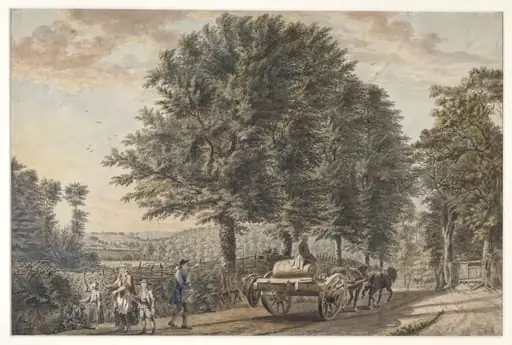
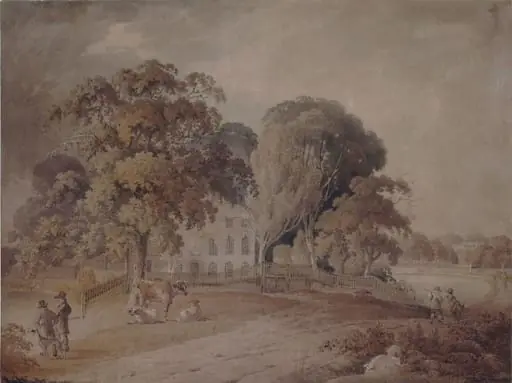
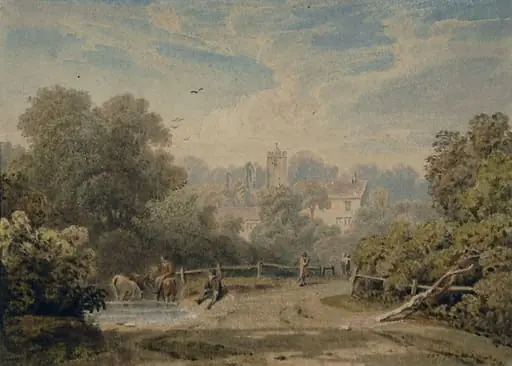
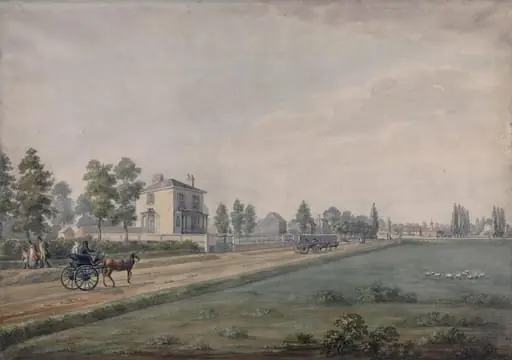
Bayswater Hill is a watercolour landscape by Paul Sandby, dated around 1750. It captures a quiet rural scene near London, rendered in delicate washes and subtle tonal shifts. The work is part of the Victoria and Albert Museum’s collection, reflecting Sandby’s role in advancing watercolour as a medium for topographical and atmospheric study during the mid-18th century.
Subject & Meaning
The painting portrays a gently sloping road winding through open countryside, flanked by modest buildings and scattered trees. Figures—a walker and a seated observer—anchor the scene in human scale, suggesting contemplation rather than activity. The composition invites quiet observation, emphasizing harmony between the land and its occasional inhabitants, without narrative or drama.
Technique & Style
Sandby employed transparent watercolour washes to build soft gradients in sky and terrain, avoiding heavy outlines. Lighter tones suggest distance and atmospheric haze, while darker accents define tree trunks and building shadows. The handling of light and shadow is restrained, creating depth through layering rather than dramatic contrast, characteristic of early English watercolour practice.
History & Provenance
Created during Sandby’s formative years as a surveyor and artist, the work likely stems from his observations of the London outskirts. It entered the Victoria and Albert Museum’s collection through the South Kensington Museum’s acquisitions of 19th-century British watercolours, preserving its status as an early example of topographical art in the medium.
Context
In the 1750s, watercolour was gaining traction among amateur and professional artists for recording landscapes and architecture. Sandby, associated with the Military Survey and later the Royal Academy, helped elevate the medium beyond mere documentation. Bayswater Hill reflects this shift, blending observational accuracy with a lyrical sensibility common in emerging English landscape traditions.
Legacy
Though not widely exhibited, the painting exemplifies Sandby’s contribution to the development of British watercolour. His precise yet poetic approach influenced later artists who sought to capture natural scenery with both technical control and emotional restraint. The work remains a quiet testament to the evolving status of watercolour in 18th-century art.
Artist & collection
Artist
Paul Sandby painted Britain’s rolling hills and old buildings in soft watercolours during the late 1700s.