Artwork
Holy Island, Northumberland
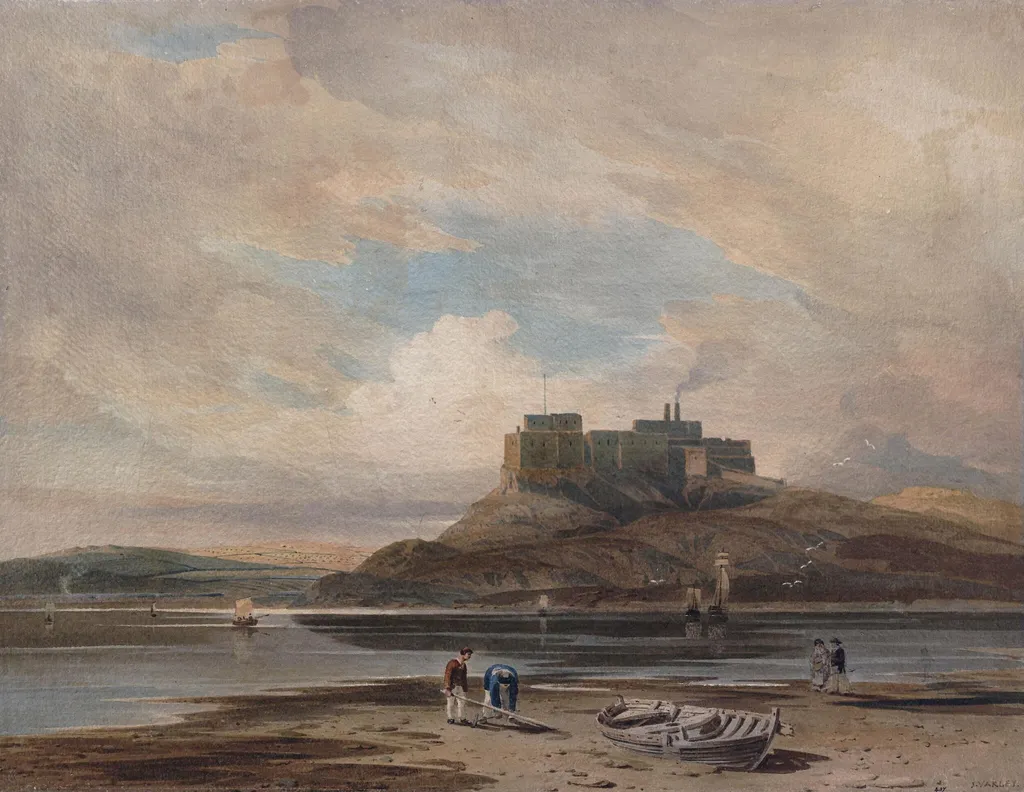
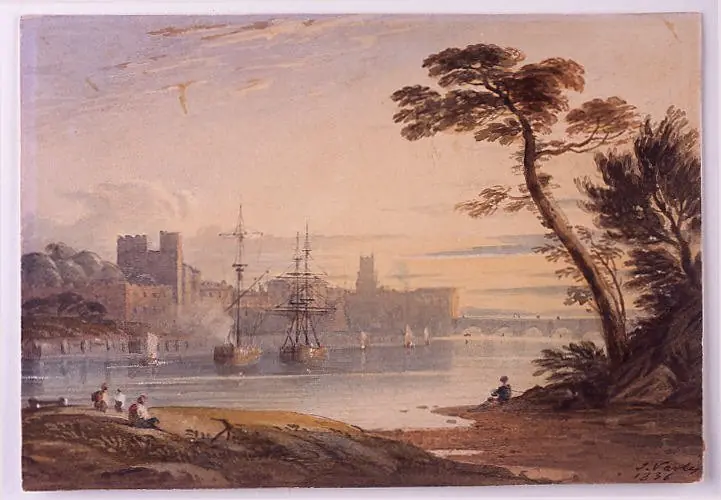
Holy Island, Northumberland is a watercolor work on paper by John Varley. It is held in the collection of the Victoria and Albert Museum.
About this work
Overview
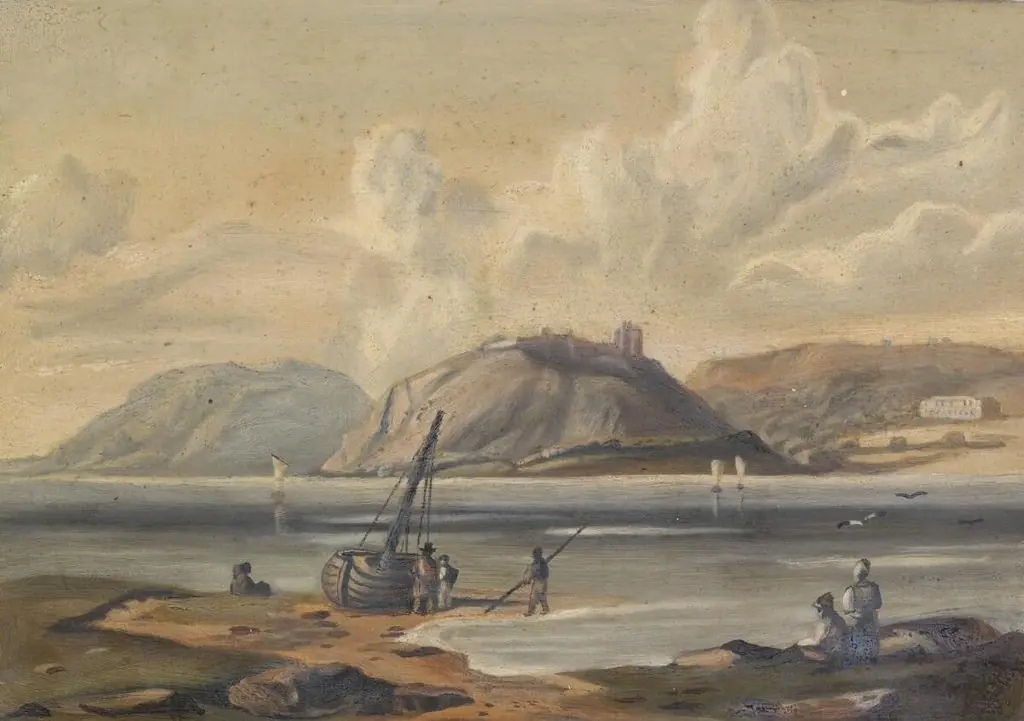
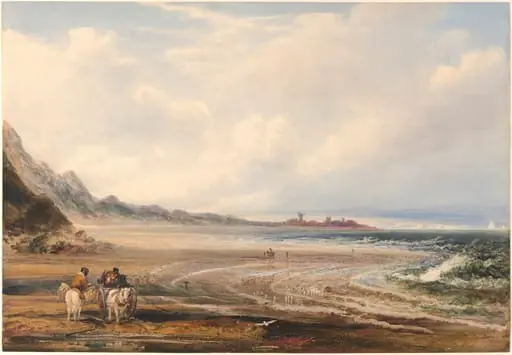
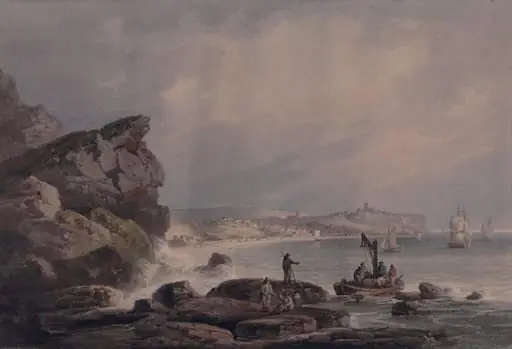
Holy Island, Northumberland is a watercolour painting created by John Varley in 1850, bearing his signature. It captures a serene scene of Holy Island, also known as Lindisfarne, off the Northumberland coast.
Subject & Meaning
The painting portrays everyday life on the island's shore, with figures engaged in quiet activities, a small boat, and driftwood. In the background, the island's castle overlooks the scene from a hill, set against a reflective body of water and sky.
Technique & Style
Varley employed a muted colour palette dominated by browns, greys, and blues, and soft, gentle brushstrokes, contributing to an overall atmosphere of calmness. The subtle interplay of light and shadow may evoke principles akin to chiaroscuro.
History & Provenance
Created in 1850, the painting is signed by the artist. Further specific details on its history and ownership are not provided.
Context
As a mid-19th-century watercolour, it reflects the era's interest in landscape and the everyday, potentially aligning with the broader British watercolour tradition of capturing serene, natural scenes.
Own this work as a print
Artist & collection
Artist
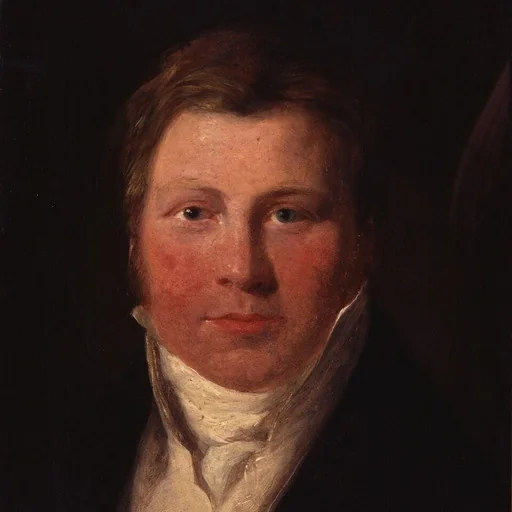
John Varley (17 August 1778 – 17 November 1842) was an English watercolour painter and astrologer, and a close friend of William Blake.

![Study of a Head in Profile [verso], by John Varley](https://artifactworldgallery.com/img/john-varley--study-of-a-head-in-profile-verso--3e16e84b6ceccae1-w320.webp)
![Two Studies of a Figure Holding a Basket [verso], by John Varley](https://artifactworldgallery.com/img/john-varley--two-studies-of-a-figure-holding-a-basket-verso--7e8aaeb3f643e9b3-w320.webp)