Artwork
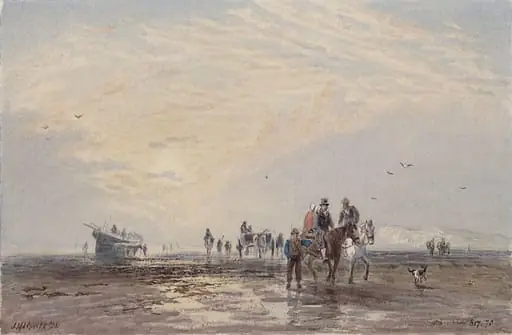
Travelers on the Sands near Redcar
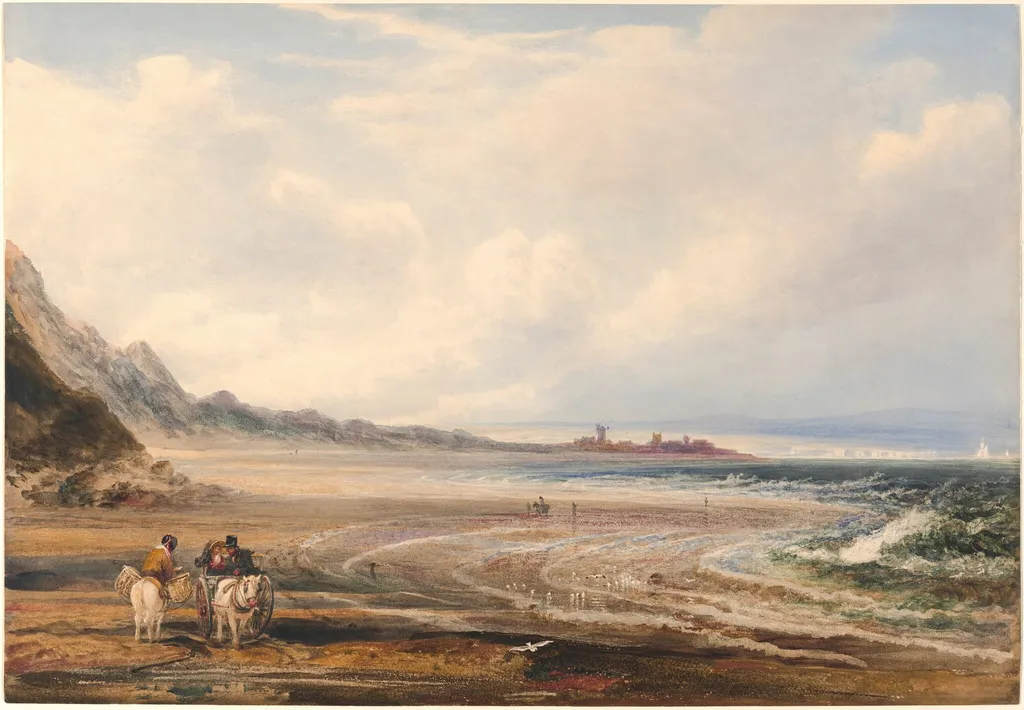
Travelers on the Sands near Redcar is a gouache drawing by the Romanticist artist Peter De Wint. It dates from 1838 and is held in the collection of the National Gallery of Art.
About this work
Overview
Peter De Wint’s 1838 work, Travelers on the Sands near Redcar, is a drawing executed in watercolor and gouache over a graphite base, with areas that have been scratched out. The composition presents a tranquil shoreline under a pale, overcast sky, where a light carriage drawn by two horses rests near the water’s edge.
Subject & Meaning
The scene captures a moment of quiet leisure on the North Yorkshire coast. Two figures sit within the carriage, gazing toward the sea, while small groups of pedestrians stroll along the sand. A distant rocky outcrop punctuates the horizon, suggesting both the openness of the landscape and the modest scale of human activity within it.
Technique & Style
De Wint builds the image with thin, layered washes of watercolor, allowing the underlying graphite sketch to inform the composition. Gouache is applied selectively to intensify certain tones, and the artist’s scratching technique removes pigment in places, creating subtle highlights and a mist‑like atmosphere. The overall effect is a soft, almost nostalgic rendering of light and air.
History & Provenance
Created in 1838, the drawing reflects De Wint’s interest in the English coast during the early Victorian period. It was likely produced as a study for a larger work or as a finished piece for private collection. The drawing has remained in the public domain, documented in museum records as part of De Wint’s oeuvre of coastal scenes.
Context
During the 1830s, British artists increasingly turned to watercolor for its capacity to capture fleeting weather conditions and the subtle tonalities of the landscape. De Wint’s approach aligns with this trend, emphasizing atmospheric effects over detailed narrative, and situates the work within the broader movement toward naturalistic, plein‑air observation in early nineteenth‑century art.
Own this work as a print
Artist & collection


 The Beach at Old Folkestone
 Dutch Coast Scene
 Lake Scene
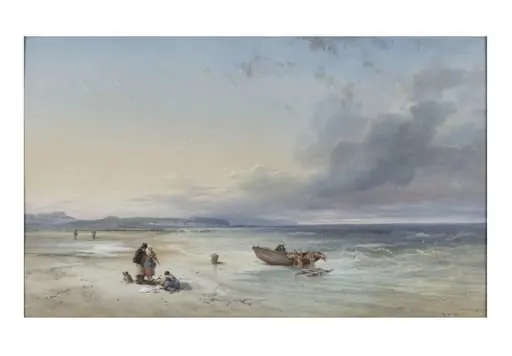 The sands of Cullercoats in Northumberland
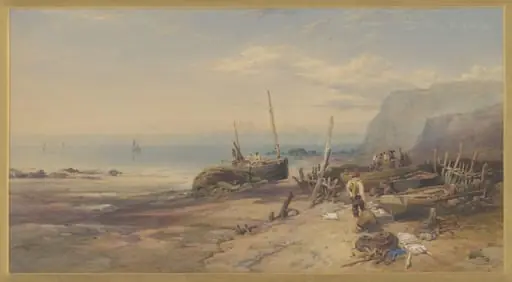 The Sands at Bonchurch, Isle of Wight
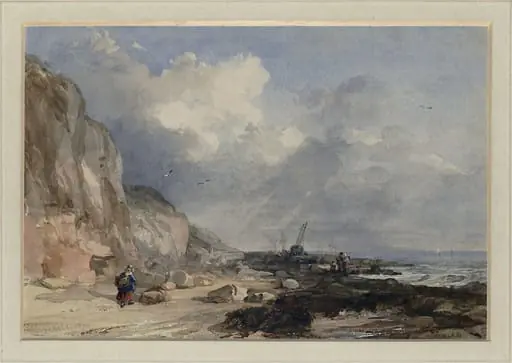 Tynemouth, Northumberland
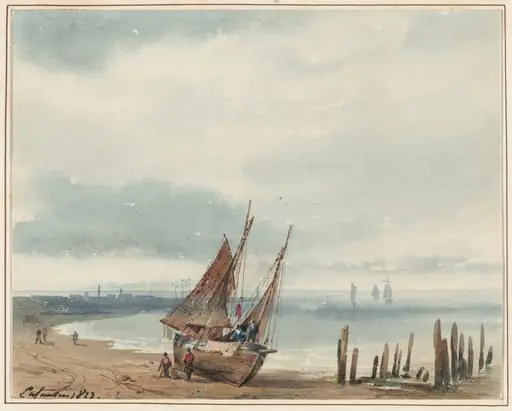 Coastal View in Normandy, with a Beached Boat
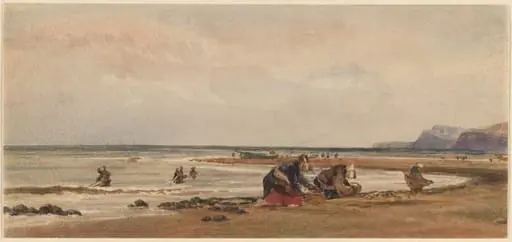 Seaweed Gatherers on the Shore at Redcar, Yorkshire
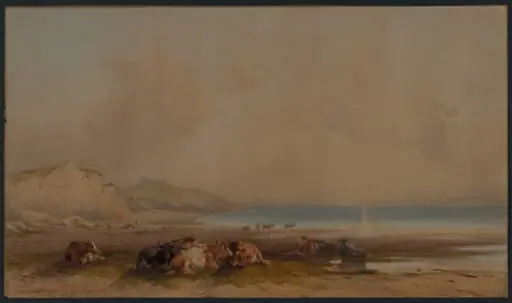 Landscape
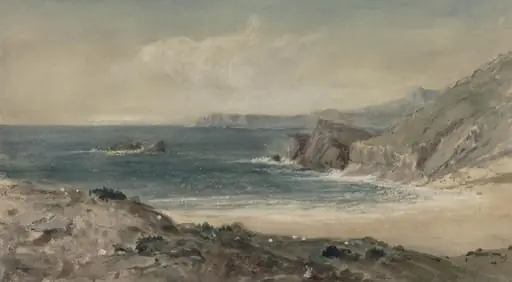 St. David's Head, St. Bride's Bay
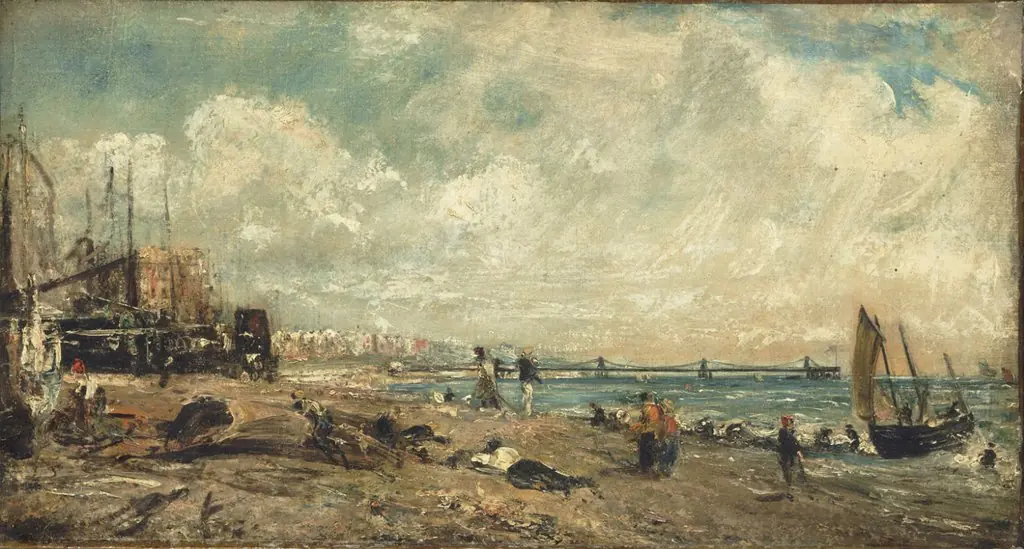 Sketch for The Marine Parade and Chain Pier, Brighton
 Crossing the Sands