Artwork
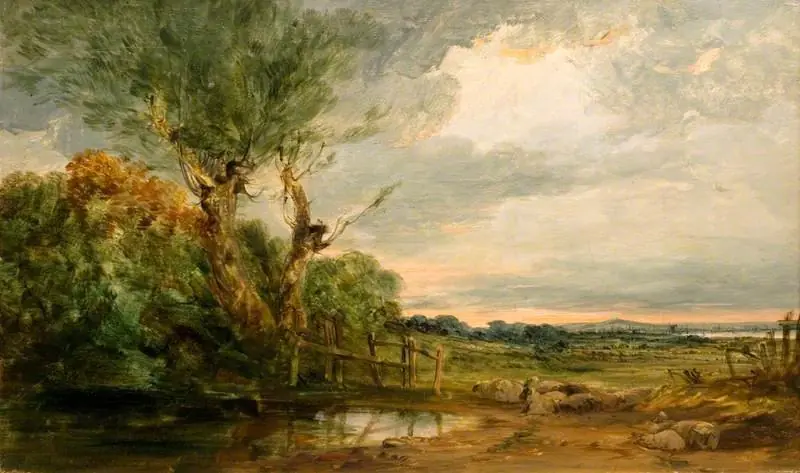
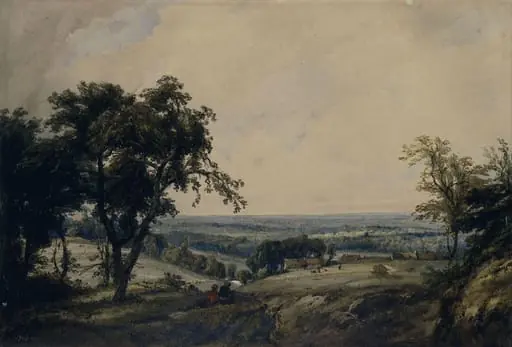
Heath Scene
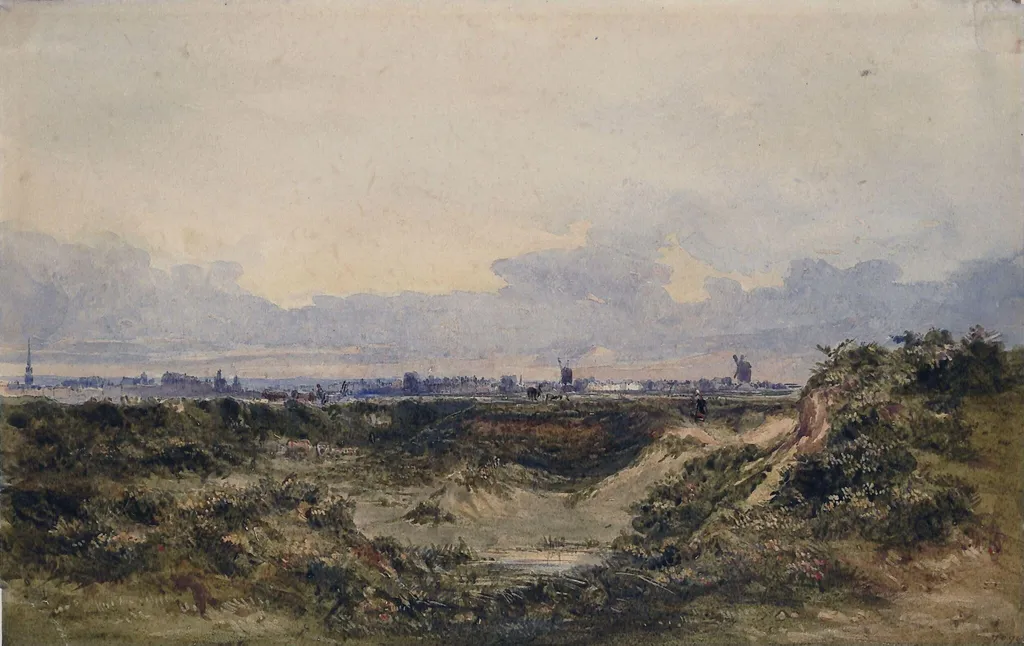
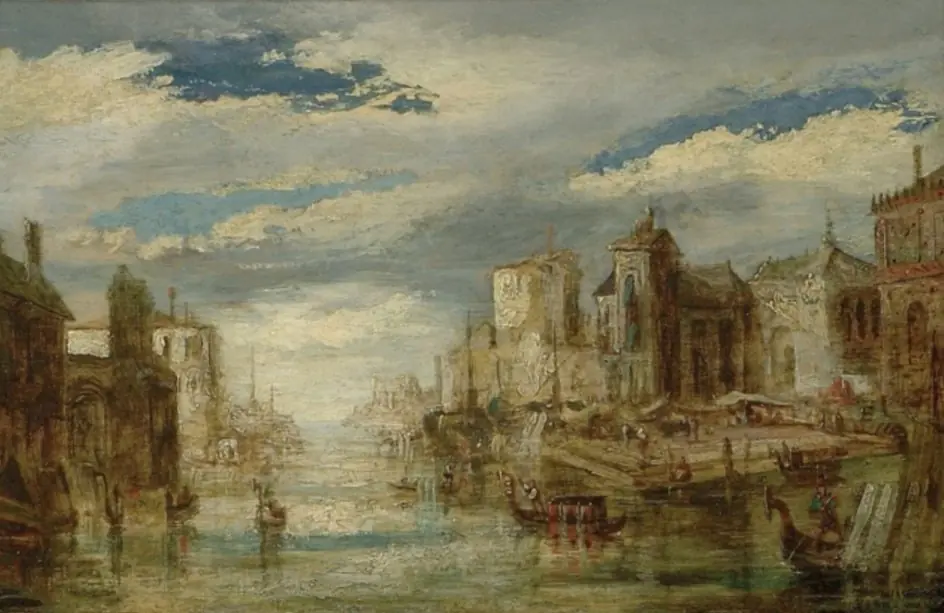
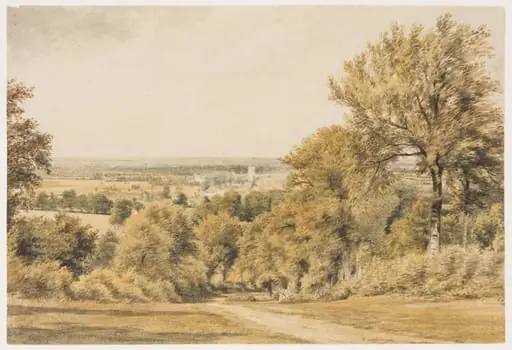
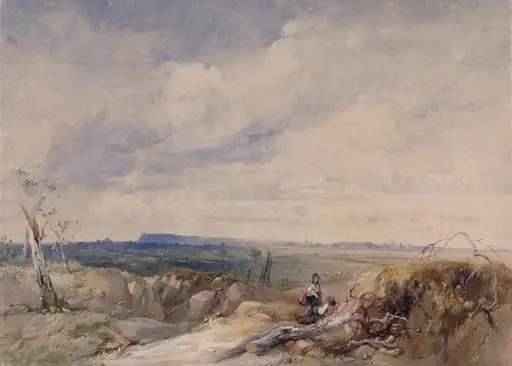
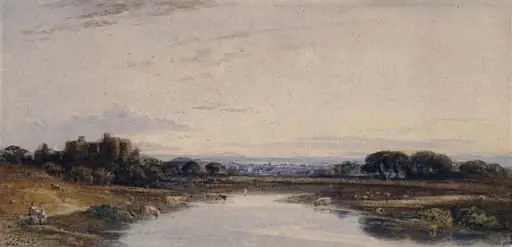
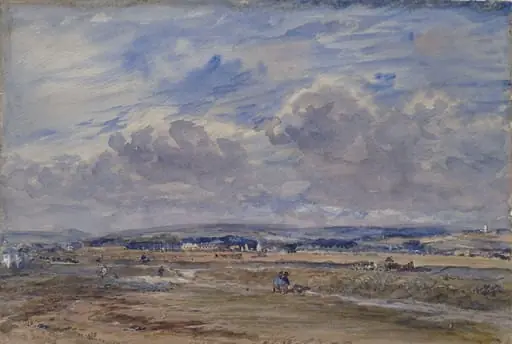
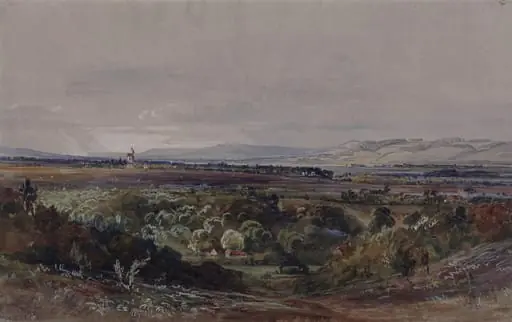
Heath Scene is a watercolor work on paper by the British Romanticist artist James Holland. It dates from 1820 and is held in the collection of the Victoria and Albert Museum.
About this work
Overview
This work exemplifies his commitment to capturing the quiet character of rural England, avoiding grandeur in favor of subtle, everyday scenery.
James Holland painted *Heath Scene* in 1820 using watercolour, a medium he employed alongside oil to explore natural landscapes. Active during the British Romantic era, Holland was a member of the Royal Watercolour Society and known for his attention to diverse terrains. This work exemplifies his commitment to capturing the quiet character of rural England, avoiding grandeur in favor of subtle, everyday scenery.
Subject & Meaning
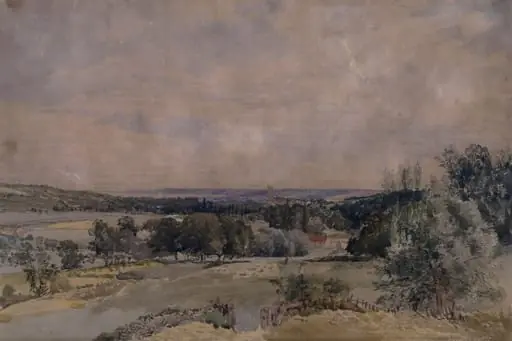
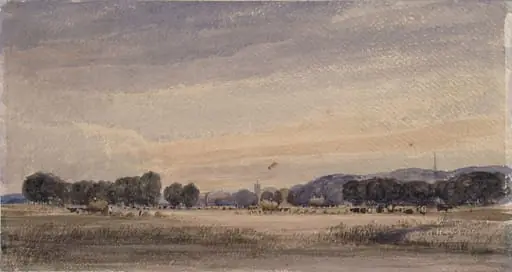
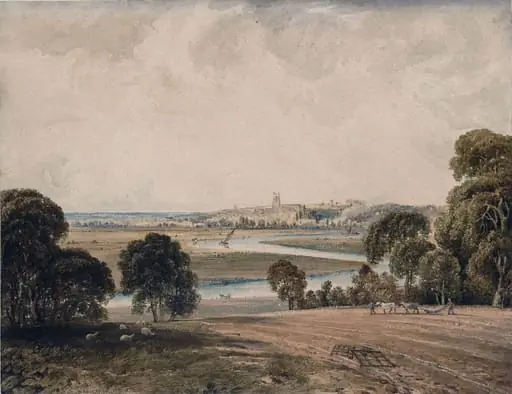
The painting presents an undisturbed heathland, with rolling grasses, scattered shrubs, and wildflowers in the foreground. A faint path winds through the middle ground, leading toward distant trees and modest structures. There is no human presence, emphasizing solitude and the quiet rhythm of nature. The scene reflects Romantic ideals of nature as a contemplative, unspoiled space, free from industrial or urban intrusion.
Technique & Style
Holland used transparent watercolour washes to build delicate layers of tone, allowing the paper’s white to suggest light. The sky, softly graded with pale clouds, contrasts with darker, more defined masses on the horizon. Brushwork is restrained yet precise, capturing texture in foliage and earth without overt detail. The composition balances open space with subtle depth, guiding the eye gently from foreground to distant horizon.
History & Provenance
Created in 1820, *Heath Scene* emerged during Holland’s early career, when he was establishing his reputation through exhibitions with the Royal Watercolour Society. While specific ownership records from this period are sparse, the work aligns with his broader output of topographical landscapes, often exhibited in London. It likely entered private collections soon after completion, reflecting the period’s growing appreciation for watercolour as a serious artistic medium.
Context
In early 19th-century Britain, watercolour was gaining legitimacy beyond sketching, embraced by artists seeking to capture transient light and atmosphere. Holland’s focus on heathlands responded to a broader cultural interest in regional topography and the sublime in ordinary landscapes. His work stood apart from dramatic Alpine scenes, instead valuing the quiet dignity of England’s open countryside.
Legacy
Holland’s *Heath Scene* contributes to a tradition of British watercolour landscape that prioritized observation over idealization. Though less celebrated than contemporaries like Turner, his consistent exploration of natural environments helped normalize watercolour as a medium for finished works. The painting remains a quiet example of how Romantic sensibilities found expression in unassuming, everyday scenery.
Own this work as a print
Artist & collection
Artist
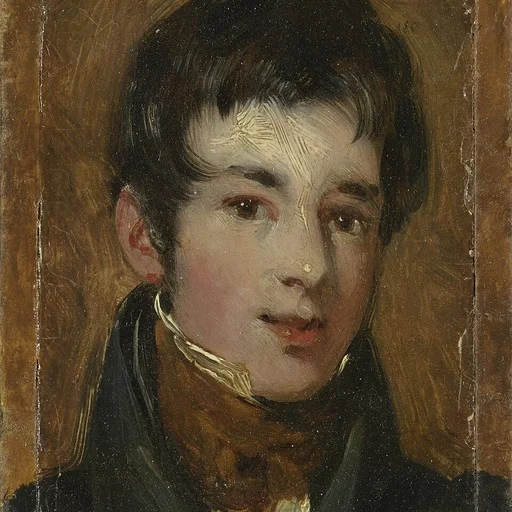
James Holland (18 October 1799 – 12 February 1870) was an English painter of flowers, landscapes, architecture, marine subjects, and a book illustrator.