Artwork
Mountain Scenery
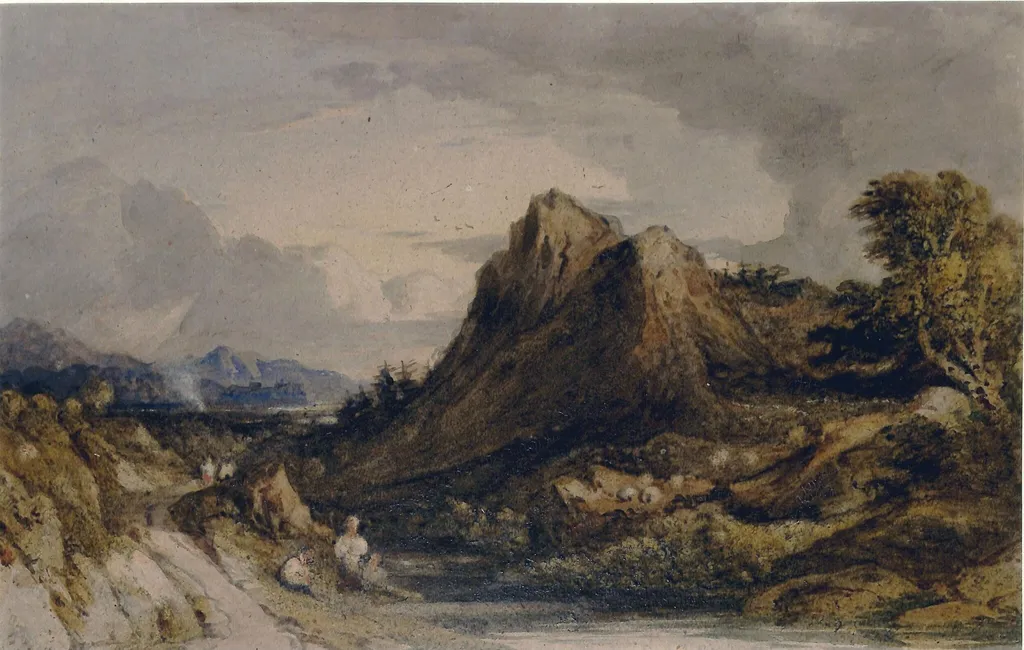
Mountain Scenery is a watercolor work on paper by the Romanticist artist John Varley. It dates from 1800 and is held in the collection of the Victoria and Albert Museum.
About this work
Overview
Varley, known for his innovative approach to the medium, captured the raw energy of the wilderness with fluid brushwork and restrained tonality.
Created in 1800 by English artist John Varley, *Mountain Scenery* is a watercolour depicting a dramatic natural landscape. Varley, known for his innovative approach to the medium, captured the raw energy of the wilderness with fluid brushwork and restrained tonality. The work reflects his deep engagement with landscape as a subject and his role in advancing watercolour as a serious artistic form during the early 19th century.
Subject & Meaning
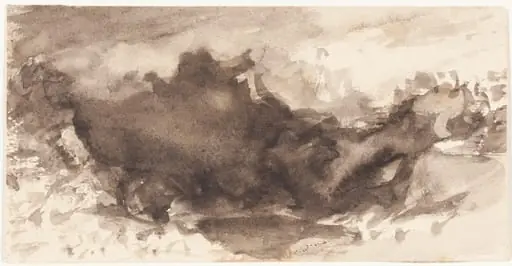
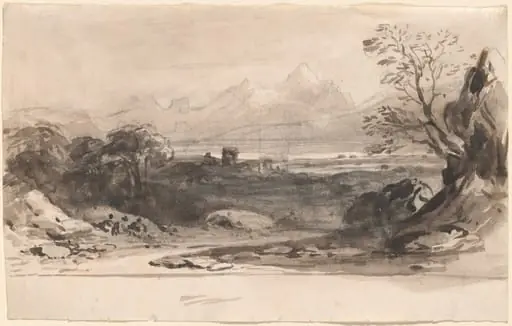
The painting presents a rugged mountain range under a turbulent sky, with scattered figures and trees suggesting human or animal presence in a vast, untamed environment. The contrast between the storm-lit clouds and patches of pale light evokes a sense of nature’s power and mystery. Rather than idealizing the scene, Varley emphasizes its wildness, aligning with emerging Romantic sensibilities that valued emotional response to the sublime in nature.
Technique & Style
Varley employed loose, rapid brushstrokes to convey motion in the clouds and atmospheric shifts, allowing the paper’s texture to contribute to the effect. His palette is dominated by muted earth tones—ochres, browns, and greys—with subtle hints of blue in the sky. The watercolour medium enabled him to build layered washes that suggest depth and weather without heavy detail, emphasizing mood over precision.
History & Provenance
The painting has remained within institutional collections since its creation and is now held by the Victoria and Albert Museum in London. While its early ownership is undocumented, its inclusion in the museum’s holdings reflects its significance in the history of British watercolour. Varley’s reputation as a teacher and member of the Watercolour Society helped secure the preservation of his works in public collections.
Context
In the early 1800s, British artists were redefining landscape painting through direct observation and emotional expression. Varley, alongside figures like Turner and Blake, moved away from classical composition toward more personal, atmospheric interpretations. His friendships with contemporaries and his interest in the occult informed a broader cultural shift toward exploring nature as both physical and metaphysical.
Legacy
Varley’s approach to watercolour influenced later generations of British landscape artists by demonstrating the medium’s capacity for expressive depth. His emphasis on spontaneity and atmospheric effect helped legitimize watercolour beyond mere sketching. Though less celebrated than some peers, his work remains a key reference in the evolution of 19th-century British art and the Romantic tradition.
Own this work as a print
Artist & collection
Artist
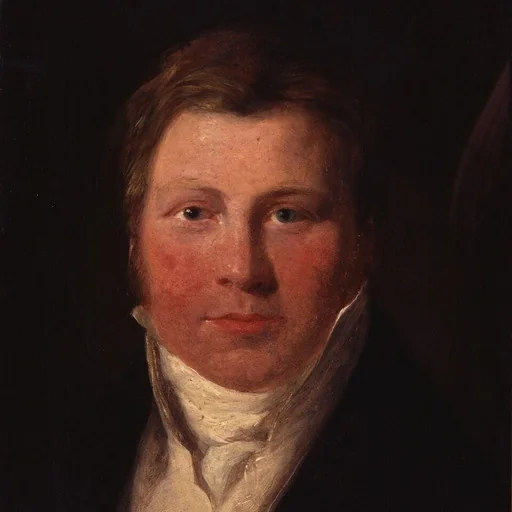
John Varley (17 August 1778 – 17 November 1842) was an English watercolour painter and astrologer, and a close friend of William Blake.

![Study of a Head in Profile [verso], by John Varley](https://artifactworldgallery.com/img/john-varley--study-of-a-head-in-profile-verso--3e16e84b6ceccae1-w320.webp)
![Two Studies of a Figure Holding a Basket [verso], by John Varley](https://artifactworldgallery.com/img/john-varley--two-studies-of-a-figure-holding-a-basket-verso--7e8aaeb3f643e9b3-w320.webp)
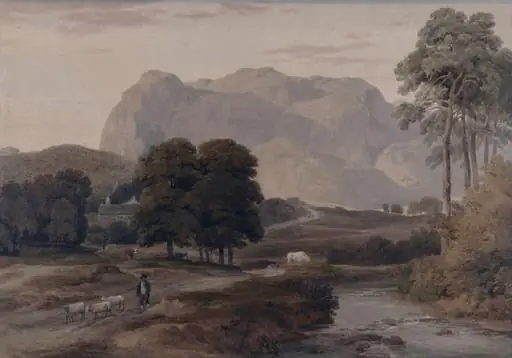 Landscape with Mountains
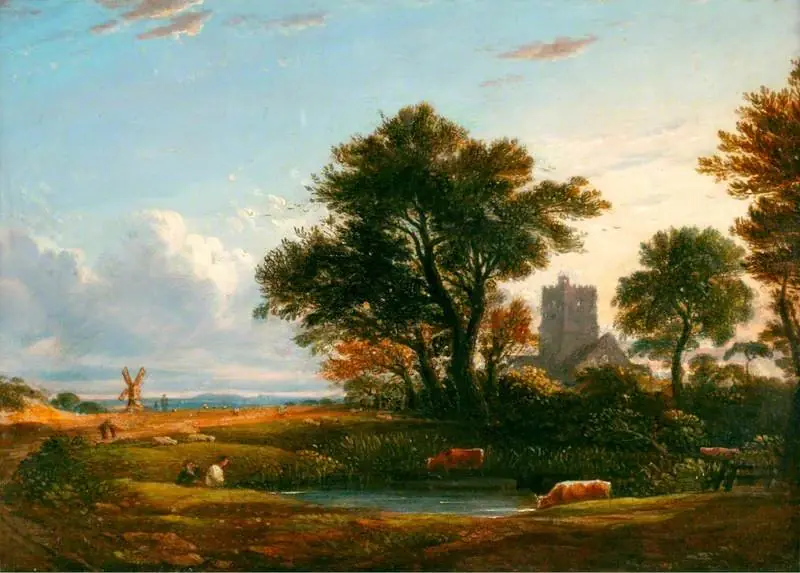
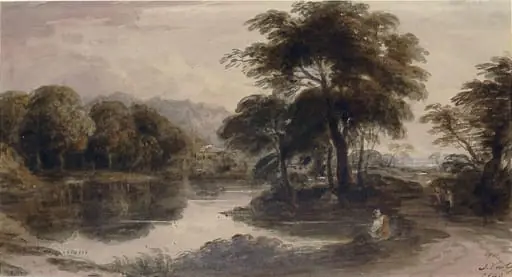 Landscape with pond
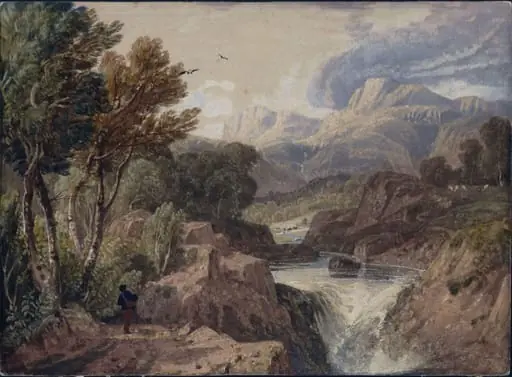 Landscape
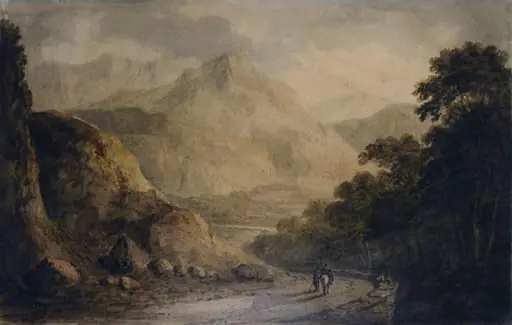 Road leading to Pont Aberglaslyn: View looking into the Vale of Festiniog, North Wales
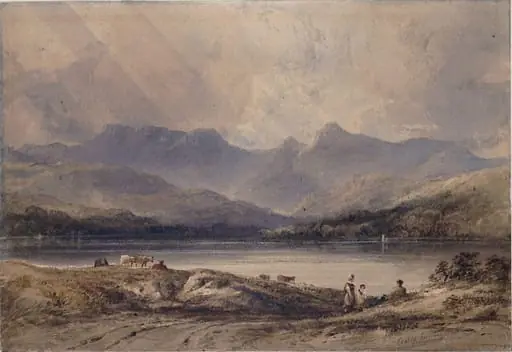 Langdale peaks from Windermere
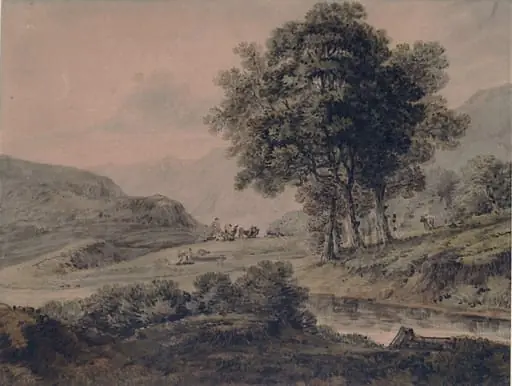 Landscape with stream, cattle and figures
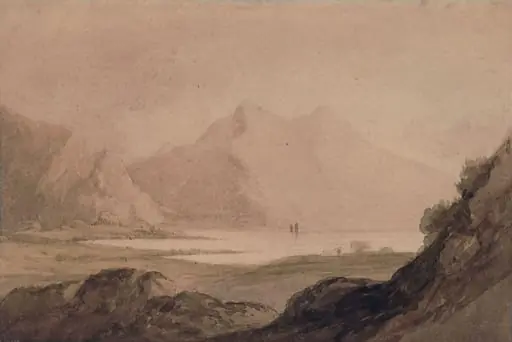 Snowdon with Llanberis Lake
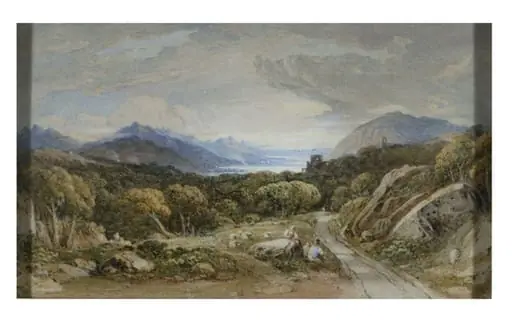 Mountain Landscape
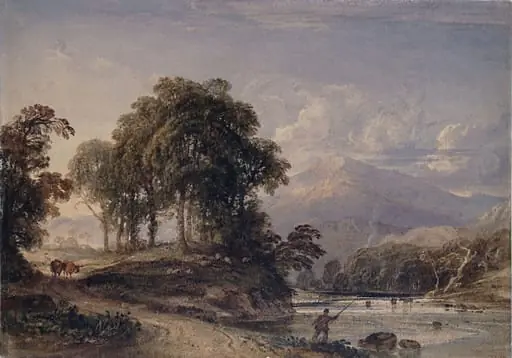 Moel Hebog, looking down the vale from Dinas Emrys, near Beddgelert
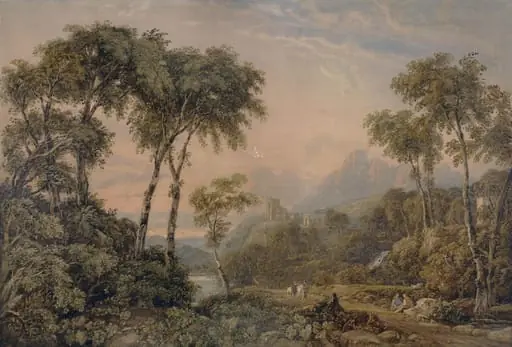 Landscape with Ruined Temple: Sunrise
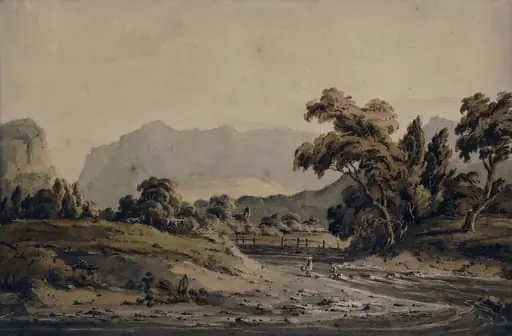 Rydal Head, Ambleside, Westmorland
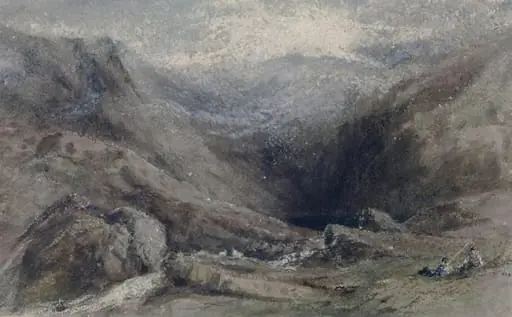 Helvellyn