Artwork
Grover Cleveland [recto]
![Grover Cleveland [recto], by Eastman Johnson, graphite, 1865](https://artifactworldgallery.com/img/eastman-johnson--grover-cleveland-recto--5212e90a5525b485-w1024.webp)
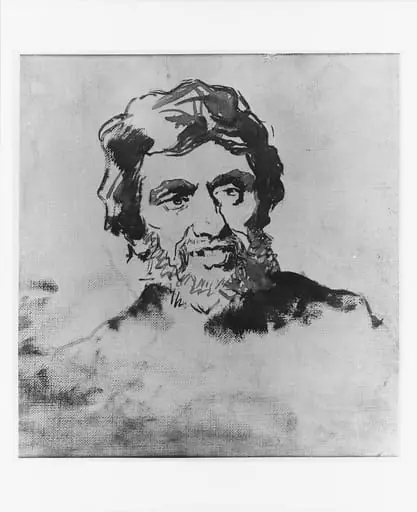
Grover Cleveland [recto] is a graphite drawing by the Romanticist artist Eastman Johnson. It dates from 1865 and is held in the collection of the National Gallery of Art.
About this work
Overview
Eastman Johnson’s drawing titled Grover Cleveland (recto) was executed in 1865. Rendered in graphite and black crayon on a light‑brown paperboard, the work presents a quick, informal portrait of a man in profile, his gaze directed downward. The sketch remains unfinished, its loose lines and modest shading suggesting facial features such as wrinkles and a beard.
Subject & Meaning
The figure depicted is a likeness of Grover Cleveland, who would later become the twenty‑second President of the United States. The downward look and subdued expression convey a contemplative mood, perhaps reflecting the subject’s private demeanor before his public career fully unfolded.
Technique & Style
Johnson employs a limited palette of graphite and black crayon, allowing for stark contrasts and swift gestural marks. The drawing’s surface shows a rough texture, with the artist’s hand evident in the rapid, unrefined strokes that outline facial contours and suggest shading without detailed modeling.
History & Provenance
Created in the immediate aftermath of the Civil War, the sketch is an early example of Johnson’s interest in contemporary figures. A small etched mark in the upper‑right corner, possibly a stamp or a faint signature, identifies the work, though its later ownership trail remains undocumented.
Artist & collection
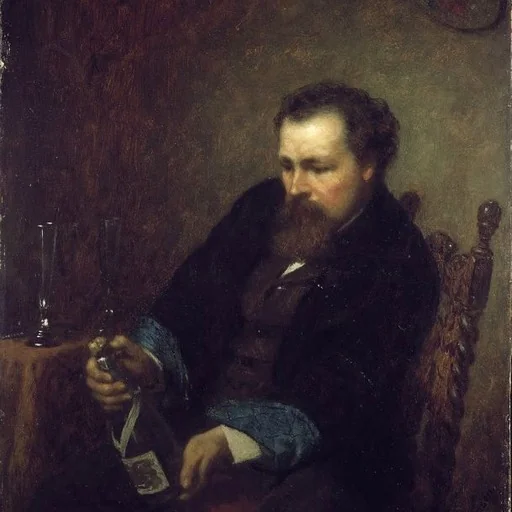
Artist
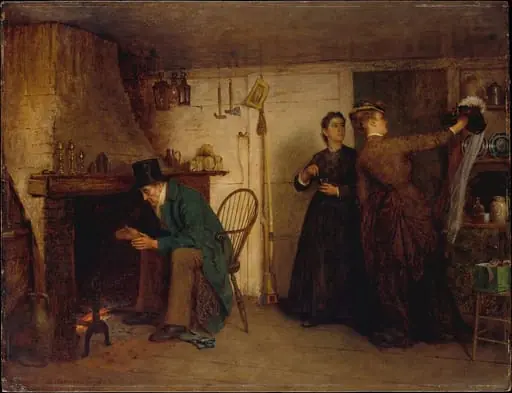
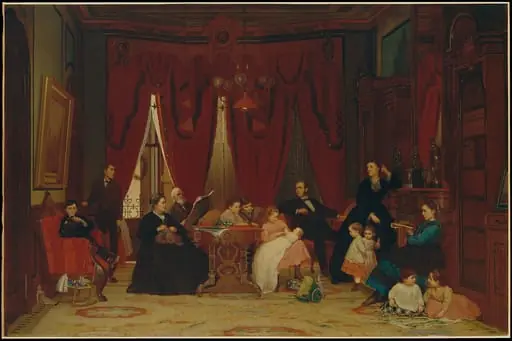
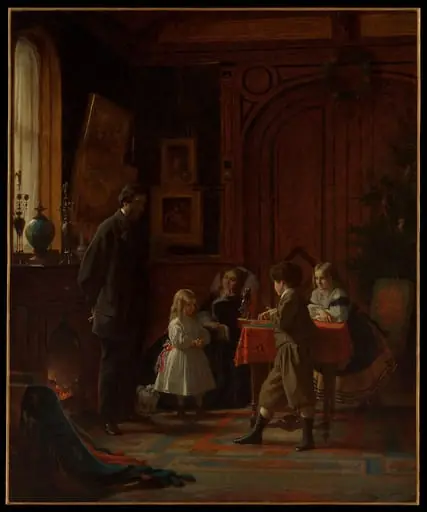
Jonathan Eastman Johnson (July 29, 1824 – April 5, 1906) was an American painter and co-founder of the Metropolitan Museum of Art, New York City, with his name inscribed at its entrance.

![GW. [Sir John Gardner Wilkinson], by Godfrey Thomas Vigne](https://artifactworldgallery.com/img/godfrey-thomas-vigne--gw-sir-john-gardner-wilkinson--64a60946dbe35509-w320.webp)
![Grover Cleveland [verso], by Eastman Johnson](https://artifactworldgallery.com/img/eastman-johnson--grover-cleveland-verso--d6ca9e9f025d6cbf-w320.webp)