Artwork
GW. [Sir John Gardner Wilkinson]
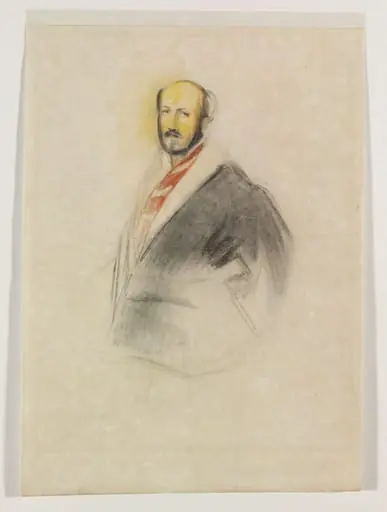
![GW. [Sir John Gardner Wilkinson], by Godfrey Thomas Vigne, watercolor, 1844](https://artifactworldgallery.com/img/godfrey-thomas-vigne--gw-sir-john-gardner-wilkinson--64a60946dbe35509-w1024.webp)
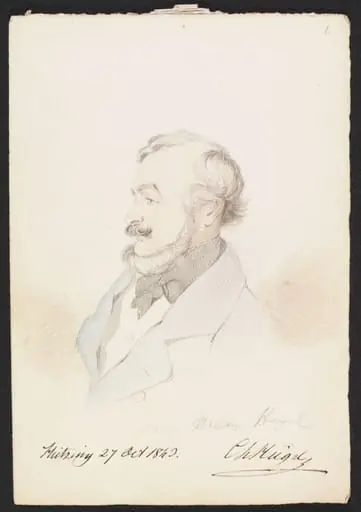
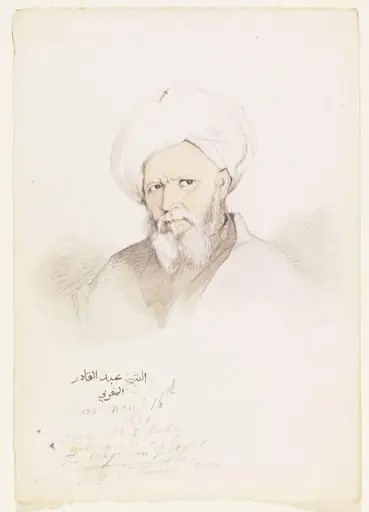
GW. [Sir John Gardner Wilkinson] is a watercolor work on paper by the British Romanticist artist Godfrey Thomas Vigne. It dates from 1844 and is held in the collection of the Victoria and Albert Museum. A delicate watercolour portrait from 1844 captures Sir John Gardner Wilkinson, a British Egyptologist and traveler.
About this work
This is a quick, sketchy watercolor portrait of a man with a thick mustache and a high collar.
This is a quick, sketchy watercolor portrait of a man with a thick mustache and a high collar. His face is turned slightly to the side, and the drawing is done in soft gray tones. The background is plain white paper, with some faint handwriting at the bottom.
The signature and date (1844) suggest this was made over 180 years ago. The artist’s name, Vigne, is written in the corner.
Look up Vigne, Godfrey Thomas (FRGS) to see more of his work.
Overview
A delicate watercolour portrait from 1844 captures Sir John Gardner Wilkinson, a British Egyptologist and traveler. Executed by Godfrey Thomas Vigne, the work is a modest, informal study rendered in muted gray tones. The subject is depicted in profile, with attention to his distinctive facial features and high collar. The plain background and faint script at the base suggest it was made as a personal record rather than a formal commission.
Subject & Meaning
Sir John Gardner Wilkinson was a pioneering scholar of ancient Egyptian society, best known for his detailed documentation of its daily life. This portrait coincides with his later travels in the Balkans, reflecting his broader interest in cultural observation. The image serves as a quiet testament to his dual identity as both field researcher and subject of scholarly record, capturing him at a transitional point in his career.
Technique & Style
Vigne employed loose, fluid watercolour strokes to suggest form without heavy detail. The palette is restrained, relying on subtle gradations of gray to define the face and clothing. The sketch-like quality implies immediacy, possibly completed during a brief encounter. The signature and date are lightly inscribed, consistent with the informal nature of the work, emphasizing function over ornamentation.
History & Provenance
The portrait entered the collection in the late 1970s through Frank Vigne, the artist’s great-nephew, acquired from a private dealer in Monmouth. Its prior ownership history is not fully documented, but its survival suggests it remained within the artist’s family circle. The work’s modest scale and unassuming presentation indicate it was likely kept as a personal memento rather than displayed publicly.
Context
In 1844, Wilkinson was returning from a survey of Montenegro, Bosnia, and Herzegovina, a project that expanded his ethnographic interests beyond Egypt. Vigne, a fellow traveler and artist, often documented figures encountered on such expeditions. This portrait reflects a broader 19th-century trend of scholars being visually recorded by companions, blending scientific curiosity with personal documentation.
Legacy
Though not widely exhibited, the portrait preserves a tangible link to Wilkinson’s scholarly life and Vigne’s role as a visual chronicler of 19th-century explorers. It contributes to the visual archive of early Egyptology and Balkan ethnography, offering insight into the personal dimensions of academic travel during an era of expanding global inquiry.
Artist & collection


![CJB. [Charles John Barnet], by Godfrey Thomas Vigne](https://artifactworldgallery.com/img/godfrey-thomas-vigne--cjb-charles-john-barnet--bae01afe8359ebfd-w320.webp)