Artwork
Grover Cleveland [verso]
![Grover Cleveland [verso], by Eastman Johnson, graphite, 1865](https://artifactworldgallery.com/img/eastman-johnson--grover-cleveland-verso--d6ca9e9f025d6cbf-w1024.webp)
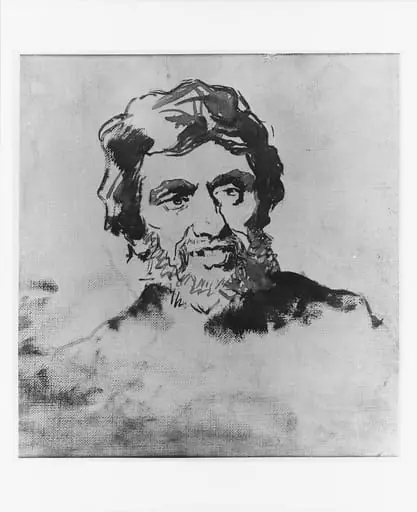
Grover Cleveland [verso] is a graphite drawing by the Romanticist artist Eastman Johnson. It dates from 1865 and is held in the collection of the National Gallery of Art.
About this work
Overview
Eastman Johnson’s graphite drawing, dated 1865, presents a head-and-shoulders portrait of a man identified as Grover Cleveland. Executed on paperboard, the work consists of a single-sided sketch rendered in pencil, with the subject gazing directly forward. The image captures a brief moment of observation rather than a polished, finished portrait.
Subject & Meaning
The figure depicted is the future U.S. president Grover Cleveland, recognizable by his moustache and formal attire. The straightforward pose and direct gaze suggest an intent to record the individual’s likeness for reference, reflecting a practical approach to portraiture common among artists who needed reliable studies for later, more elaborate compositions.
Technique & Style
Johnson employed graphite on paperboard, allowing for swift, gestural lines that convey the basic contours of the face and shoulders. The drawing is marked by visible lead strokes and occasional smudges, indicating a rapid execution. The lack of shading or tonal modeling points to a preparatory study rather than a finished artwork.
History & Provenance
Created in the year of the Civil War’s conclusion, the sketch belongs to Johnson’s early career before he achieved broader recognition for genre scenes. Its identification as a portrait of Cleveland links it to the political climate of the era, though the work has remained a modest study within the artist’s oeuvre, passing through private collections before entering its present holding.
Artist & collection
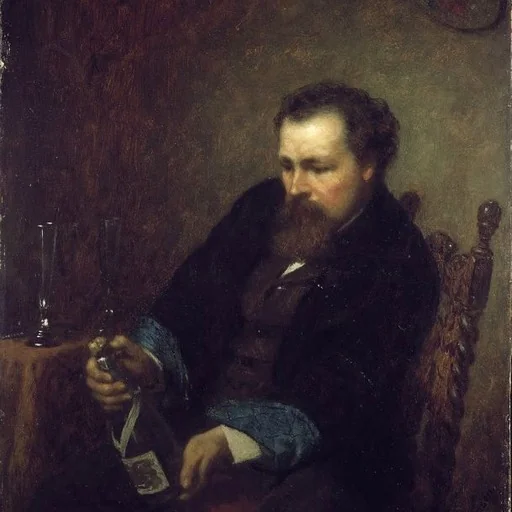
Artist
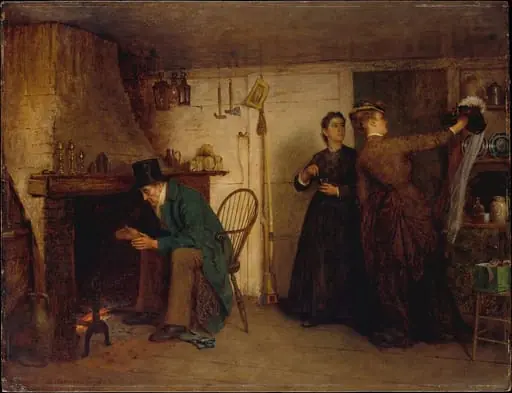
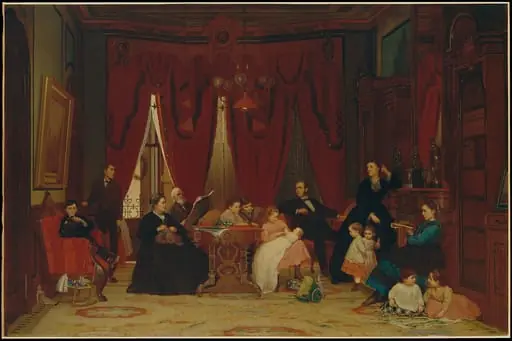
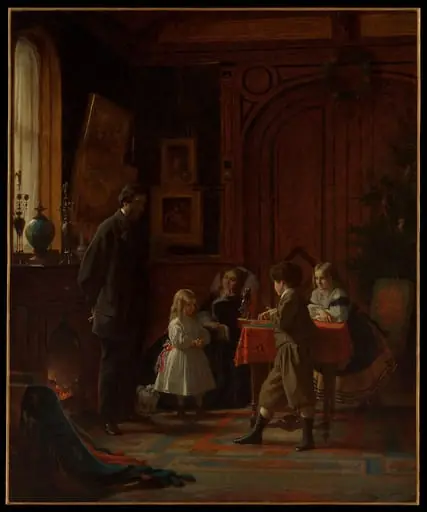
Jonathan Eastman Johnson (July 29, 1824 – April 5, 1906) was an American painter and co-founder of the Metropolitan Museum of Art, New York City, with his name inscribed at its entrance.

![GW. [Sir John Gardner Wilkinson], by Godfrey Thomas Vigne](https://artifactworldgallery.com/img/godfrey-thomas-vigne--gw-sir-john-gardner-wilkinson--64a60946dbe35509-w320.webp)
![Grover Cleveland [recto], by Eastman Johnson](https://artifactworldgallery.com/img/eastman-johnson--grover-cleveland-recto--5212e90a5525b485-w320.webp)