Artwork
Moreton Old (or Little) Hall, (The Front)
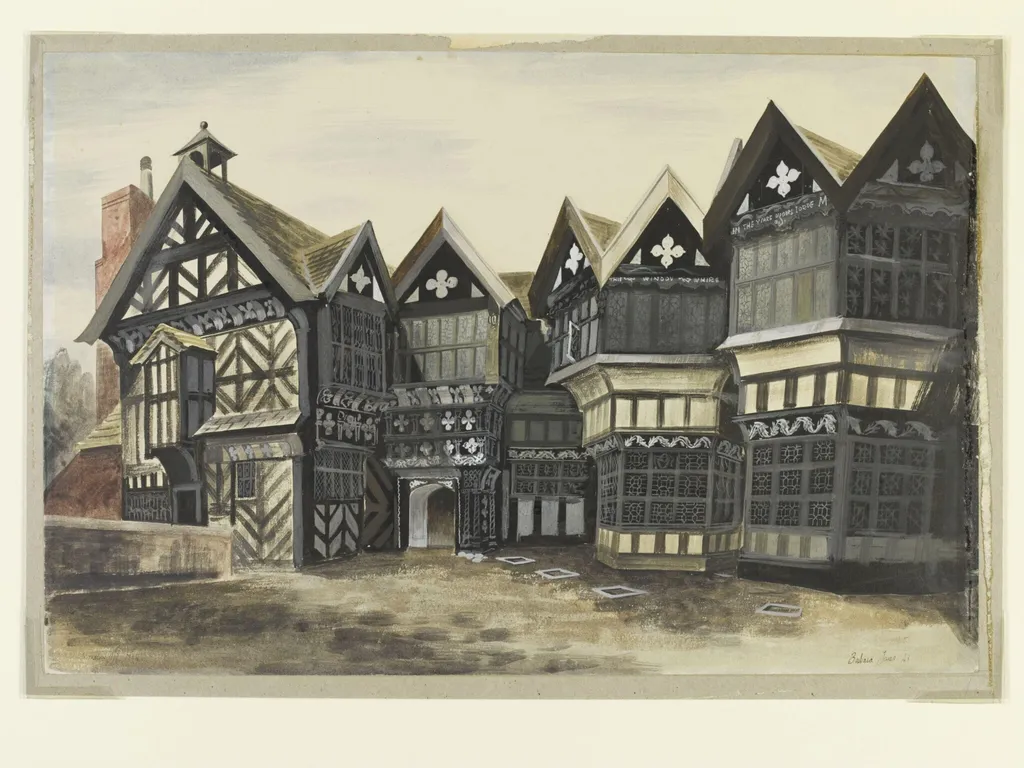
Moreton Old (or Little) Hall, (The Front) is a watercolor work on paper by Barbara Jones. It dates from 1943 and is held in the collection of the Victoria and Albert Museum. This 1943 watercolour by an unnamed artist captures the front facade of Little Moreton Hall, a 16th-century timber-framed manor in Cheshire.
About this work
Overview
This 1943 watercolour by an unnamed artist captures the front facade of Little Moreton Hall, a 16th-century timber-framed manor in Cheshire.
This 1943 watercolour by an unnamed artist captures the front facade of Little Moreton Hall, a 16th-century timber-framed manor in Cheshire. Created under the Recording Britain initiative, the work is one of over 1,500 topographical studies commissioned during World War II to visually archive at-risk architectural heritage. The piece is signed and dated, reflecting its role as a deliberate historical record rather than a purely expressive work.
Subject & Meaning
Little Moreton Hall, an Elizabethan country house known for its intricate black-and-white timbering, represents a vanishing strand of English vernacular architecture. The painting emphasizes its ornate gables, clustered windows, and carved woodwork, highlighting craftsmanship that industrialization and wartime destruction threatened to erase. The choice of subject underscores the project’s aim to preserve visual memory of structures tied to national identity.
Technique & Style
Executed in watercolour, the work employs soft washes and delicate linework to render the building’s textured surfaces. The medium’s transparency allows underlying layers to suggest age and weathering, while precise detailing in the timber joints and decorative carvings conveys structural complexity. The subdued palette and gentle gradations avoid dramatic contrast, favoring quiet observation over emotional emphasis.
History & Provenance
Commissioned by the Pilgrim Trust under the direction of Sir Kenneth Clark, this painting was part of the Recording Britain project (1940–1943), which employed 97 artists to document landscapes and buildings vulnerable to wartime damage or urban renewal. The work entered the Victoria and Albert Museum’s collection alongside other project pieces, where it remains accessible as a historical archive of pre-war English architecture.
Context
During the early 1940s, Britain faced widespread destruction from aerial bombing and rapid modernization. The Recording Britain initiative emerged as a cultural response, seeking to safeguard visual records of rural and historic sites before they disappeared. Artists were sent across the country to produce accurate, unembellished depictions, turning topography into an act of preservation.
Legacy
The Recording Britain collection endures as a vital resource for architectural historians and conservators. This watercolour, like others in the series, provides a baseline for understanding the condition of heritage buildings mid-20th century. Its quiet precision continues to inform restoration efforts and public awareness of England’s architectural past, long after the war ended.
Artist & collection
Artist
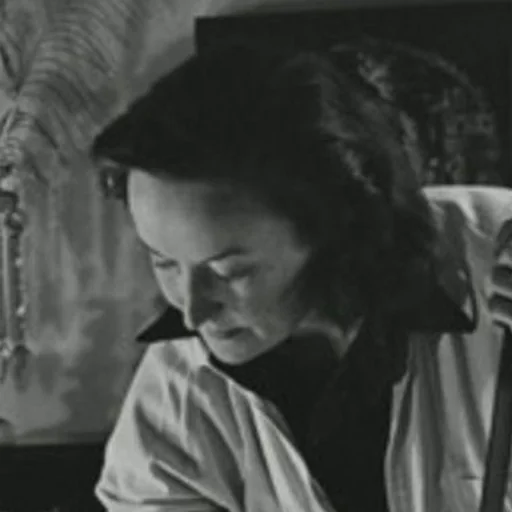
Barbara Mildred Jones (25 December 1912 – 28 August 1978) was an English artist, writer and mural painter. She is known for curating the exhibition Black Eyes and Lemonade (1951) and her book The Unsophisticated Arts (1951).

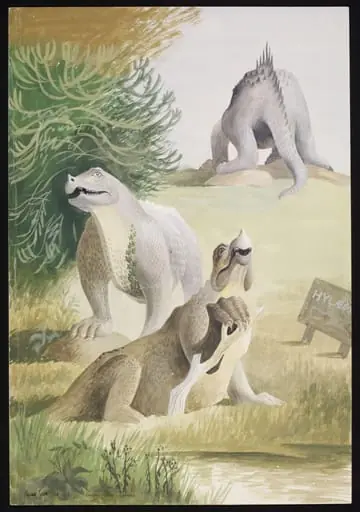 Crystal Palace Gardens, Sydenham, Kent
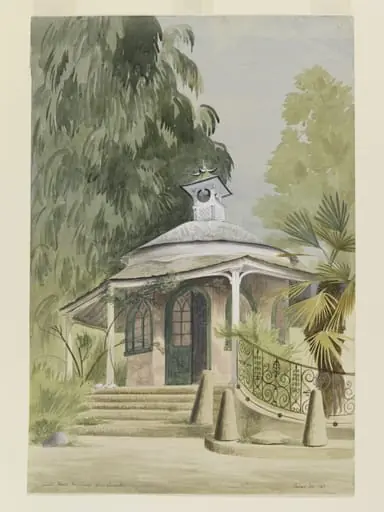 Summer House, Marlborough House, Falmouth
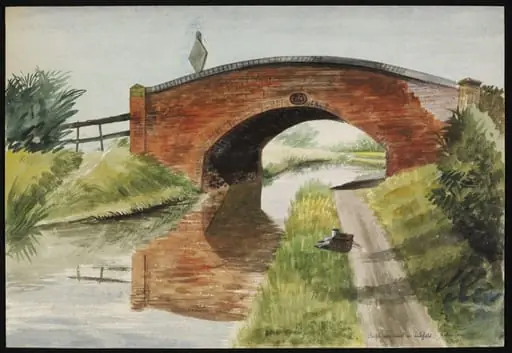 Bridge over Canal, near Litchfield
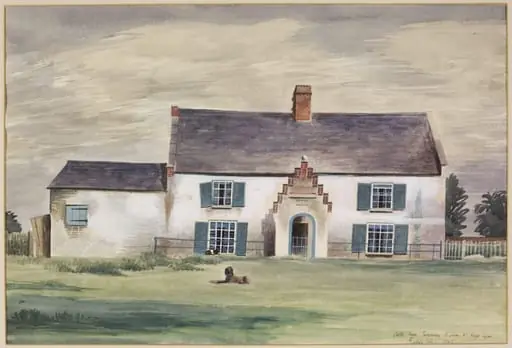 Castle Farm, Terrington St John, near King's Lynn
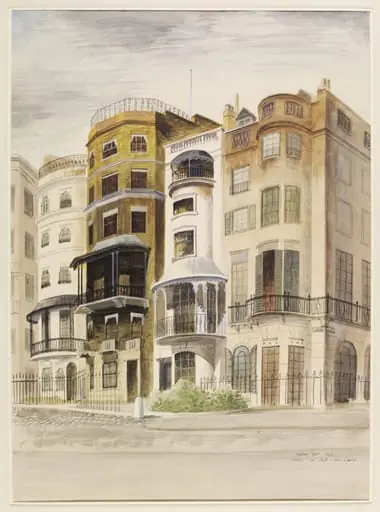 93 to 97 Park Lane, W.1.
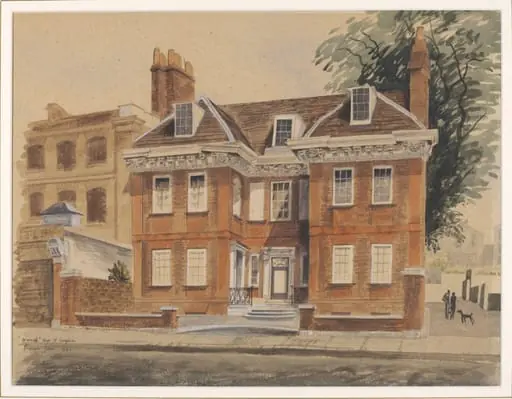 "Wrencote," High Street, Croydon
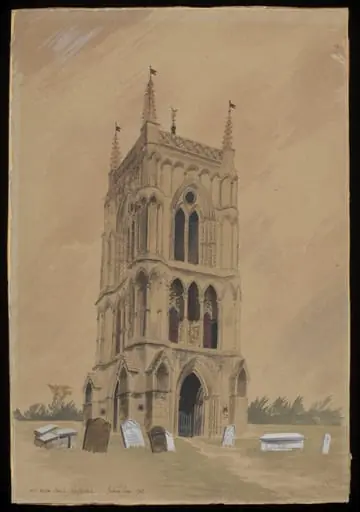 The bell tower, St. Mary's Church, West Walton near Wisbech
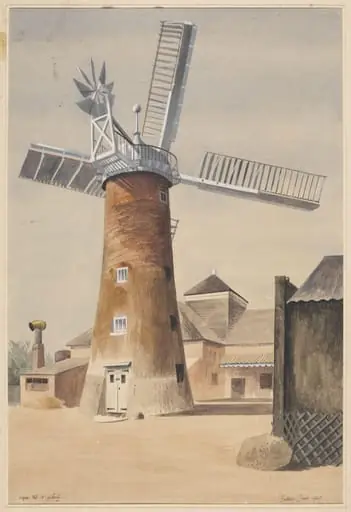 The Mill, Walpole Highway, near Wisbech
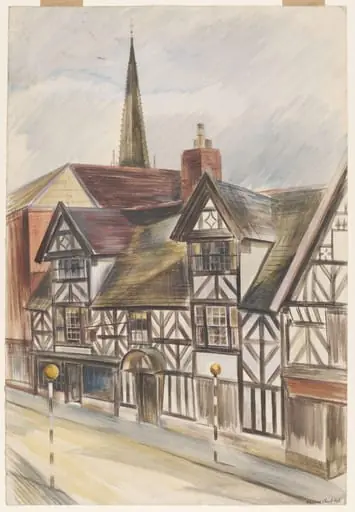 Old Houses, Cheadle
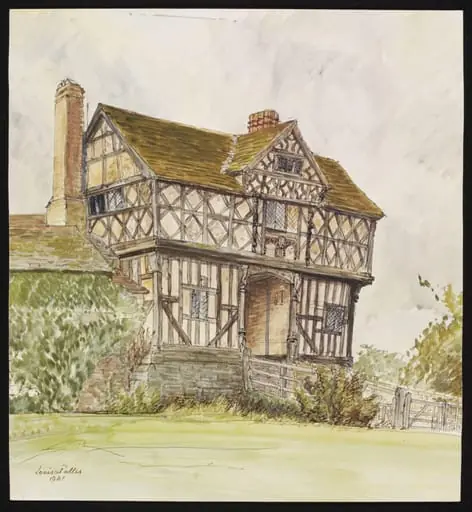 Elizabethan Gatehouse, Stokesay
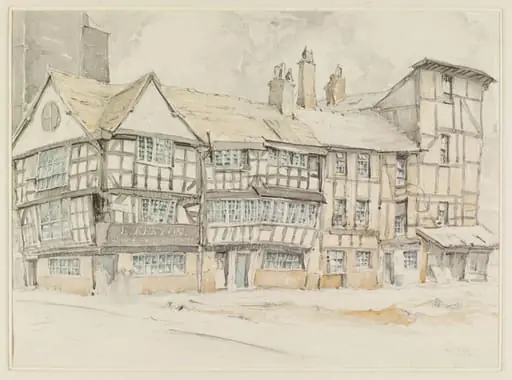 The Old Shambles, Manchester, Lancashire
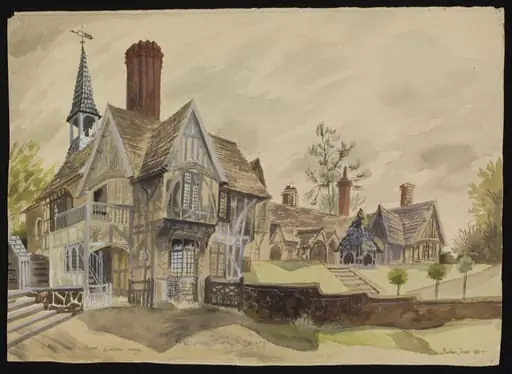 St. Mary's Homes and Chapel, Godstone
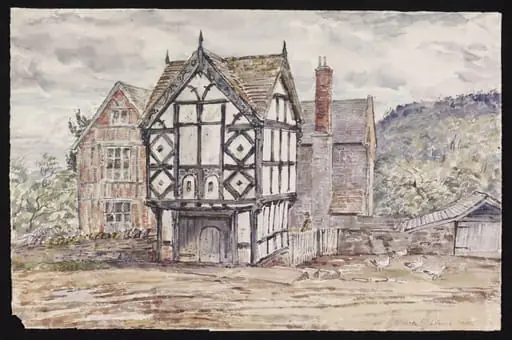 Farm and Falconry, The Buttas, Canon Pyon
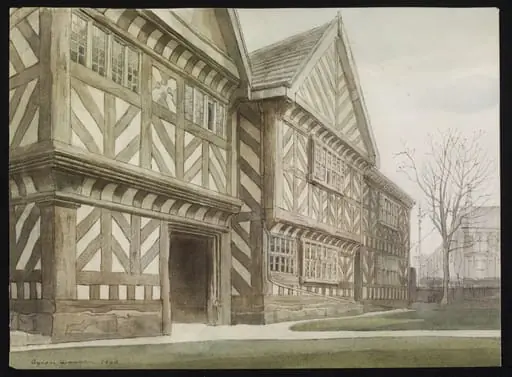 Slade Hall, Manchester
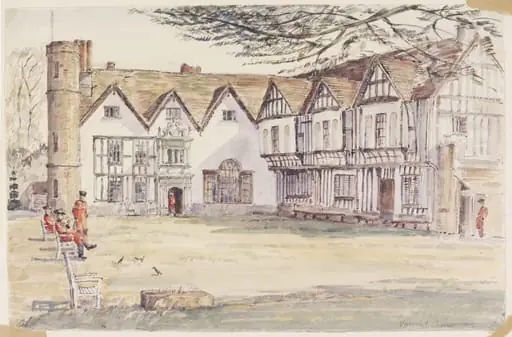 Rudhall, near Ross-on-Wye
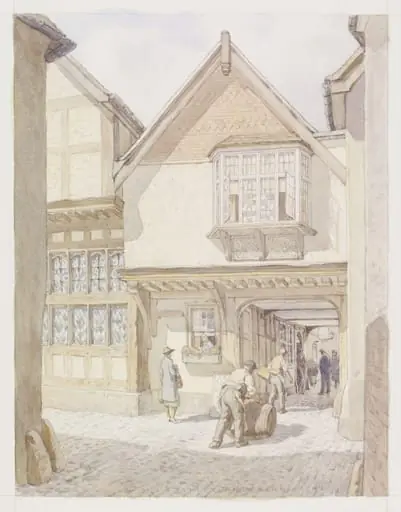 "Ye Old King's Head", Aylesbury
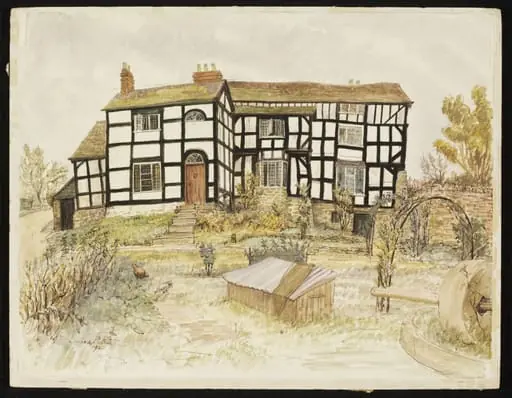 Paytoe Hall, Leintwardine
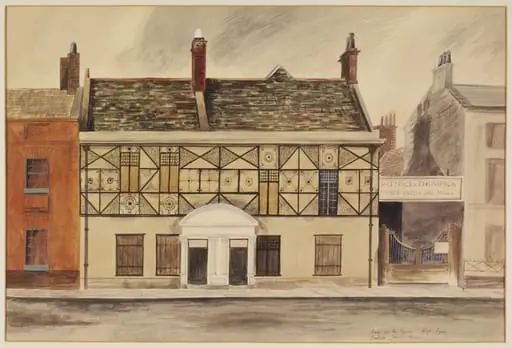 House on the Square, King's Lynn