Artwork
Crystal Palace Gardens, Sydenham, Kent
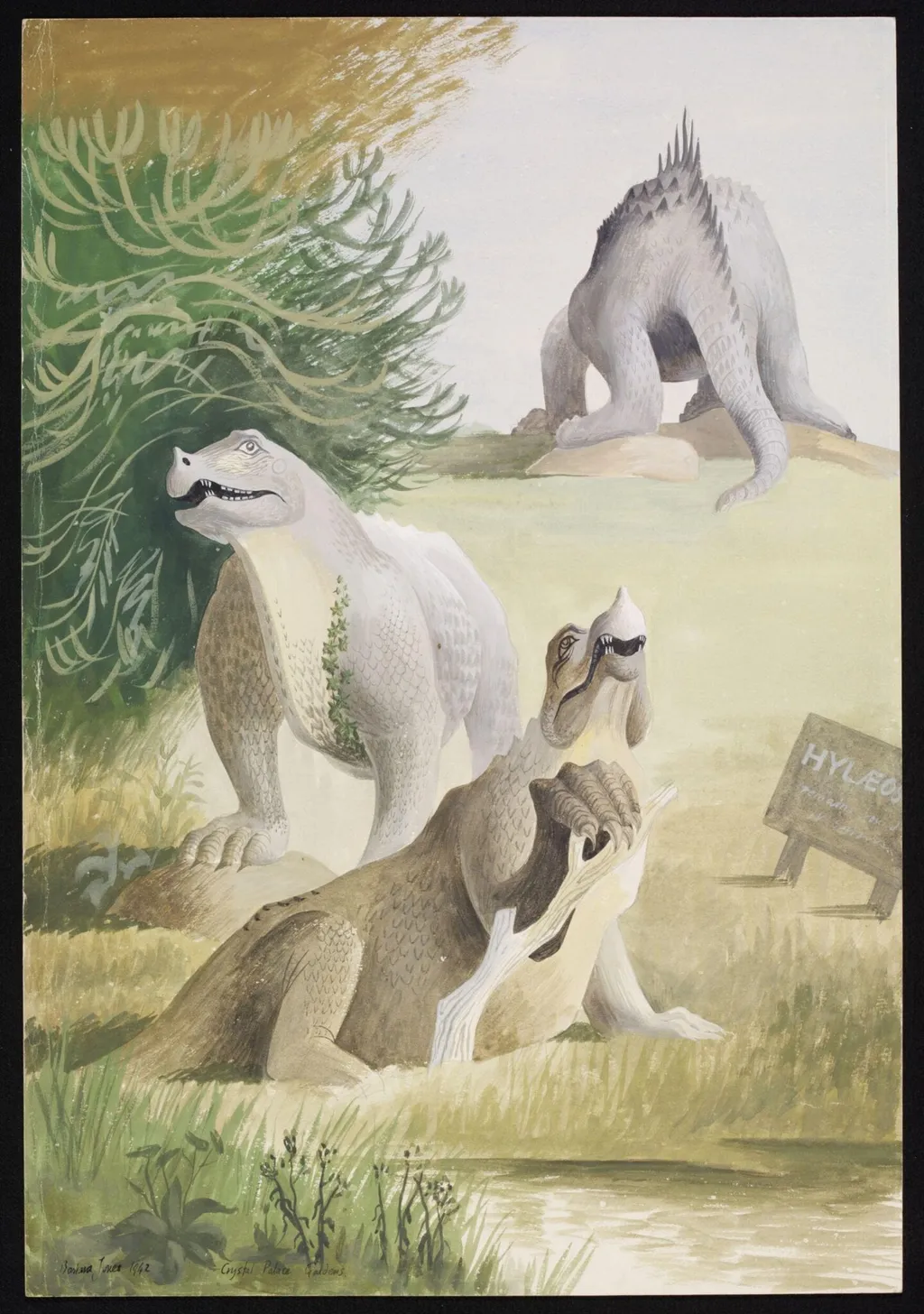
Crystal Palace Gardens, Sydenham, Kent is a watercolor work on paper by the Impressionist artist Barbara Jones. It dates from 1942 and is held in the collection of the Victoria and Albert Museum.
About this work
Overview
Created as part of the Recording Britain project, the work captures a quiet, everyday scene amid wartime uncertainty.
This 1942 watercolour by Barbara Jones depicts the dinosaur sculptures at Crystal Palace Park in Sydenham, Kent. Created as part of the Recording Britain project, the work captures a quiet, everyday scene amid wartime uncertainty. The piece reflects a broader effort to preserve visual records of British cultural landmarks considered vulnerable during the conflict, using topographical precision and subtle observation.
Subject & Meaning
The three fossil-inspired sculptures, rendered in muted greys and whites, stand amid overgrown vegetation, their presence both curious and slightly forlorn. One raises its head toward a tree, suggesting a moment of stillness amid neglect. The faintly legible sign 'HYLEOS' anchors the scene in its historical context, referencing the park’s 19th-century scientific ambitions. The work quietly evokes the passage of time and the fading relevance of once-celebrated displays.
Technique & Style
Jones employed transparent watercolour washes to suggest soft light and atmospheric depth, with delicate brushwork defining the grasses, foliage, and distant water. The dinosaurs are rendered with restrained detail, their forms emerging through subtle tonal shifts rather than bold outlines. The cloudy sky and pale ground create a muted palette, reinforcing the painting’s contemplative tone and aligning with the Recording Britain project’s emphasis on understated realism.
History & Provenance
Commissioned by the Recording Britain project, this watercolour was produced between 1940 and 1943 under the direction of Sir Kenneth Clark and funded by the Pilgrim Trust. It entered the Victoria and Albert Museum’s collection as part of the project’s archive, which amassed over 1,500 works by 97 artists. The piece remains a documented artifact of Britain’s wartime cultural preservation efforts.
Context
The Crystal Palace dinosaur sculptures, originally installed in 1854, were among the first large-scale reconstructions of prehistoric life. By 1942, they were weathered and largely forgotten, overshadowed by modern scientific understanding. Jones’s depiction captures them not as scientific exhibits but as quiet relics within a changing landscape, reflecting a broader wartime preoccupation with preserving the nation’s layered, often neglected heritage.
Legacy
Barbara Jones’s watercolour contributes to a significant archive of British topographical art from the Second World War. It preserves a specific moment in the life of the Crystal Palace site, before later restoration efforts. The work continues to be studied for its nuanced portrayal of cultural memory, and Jones’s role in the Recording Britain project is now recognized as an important contribution to 20th-century British art documentation.
Artist & collection
Artist
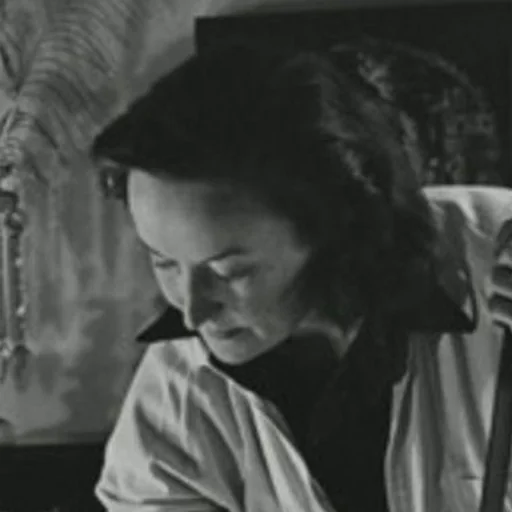
Barbara Mildred Jones (25 December 1912 – 28 August 1978) was an English artist, writer and mural painter. She is known for curating the exhibition Black Eyes and Lemonade (1951) and her book The Unsophisticated Arts (1951).

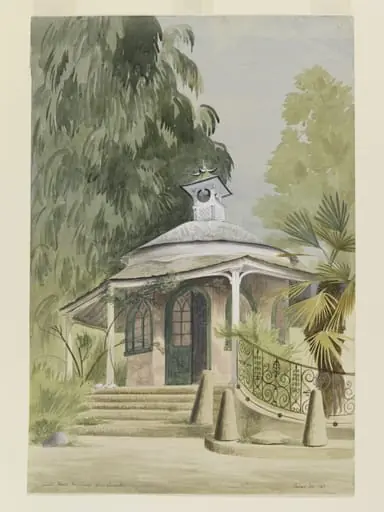 Summer House, Marlborough House, Falmouth
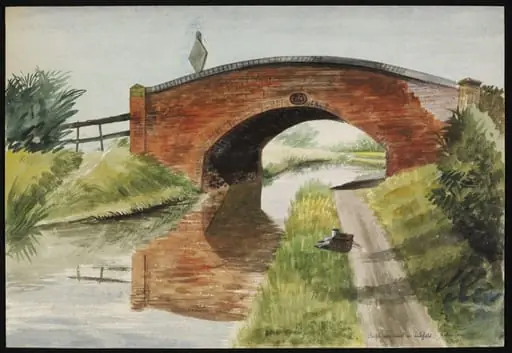 Bridge over Canal, near Litchfield
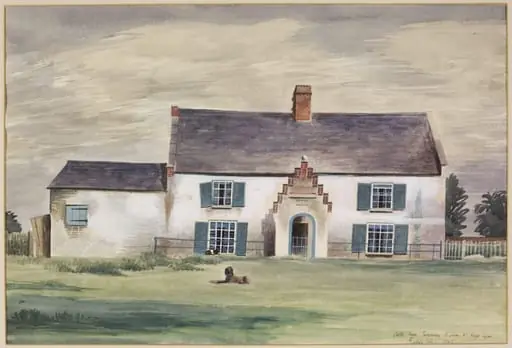 Castle Farm, Terrington St John, near King's Lynn
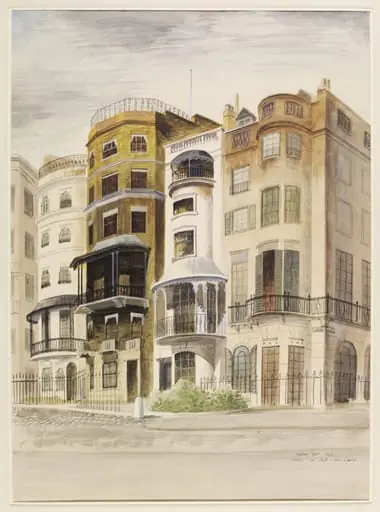 93 to 97 Park Lane, W.1.
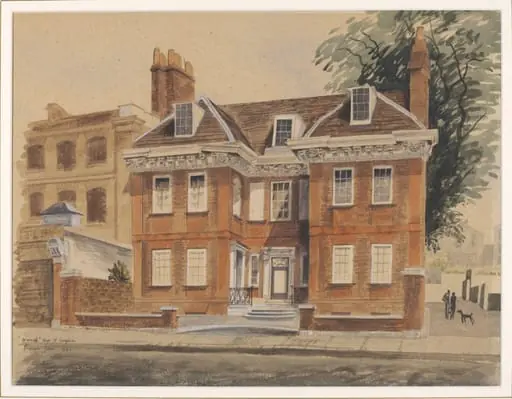 "Wrencote," High Street, Croydon
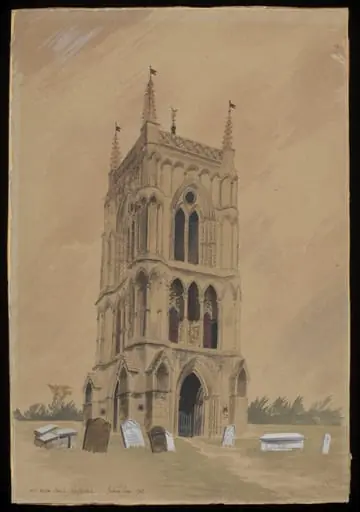 The bell tower, St. Mary's Church, West Walton near Wisbech
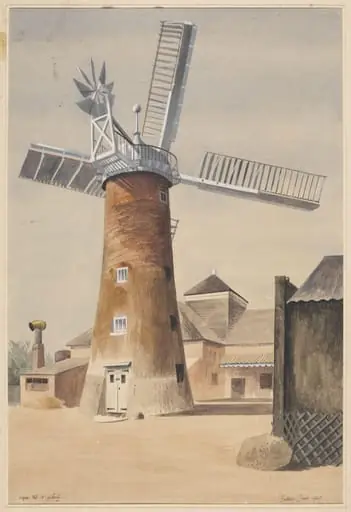 The Mill, Walpole Highway, near Wisbech
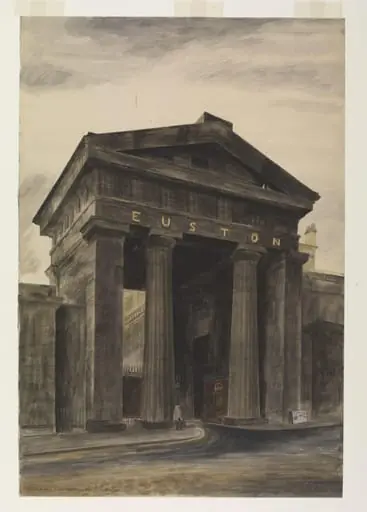 Doric arch, Euston Station, London, NW1