Artwork
H Beard Print Collection
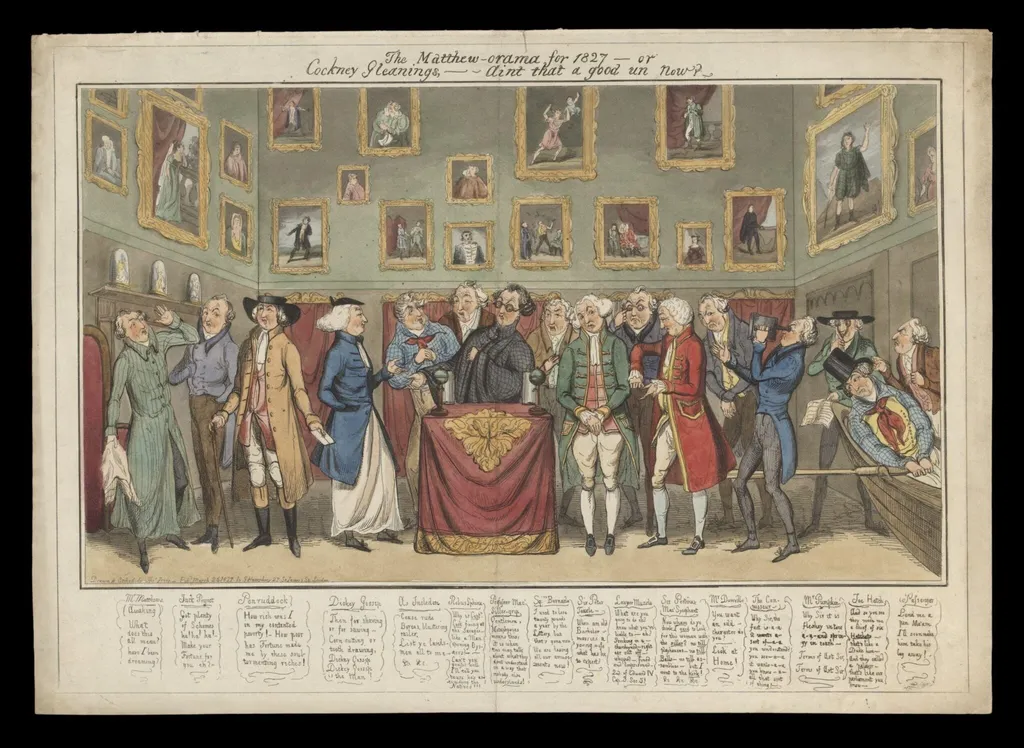
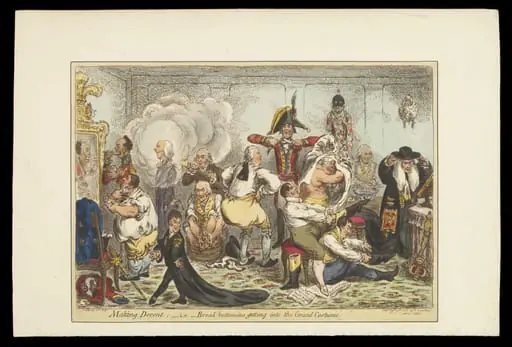
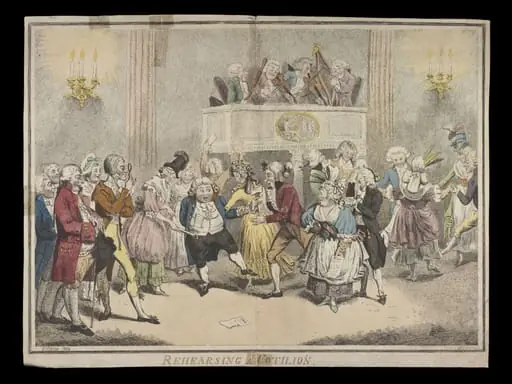
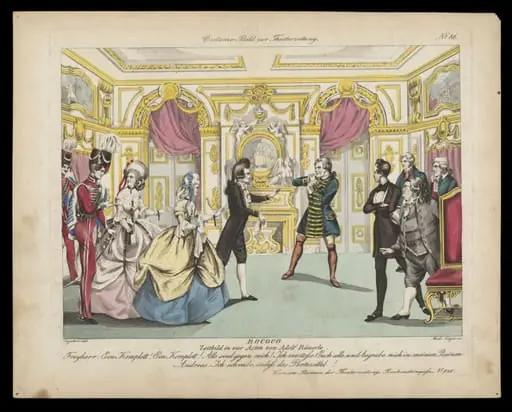
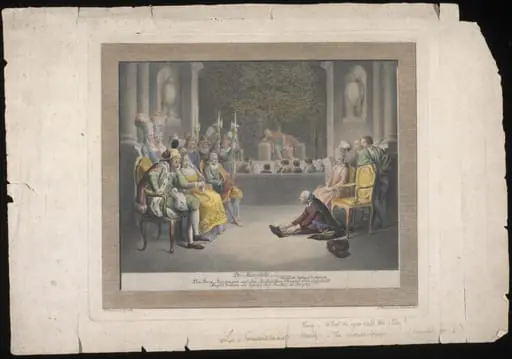
H Beard Print Collection is a print by the Romanticist artist Thomas Jones. It dates from 1827 and is held in the collection of the Victoria and Albert Museum. A satirical print from 1827, published by T.
About this work
Overview
', the work reflects the popularity of his one-man theatrical performances, where he rapidly shifted personas to entertain audiences.
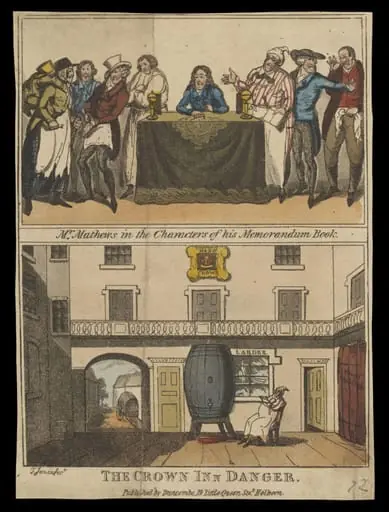
A satirical print from 1827, published by T. McLean, captures the actor Charles Mathews portraying a dozen distinct characters in a single composition. Entitled 'Mathew-orama for 1827, or, Cockney Gleanings, ain't that a good un now?', the work reflects the popularity of his one-man theatrical performances, where he rapidly shifted personas to entertain audiences. The print combines visual detail with textual commentary, typical of popular print culture of the era.
Subject & Meaning
The print showcases Mathews in roles drawn from contemporary comedy and farce, including figures like Sir Peter Teazle and Lawyer Muzzle, all performed by him alone on stage. It celebrates his virtuosity in character transformation and appeals to the public’s fascination with theatrical mimicry. The title’s colloquial tone and exaggerated label 'Mathew-orama' underscore the humorous, self-referential nature of his fame.
Technique & Style
The image is a hand-colored etching, densely packed with small, finely rendered figures and accompanying captions identifying each character. The composition arranges Mathews’ personas in a grid-like formation, allowing viewers to compare their costumes and expressions. The style aligns with British caricature traditions, blending realism with exaggeration to highlight each role’s distinct personality.
History & Provenance
Produced in 1827 by publisher T. McLean, known for theatrical prints, the work was likely sold as a souvenir to fans of Mathews’ performances. It entered the H. Beard Print Collection, a significant archive of 19th-century British theatrical imagery, preserving it as a record of popular entertainment before the rise of photography and recorded media.
Context
During the 1820s, Charles Mathews was renowned for his 'monologues'—one-man shows featuring rapid character switches. This print emerged amid a surge in printed ephemera that documented stage stars, reflecting a growing middle-class interest in theater. Similar prints by artists like Thomas Jones catered to this market, blending portraiture with satire to capture the spirit of the age.
Legacy
The print remains a valuable document of early 19th-century performance culture, illustrating how actors achieved celebrity through visual media. It exemplifies the intersection of theater and print, where ephemeral stage acts were immortalized in paper form. Though Mathews’ specific roles have faded from popular memory, this image preserves the energy and ingenuity of his craft.
Artist & collection