Artwork
H Beard Print Collection
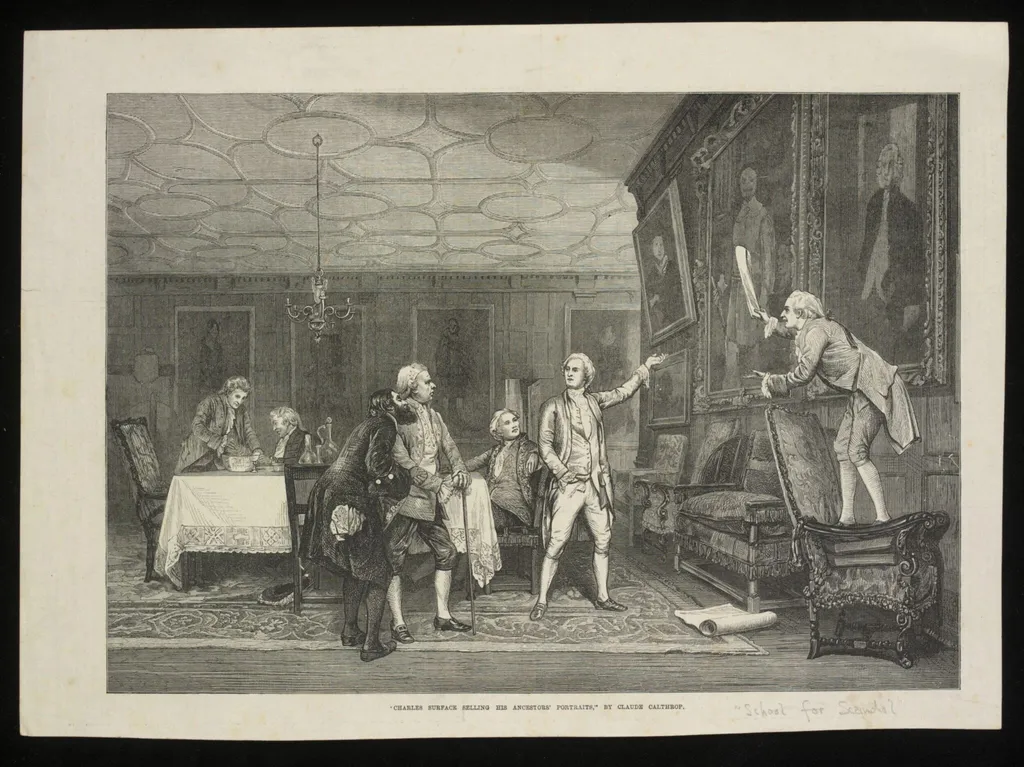
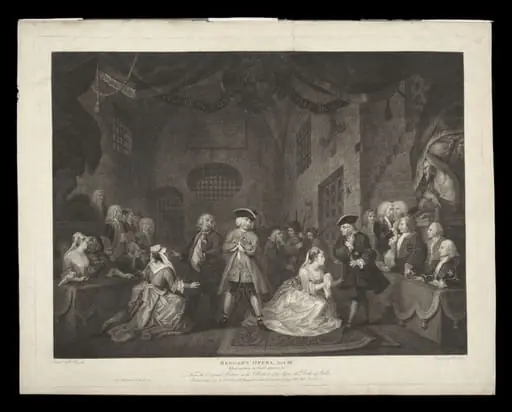
H Beard Print Collection is a print by Claude Calthrop. It dates from 1850 and is held in the collection of the Victoria and Albert Museum.
About this work
Overview
It reproduces a painted scene by Claude Calthrop, reflecting a widespread 18th-century practice of translating theatrical imagery into accessible graphic form.
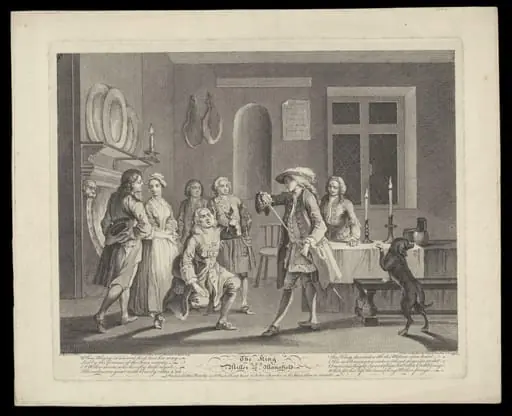
This print captures a pivotal moment from Richard Brinsley Sheridan’s comedy The School for Scandal, rendered as an engraving meant for domestic display. It reproduces a painted scene by Claude Calthrop, reflecting a widespread 18th-century practice of translating theatrical imagery into accessible graphic form. The composition centers on Charles Surface’s public auction of ancestral portraits, a satirical act that underscores themes of moral decay and familial duty.
Subject & Meaning
Charles Surface, impoverished and reckless, auctions off family portraits—including the ancestral tree, used as a makeshift hammer—to settle debts. The buyer, Mr. Premium, is his uncle in disguise, testing Charles’s character. The scene critiques the erosion of inherited values in a mercantile society, where lineage becomes a commodity. The uncle’s concealed identity adds dramatic irony, revealing the tension between appearance and true worth.
Technique & Style
Executed as an engraving, the print employs fine lines and tonal contrasts to convey texture and movement. Figures are rendered with theatrical gestures, emphasizing the scene’s comedic gravity. The composition directs attention to the central act—the hammering of the family tree—while background details suggest a crowded auction room. The style aligns with contemporary printmaking conventions, prioritizing narrative clarity over painterly richness.
History & Provenance
The engraving derives from a painting by Claude Calthrop, created to illustrate Sheridan’s popular play. As a reproductive print, it was produced for the domestic market, allowing middle-class households to own a visual reference to contemporary theater. Such prints were widely circulated before photography, serving as both entertainment and cultural artifacts. The V&A Museum holds examples of similar works from this period.
Context
In late 18th-century Britain, theater-inspired prints were a thriving industry, bridging elite drama and public taste. Sheridan’s play, satirizing gossip and moral hypocrisy, resonated with audiences concerned with social pretense. The print’s circulation reflects how visual culture amplified literary themes, turning stage satire into household imagery. Engraving allowed these narratives to reach beyond the theater, embedding them in everyday life.
Legacy
This print exemplifies how reproductive engraving preserved and disseminated theatrical moments before photographic reproduction. It documents the intersection of literature, visual art, and popular culture in the pre-industrial era. While the original painting is now obscure, the print endures as a material witness to the period’s fascination with moral satire and the commodification of heritage.
Artist & collection
Artist
Claude Calthrop made late 19th-century prints in the H Beard Print Collection tradition.

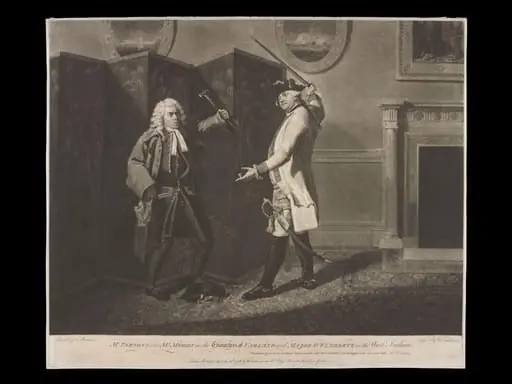
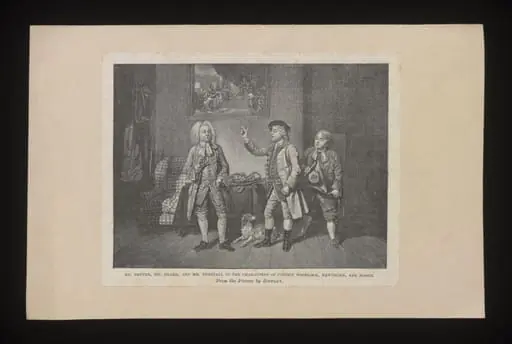 Mr Shuter, Mr. Beard, and Mr. Dunstall in the charaters of Justice Woodcock, Hawthorn and Hodge
 H Beard Print Collection
 H Beard Print Collection
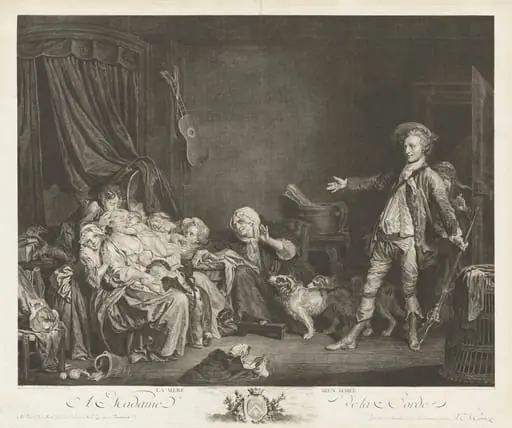 La mére bienaimée (The Well-Loved Mother)
 H Beard Print Collection
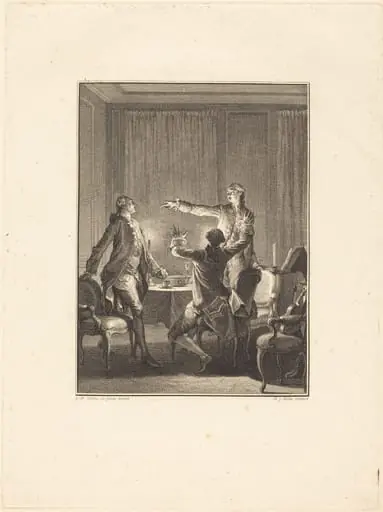 La provocation
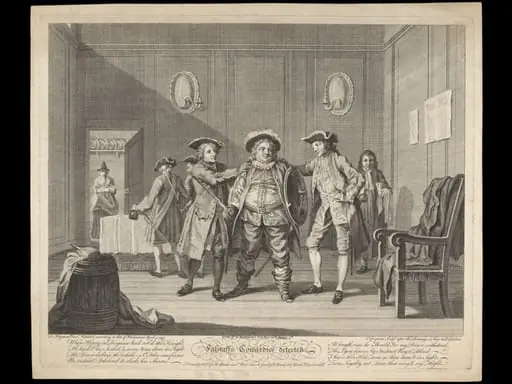 H Beard Print Collection
 H Beard Print Collection
 La Provocation
 H Beard Print Collection
 H Beard Print Collection
 H Beard Print Collection