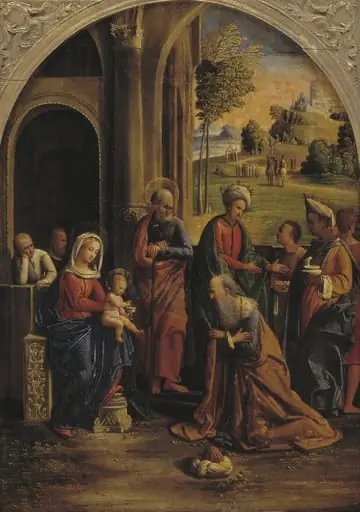
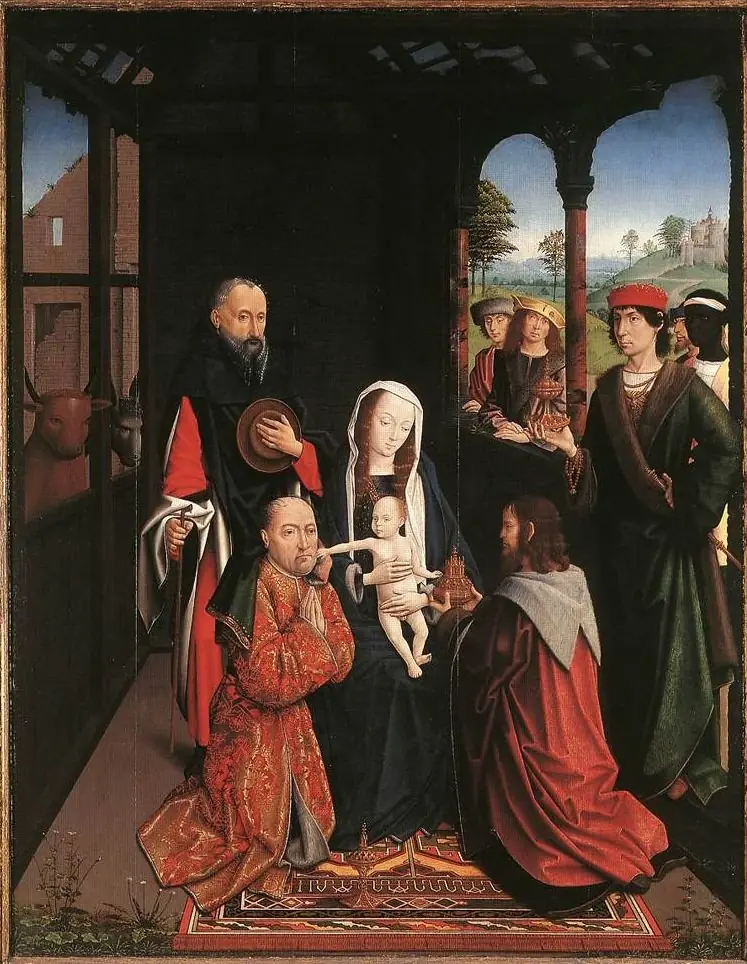
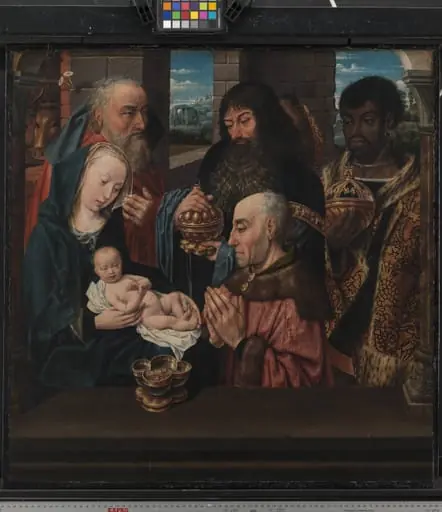
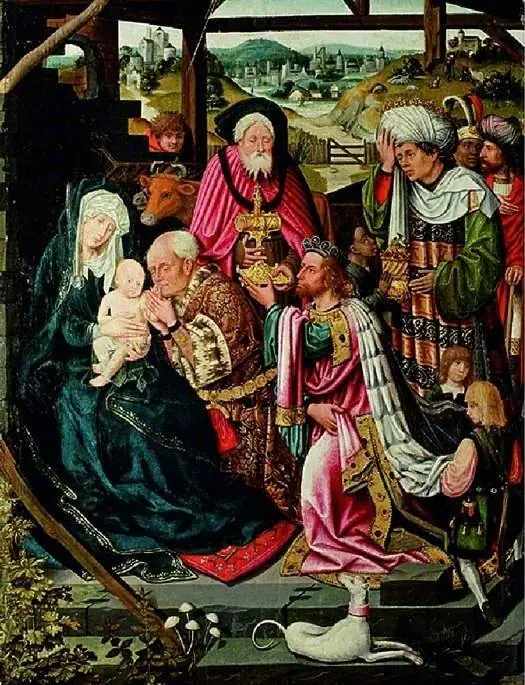
Artwork
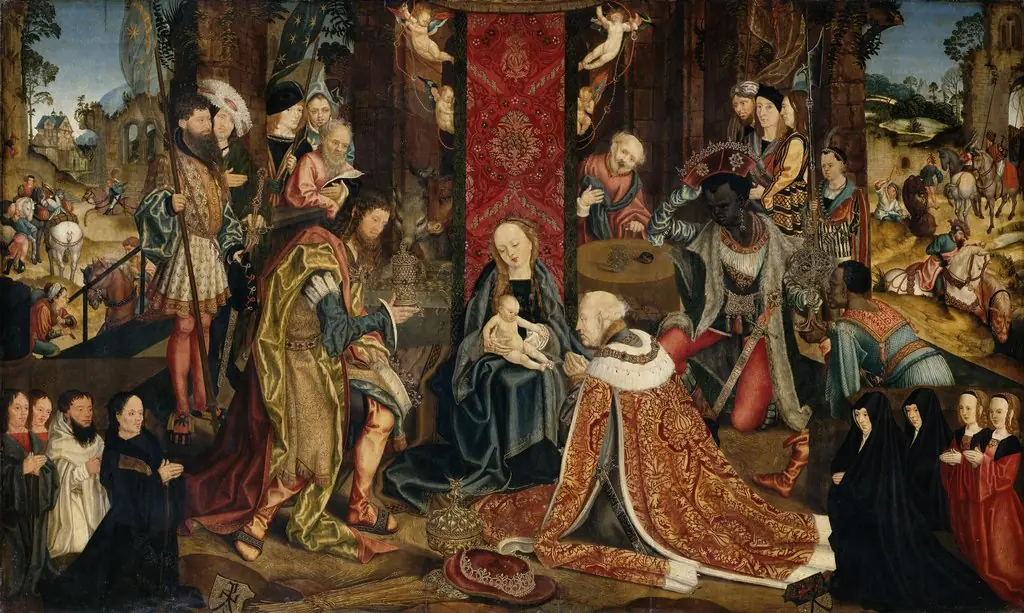
The large Adoration of the Kings
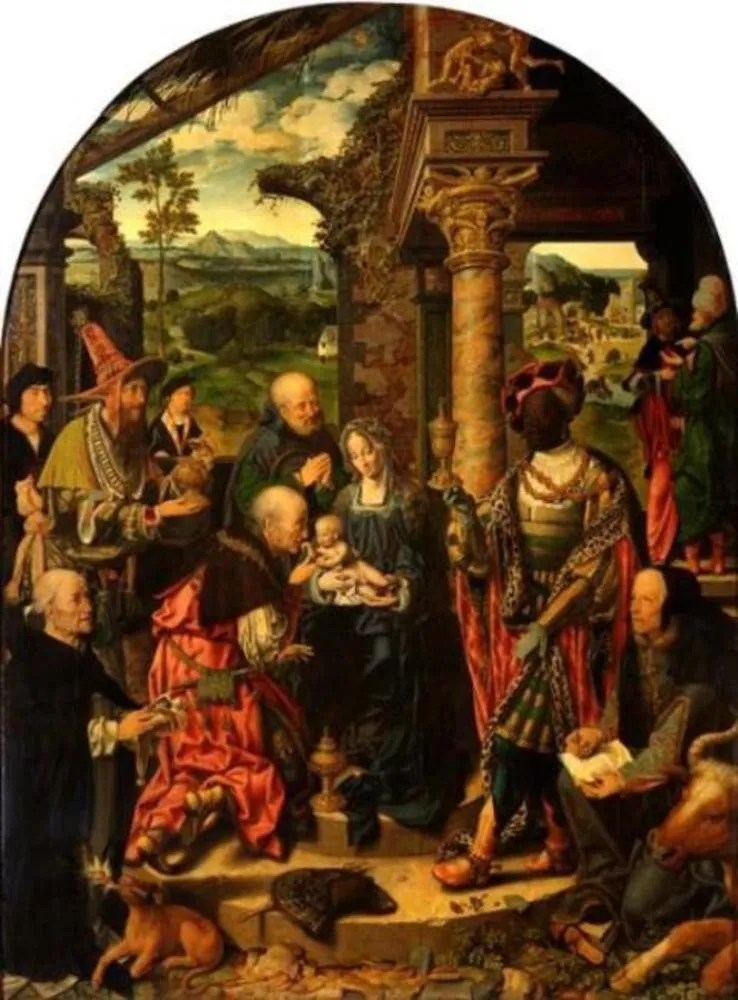
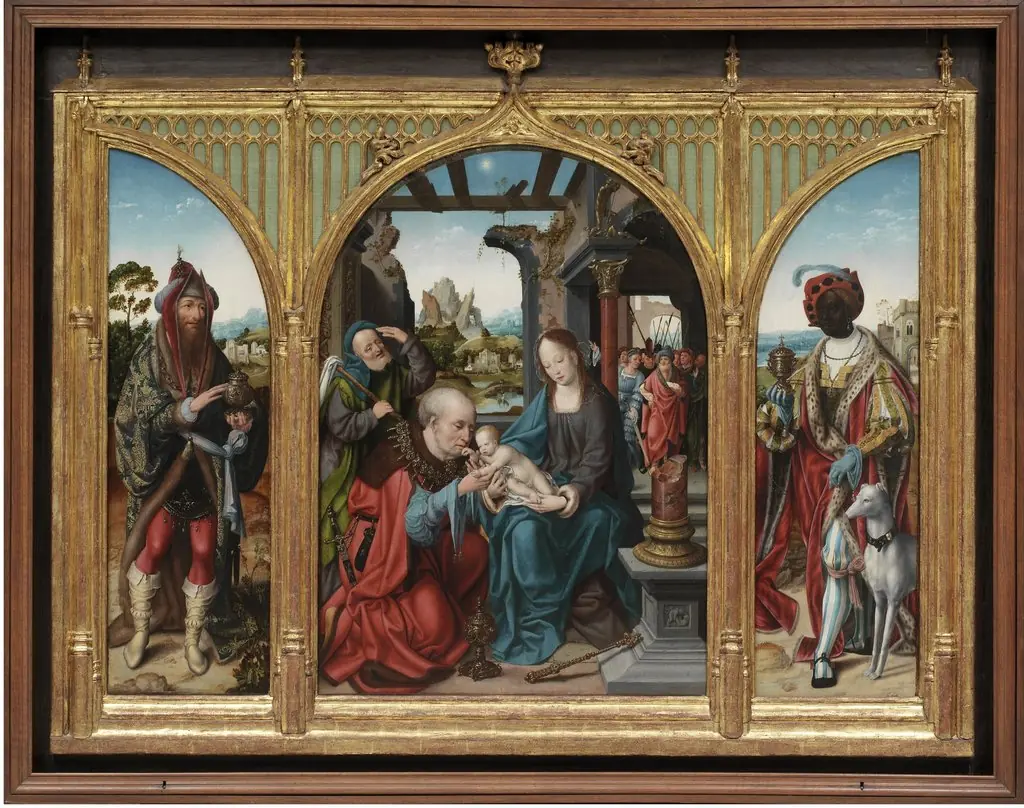
The large Adoration of the Kings is an oil painting by the Northern Renaissance artist Joos van Cleve. It dates from 1525 and is held in the collection of the Staatliche Kunstsammlungen Dresden.
About this work
Overview
The painting remains part of the Gemäldegalerie Alte Meister’s collection, where it exemplifies the devotional art favored by urban patrons of the period.
Painted in 1525 by Joos van Cleve, this oil-on-panel work is a large-scale depiction of the Adoration of the Magi. Van Cleve, active in Antwerp during the early 16th century, was known for his religious compositions that fused Netherlandish precision with emerging Renaissance sensibilities. The painting remains part of the Gemäldegalerie Alte Meister’s collection, where it exemplifies the devotional art favored by urban patrons of the period.
Subject & Meaning
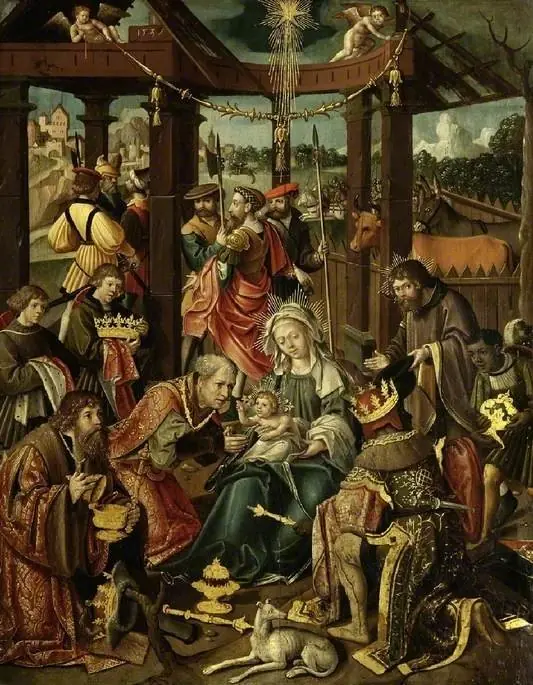
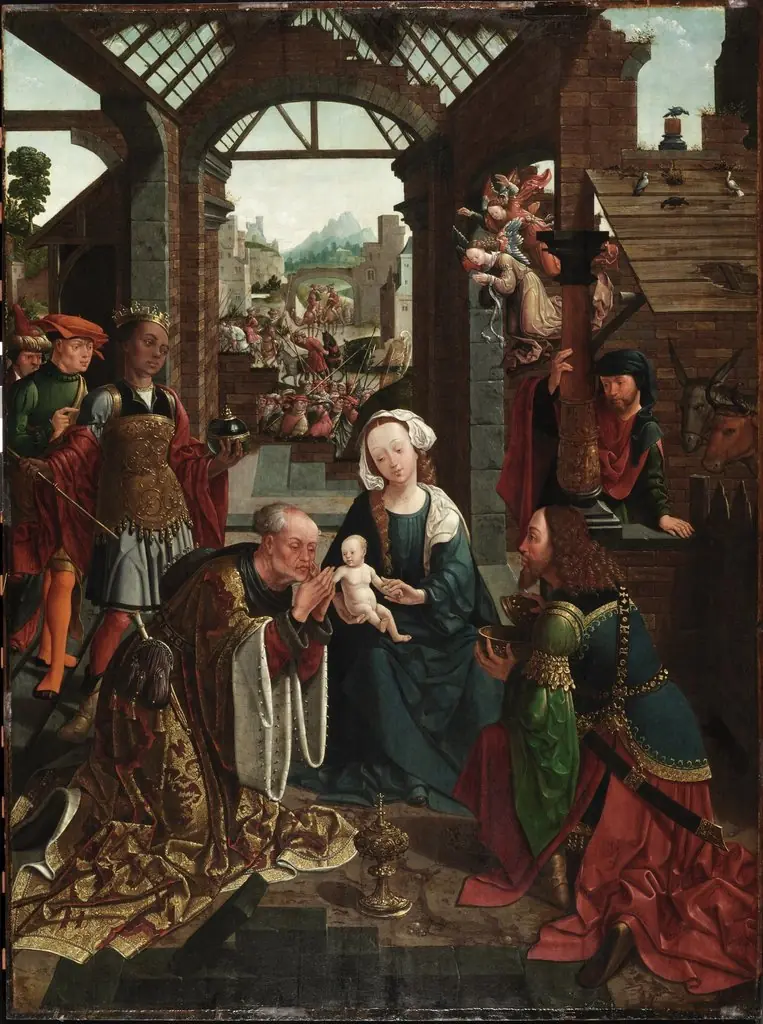
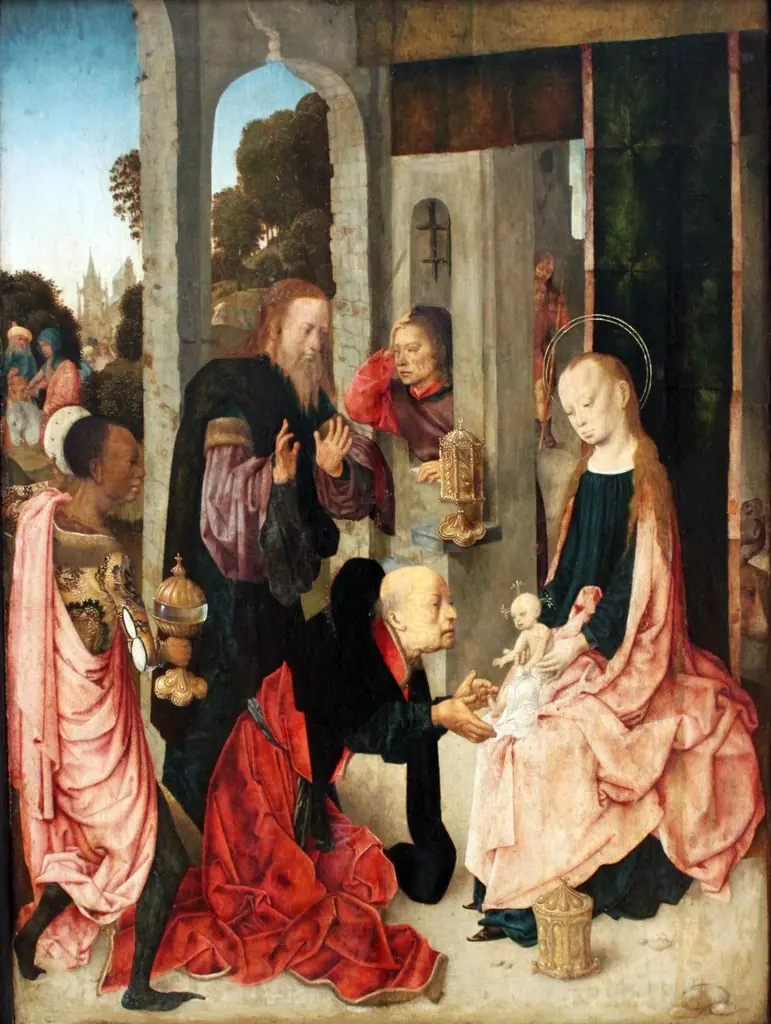
The scene centers on the infant Christ, seated on the Virgin Mary’s lap, as three kings offer gifts in recognition of his divine status. Surrounding figures include attendants, courtiers, and observers, each engaged in acts of reverence. The composition reinforces theological themes of humility and recognition, common in Nativity narratives of the time. The inclusion of diverse ethnicities among the Magi reflects contemporary European views of global kingship and Christian universality.
Technique & Style
Van Cleve employed fine brushwork to render intricate textiles, polished stone surfaces, and atmospheric landscapes visible through an arched opening. His use of oil paint allowed for layered glazes that enhanced color depth and textural realism. The figures are arranged with careful spatial logic, while the background landscape—distant hills and trees—adds depth without distracting from the central group, a hallmark of Northern Renaissance composition.
History & Provenance
Created during Van Cleve’s mature period in Antwerp, the painting likely originated as a private devotional piece for a wealthy patron. It entered the Gemäldegalerie Alte Meister’s holdings through documented acquisitions in the 18th or 19th century, preserving its condition and attribution. No major alterations or reworkings are recorded, suggesting it has remained largely intact since its completion.
Context
In early 16th-century Antwerp, religious imagery remained central to artistic production despite growing humanist interests. Van Cleve’s workshop catered to both local and international clients, producing altarpieces and devotional panels that balanced traditional iconography with refined detail. This painting reflects the city’s role as a hub of artistic innovation, where Northern traditions met southern influences through trade and travel.
Legacy
Van Cleve’s version of the Adoration contributed to the genre’s popularity across Northern Europe. His detailed rendering of costume, architecture, and natural elements influenced later painters in the region. Though less widely known today than contemporaries like Dürer or Bruegel, his work remains a key reference for understanding the evolution of religious painting in the Low Countries during the Reformation era.
Artist & collection
Artist
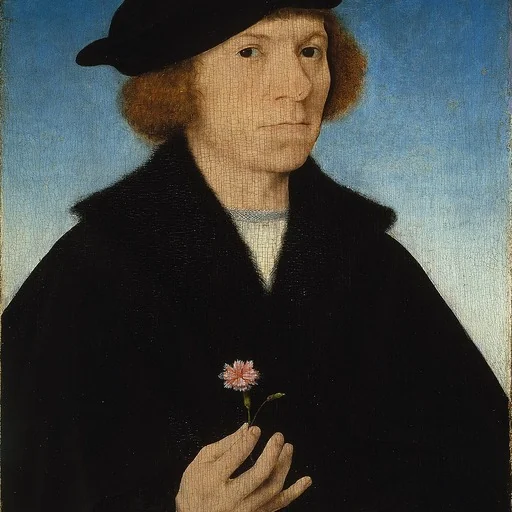
Joos van Cleve (; also Joos van der Beke; c. 1485–1490 – 1540/1541) was a leading painter active in Antwerp from his arrival there around 1511 until his death in 1540 or 1541. Within Dutch and Flemish Renaissance…