Artwork
Virgin and Child with Saints Anne and Joachim
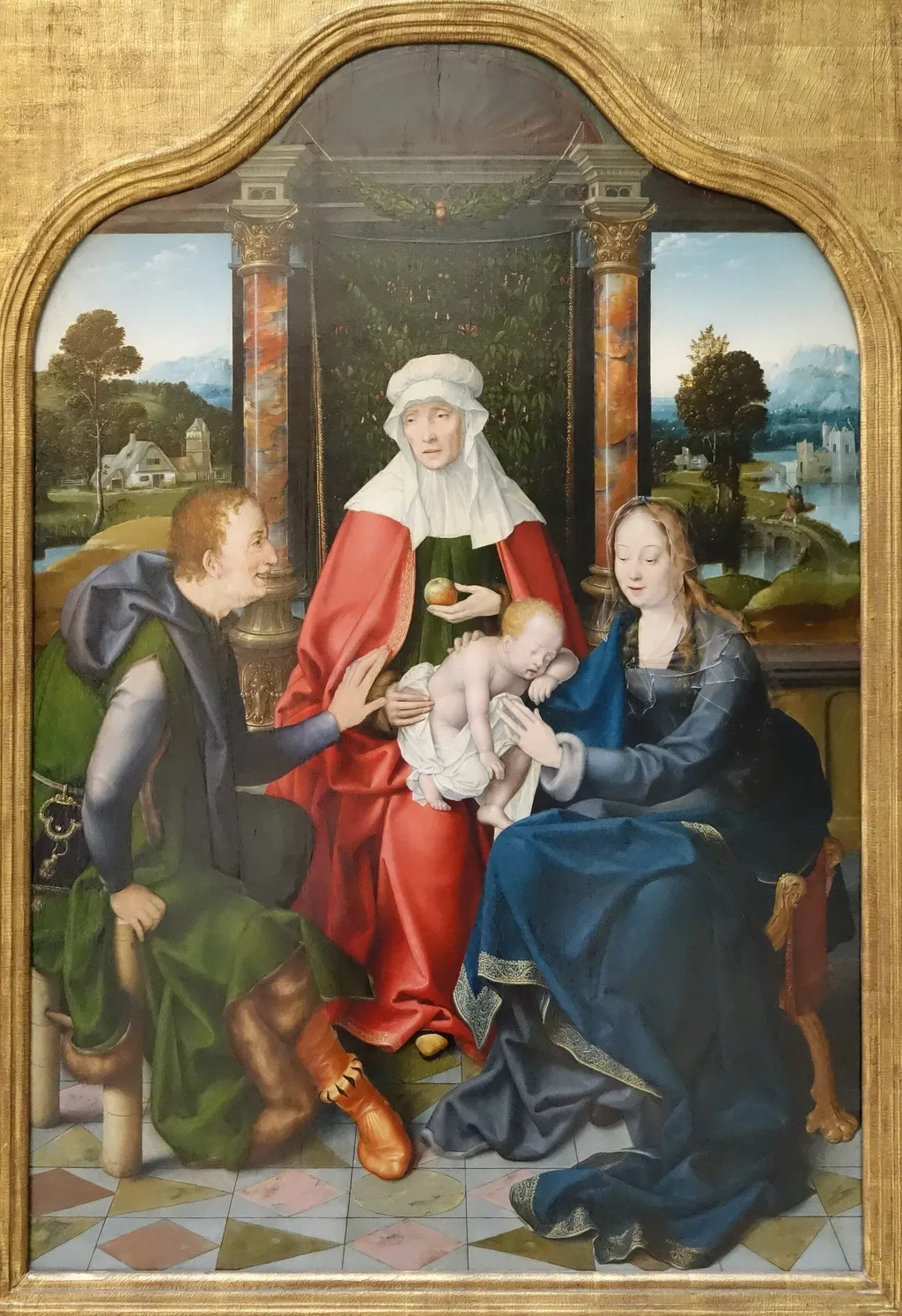
Virgin and Child with Saints Anne and Joachim is an oil painting by the Northern Renaissance artist Joos van Cleve. It dates from 1520 and is held in the collection of the Royal Museums of Fine Arts of Belgium.
About this work
Overview
The composition reflects the devotional priorities of early 16th-century Northern Europe, blending intimate familial warmth with sacred symbolism.
Painted around 1520 by Joos van Cleve, this oil-on-panel work presents a devotional scene centered on the Virgin Mary, the infant Christ, and Mary’s parents, Saints Anne and Joachim. Van Cleve, a leading figure in Antwerp’s artistic community and a member of the Guild of Saint Luke, synthesized the meticulous detail of Early Netherlandish painting with emerging Renaissance sensibilities. The composition reflects the devotional priorities of early 16th-century Northern Europe, blending intimate familial warmth with sacred symbolism.
Subject & Meaning
The painting depicts the Holy Family within the context of Mary’s lineage, emphasizing her divine origin through her parents, Anne and Joachim. Their presence affirms the theological notion of Mary’s Immaculate Conception, a doctrine gaining prominence in the period. The tender interaction between mother and child underscores human tenderness within sacred narrative, while the inclusion of Joachim completes the familial triad, reinforcing the earthly roots of the Virgin’s holiness.
Technique & Style
Van Cleve employed fine brushwork characteristic of Northern Renaissance traditions, rendering textures with precision—fabric folds, hair, and foliage are rendered with delicate attention. Rich pigments, particularly the deep blue of Mary’s robe and the crimson of Anne’s cloak, create visual emphasis against the muted landscape. The atmospheric perspective, with distant hills and a village, adds spatial depth, while the luminous quality of the oil medium enhances the warmth and realism of the figures.
History & Provenance
The painting has remained within institutional collections since at least the 19th century and is now held by the Royal Museums of Fine Arts of Belgium. Its continuous preservation suggests it was valued early as a significant work by a prominent Antwerp master. No major disruptions in ownership are documented, indicating it likely stayed within ecclesiastical or elite private circles in the Low Countries before entering public collection.
Context
In early 16th-century Antwerp, religious imagery remained central to artistic production despite growing humanist influences. Van Cleve’s workshop catered to both local patrons and international buyers, producing altarpieces and devotional panels that balanced traditional iconography with refined technique. This painting reflects the city’s role as a hub of artistic innovation, where Netherlandish realism met Renaissance ideals of harmony and naturalism.
Legacy
Joos van Cleve’s approach influenced subsequent generations of Northern painters through his synthesis of detail and emotional nuance. While less widely known today than some contemporaries, his works, including this one, remain important examples of how religious themes were rendered with psychological depth and technical mastery in the decades before the Reformation reshaped artistic patronage in the Low Countries.
Artist & collection
Artist
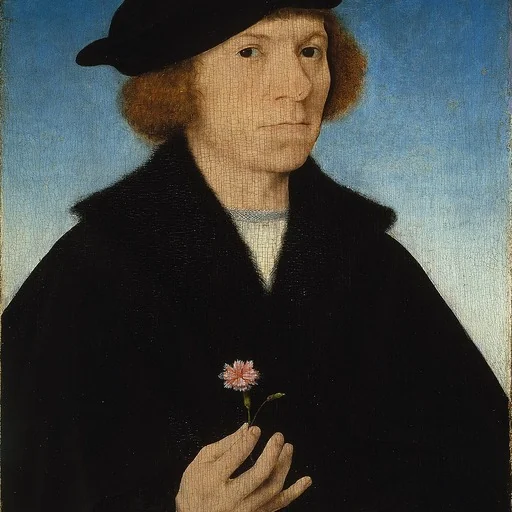
Joos van Cleve (; also Joos van der Beke; c. 1485–1490 – 1540/1541) was a leading painter active in Antwerp from his arrival there around 1511 until his death in 1540 or 1541. Within Dutch and Flemish Renaissance…

Museum
Royal Museums of Fine Arts of Belgium
Continue through works from the same source collection.
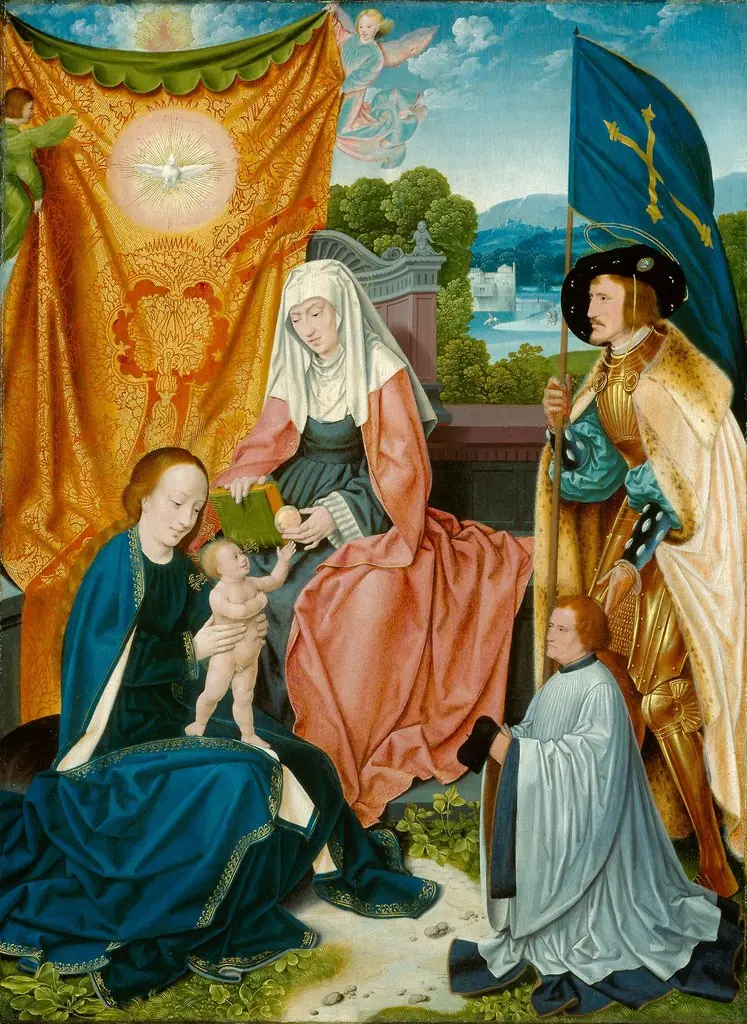 Virgin and Child with Saint Anne, Saint Gereon, and a Donor
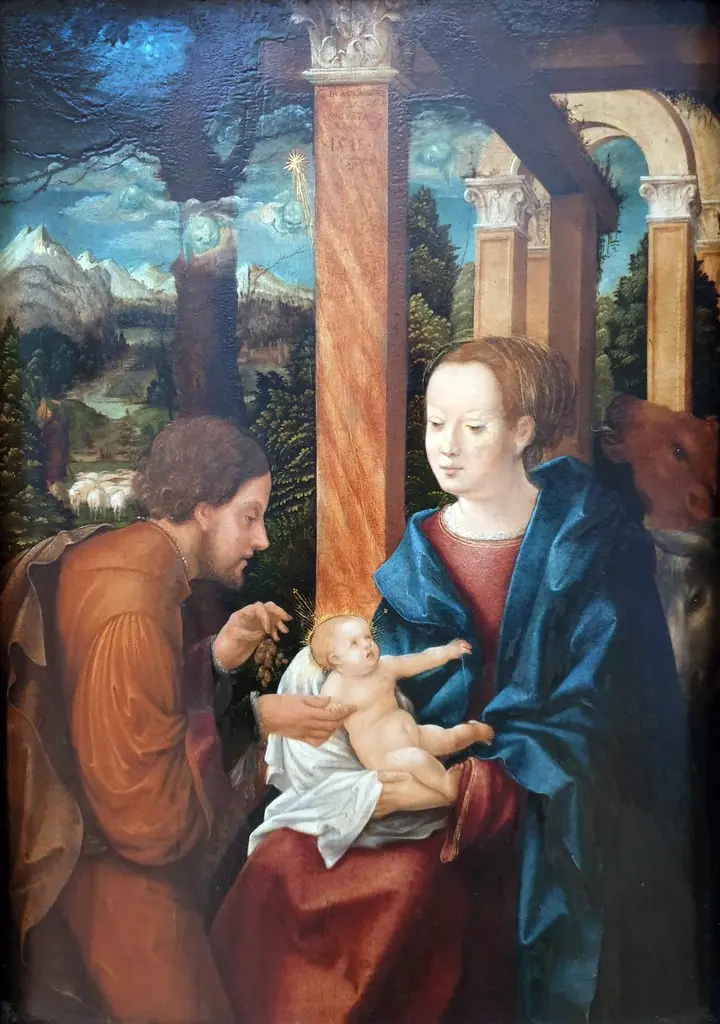 The birth of Christ
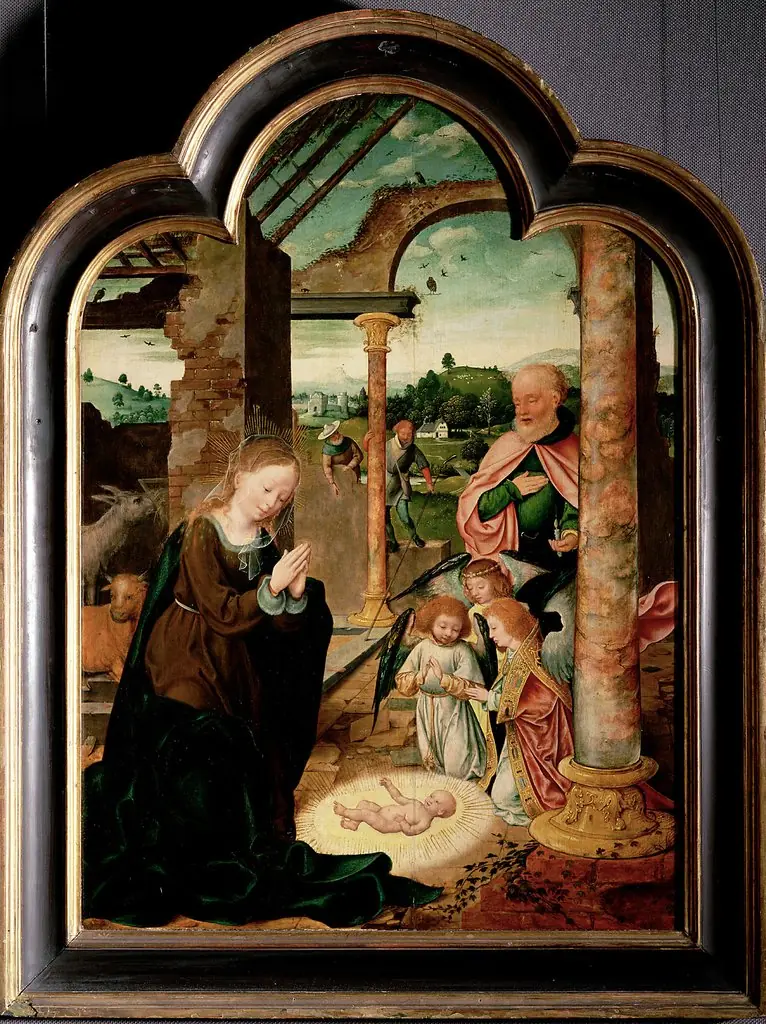 The Birth of Christ
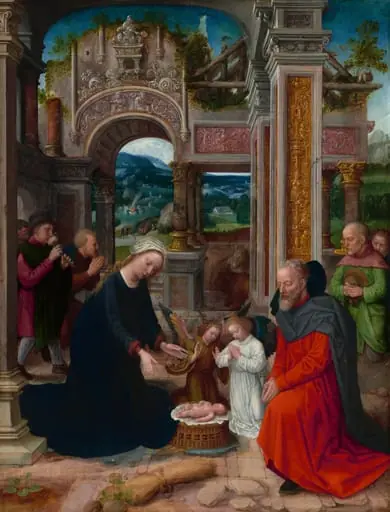 The Adoration of the Shepherds
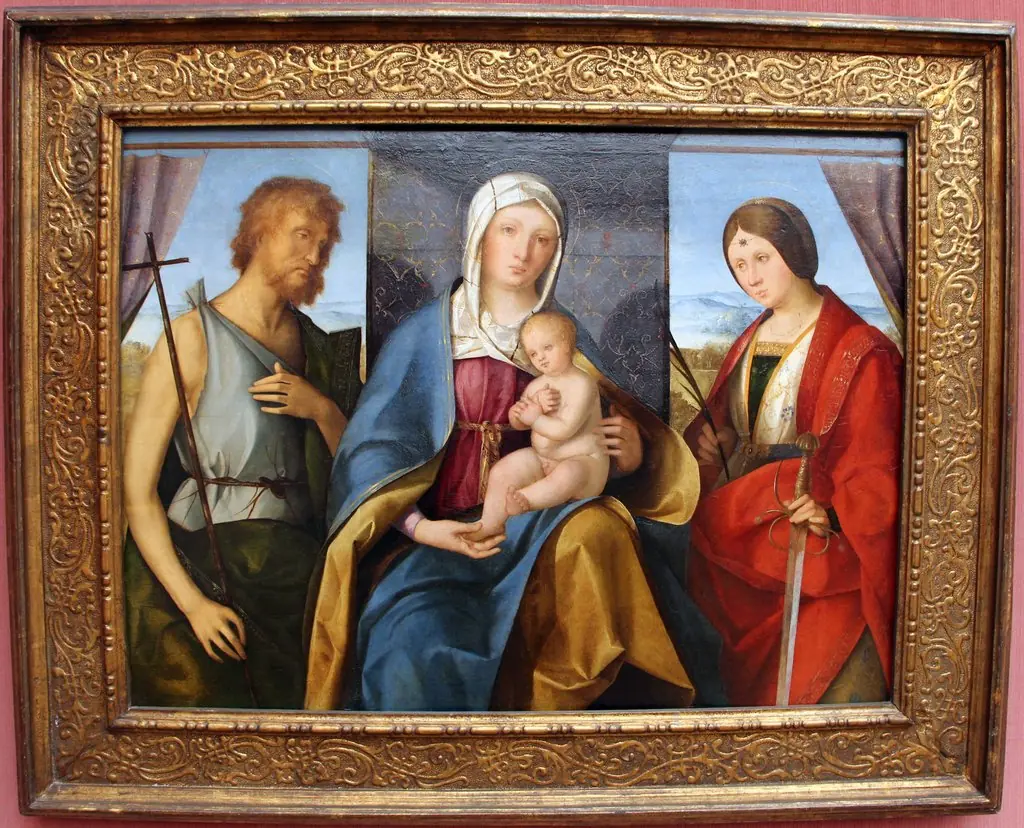 Thronende Maria mit d. Kind und den Heiligen Johannes dem Täufer und Katharina von Alexandrien
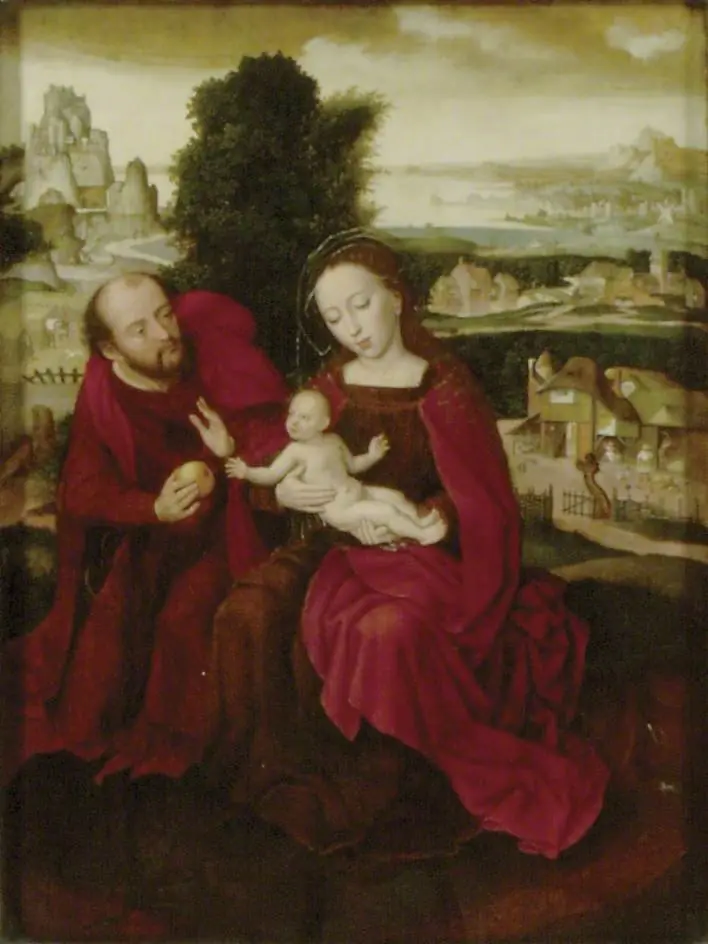 The Holy Family in a Landscape
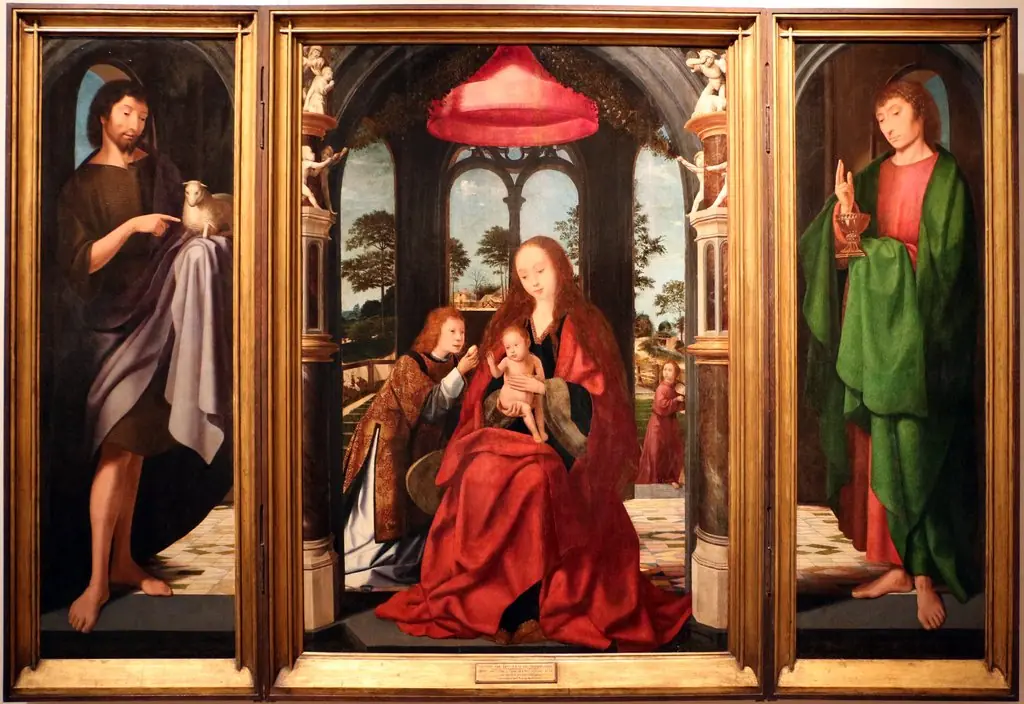 Triptych of the Virgin with the Child and Angels, St. John the Baptist and St. John the Evangelist
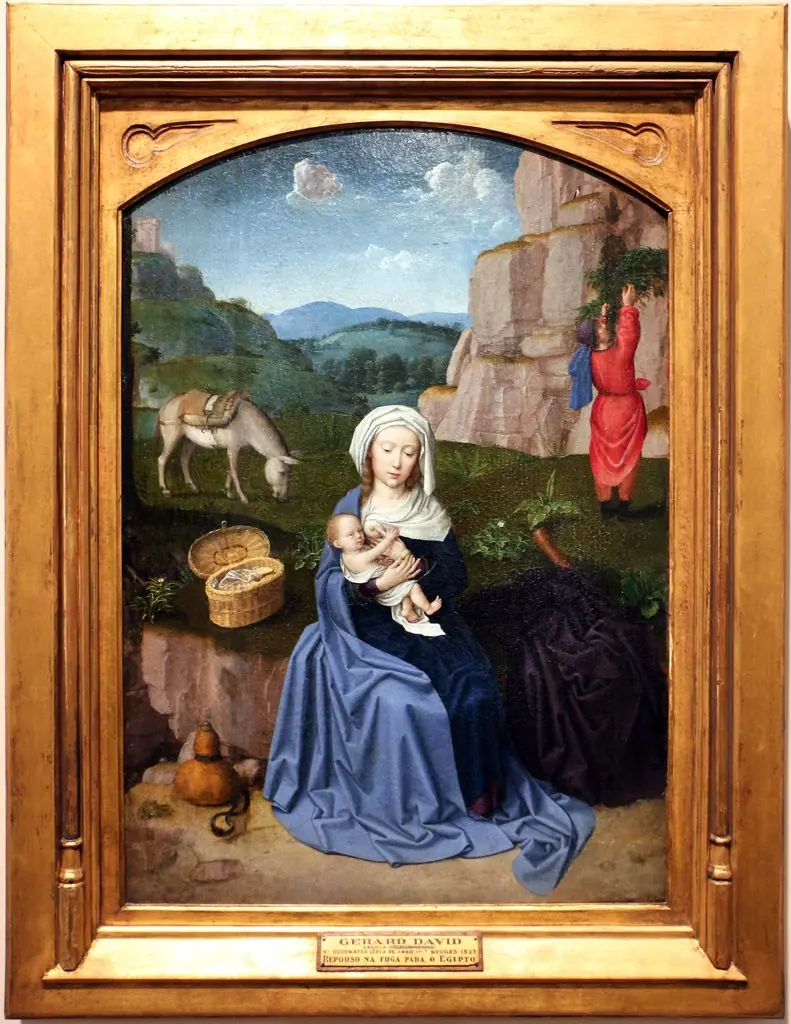 Rest on the Flight into Egypt