Artwork
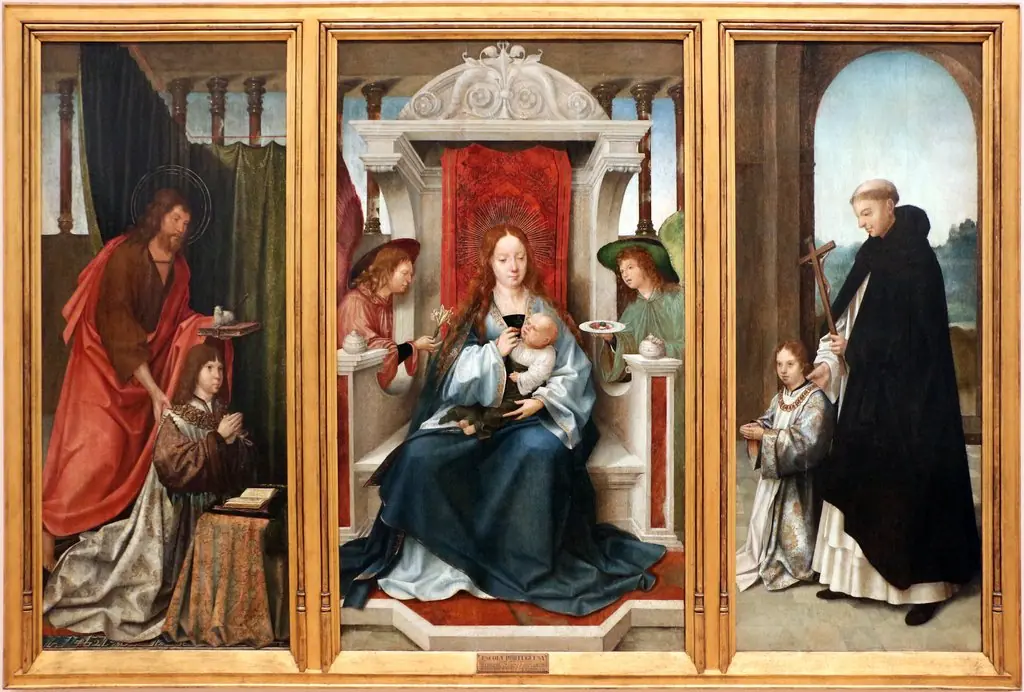
Triptych of the Virgin with the Child and Angels, St. John the Baptist and St. John the Evangelist
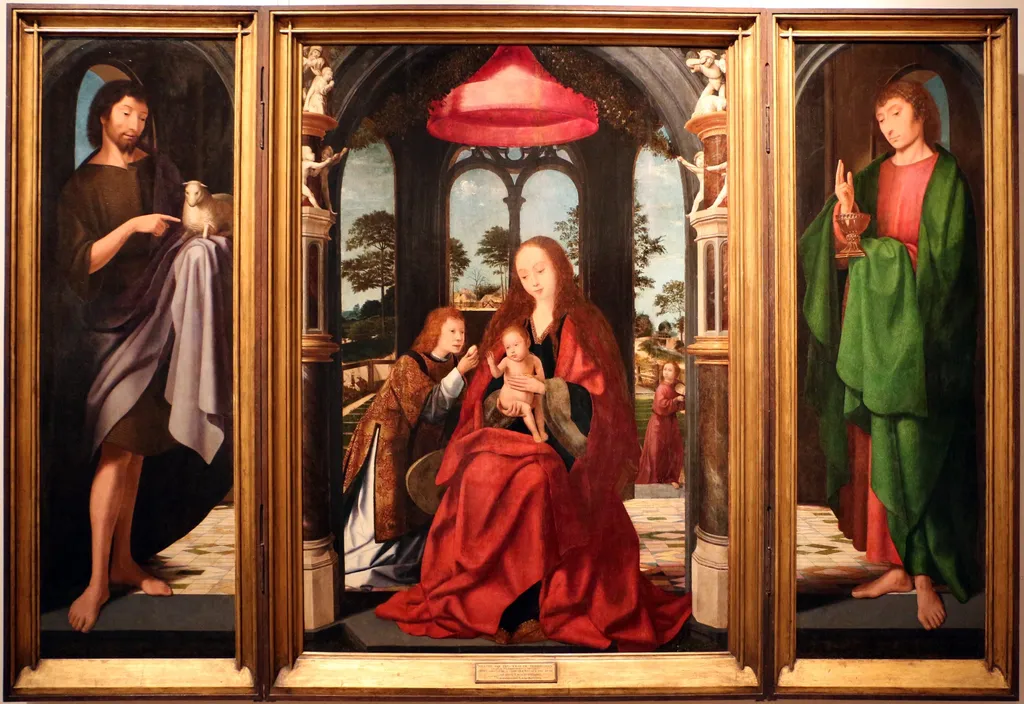
Triptych of the Virgin with the Child and Angels, St. John the Baptist and St. John the Evangelist is an unspecified painting by the Northern Renaissance artist Master of the Morrison Triptych. It dates from 1500 and is held in the collection of the National Museum of Ancient Art. Created circa 1500, this three‑panel work presents a devotional scene typical of Northern Renaissance art.
About this work
Overview
The composition is intended for private or chapel use, reflecting the period’s focus on intimate religious contemplation.
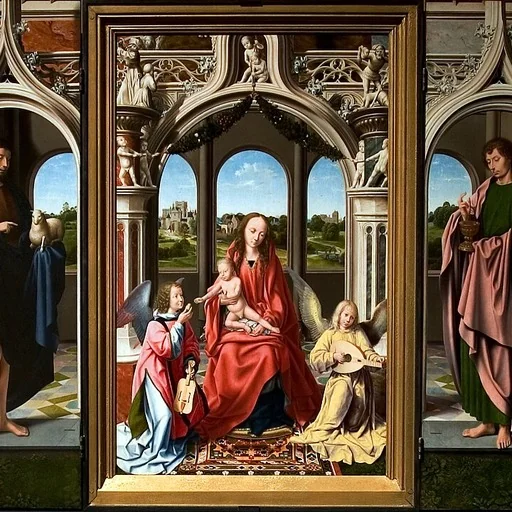
Created circa 1500, this three‑panel work presents a devotional scene typical of Northern Renaissance art. The central image shows the Virgin seated with the infant Christ, flanked by two angels, while the side panels portray St John the Baptist with a lamb and St John the Evangelist with a chalice. The composition is intended for private or chapel use, reflecting the period’s focus on intimate religious contemplation.
Subject & Meaning
The central figure of Mary holding the Child emphasizes the maternal bond and the incarnation, while the accompanying angels underscore heavenly intercession. St John the Baptist, identified by the lamb, alludes to his role as the forerunner of Christ, whereas St John the Evangelist, with his cup, references the Passion. Together the saints frame the holy family, reinforcing themes of salvation and devotion.
Technique & Style
Executed in the meticulous manner of Early Netherlandish painters, the panels display fine brushwork that renders textures—from fabric folds to foliage—with striking realism. A restrained palette is enlivened by subtle gold leaf accents, lending a modest opulence. The spatial depth is achieved through layered landscape backgrounds, while the figures retain a sculptural solidity characteristic of the period’s attention to anatomical accuracy.
History & Provenance
The work is attributed to the anonymous Master of the Morrison Triptych, an Antwerp‑based artist active at the turn of the 16th century. Though the painter’s identity remains unknown, the piece exemplifies his known output of devotional triptychs. It entered the collection of the National Museum of Ancient Art, where it is currently conserved and displayed as part of the museum’s Northern Renaissance holdings.
Artist & collection
Artist
Master of the Morrison Triptych
The Master of the Morrison Triptych is the name given to an unknown Early Netherlandish painter active in Antwerp around 1500–1510.

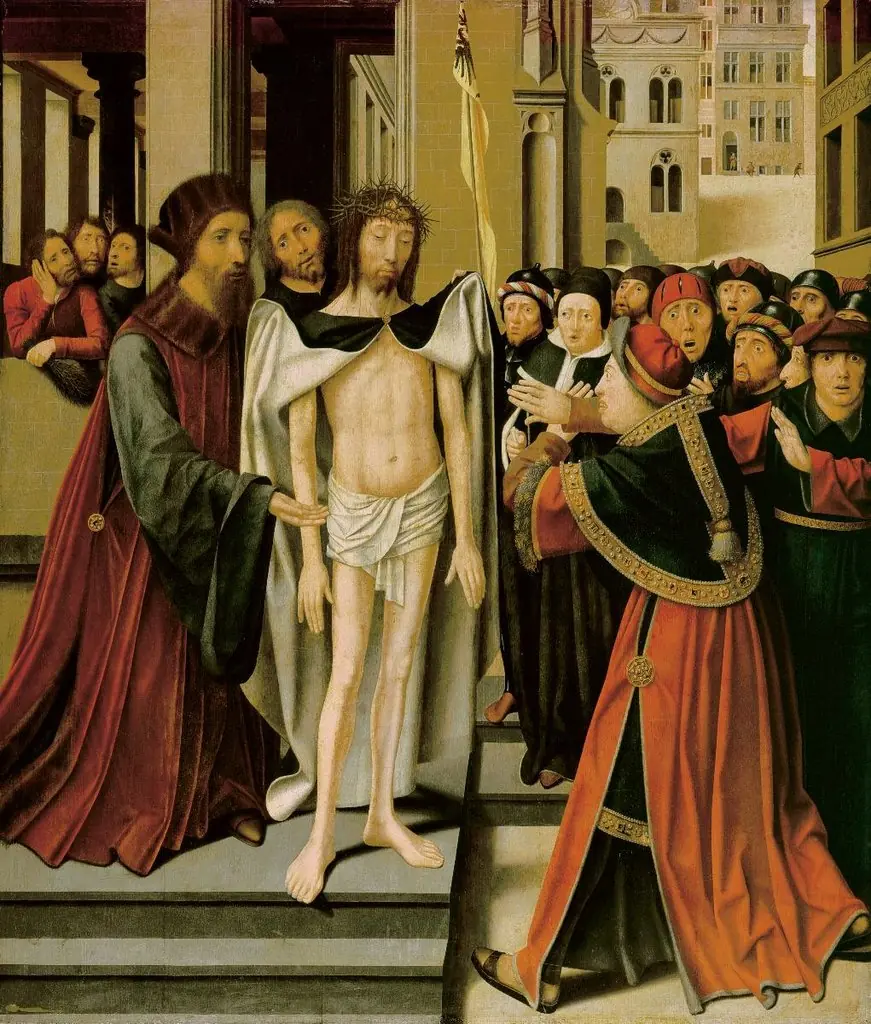
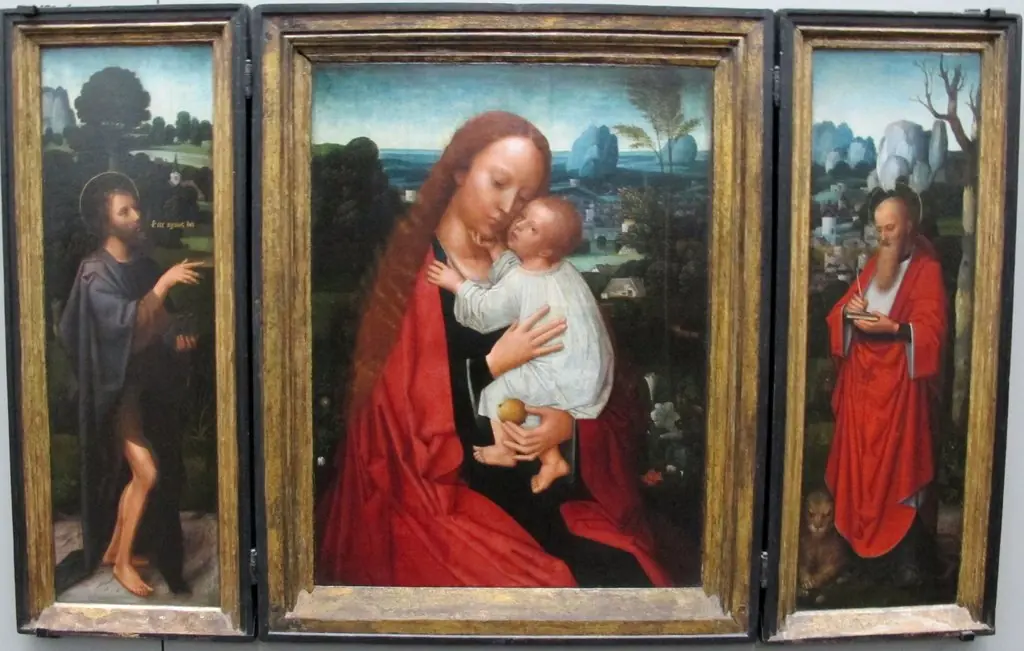 Madonna with John the Baptist and Saint Jerome
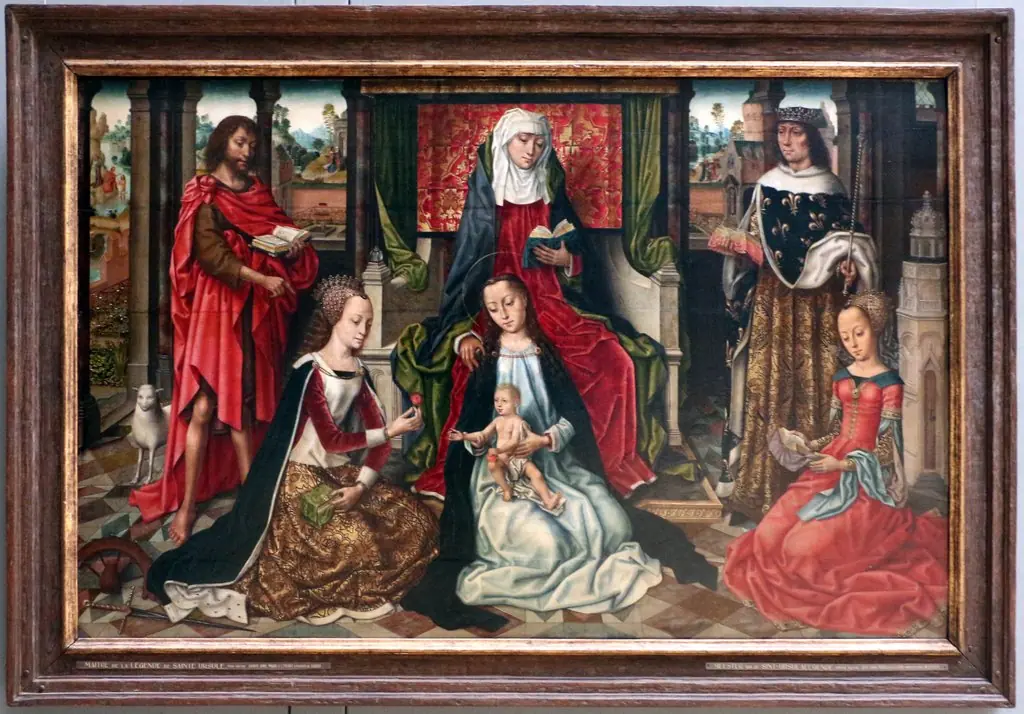 Saint Anne with the Virgin and Child and four saints (John the Baptist, Louis IX, Catherine and Barbara)
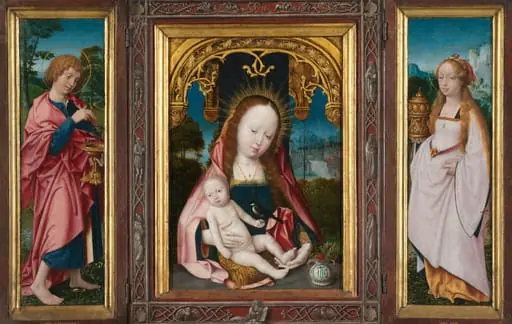 Triptych with Virgin and Child, Saint John the Evangelist (left wing) and Mary Magdalene (right wing)
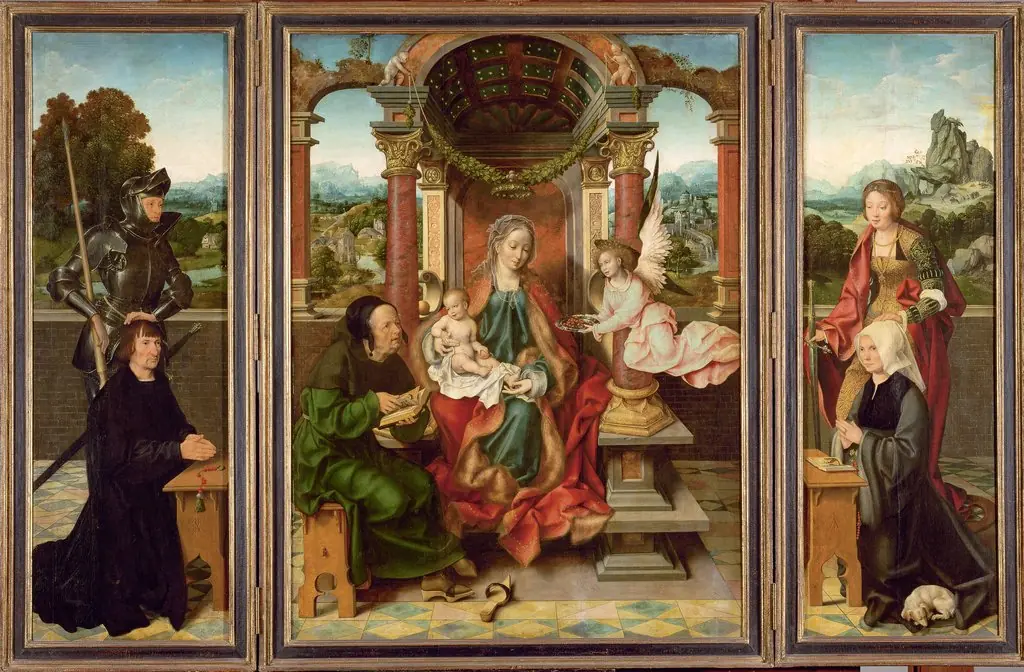 Winged Altar
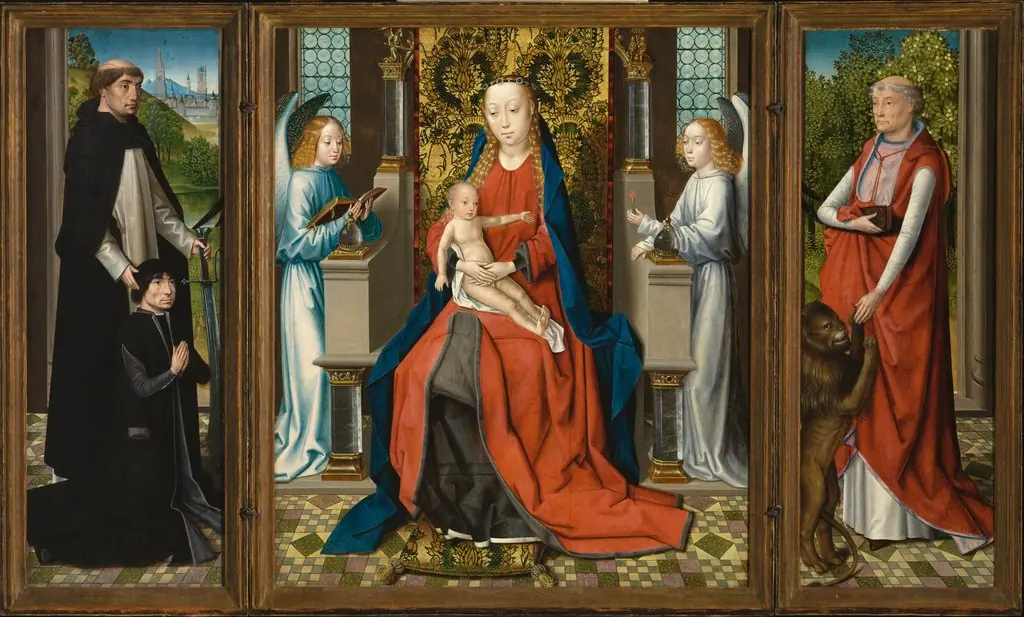 Triptych of Madonna and Child with Angels; Donor and His Patron Saint Peter Martyr; and Saint Jerome and His Lion
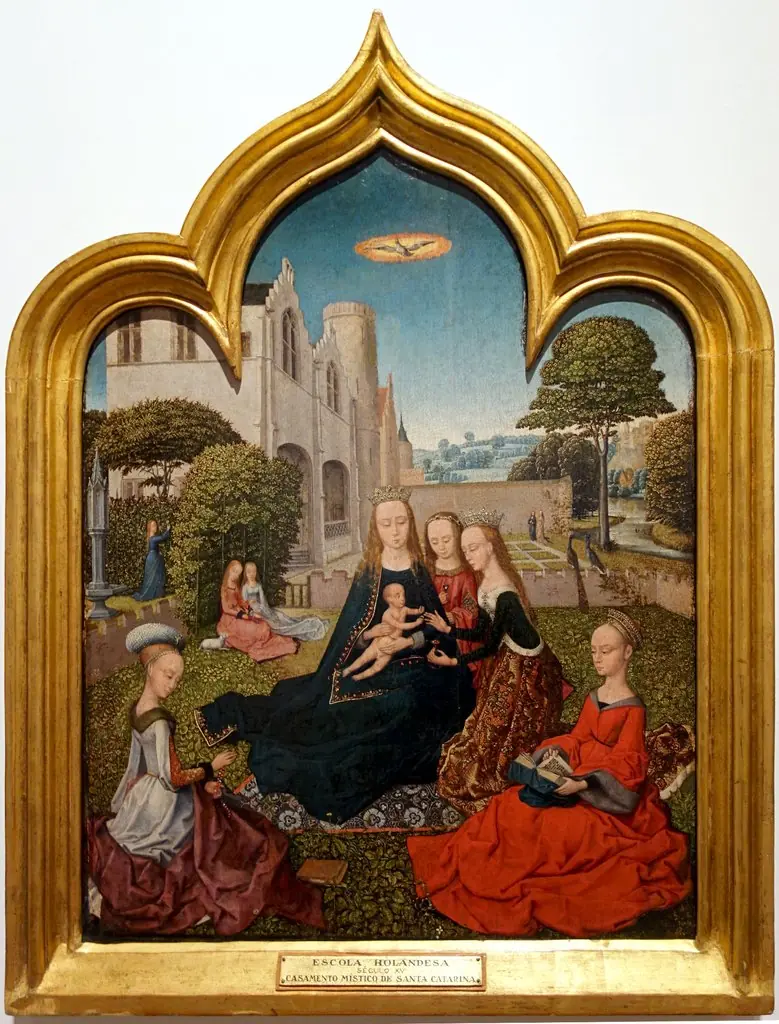 The mystic marriage of St. Catherine
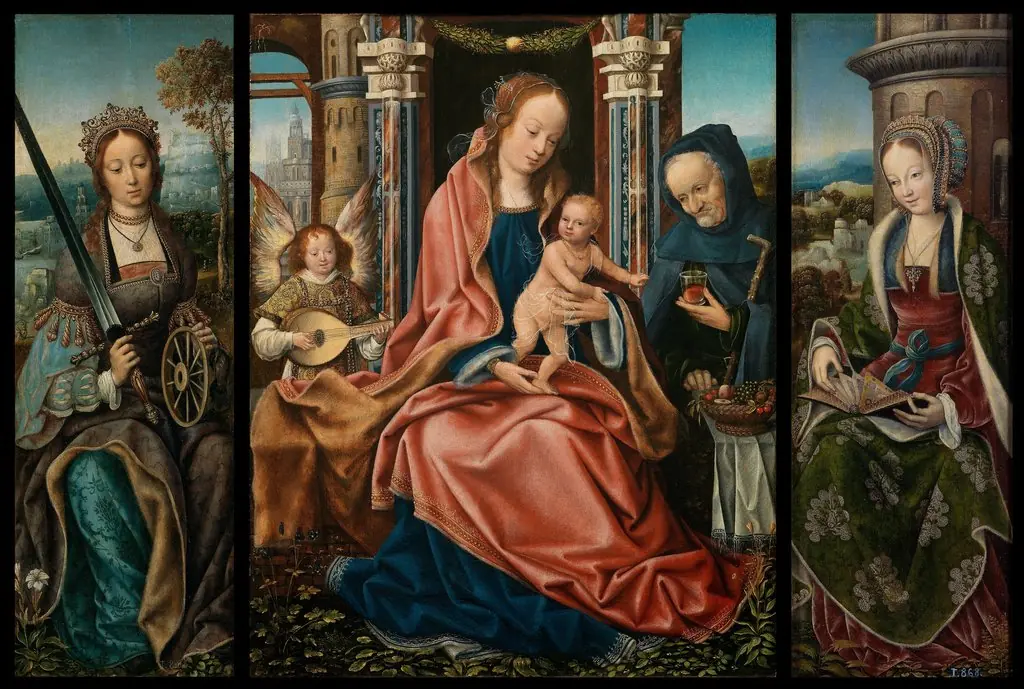 The Holy Family with a Musician Angel Saints Catherine and Barbara
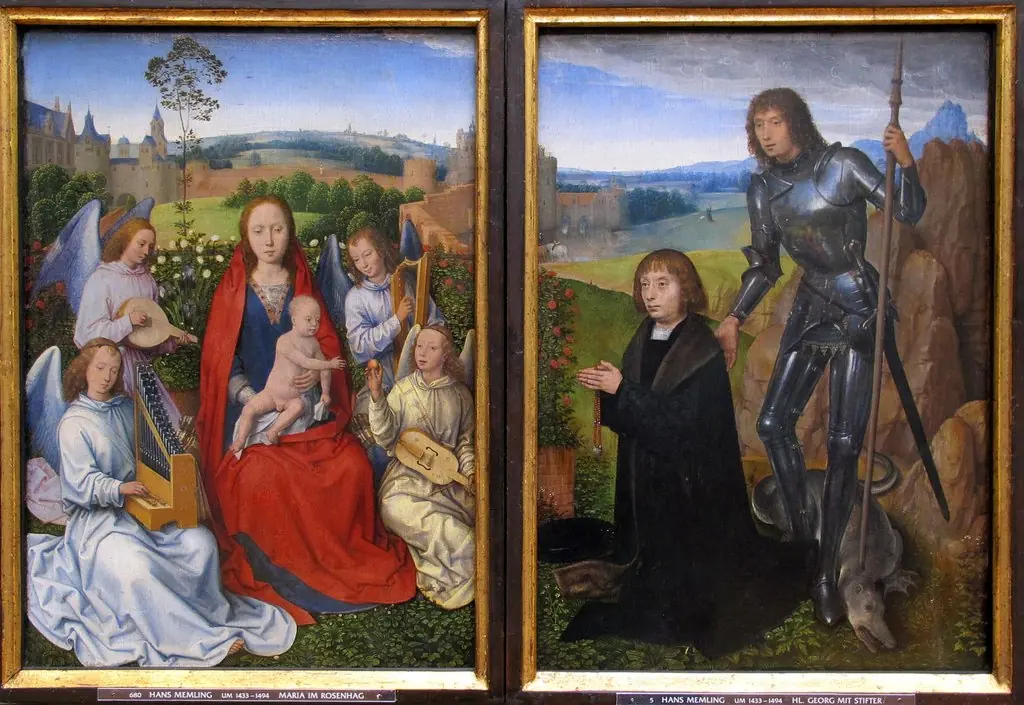 Diptych of Munich
 Triptych of the Princes
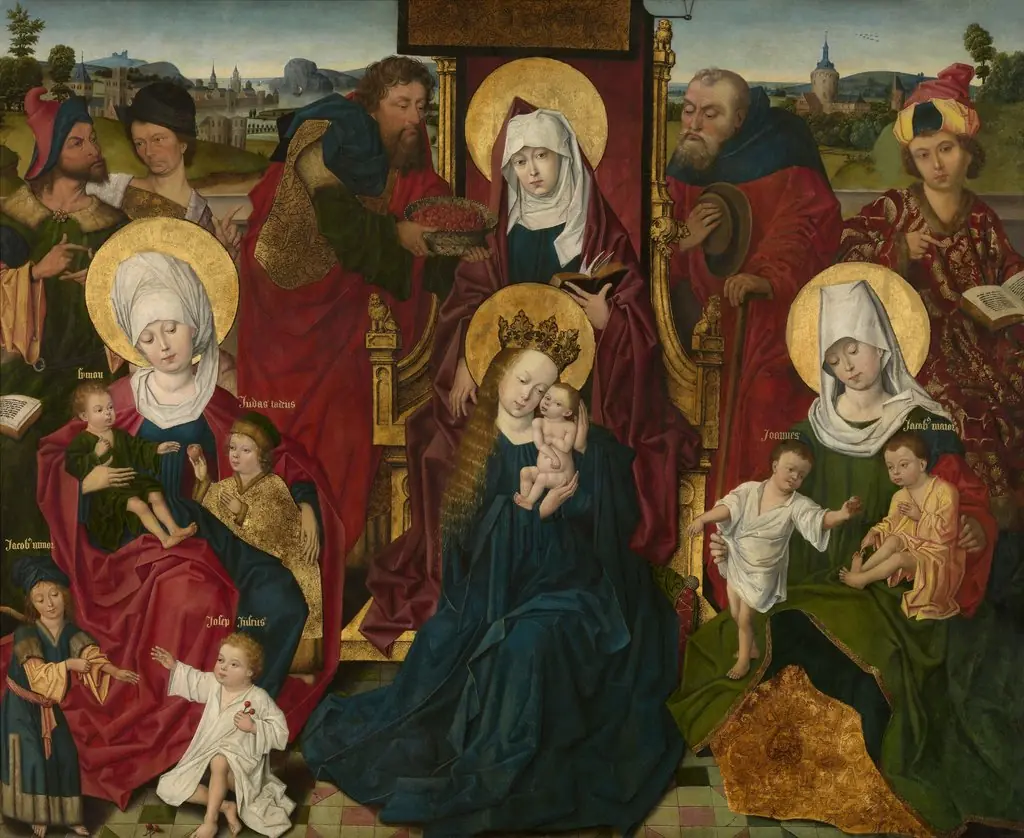 Holy Kinship