Artwork
The Queen of Etruria and her Children
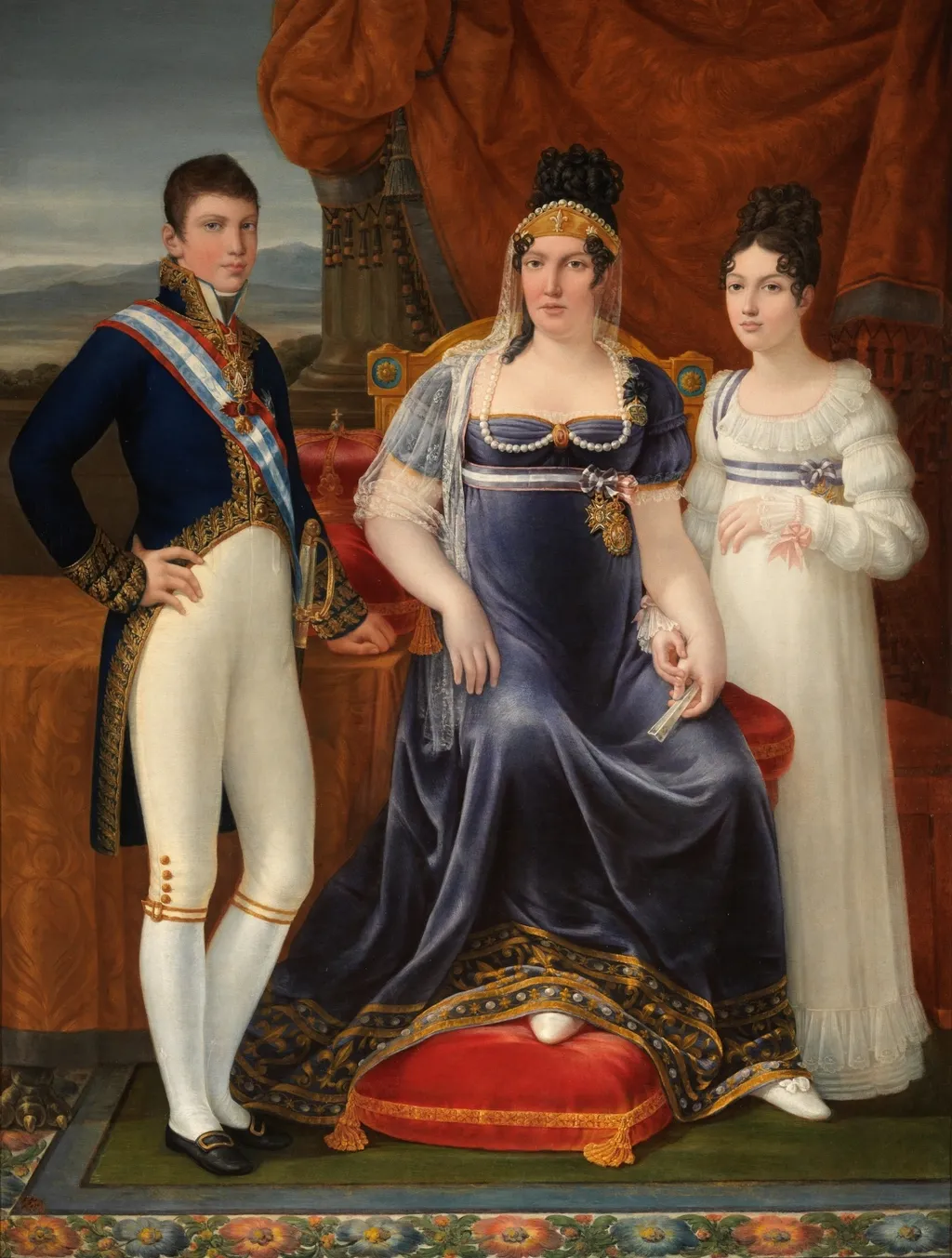
The Queen of Etruria and her Children is an oil painting by José Aparicio. It dates from 1815 and is held in the collection of the Museo del Prado.
About this work
Overview
Aparicio, a Spanish Neoclassical artist, captured the royal family with meticulous detail, emphasizing their status and lineage.
This 1815 oil painting by José Aparicio, titled The Queen of Etruria and her Children, presents a formal portrait of Maria Luisa I, Duchess of Lucca, alongside her two children. Aparicio, a Spanish Neoclassical artist, captured the royal family with meticulous detail, emphasizing their status and lineage. The work is a significant example of court portraiture from the period and is housed in the collection of the Museo del Prado.
Subject & Meaning
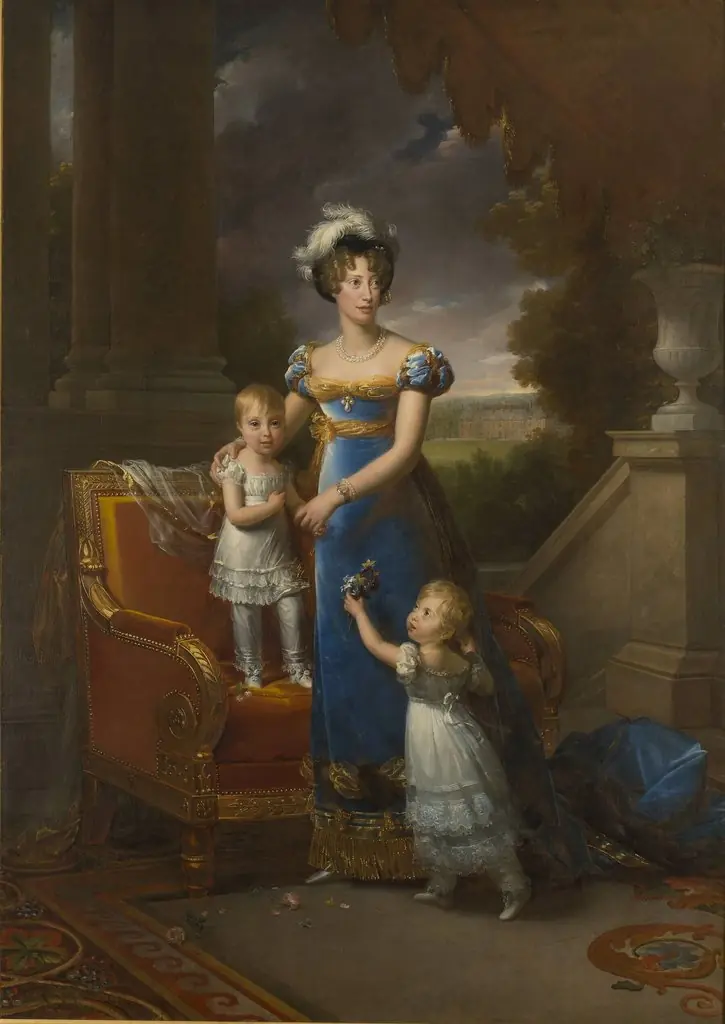
The central figure is Maria Luisa I, who previously held the title Queen of Etruria, depicted here with her offspring. Her attire is adorned with several prestigious honors, including the Golden Fleece, the Order of Charles III, and the Order of Queen Maria Luisa, all signifying her elevated rank and connections to European royalty. The children, formally dressed, complete the dynastic representation, underscoring the family's importance and continuity.
Technique & Style
Aparicio's Neoclassical approach is evident in the painting's balanced composition and precise rendering. The artist utilized oil paint to create a rich texture in the subjects' garments, from the dark blue dress with gold accents to the white shawl and the children's formal wear. The detailed depiction of jewelry, such as a pearl necklace and crown, alongside sashes and medals, highlights the artist's skill in conveying the sitters' opulence and status within a formal setting.
Context
Created in 1815, this portrait reflects the artistic trends and patronage prevalent during the reign of King Ferdinand VII in Spain, with whom José Aparicio was closely associated. Aparicio was recognized for his ability to produce official portraits of royalty and nobility, making him a fitting choice to depict Maria Luisa I. The painting thus serves as a historical document, illustrating the visual representation of power and aristocracy in post-Napoleonic Europe.
Own this work as a print
Artist & collection
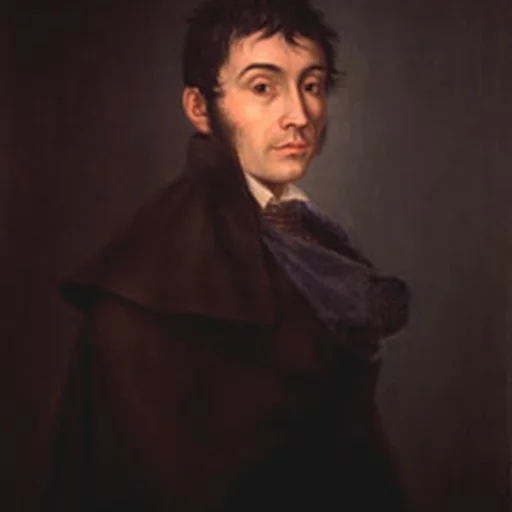
Artist
José Aparicio e Inglada (16 December 1773 – 10 May 1838) was a Spanish painter in the Neoclassical style; closely associated with the reign of King Ferdinand VII.