Artwork
El vaso de agua
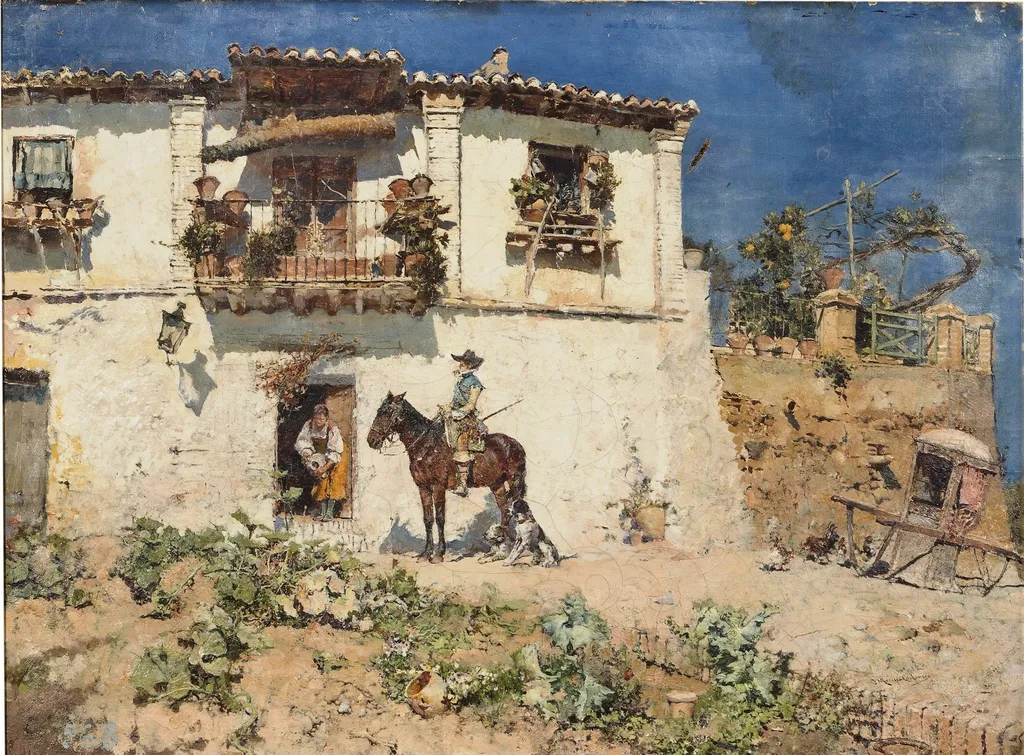
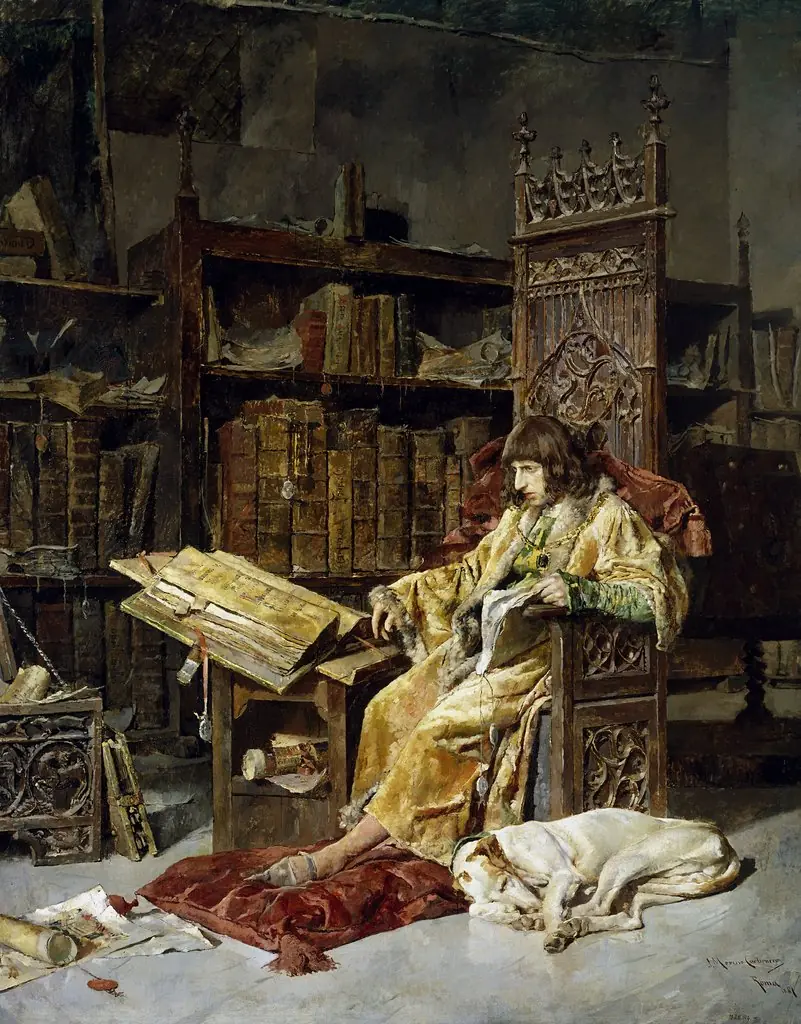
El vaso de agua is an oil painting by the Post-Impressionist artist José Moreno Carbonero. It dates from 1892 and is held in the collection of the Museo del Prado.
About this work
Overview
El vaso de agua is an 1892 oil painting by Spanish artist José Moreno Carbonero, a key figure in the Málaga School of Painting.
El vaso de agua is an 1892 oil painting by Spanish artist José Moreno Carbonero, a key figure in the Málaga School of Painting. Though known for historical subjects, this work belongs to his quieter genre scenes. The piece is part of the Museo del Prado’s collection and reflects his mastery of domestic and rural settings. It stands as an example of his later work, where narrative restraint replaces grand historical themes.
Subject & Meaning
The scene depicts a solitary man on horseback in a sunlit courtyard, accompanied by a dog, before a modest stone house with a wooden balcony. Potted plants and a wooden cart suggest a quiet rural life. The title, meaning 'The Glass of Water,' hints at an unspoken moment of pause or hospitality, though no vessel is visible. The stillness and isolation evoke contemplation rather than action, inviting quiet interpretation.
Technique & Style
Moreno Carbonero employs careful chiaroscuro to model forms and define spatial depth, with soft transitions between light and shadow. The brushwork is precise yet unobtrusive, favoring naturalistic rendering over expressive brushstrokes. Colors are muted but harmonious, with warm stone tones contrasting against the pale sky. The composition is balanced and grounded, emphasizing stillness over movement.
History & Provenance
Painted in 1892, the work entered the Museo del Prado’s collection shortly after its creation. Moreno Carbonero was highly regarded in his time, receiving honors at international expositions, and this painting reflects his reputation for technical polish. It remained in private or institutional hands before being acquired by the Prado, where it has been consistently displayed as part of Spain’s 19th-century genre painting tradition.
Context
Created during the waning years of 19th-century academic painting, El vaso de agua emerged as realism and impressionism gained ground. While contemporaries experimented with light and spontaneity, Moreno Carbonero retained a controlled, narrative-driven approach. His focus on everyday rural life aligned with broader European trends, yet his execution remained rooted in traditional training and compositional discipline.
Legacy
Though less celebrated today than his historical works, El vaso de agua endures as a refined example of Spanish genre painting from the late 19th century. It illustrates the transition from grand narrative to intimate observation in Spanish art. The painting’s quiet dignity and technical assurance continue to inform scholarly discussions on the persistence of academic values amid evolving artistic currents.
Own this work as a print
Artist & collection
Artist
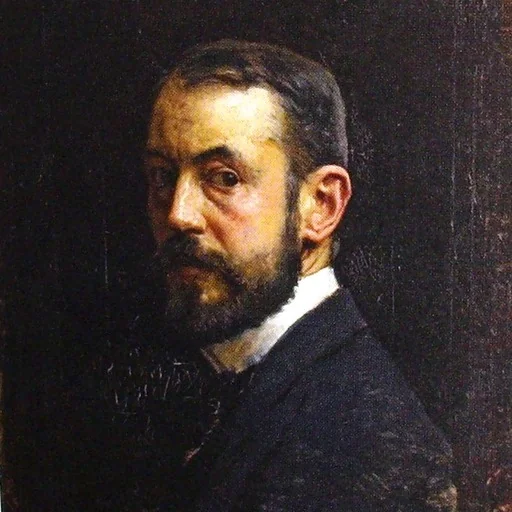
José Moreno Carbonero (Spanish: ; 24 March 1858 – 15 April 1942) was a Spanish painter and decorator.


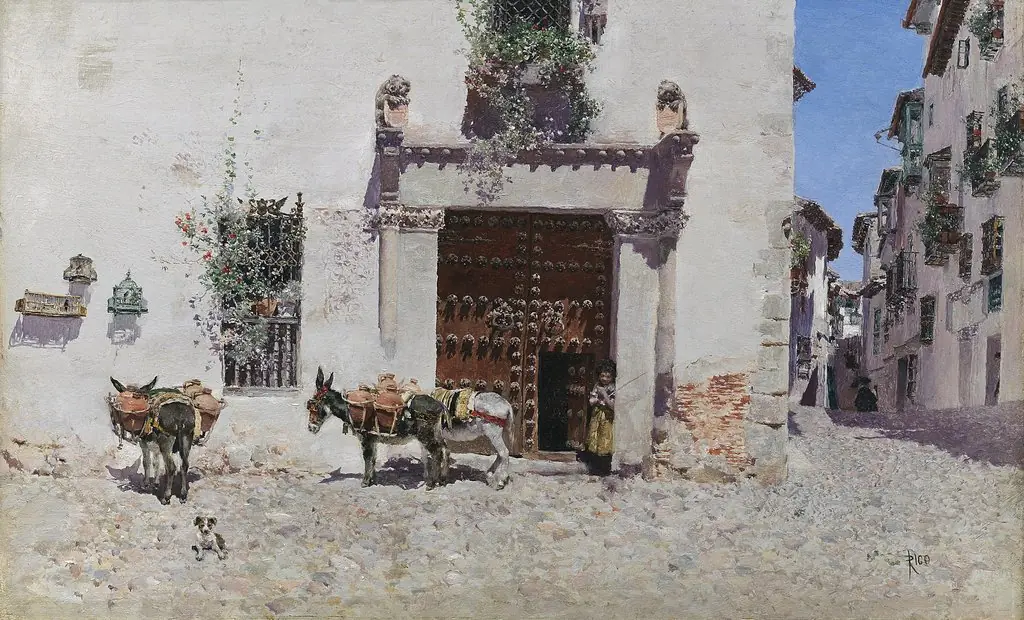 Doorway of a House in Toledo
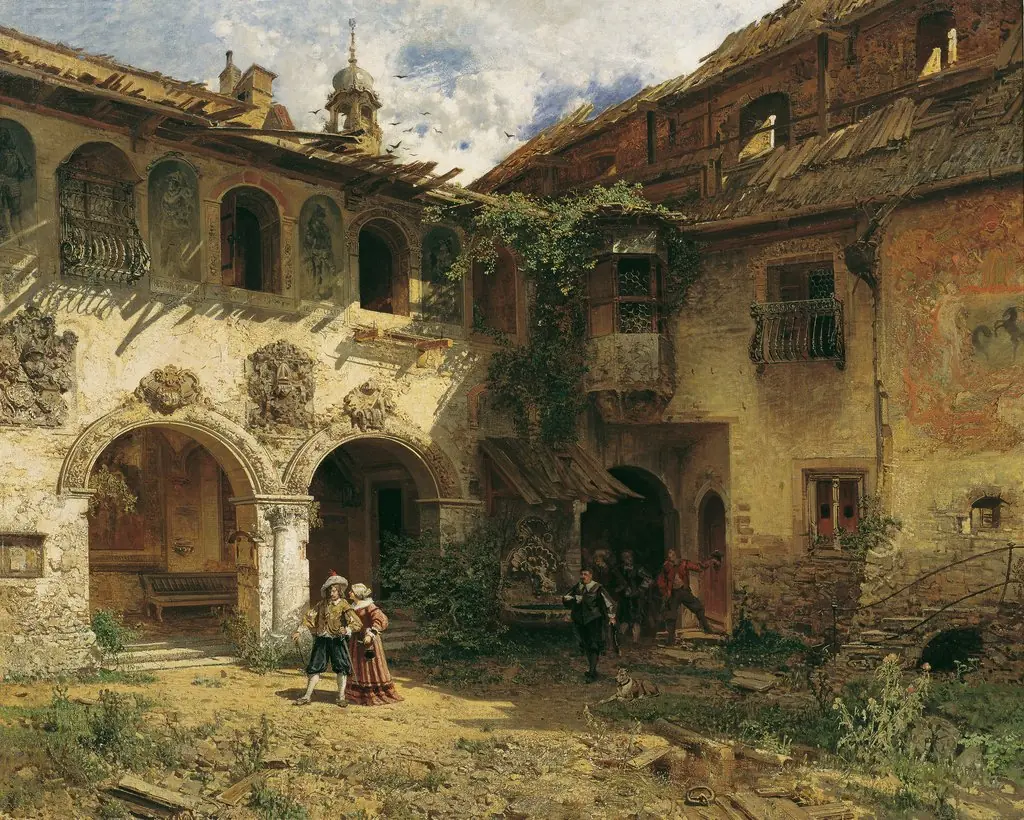 Hof der Fürstenburg in Burgeis
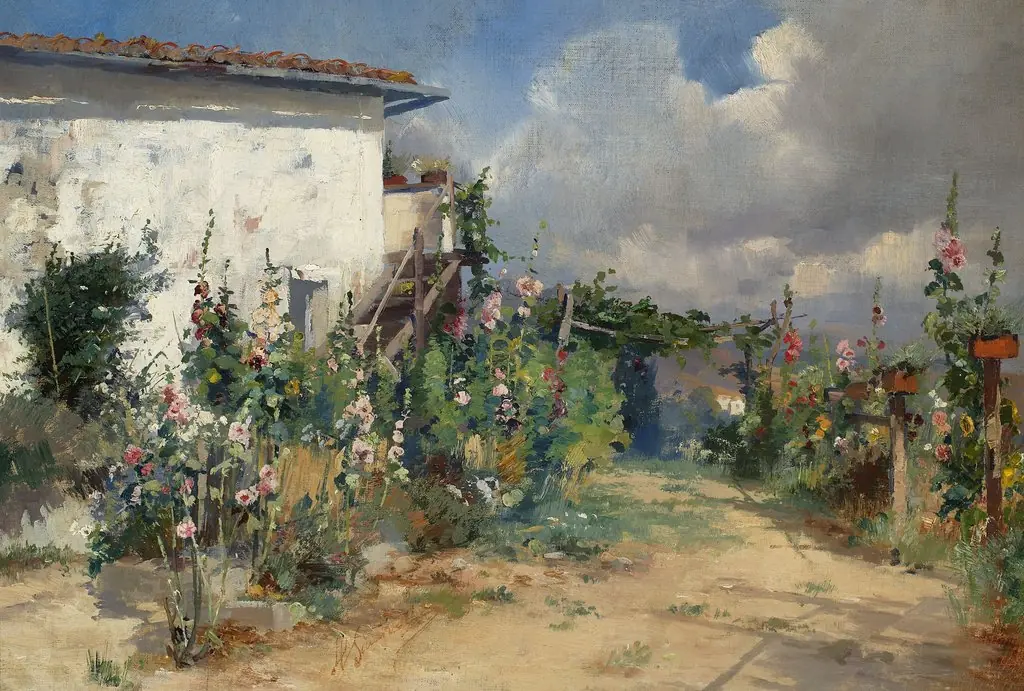 House with hollyhocks in the garden
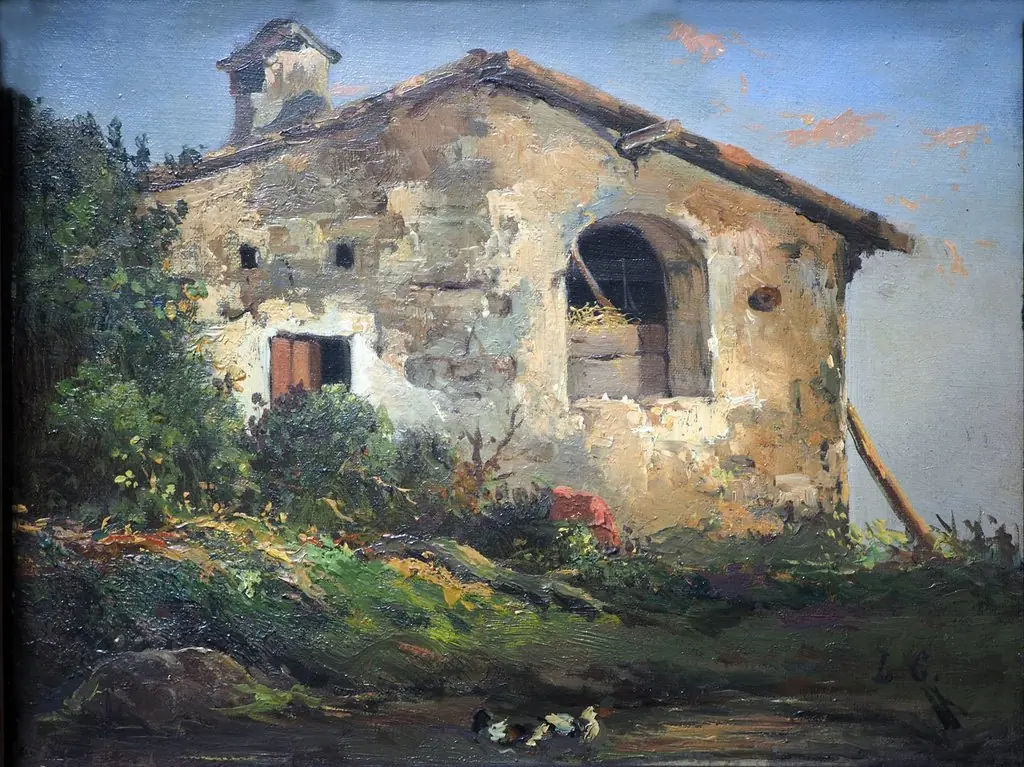 Derelict House
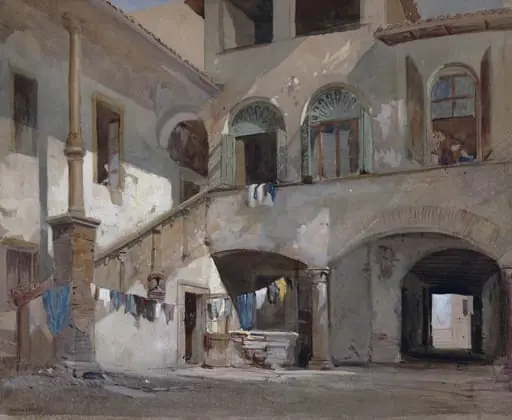 An Italian Courtyard
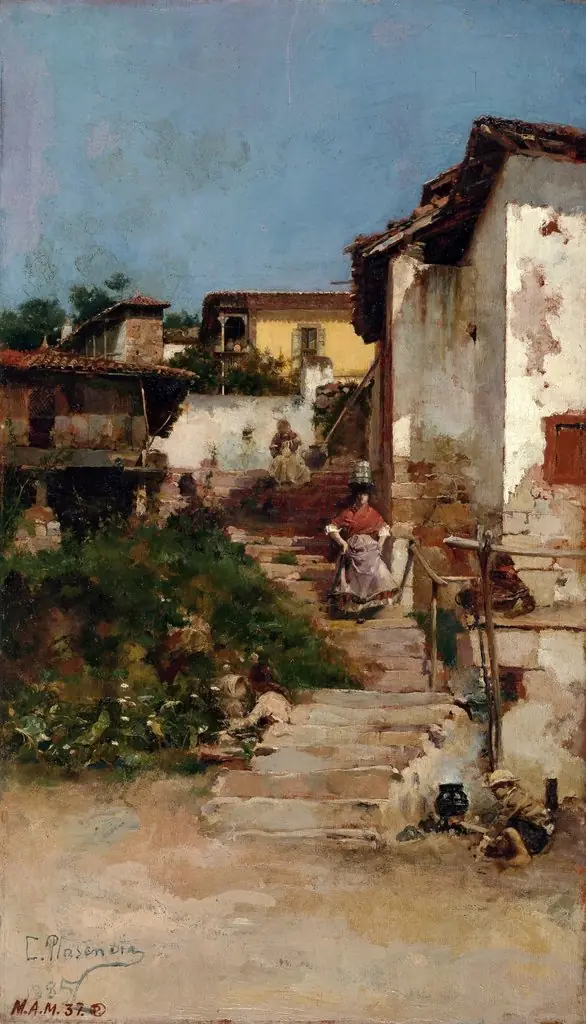 San Esteban de Pravia
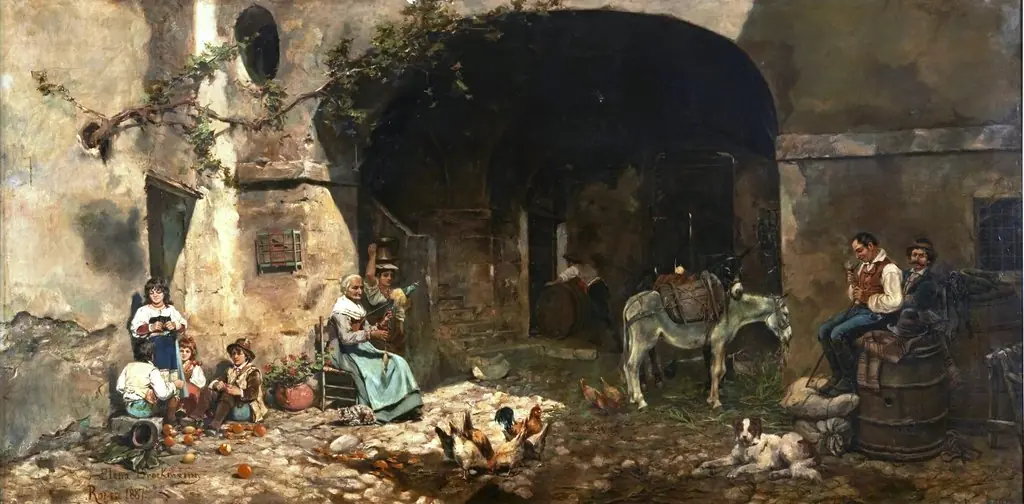 El patio de un parador
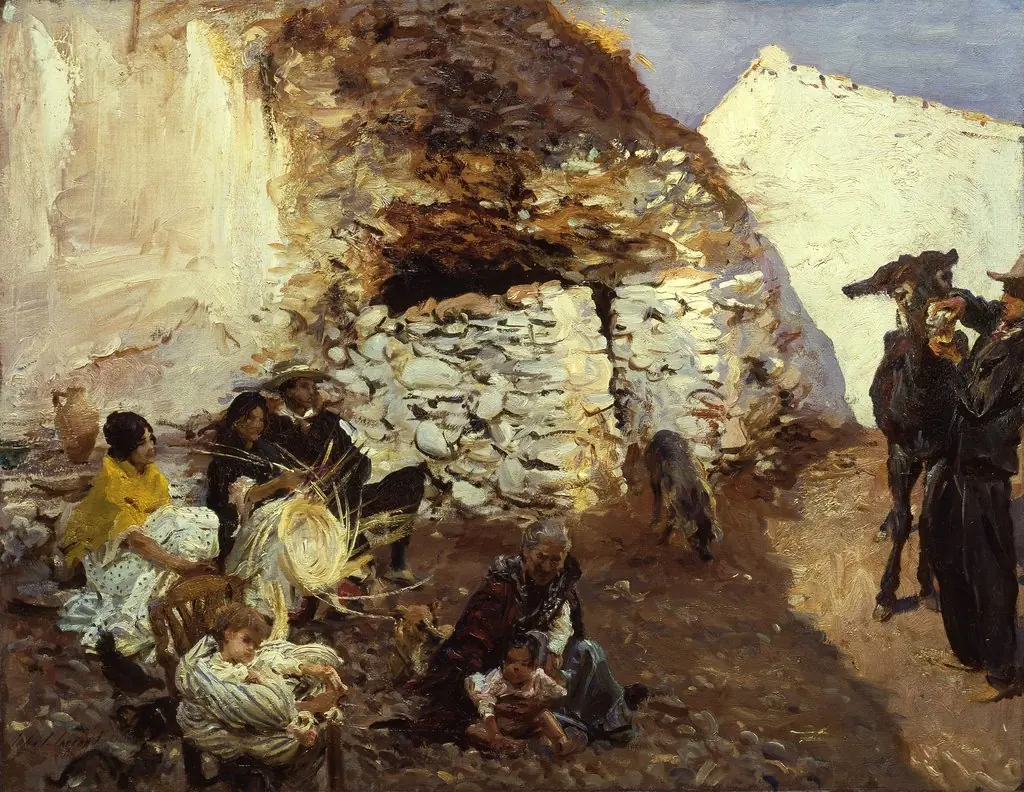 Gypsy Encampment, Granada, Spain
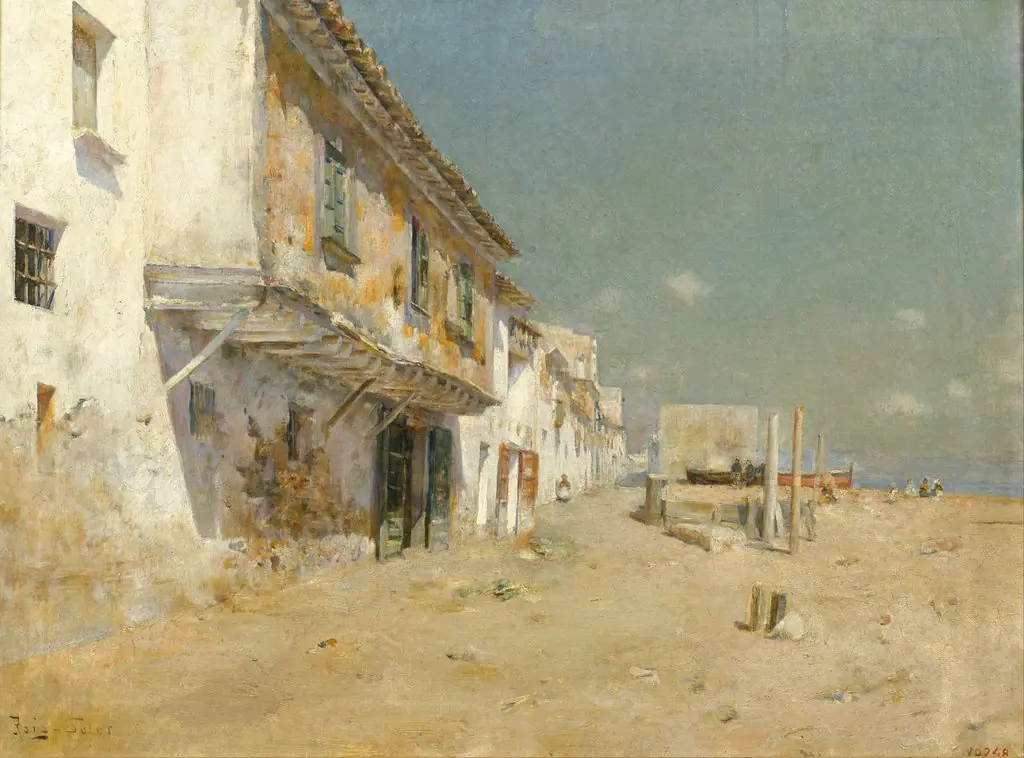 Blanes Beach
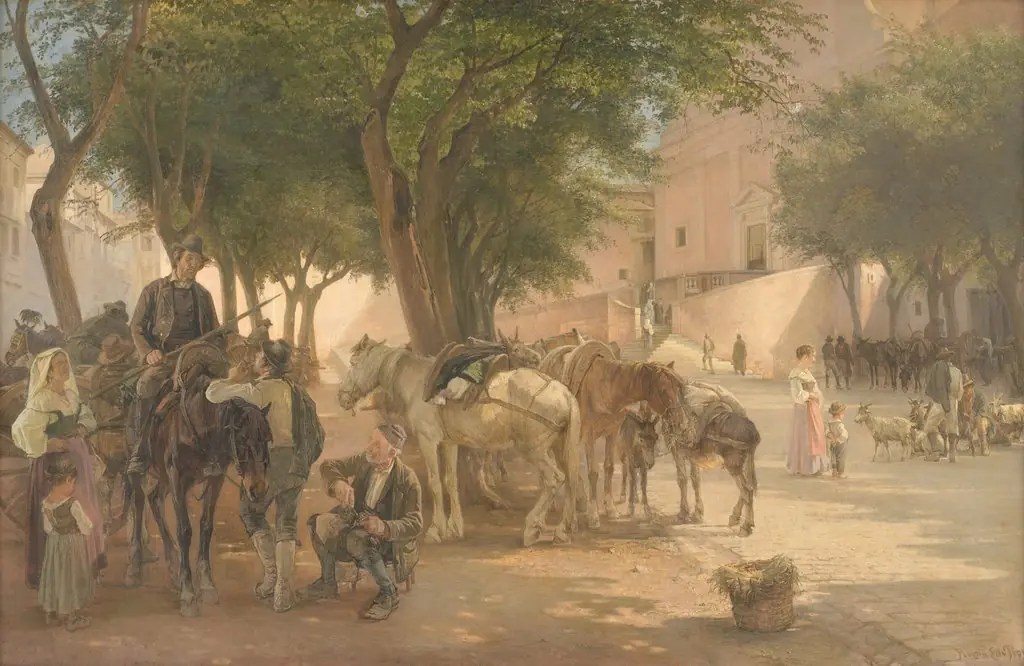 At the Capuchin Monastery in Rome
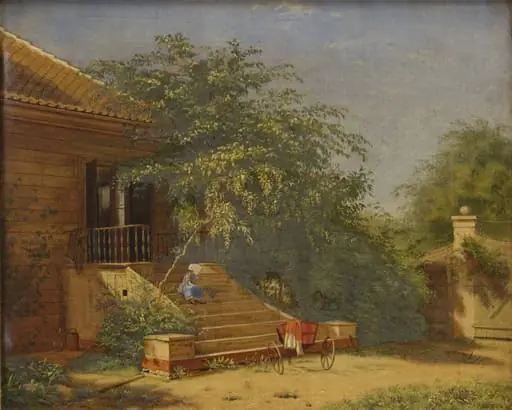 The Garden Steps Leading to the Painter Christen Købke's Studio at Blegdammen, Copenhagen
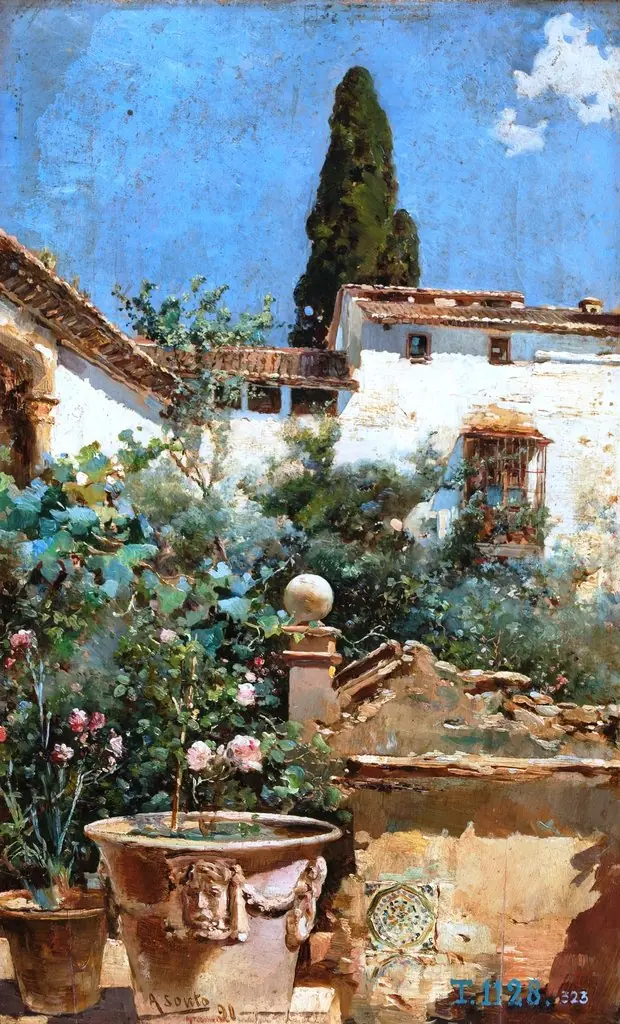 Paisaje de Granada