Artwork
Paisaje del Guadaíra en el momento de ser atravesado por ganado
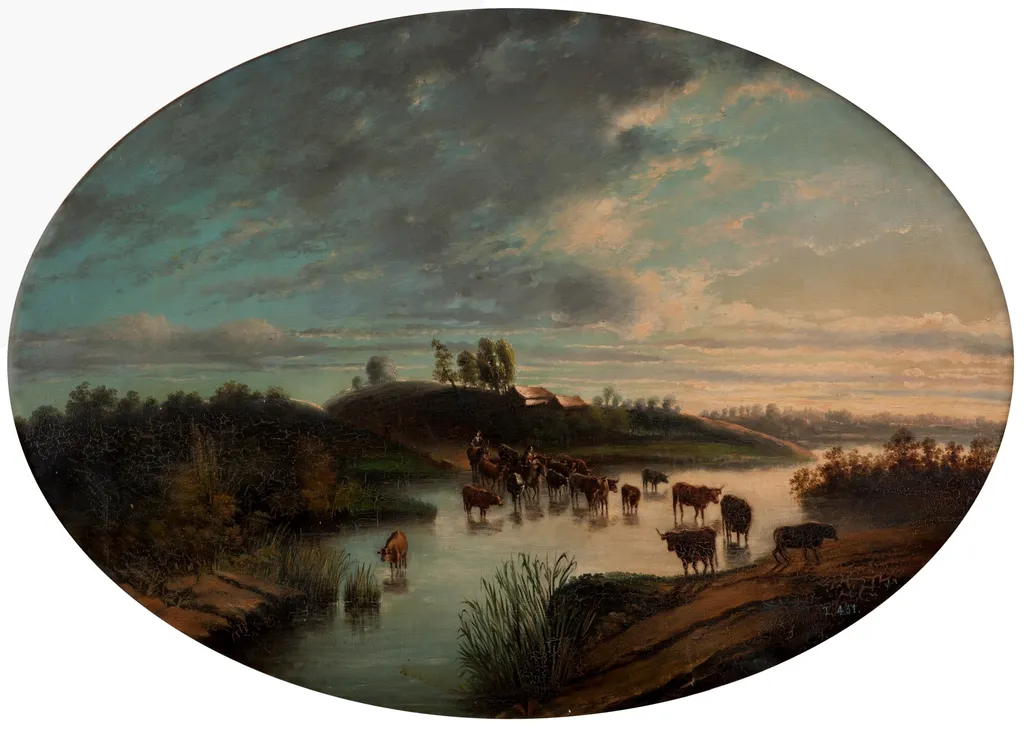
Paisaje del Guadaíra en el momento de ser atravesado por ganado is an oil painting by the Post-Impressionist artist José Ramill y Muñoz. It dates from 1871 and is held in the collection of the Museo del Prado.
About this work
Overview
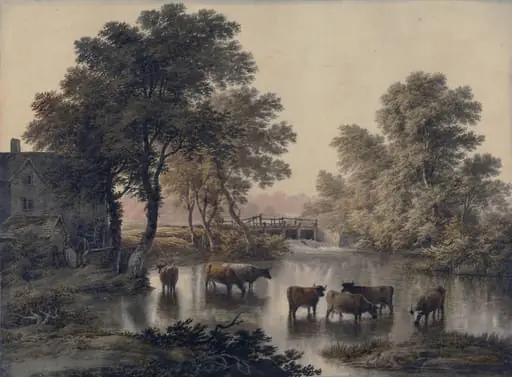
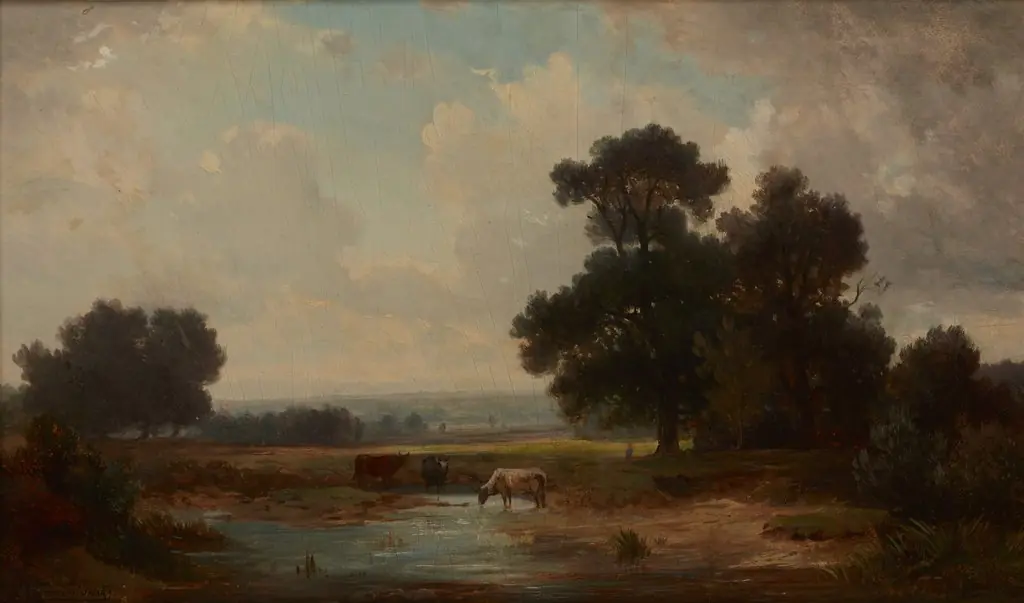
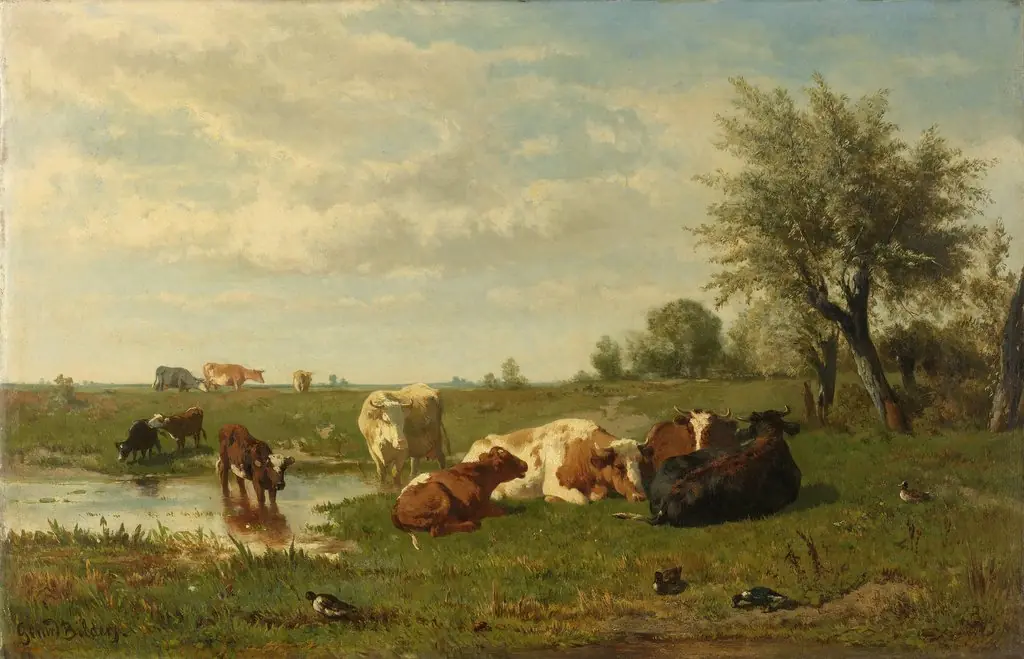
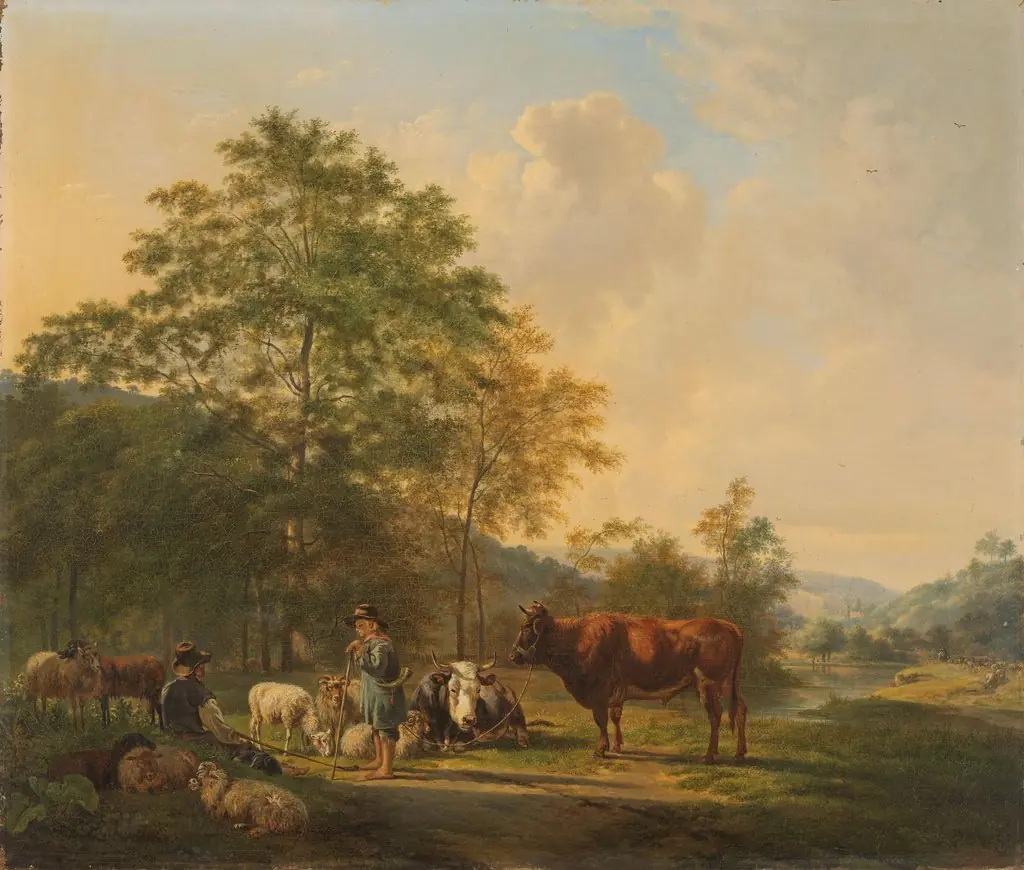
It captures a moment of everyday life in the Spanish countryside, focusing on livestock crossing a shallow stream amid natural surroundings.
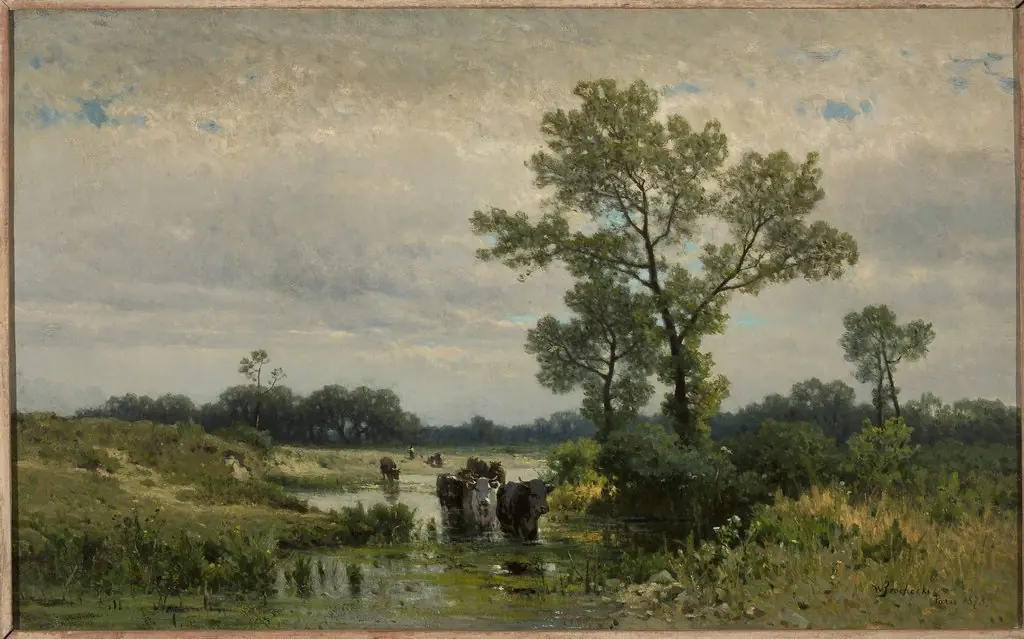
Painted in 1871 by José Ramill y Muñoz, this oil on canvas depicts a quiet rural scene along the Guadaíra River. The work is part of the permanent collection at the Museo del Prado in Madrid. It captures a moment of everyday life in the Spanish countryside, focusing on livestock crossing a shallow stream amid natural surroundings. The composition avoids dramatic action, instead emphasizing stillness and the quiet rhythm of pastoral existence.
Subject & Meaning
A small herd of dark brown cattle stands partially submerged in the river, with some resting on the muddy bank. The animals are grouped centrally, drawing the eye without dominating the scene. A distant hill crowned by a single structure suggests human habitation, subtly linking the natural world with rural economy. The painting conveys no narrative beyond the animals’ pause, reflecting a quiet appreciation for the ordinary rhythms of agrarian life.
Technique & Style
Ramill y Muñoz employs soft, muted tones to render the overcast sky and the river’s reflective surface. Brushwork is restrained, favoring smooth transitions between elements rather than sharp detail. The cows are rendered with solid, rounded forms, their dark bodies contrasting gently against the pale water and earth. The atmospheric perspective and subdued palette align with 19th-century Spanish landscape traditions that valued tonal harmony over dramatic contrast.
History & Provenance
The painting entered the Museo del Prado’s collection shortly after its completion in 1871. It was likely acquired through official channels, as Ramill y Muñoz was an active participant in Spain’s academic art circles. No significant changes in ownership are recorded, and the work has remained in public hands since its creation, preserved as part of Spain’s regional landscape tradition.
Context
Created during a period when Spanish artists increasingly turned to native landscapes and rural subjects, this work reflects a broader shift away from historical or mythological themes. Ramill y Muñoz, like contemporaries such as Carlos de Haes, sought to capture the Spanish countryside with observational fidelity. The painting aligns with the quiet realism favored by regional academies, emphasizing local topography and daily life over idealized scenery.
Legacy
Though not widely exhibited outside Spain, the painting remains a representative example of late 19th-century Spanish landscape painting. It contributes to the understanding of how regional artists documented the natural environment without romanticization. Ramill y Muñoz’s focus on unadorned rural scenes helped sustain a tradition of observational painting that influenced later generations of Spanish realists.
Artist & collection