Artwork
Untitled
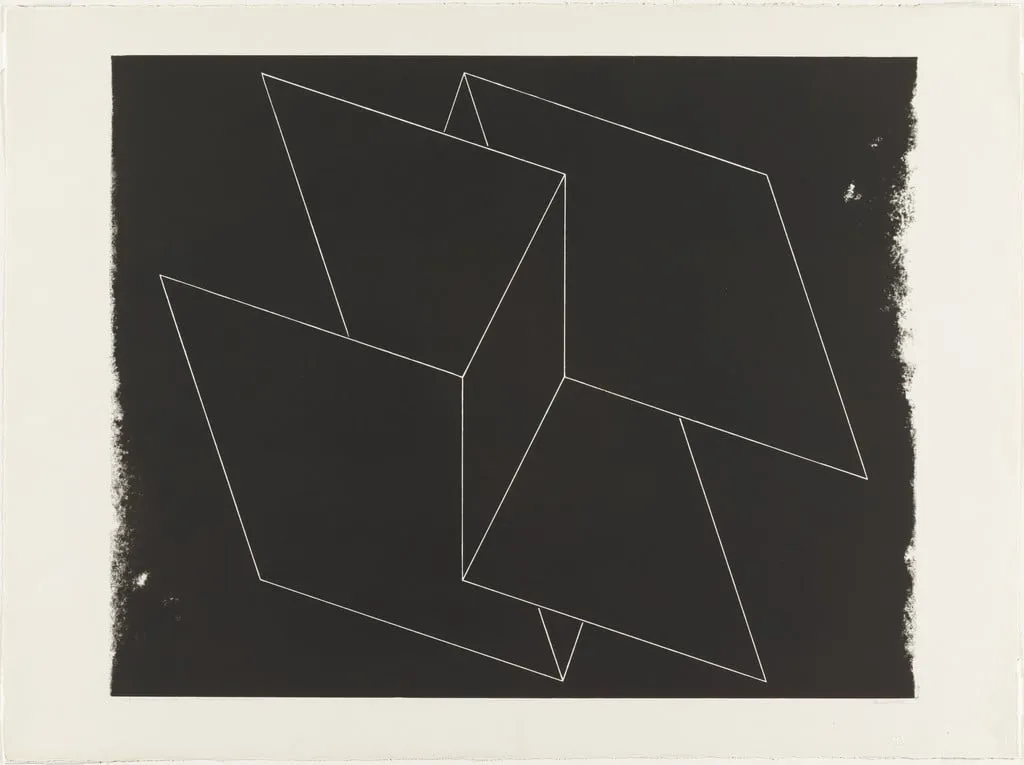
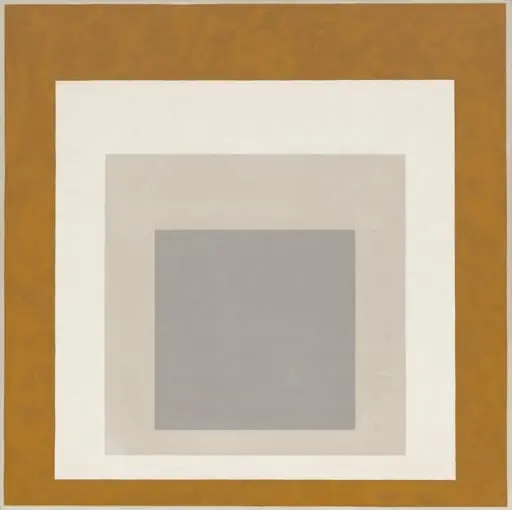
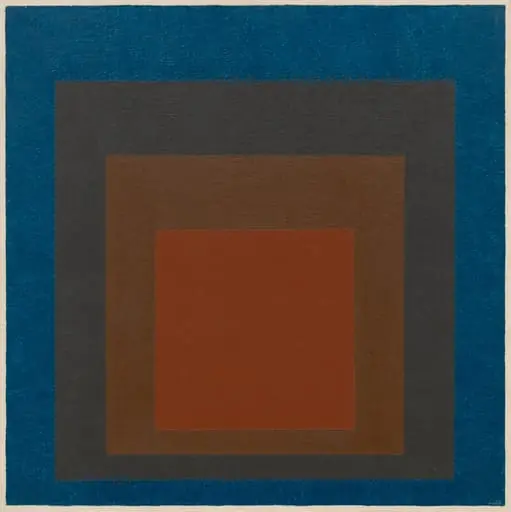
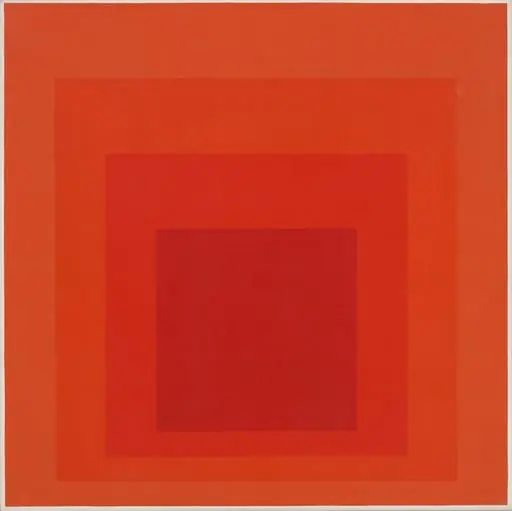
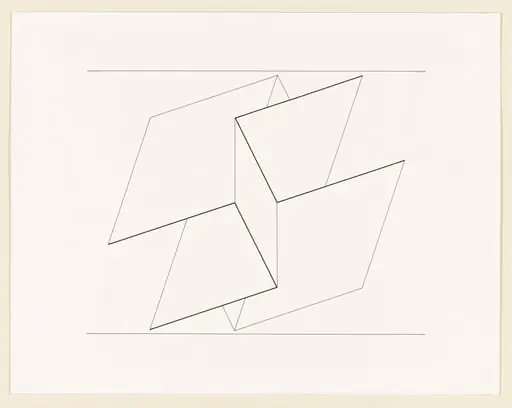
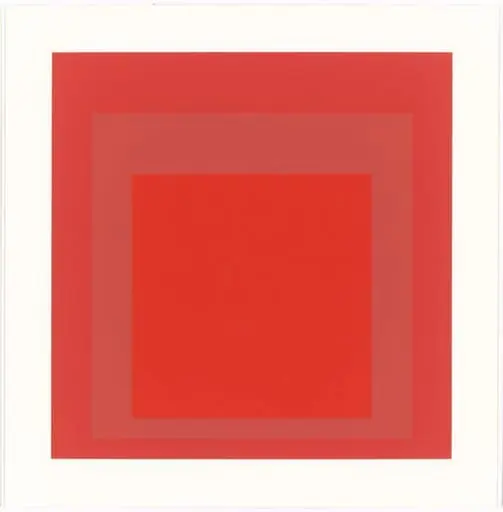
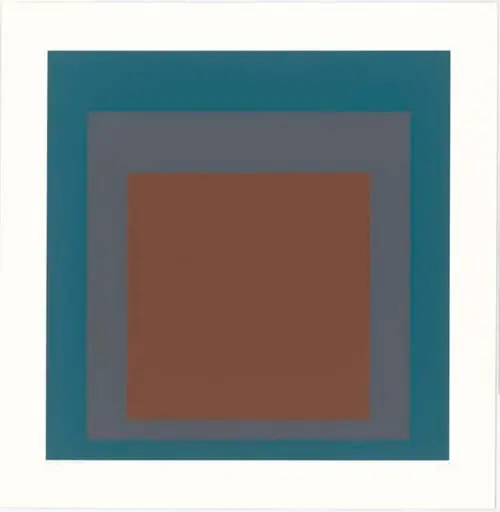
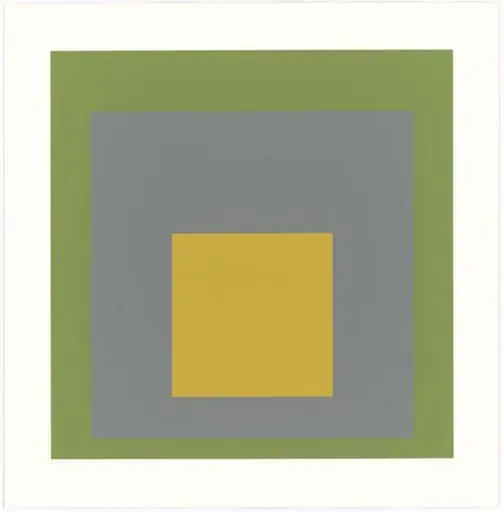
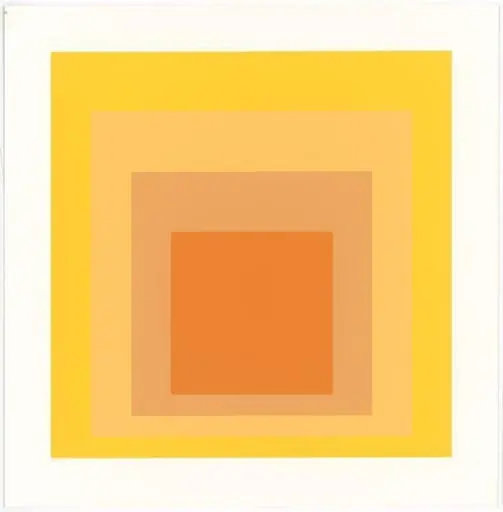
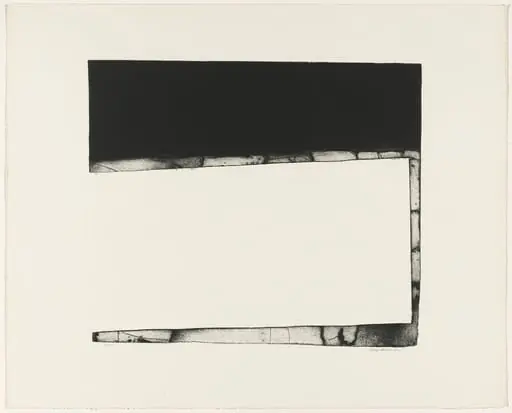
Untitled is an ink print by Josef Albers. It dates from 1962 and is held in the collection of the Museum of Modern Art.
About this work
Overview
Created in 1962, this lithograph by Josef Albers belongs to his later period, following his influential tenure at the Bauhaus and Black Mountain College.
Created in 1962, this lithograph by Josef Albers belongs to his later period, following his influential tenure at the Bauhaus and Black Mountain College. As a printmaker, Albers used lithography to refine his studies of visual perception, favoring the medium’s capacity for subtle tonal variation and precise line work. The work is part of a broader series exploring geometric forms and color interaction, though this piece omits color entirely, focusing instead on contrast and spatial ambiguity.
Subject & Meaning
Three abstract, box-like forms appear to hover or stack asymmetrically against a dark field. Their tilted planes and irregular alignment disrupt conventional perspective, suggesting depth without relying on traditional spatial cues. The shapes resist clear identification—neither architecture nor object—inviting the viewer to consider how perception shapes recognition. Albers intended such ambiguity to reveal how context alters visual experience, even in minimal compositions.
Technique & Style
The lithograph employs hand-drawn lines on stone, with deliberate softness in the edges, suggesting slight smudging or uneven ink distribution. The rough paper borders imply the print was trimmed by hand, reinforcing its handmade quality. The stark contrast between white forms and black ground emphasizes tonal relationships over color, aligning with Albers’s focus on how light, shadow, and proximity influence visual interpretation.
History & Provenance
This work emerged during Albers’s time at Yale University, where he continued refining his color and form theories. It was likely produced in a university print workshop, consistent with his practice of using printmaking as a pedagogical tool. The piece was not widely exhibited at the time, and its provenance remains tied to private collections and institutional archives that preserved his lesser-known prints from the 1960s.
Context
In the early 1960s, American art was shifting toward Minimalism and Conceptualism, yet Albers remained committed to perceptual inquiry rather than ideological statements. His work stood apart from the dominant trends by prioritizing systematic observation over expression. This lithograph reflects his belief that seeing itself—rather than subject matter—was the true subject of art, a stance rooted in his Bauhaus training and lifelong teaching philosophy.
Legacy
Though less celebrated than his color studies, this lithograph exemplifies Albers’s enduring contribution to modern printmaking: using technical restraint to probe visual psychology. Its quiet complexity influenced later artists interested in geometry, perception, and the materiality of print. The work remains a quiet but significant document of his lifelong effort to make viewers aware of how they see, not just what they see.
Artist & collection
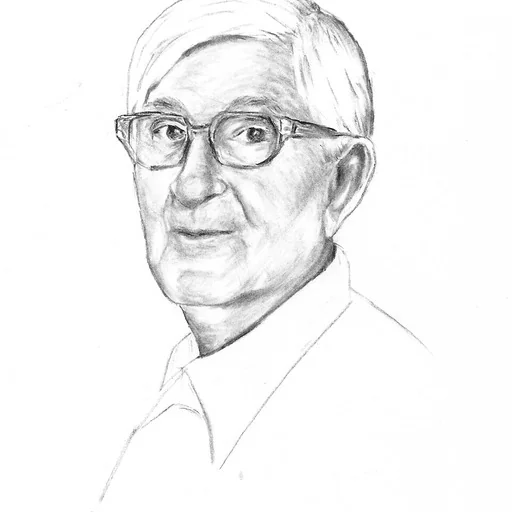
Artist
Josef Albers ( AL-bərz, US also AHL-, German: ; March 19, 1888 – March 25, 1976) was a German-born American artist and educator who is considered one of the most influential 20th-century art teachers in the United States.