Artwork
Untitled
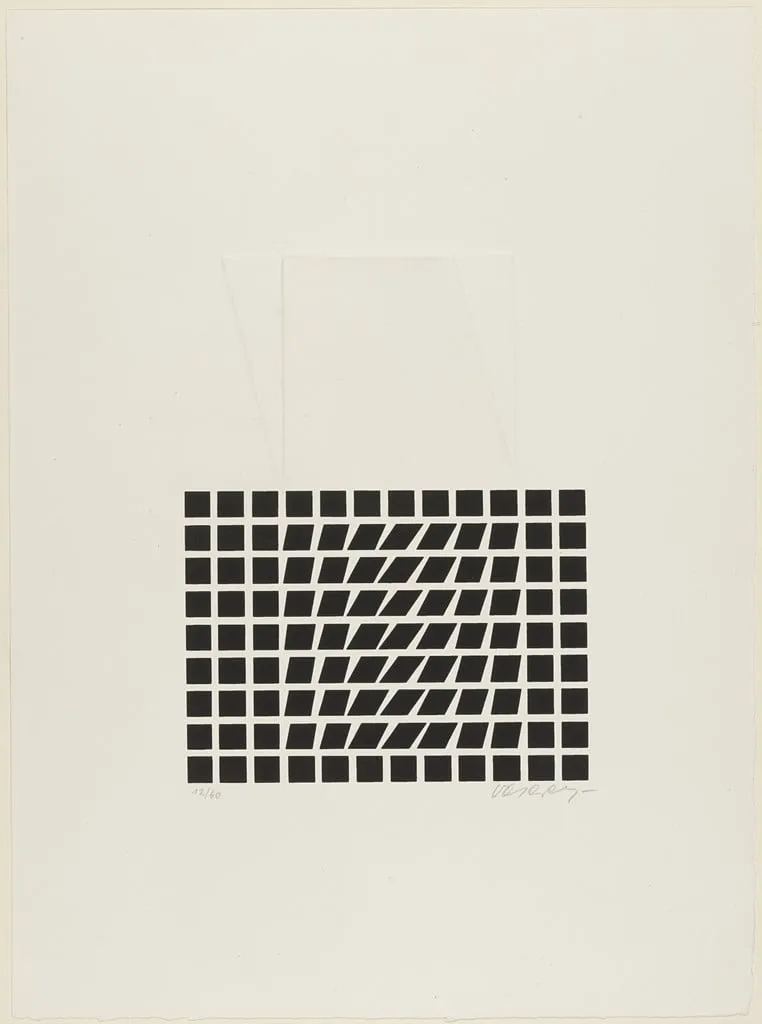
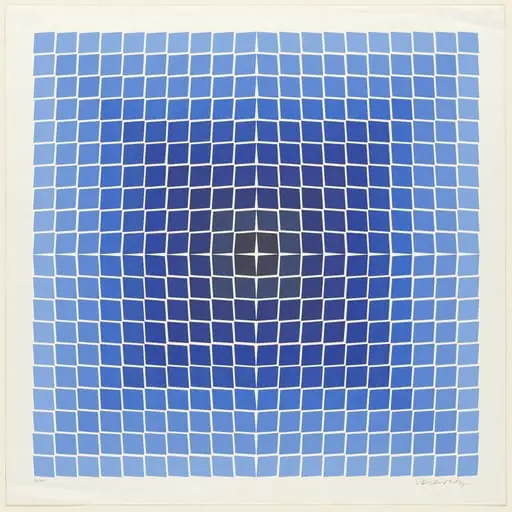
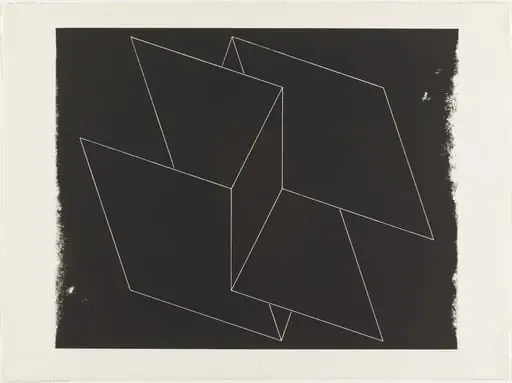
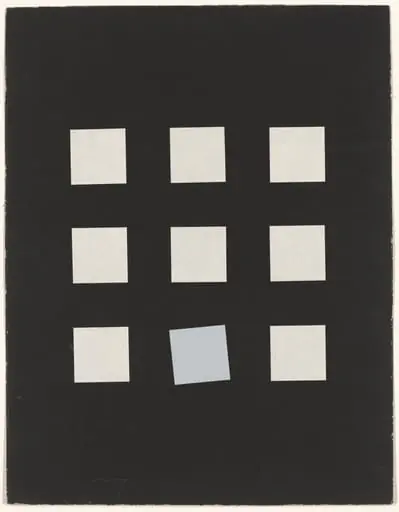
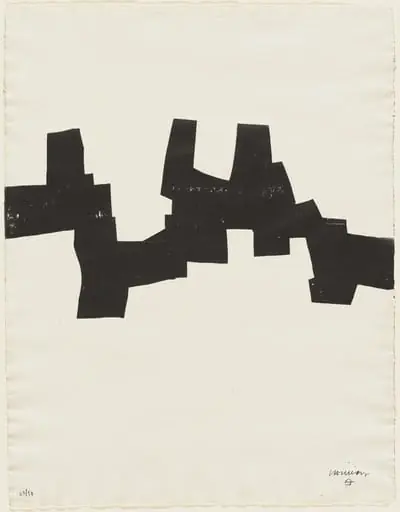
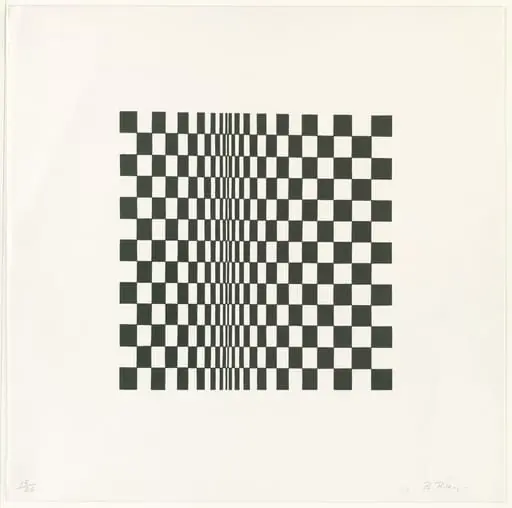
Untitled is an ink print by Victor Vasarely. It dates from 1960 and is held in the collection of the Museum of Modern Art.
About this work
Overview
The piece belongs to The Museum of Modern Art’s permanent collection and exemplifies his exploration of optical effects through precise geometric forms.
Created in 1960, this screenprint with embossing is one of many abstract works by Victor Vasarely, a Hungarian-born artist who settled in France. The piece belongs to The Museum of Modern Art’s permanent collection and exemplifies his exploration of optical effects through precise geometric forms. Unlike painterly abstractions, it relies on structure and repetition to generate visual tension without narrative content.
Subject & Meaning
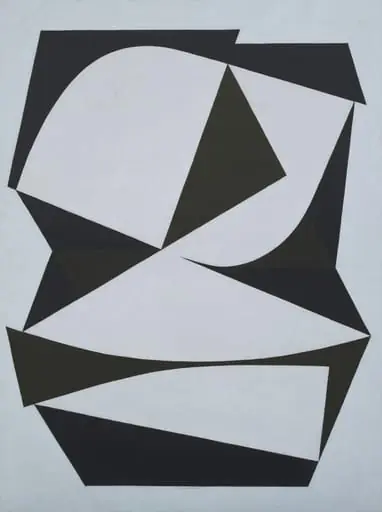
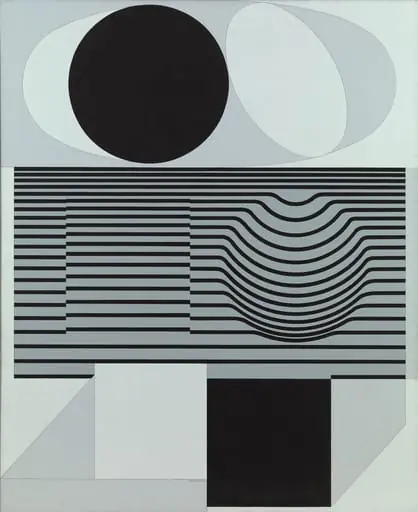
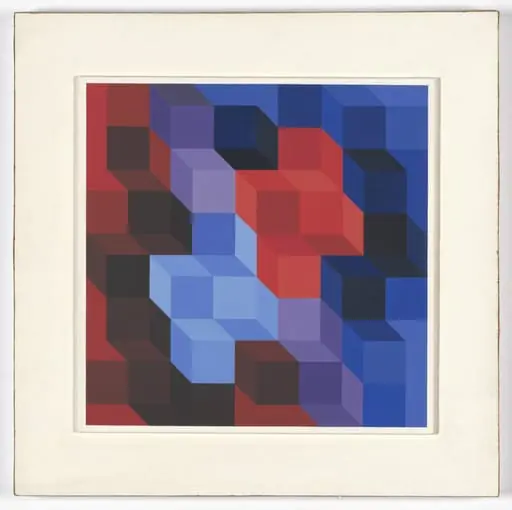
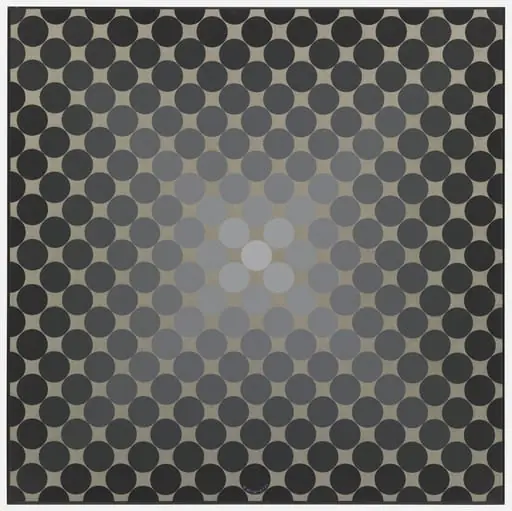
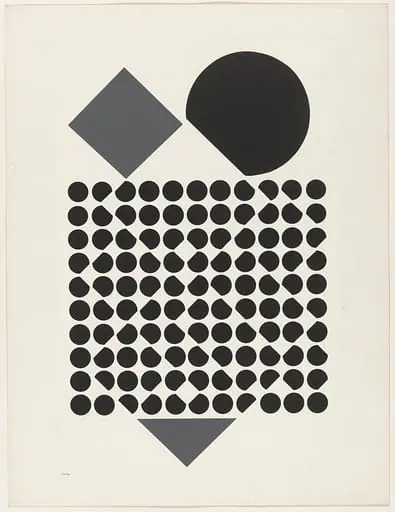
The composition consists of uniformly sized black rectangles, each inscribed with diagonal lines, arranged in a rigid grid. A small void at the top disrupts the pattern, introducing a subtle imbalance. The tilted orientation of the shapes creates a sense of instability within order, suggesting movement or perceptual shift. The work invites observation rather than interpretation, emphasizing visual rhythm over symbolic meaning.
Technique & Style
Vasarely employed screenprinting to achieve sharp, flat fields of black against a pale ground, while embossing added tactile dimensionality to the paper surface. The result is a hybrid of visual precision and physical texture. The slight angular deviation of each form introduces a controlled irregularity, a hallmark of his approach to systematic abstraction. The faint signature in the lower right corner is deliberately subdued, reinforcing the impersonal nature of the design.
History & Provenance
Produced during the height of Vasarely’s engagement with Op art, this print emerged from a period when he was refining his method of generating optical effects through repetition and modulation. It entered The Museum of Modern Art’s collection in the decades following its creation, reflecting institutional recognition of his role in advancing geometric abstraction in postwar printmaking.
Context
In the late 1950s and early 1960s, artists across Europe and the U.S. began investigating perception through structured compositions. Vasarely’s work aligned with broader interests in visual psychology and industrial design, rejecting expressive gesture in favor of mathematical clarity. His prints were often produced in editions, positioning them as accessible intermediaries between fine art and mass culture.
Legacy
This print contributes to a body of work that influenced later developments in graphic design, architecture, and digital visual culture. Vasarely’s emphasis on systematic form and perceptual ambiguity laid groundwork for subsequent explorations of visual illusion. While not overtly political or emotional, his prints remain significant for their rigorous interrogation of how structure affects seeing.
Artist & collection
Artist
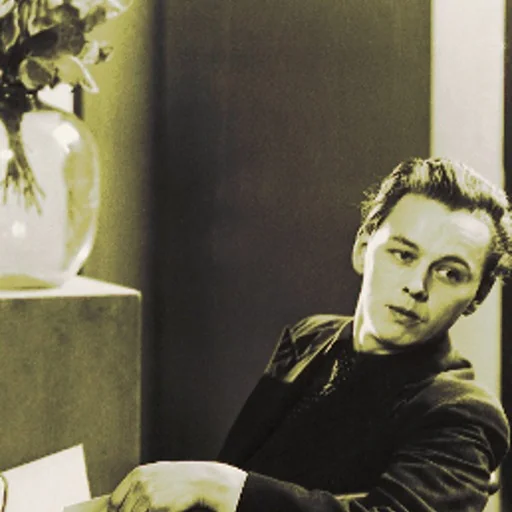
Victor Vasarely (French: ; born Vásárhelyi Győző, Hungarian: ; 9 April 1906 – 15 March 1997) was a Hungarian-French artist, who is widely accepted as a "grandfather" and leader of the Op art movement.