Artwork
The Shelling of ’s-Hertogenbosch by the French
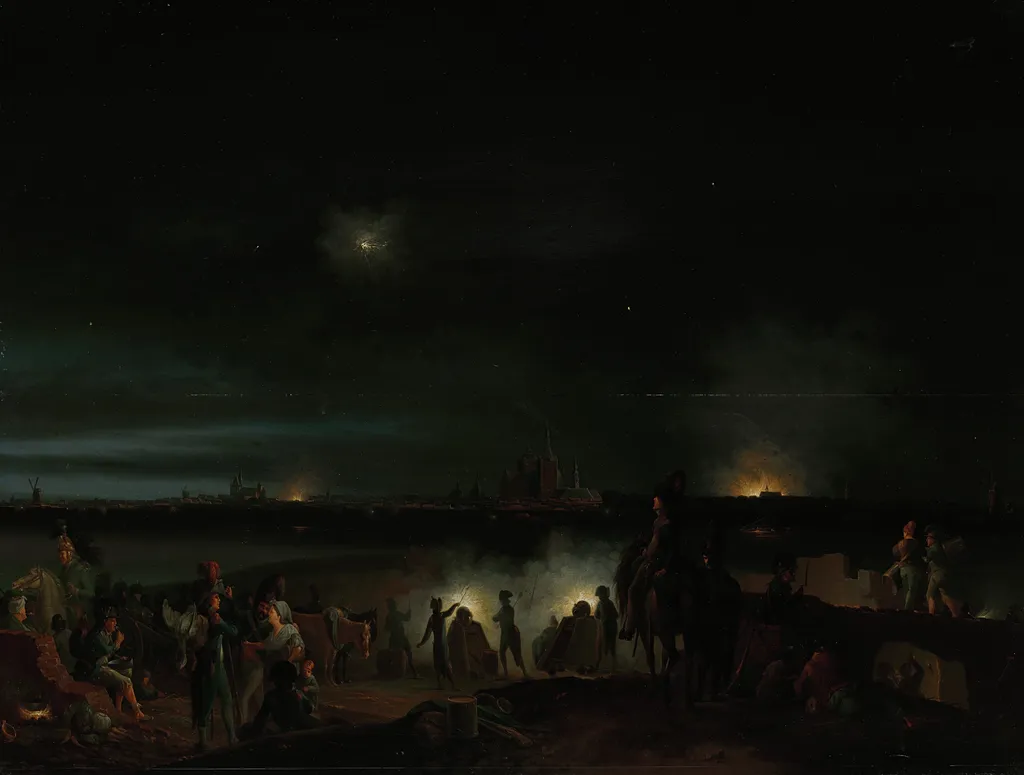
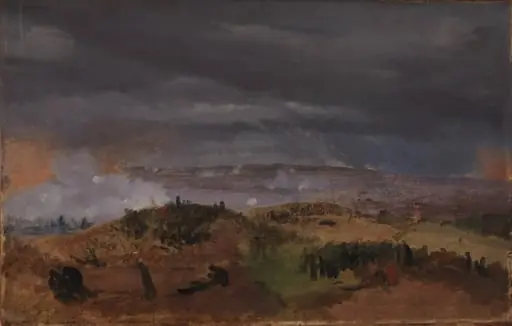
The Shelling of ’s-Hertogenbosch by the French is an oil painting by Joseph August Knip. It dates from 1800 and is held in the collection of the Rijksmuseum.
About this work
Overview
Joseph August Knip’s 1800 oil painting, *The Shelling of ’s‑Hertogenbosch by the French*, captures a nocturnal assault on the Dutch city. The canvas, now part of the Rijksmuseum’s holdings, presents a turbulent riverside scene illuminated by fire and a fleeting meteor, foregrounded by a scattered crowd observing the devastation.
Subject & Meaning
The work portrays a chaotic night on the banks of a river as French forces bombard ’s‑Hertogenbosch. Figures—some standing, others seated—are rendered as small, vulnerable observers amid burning structures and rising smoke, suggesting the civilian experience of wartime terror and the fleeting nature of safety.
Technique & Style
Knip employs a stark chiaroscuro, contrasting deep, shadowy tones with the bright orange of flames and the luminous meteor. This lighting scheme heightens drama, while the loose handling of figures and atmospheric effects convey movement and uncertainty, typical of early‑19th‑century Dutch narrative painting.
History & Provenance
Created in 1800, the painting reflects contemporary events of the French Revolutionary Wars. After remaining in private hands, it entered the Rijksmuseum collection, where it is displayed as part of the museum’s representation of Dutch historical scenes from the Napoleonic era.
Own this work as a print
Artist & collection
Artist
Joseph August Knip (sometimes Latinized to Josephus Augustus Knip; baptized 3 August 1777 in Tilburg – buried 1 October 1847 in Berlicum) was a Dutch painter.

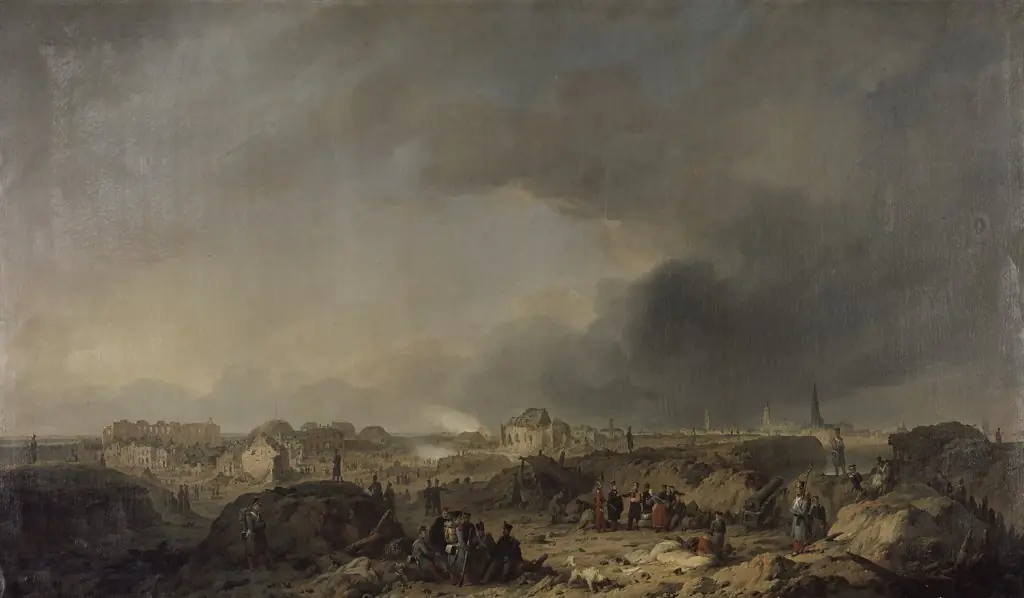 The Antwerp Castle after the Bombardement in 1832
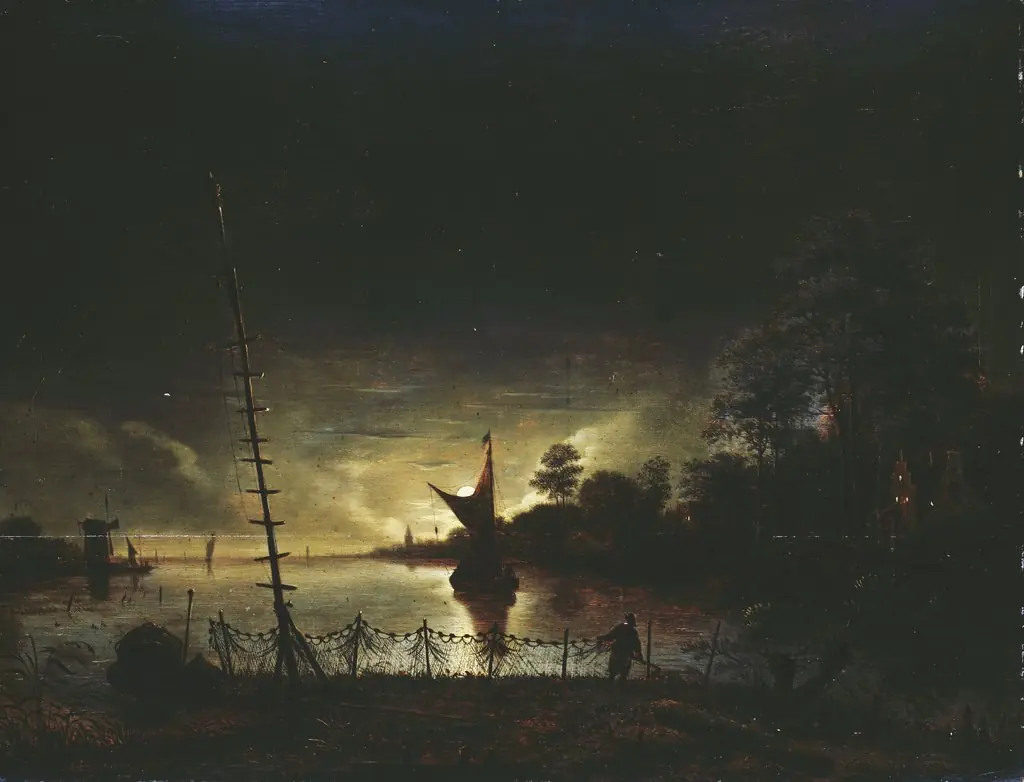 Moonlit landscape
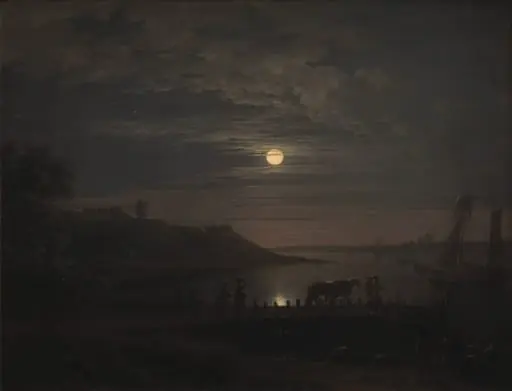 The Crossing over the Little Belt at Snoghøj. Moonrise
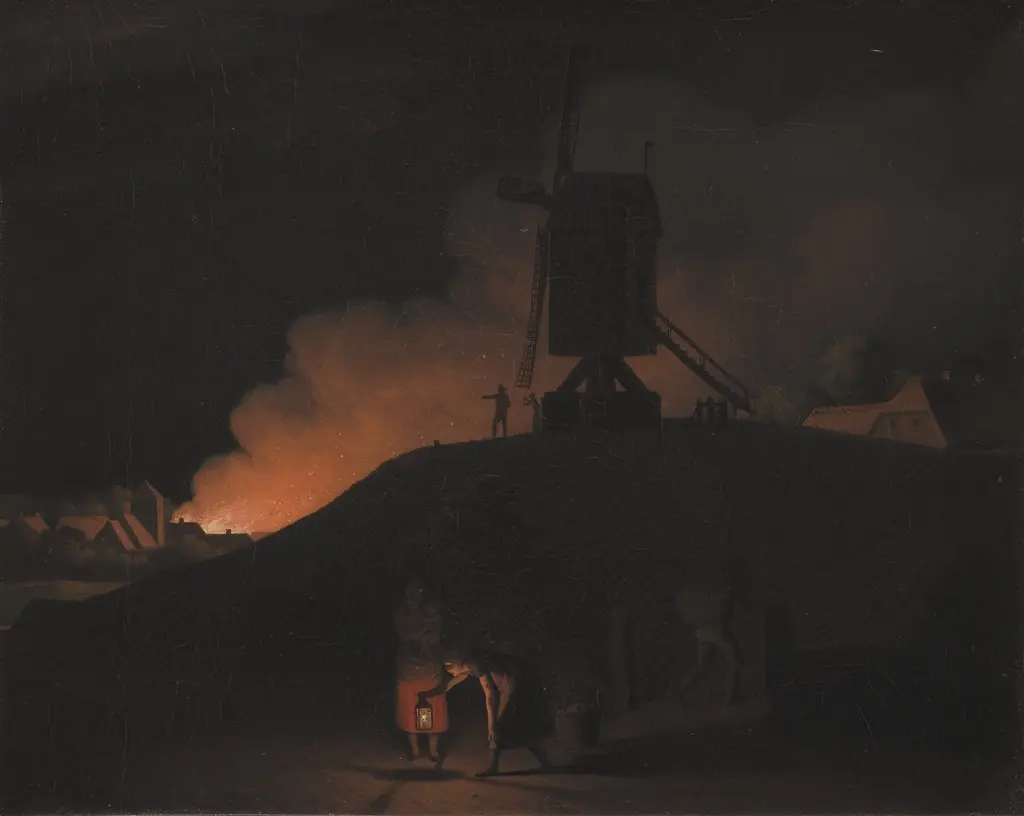 A Fire at Night
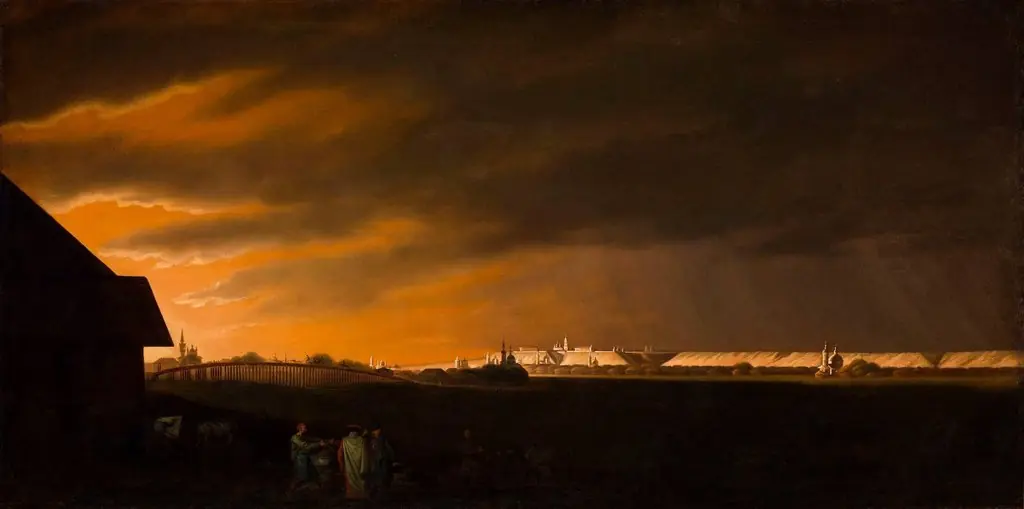 Sunset over Tobolsk.
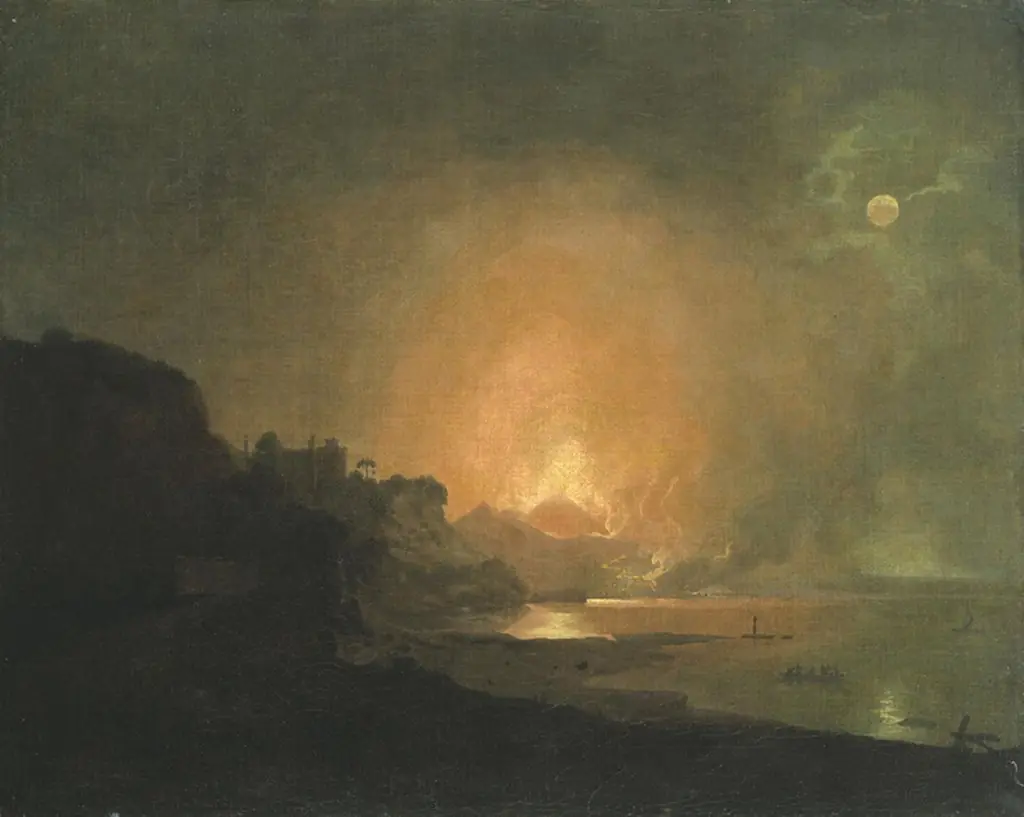 Vesuvius in Eruption
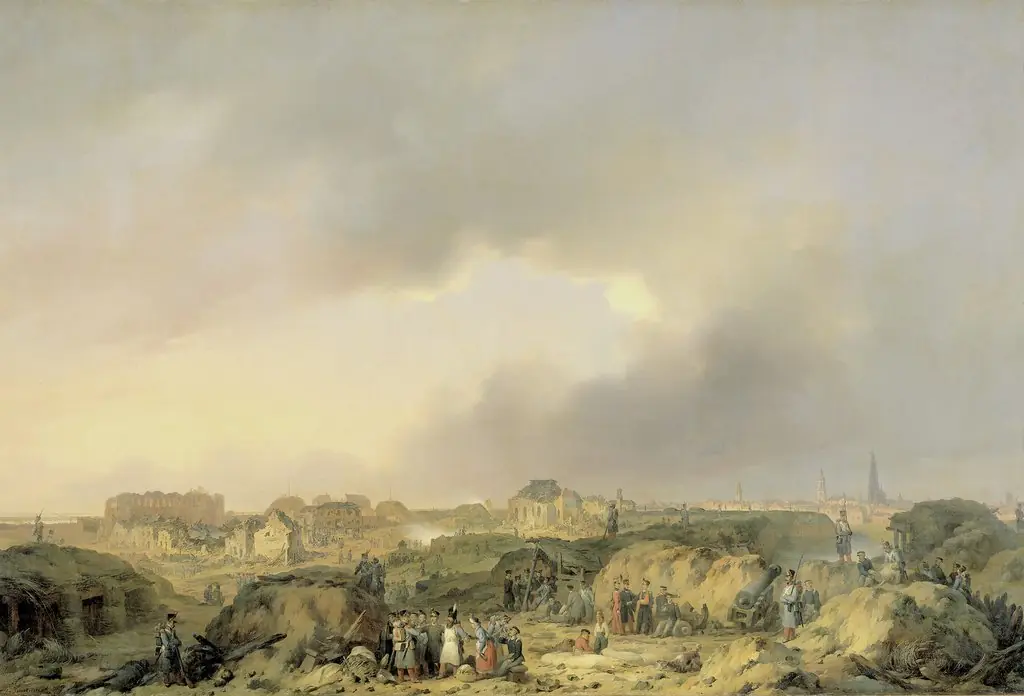 The Citadel of Antwerp shortly after the Siege of 19 November-23 December 1832, and the Surrender of the Dutch Garisson to the French
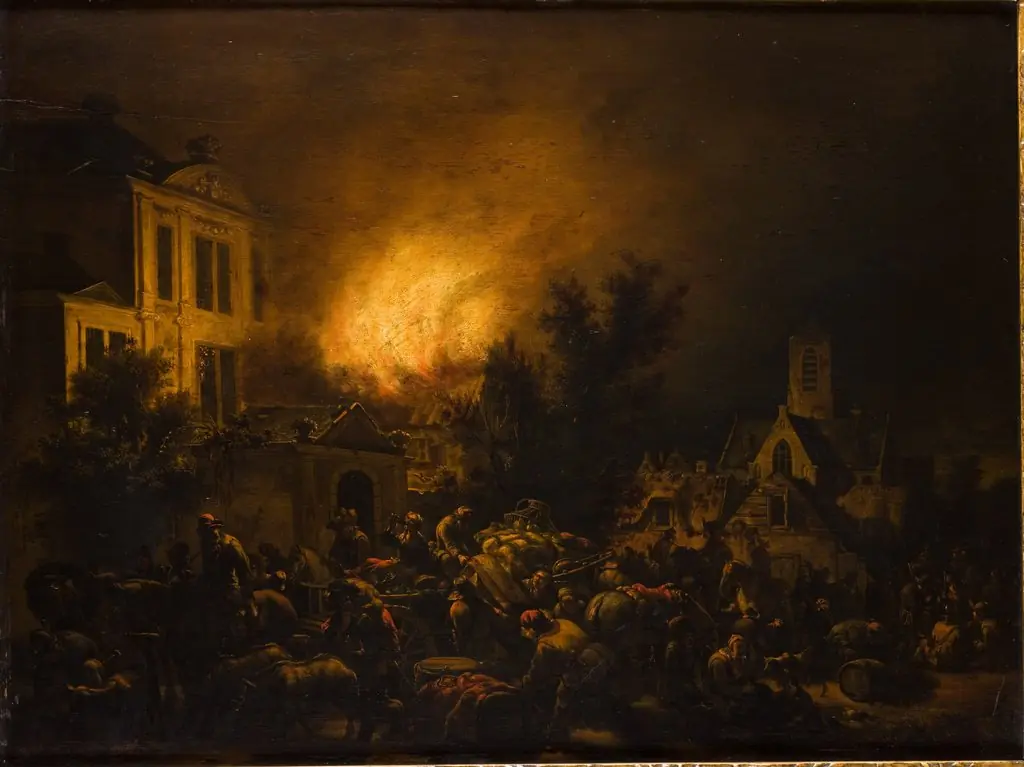 Fire in the City – Palace in the Fire
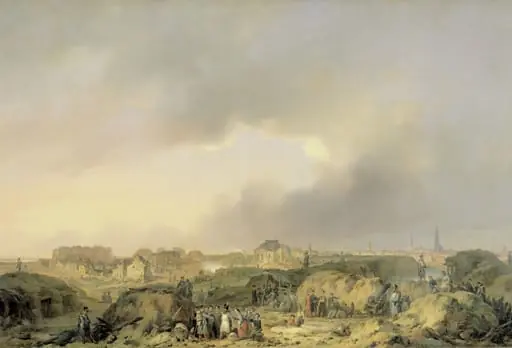 The Citadel of Antwerp shortly after the Siege of 19 November-23 December 1832, and the Surrender of the Dutch Garisson to the French
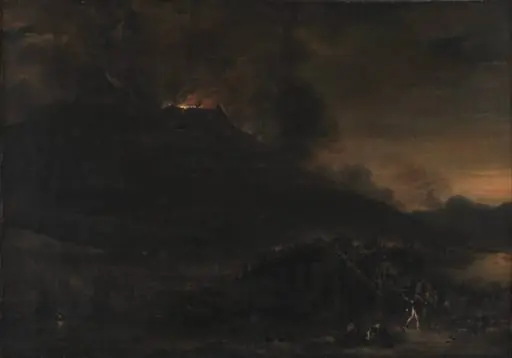 Vesuvius Erupting at Nightfall
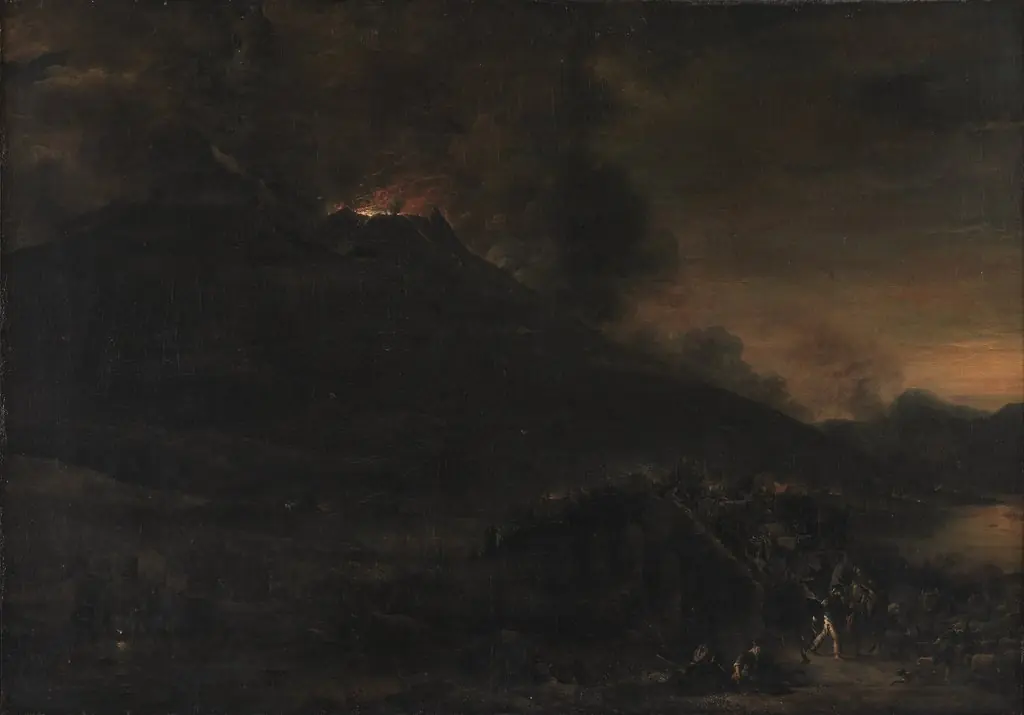 Vesuvius Erupting at Nightfall
 The Battle of Isted 25 July 1850. Study