Artwork
Vesuvius Erupting at Nightfall
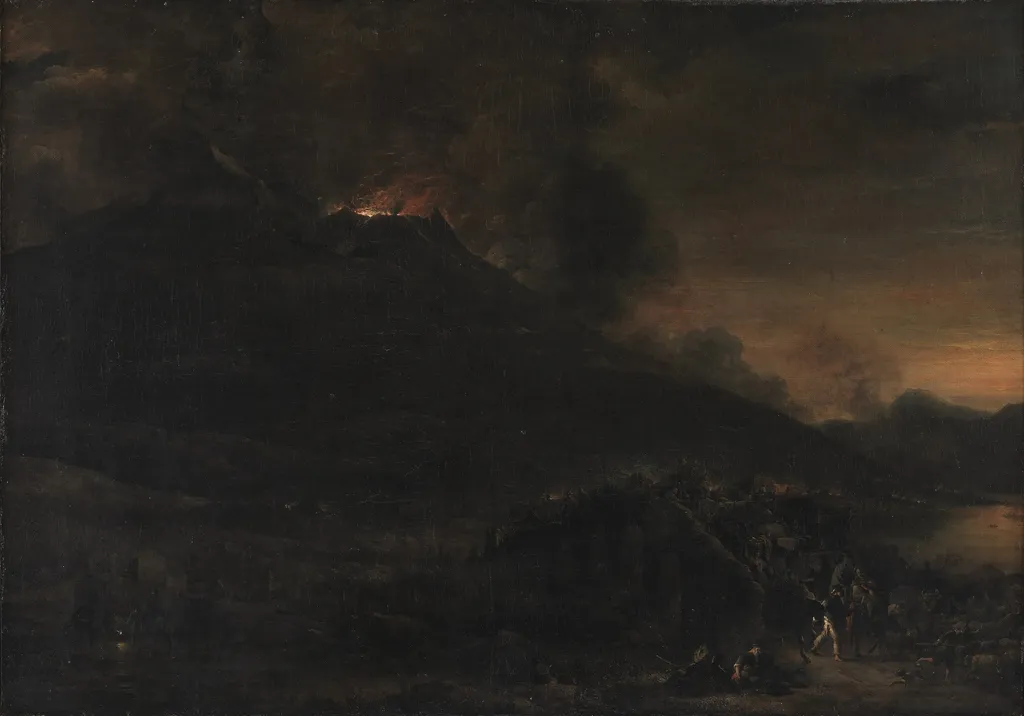
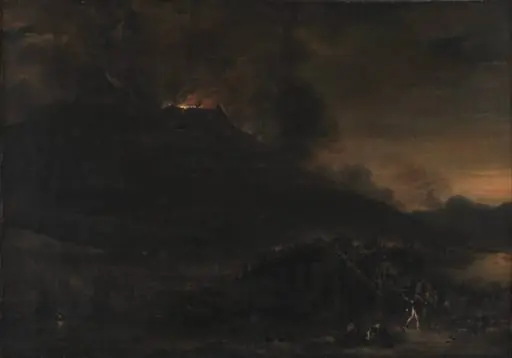
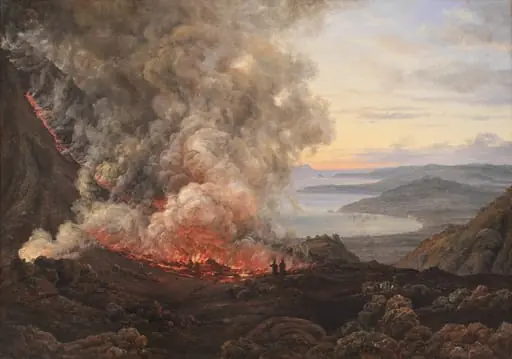
Vesuvius Erupting at Nightfall is an oil painting by the Dutch Golden Age artist Jan Asselijn. It dates from 1638 and is held in the collection of the Statens Museum for Kunst.
About this work
Overview
Painted in 1638 by Jan Asselijn, this oil work captures Mount Vesuvius in violent eruption under twilight.
Painted in 1638 by Jan Asselijn, this oil work captures Mount Vesuvius in violent eruption under twilight. The scene is rendered with intense contrast between the fiery glow of the volcano and the deepening night. Held in the collection of the Statens Museum for Kunst, the painting reflects a fascination with natural cataclysm common in early 17th-century Dutch art, though the subject is Italian in origin.
Subject & Meaning
The painting portrays a moment of human panic amid geological fury. Figures scramble across the foreground—some on horseback, others on foot—fleeing the advancing ash and heat. The eruption dominates the composition, suggesting nature’s overwhelming power over human effort. There is no clear religious or mythological narrative; instead, the focus lies in the raw immediacy of survival and destruction.
Technique & Style
Asselijn employs strong chiaroscuro to heighten the drama, contrasting the incandescent reds and oranges of the lava with the cool blues and grays of the night sky. Bold, fluid brushwork conveys movement and turbulence, particularly in the swirling smoke and fleeing figures. The texture of ash and flame is suggested rather than meticulously detailed, emphasizing emotional impact over topographical accuracy.
History & Provenance
The painting entered the Danish national collection in the 19th century, likely through acquisitions of Dutch and Flemish works during a period of renewed interest in Northern European Baroque art. Its attribution to Asselijn has remained consistent, though little documentation exists regarding its early ownership or exhibition history prior to its arrival in Copenhagen.
Context
While Dutch artists of the time typically favored landscapes and domestic scenes, a small group, including Asselijn, explored exotic or dramatic natural phenomena. Vesuvius, long associated with classical ruin and divine wrath, offered a potent subject. This painting aligns with broader European curiosity about volcanic activity, fueled by travel accounts and scientific observation emerging in the early modern period.
Legacy
Asselijn’s depiction of Vesuvius stands as one of the few Dutch Baroque paintings to treat a volcanic eruption as its central theme. It influenced later artists interested in sublime natural forces, though it never achieved widespread fame. Today, it remains a quiet testament to the period’s willingness to confront nature’s violence without romanticizing it.
Own this work as a print
Artist & collection

 Vesuvius Erupting at Nightfall
 The Eruption of Vesuvius
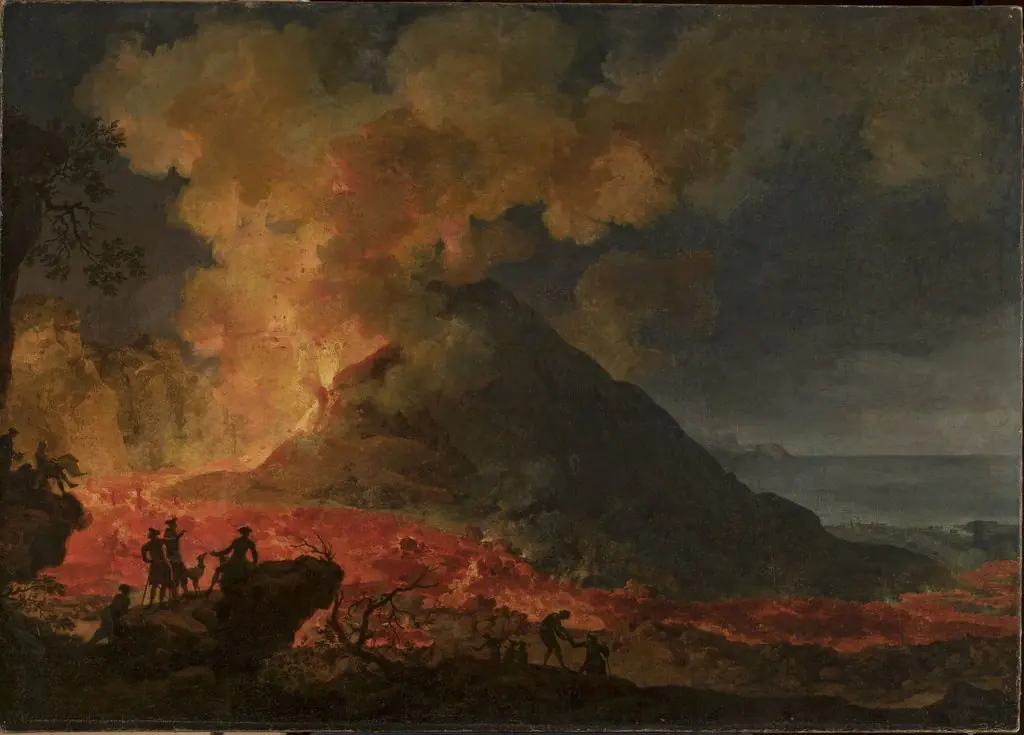 Eruption of Vesuvius
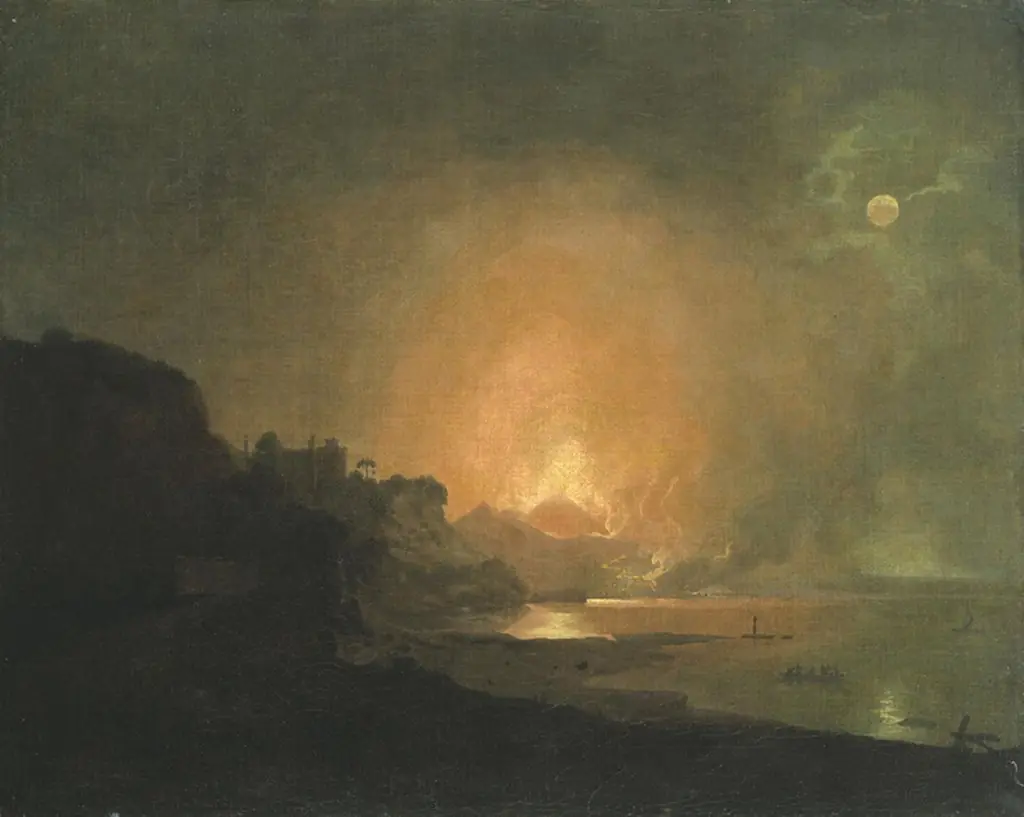 Vesuvius in Eruption
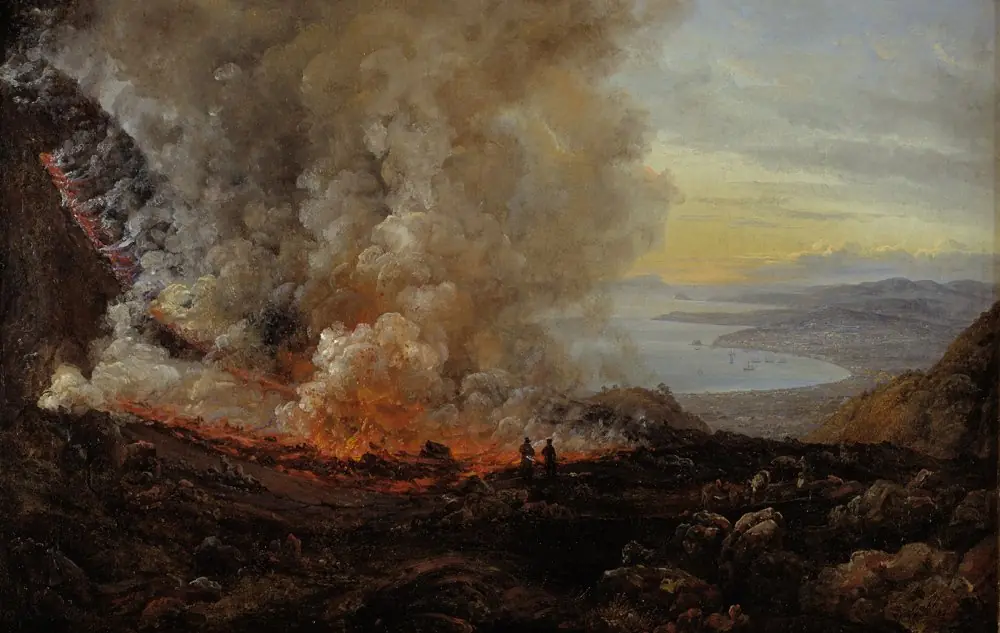 The Eruption of Vesuvius
 The Eruption of Vesuvius
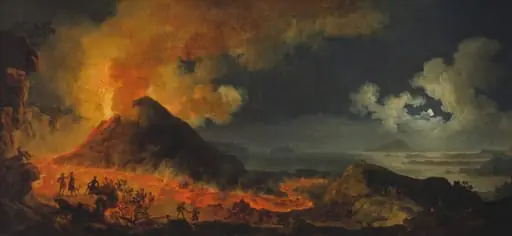 The Eruption of Vesuvius
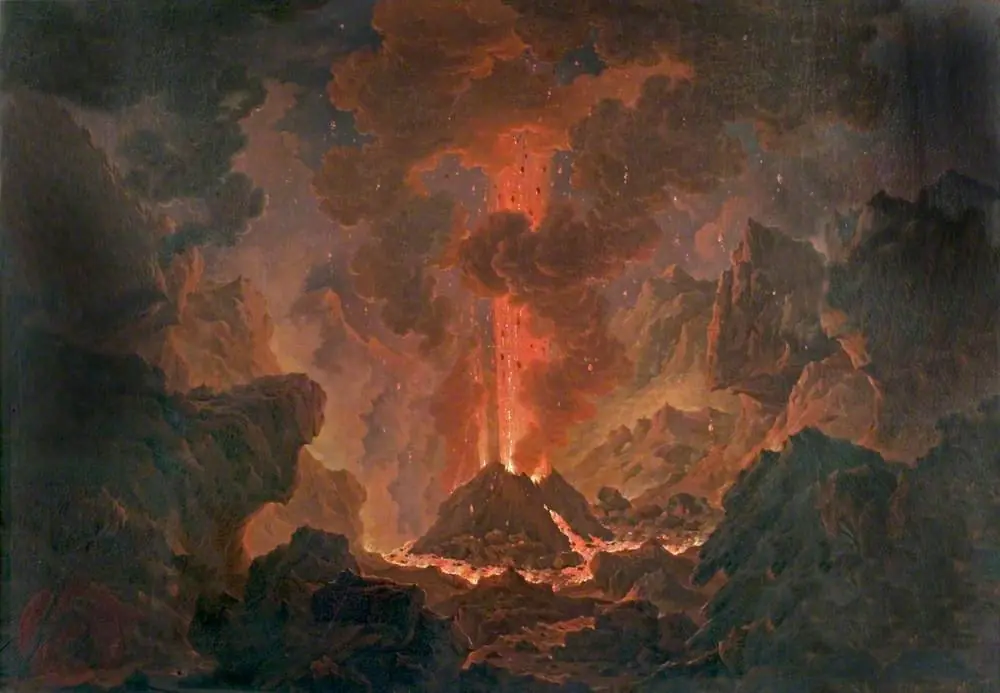 Vesuvius in Eruption, Italy
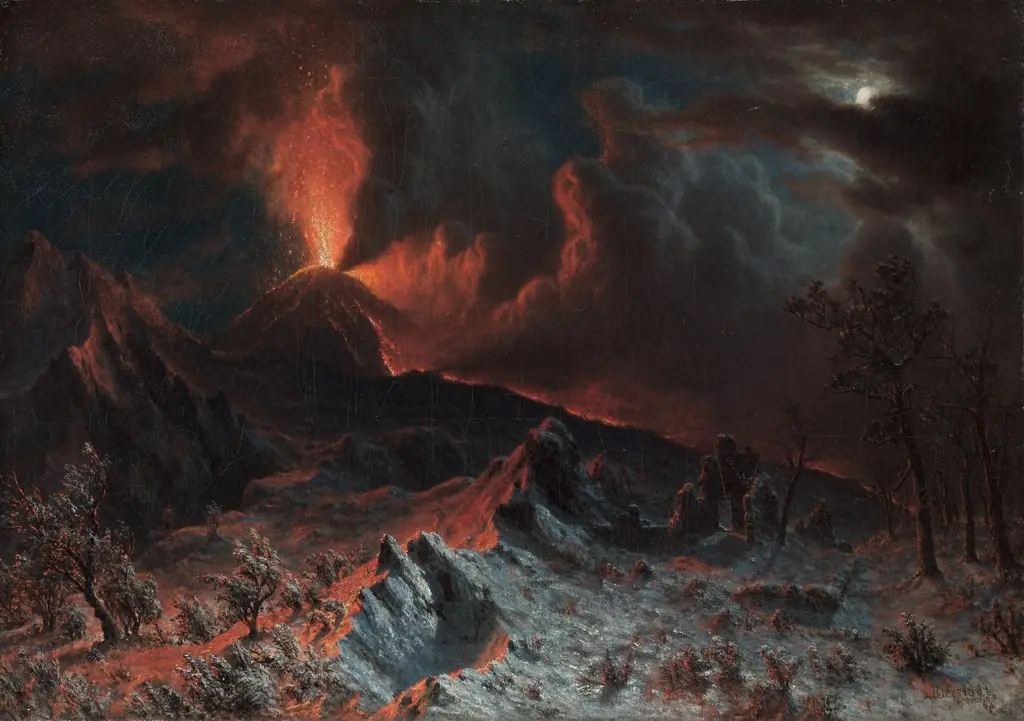 Mount Vesuvius at Midnight
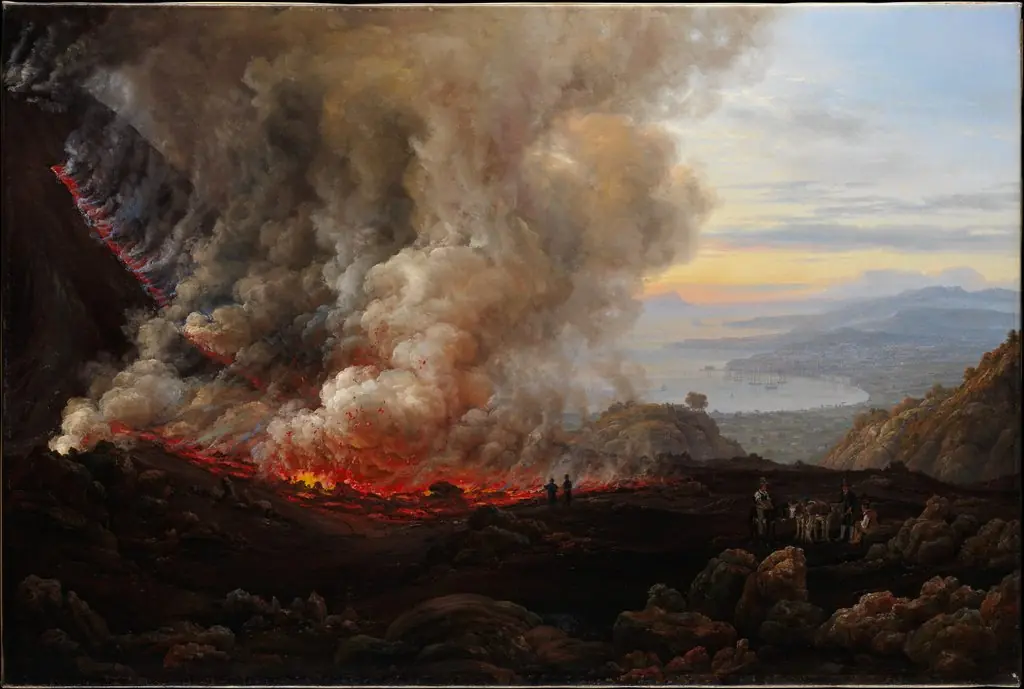 An Eruption of Vesuvius
 Eruption of the Volcano Vesuvius
 Vesuvius in Eruption, with a View over the Islands in the Bay of Naples