Artwork
Mercator and Ortelius
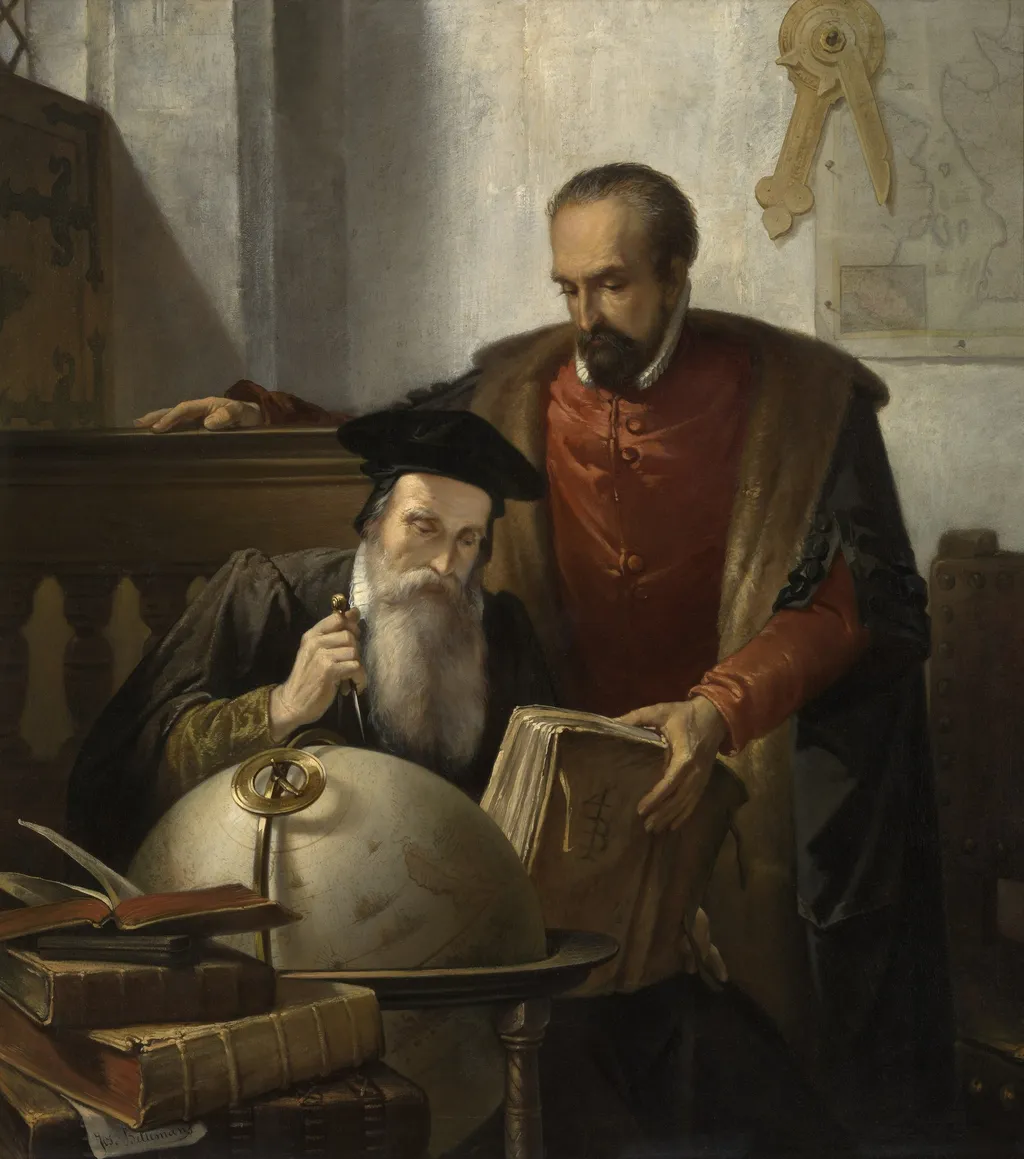
Mercator and Ortelius is an oil painting by the Realist artist Joseph Bellemans. It dates from 1870 and is held in the collection of the Royal Museum of Fine Arts Antwerp.
About this work
Overview
Painted in 1870 by Joseph Bellemans, this oil work portrays two pioneering cartographers, Abraham Ortelius and Gerardus Mercator, in a quiet moment of scholarly exchange. The scene is set in a dimly lit study, where books, maps, and a large globe dominate the space. The composition emphasizes intellectual labor over grandeur, focusing on the quiet intensity of their collaboration.
Subject & Meaning
The painting captures Ortelius, the elder with a white beard, drafting with a quill, and Mercator, younger and dressed in red, pointing to a text.
The painting captures Ortelius, the elder with a white beard, drafting with a quill, and Mercator, younger and dressed in red, pointing to a text. Their proximity suggests mutual respect and shared purpose. The globe between them, marked with a gold meridian ring, symbolizes their joint legacy in mapping the known world. The cluttered desk and wall-mounted instruments reflect the material culture of Renaissance cartography.
Technique & Style
Bellemans employs soft chiaroscuro to model the figures and objects, lending depth without dramatic contrast. The textures of fabric, wood, and parchment are rendered with quiet precision, avoiding theatricality. The lighting falls naturally across the scene, casting gentle shadows that anchor the figures in space and emphasize the tactile presence of their tools and surroundings.
History & Provenance
Commissioned in the 19th century, the painting was acquired by the Royal Museum of Fine Arts Antwerp, where it remains in the collection. It reflects a period of renewed interest in Flemish scientific heritage, long after the lives of Ortelius and Mercator. The work was not contemporary to its subjects but rather a retrospective tribute to their enduring influence on European geography.
Context
In the 16th century, Ortelius and Mercator revolutionized mapmaking with systematic compilation and projection techniques. By the 1870s, their legacy was invoked as Belgium sought to assert its cultural contributions to science. Bellemans’ painting aligns with a broader 19th-century trend of romanticizing historical scholars, framing them as quiet heroes of knowledge rather than public figures.
Legacy
The painting preserves the visual memory of two foundational figures in cartography, not through monumentality but through intimacy. It serves as a quiet testament to the collaborative nature of scientific progress. While not widely reproduced, it continues to anchor public understanding of these scholars within the context of their working environment.
Own this work as a print
Artist & collection

 The Last Moments of Count Egmont (Count Egmont Before His Death)
 Scene from the life of Gilbert of Schoonbeke
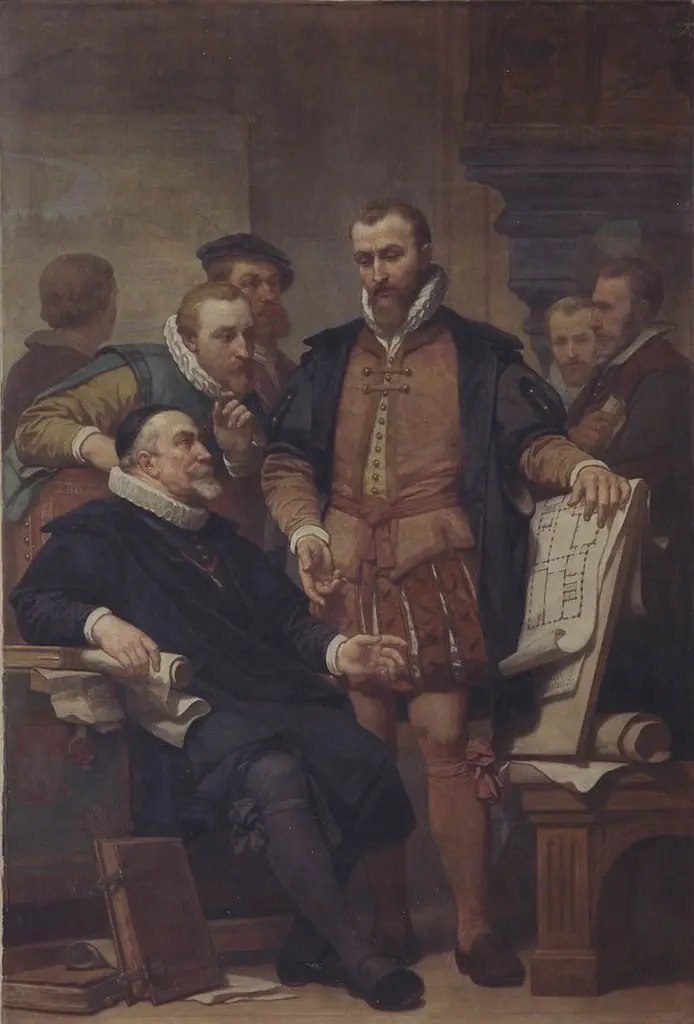 Cornelis Floris II Shows the Plan of the Town Hall
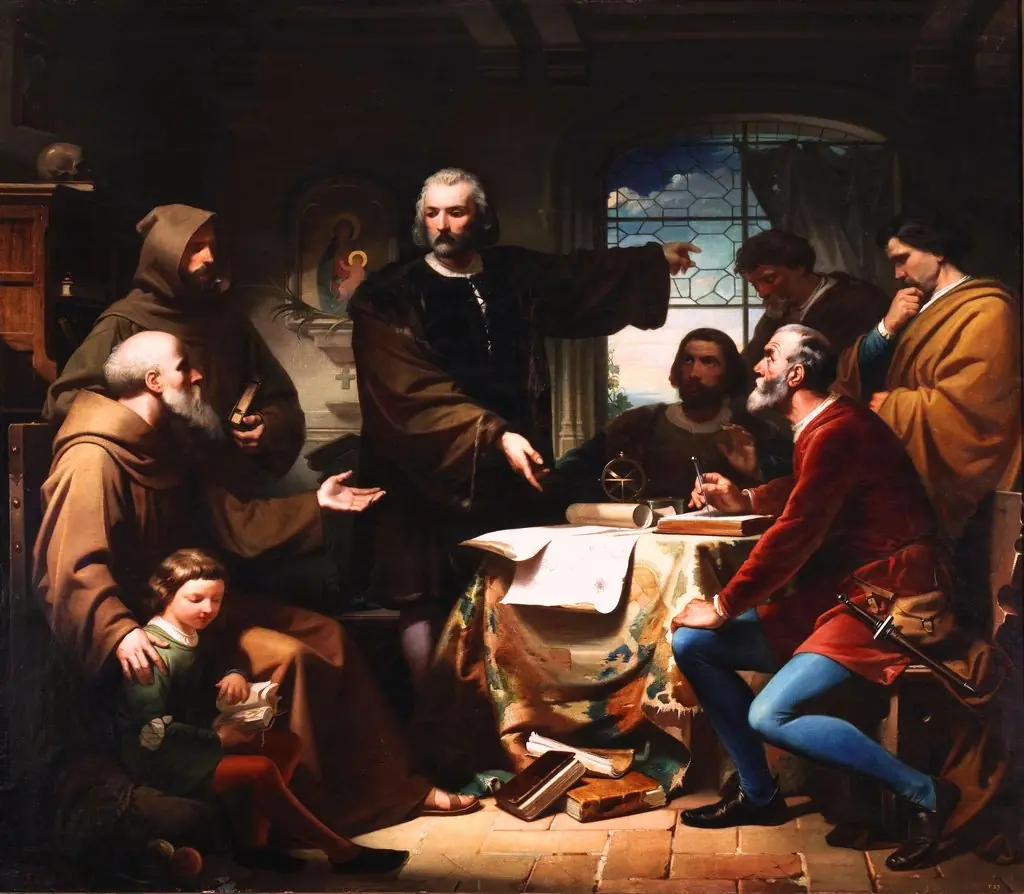 Christopher Columbus in the Convent of La Rábida
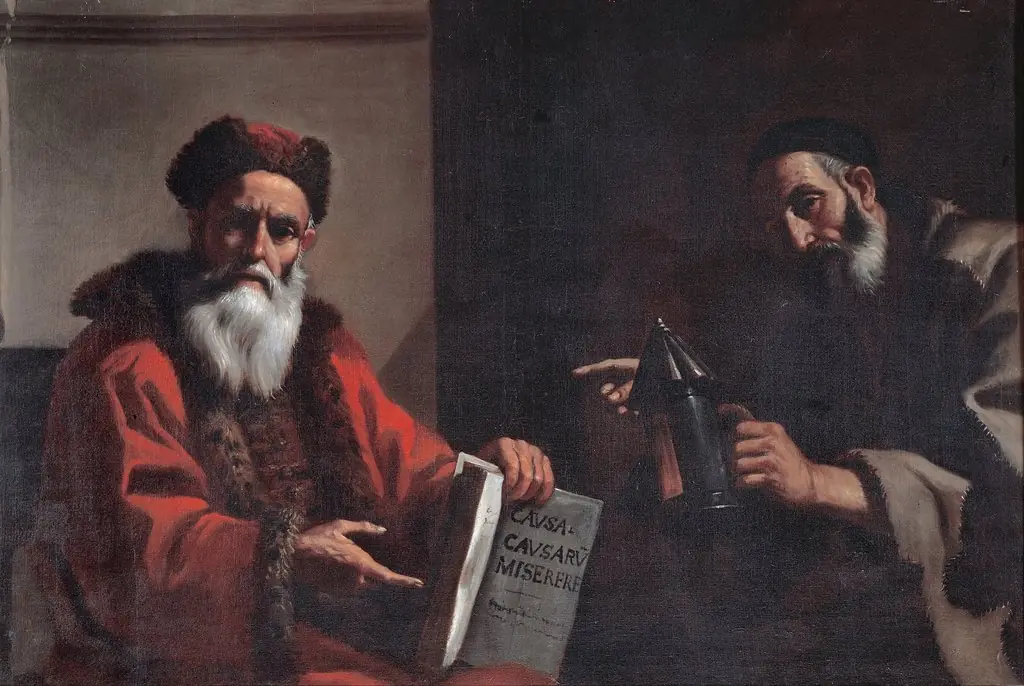 Plato and Diogenes
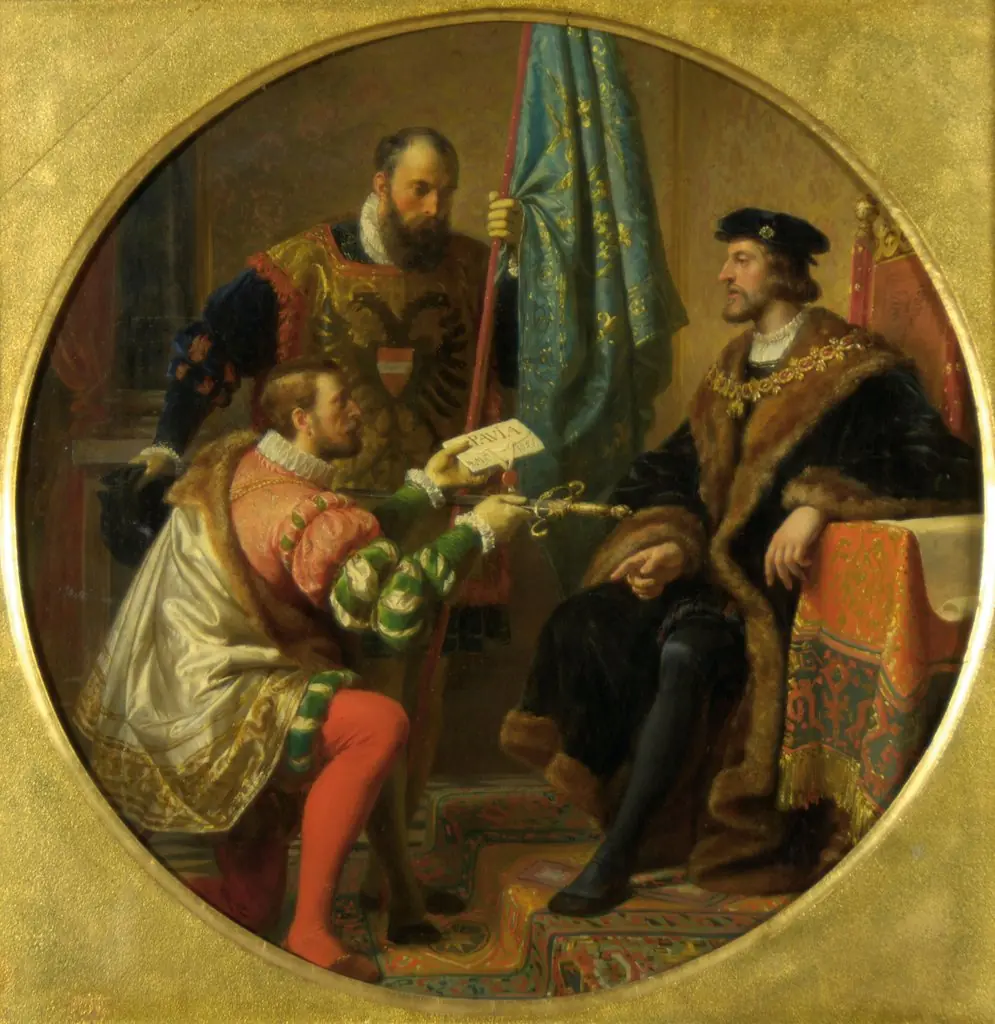 Emperor Charles V and King Francis I at Pavia 1525
 Georges d'Armagnac (c.1501–1585), Bishop of Rodez, with His Secretary Guillaume Philandrier (d.1565)
 The Geographer
 Faust und Mephisto in der Studierstube
 The Alchemist
 Paul III with a prelate
 The Architect Cornelis Floris II