Artwork
Untitled
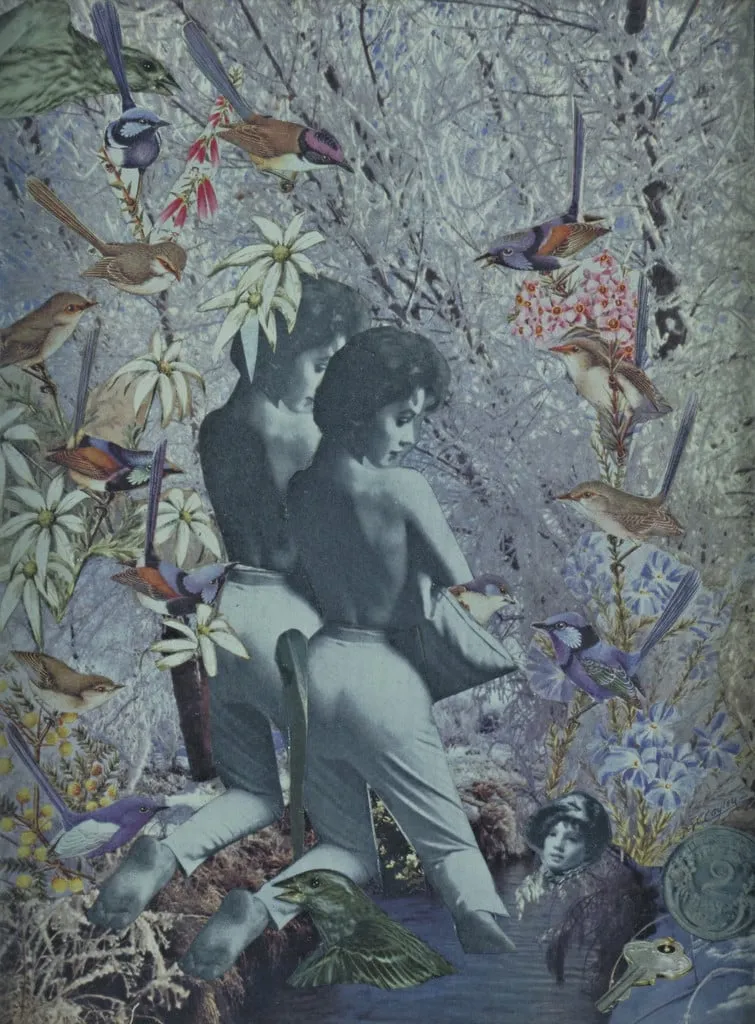
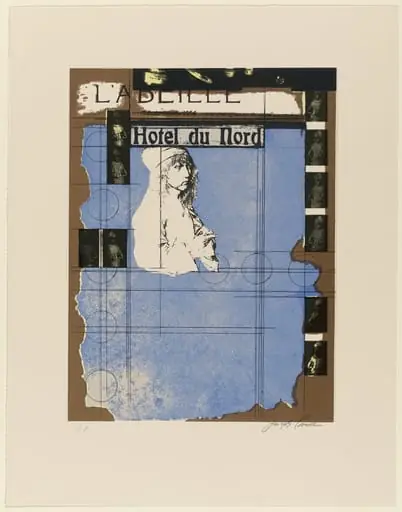
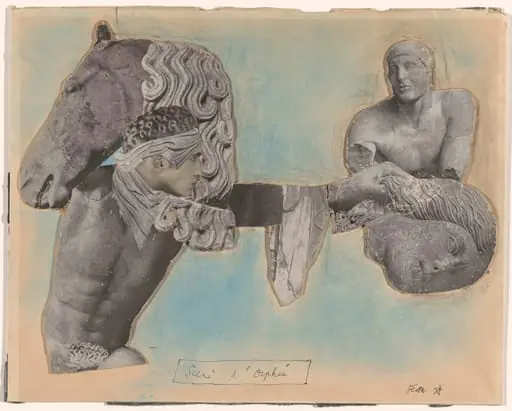
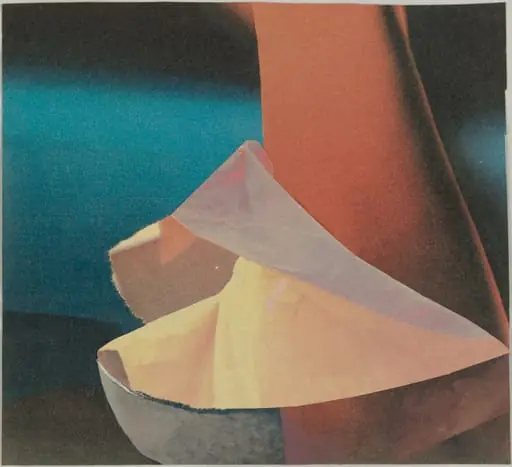
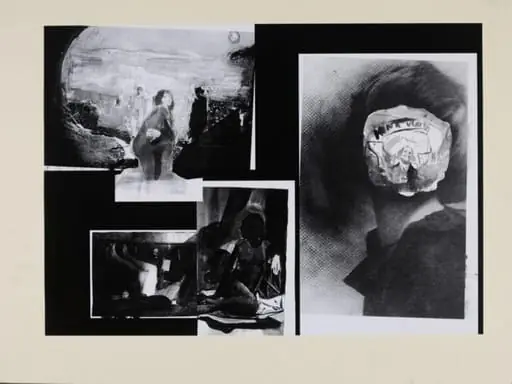
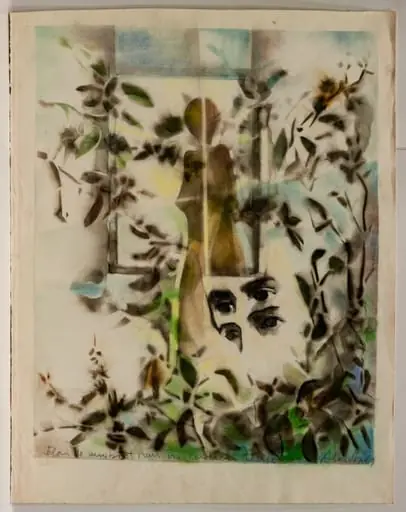
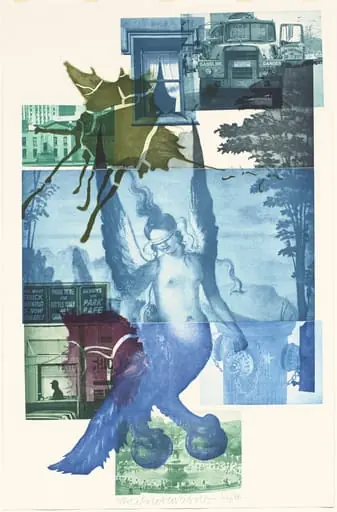
Untitled is a glass drawing by Joseph Cornell. It dates from 1956 and is held in the collection of the Museum of Modern Art.
About this work
Overview
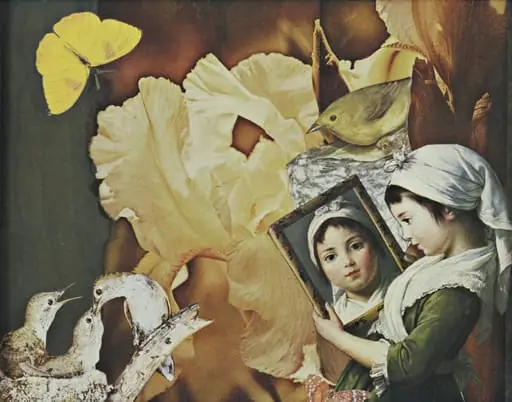
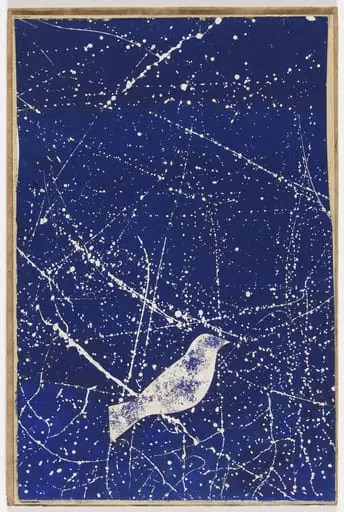
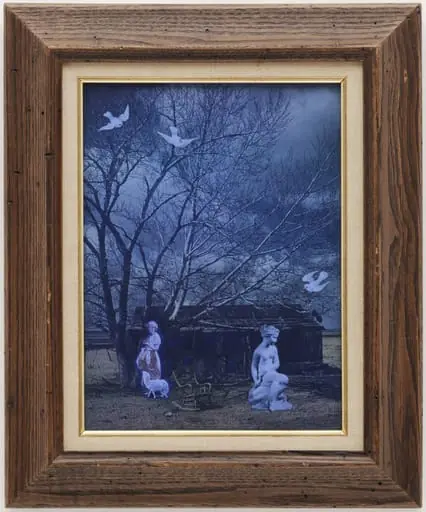
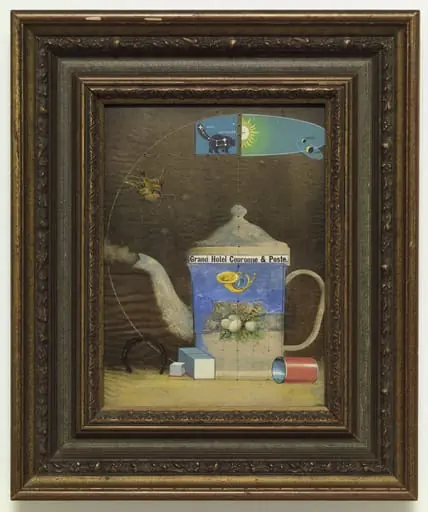
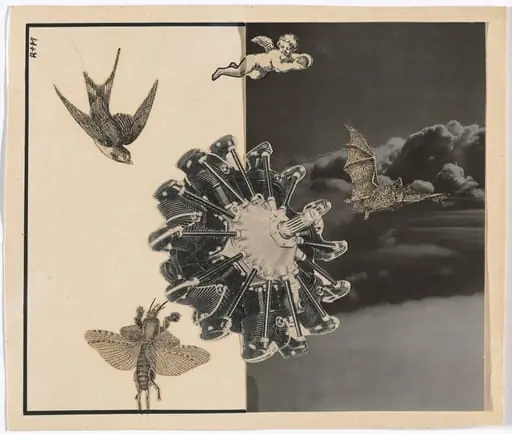
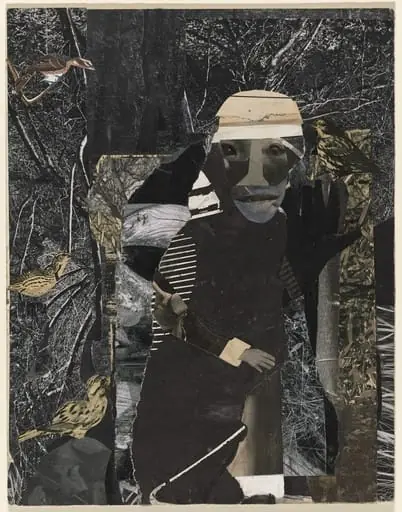
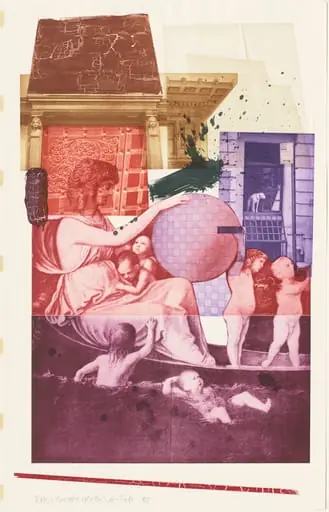
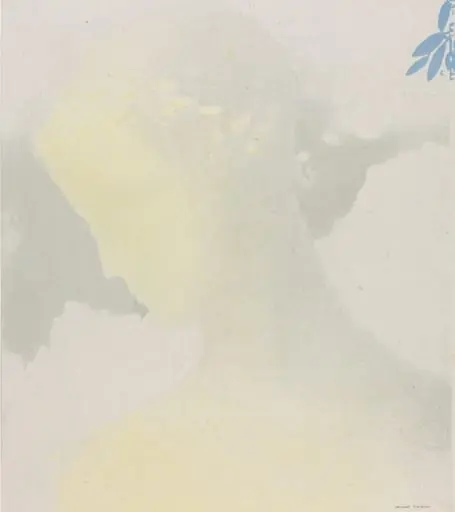
Joseph Cornell created this 1956 work using cut-and-pasted printed materials mounted on board and framed behind colored glass. A self-taught artist, he assembled imagery from discarded publications—books, catalogs, and postcards—to construct intimate, dreamlike scenes. His method avoided traditional painting, instead relying on found visual fragments arranged with deliberate, quiet precision.
Subject & Meaning
No clear narrative is offered; instead, the scene invites contemplation of isolation, wonder, and the fragile bond between human and natural worlds.
The composition centers on a nude male figure, one hand cradling a small bird, the other reaching upward. Surrounding him are lush, colorful flora and avian forms, while a shadowed silhouette hovers near the base. The imagery evokes a private mythos, blending innocence with mystery. No clear narrative is offered; instead, the scene invites contemplation of isolation, wonder, and the fragile bond between human and natural worlds.
Technique & Style
Cornell layered printed paper cutouts—some in monochrome, others in vivid hues—onto a paper support, then secured them to a wooden board. The entire piece is enclosed behind tinted glass, which softens contrasts and alters perception. His technique rejects brushwork in favor of precise placement, creating depth through overlapping fragments rather than perspective. The result is a tactile, layered illusion that feels both intimate and distant.
History & Provenance
Made in 1956, the work emerged from Cornell’s Queens home studio, where he spent decades assembling collages from materials sourced at secondhand shops and libraries. Though largely reclusive, he corresponded with artists like Marcel Duchamp and maintained ties to the Surrealist circle. This piece reflects his lifelong practice of transforming ephemeral printed matter into enduring, poetic objects.
Context
Cornell’s work developed alongside Surrealism but diverged in tone, favoring quiet introspection over shock or satire. His collages responded to a postwar cultural appetite for the symbolic and the subconscious, yet remained rooted in personal ritual rather than political or theoretical agendas. The use of vintage imagery evokes nostalgia, while the colored glass suggests a filtered, almost sacred view of the world.
Legacy
Cornell’s approach influenced later generations of assemblage artists and conceptual makers who value found objects and non-traditional composition. His work demonstrated that emotional resonance could arise from restraint and repetition, not grand gestures. Today, his collages are studied for their quiet innovation in redefining drawing as a practice of accumulation, memory, and subtle transformation.
Artist & collection
Artist
Joseph Cornell (December 24, 1903 – December 29, 1972) was an American visual artist and filmmaker, one of the pioneers and most celebrated exponents of assemblage.