Artwork
Euterpe
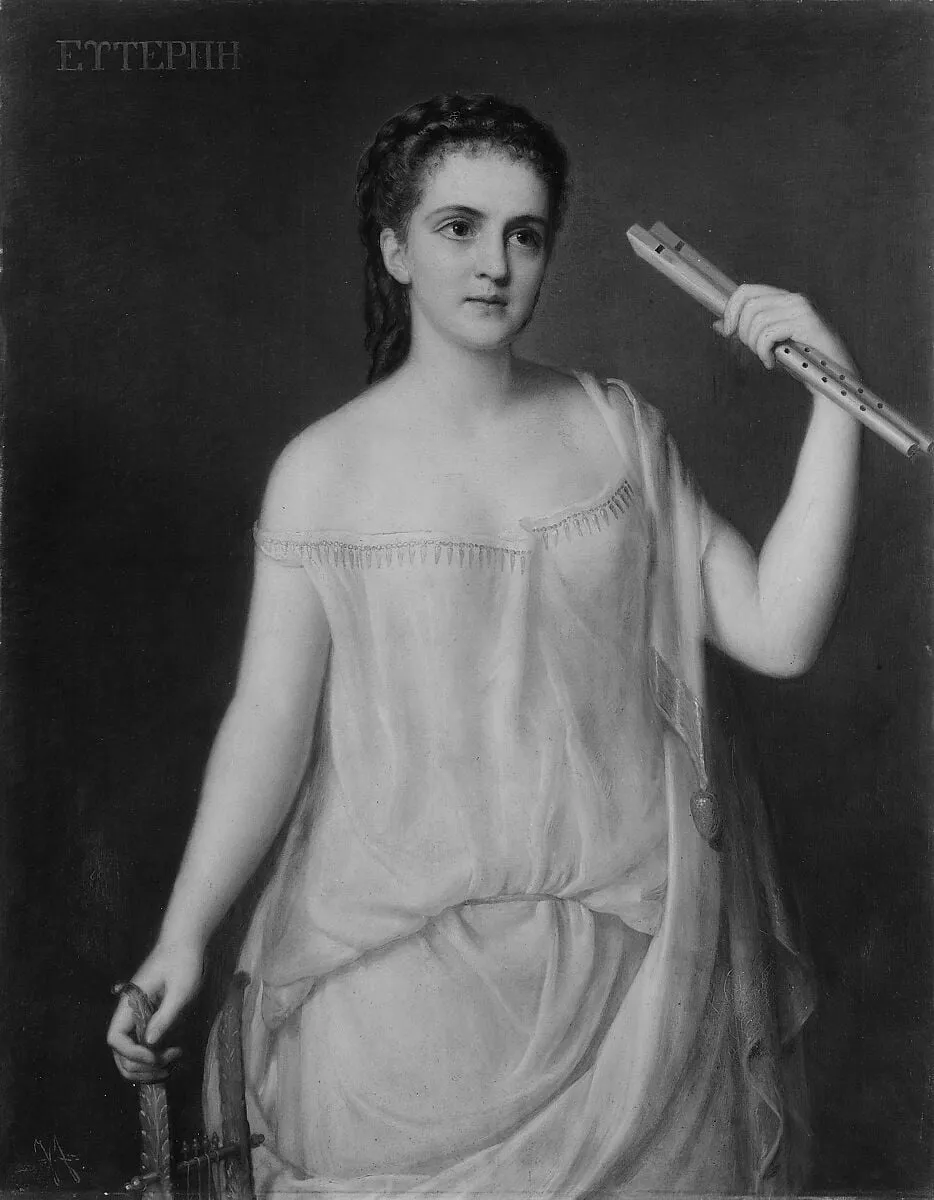
Euterpe is an oil painting by the Impressionist artist Joseph Fagnani. It dates from 1869 and is held in the collection of the Metropolitan Museum of Art.
About this work
Fagnani painted her in 1869, when most American artists still looked to Europe for inspiration.
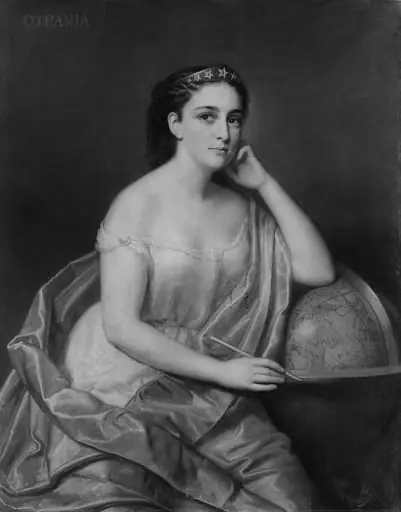
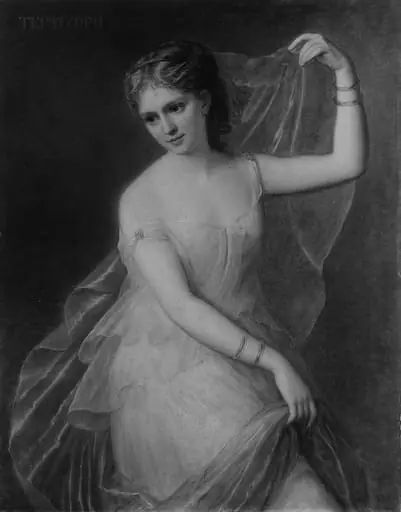
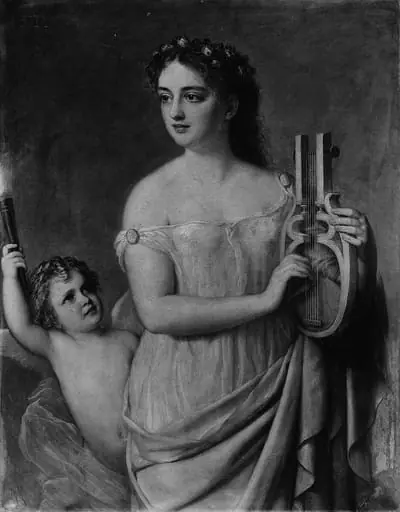
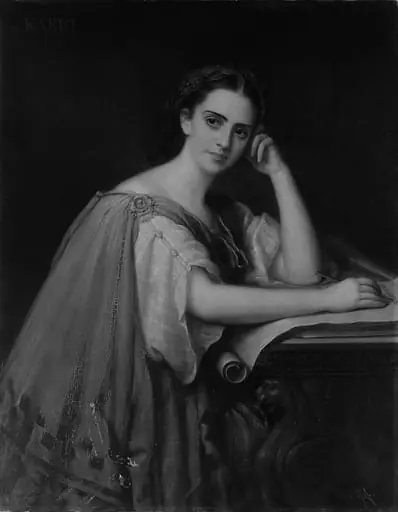
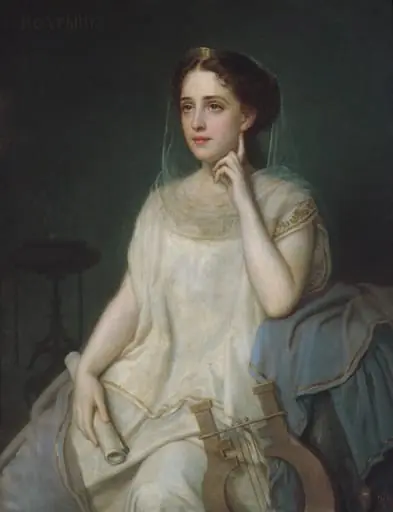
A woman in a white gown sits on a stone bench, holding a flute and a wreath of flowers. Soft light glows on her face and the folds of her dress.
This is Euterpe, the muse of music in Greek myth. Fagnani painted her in 1869, when most American artists still looked to Europe for inspiration. Here, she’s calm and real—not a distant goddess, just a woman lost in thought. The flowers in her lap feel like a quiet nod to spring or creativity.
If you like how she feels both timeless and ordinary, look up other paintings of muses.
Overview
Joseph Fagnani’s 1869 oil on canvas presents Euterpe, the Greek muse of music, seated on a stone bench. The figure is rendered in a white gown, clutching a flute and a floral wreath, bathed in gentle illumination that highlights the softness of her features and the drapery.
Subject & Meaning
The work portrays Euterpe not as an elevated deity but as a contemplative woman, suggesting an intimate connection between artistic inspiration and everyday experience. The inclusion of spring‑time flowers subtly alludes to renewal and the creative spark associated with music.
Technique & Style
Fagnani employs a restrained palette and delicate brushwork to model the figure’s skin and fabric, allowing light to glide across the surface. The composition balances realism with a hint of idealization, reflecting the mid‑nineteenth‑century American tendency to look toward European academic conventions while maintaining a personal sensibility.
History & Provenance
Created in 1869, the painting emerged during a period when American artists frequently sought European artistic models. It now resides in the American Wing, where it contributes to the museum’s narrative of transatlantic artistic exchange in the post‑Civil War era.
Context
Euterpe belongs to a broader tradition of muse representations popular in the 1800s, serving both as allegorical symbols of the arts and as studies of the female form. Fagnani’s interpretation aligns with contemporary interests in merging classical mythology with domestic, relatable settings.
Artist & collection