Artwork
Vanitas
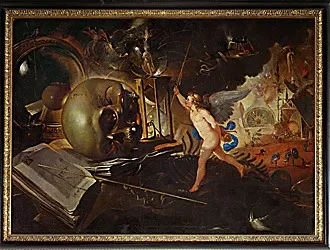
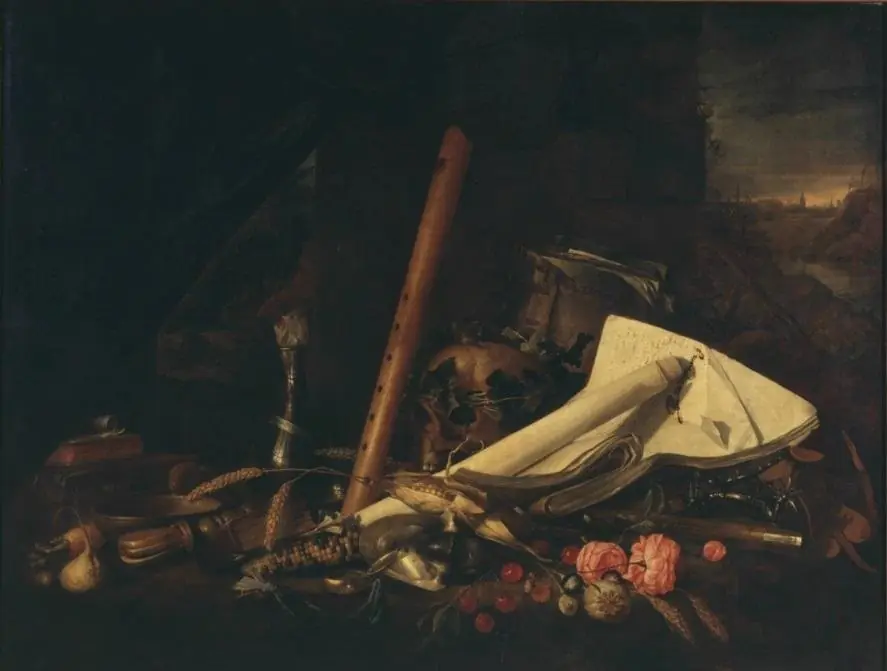
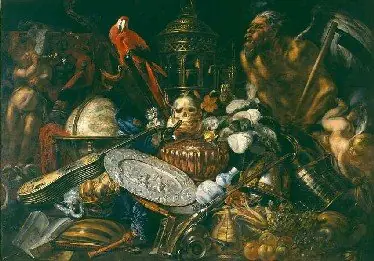
Vanitas is an unspecified painting by the Dutch Golden Age artist Joseph Heintz the Younger. It dates from 1649 and is held in the collection of the Pinacoteca di Brera.
About this work
Overview
Though primarily known for religious and mythological subjects, he engaged with the Northern European vanitas tradition during his time in Italy.
Joseph Heintz the Younger, a German-born painter active in Venice from the 1620s, produced this still life around 1649. Though primarily known for religious and mythological subjects, he engaged with the Northern European vanitas tradition during his time in Italy. The work aligns with broader 17th-century concerns about transience, executed with the precision characteristic of Dutch and Venetian still-life practices of the era.
Subject & Meaning
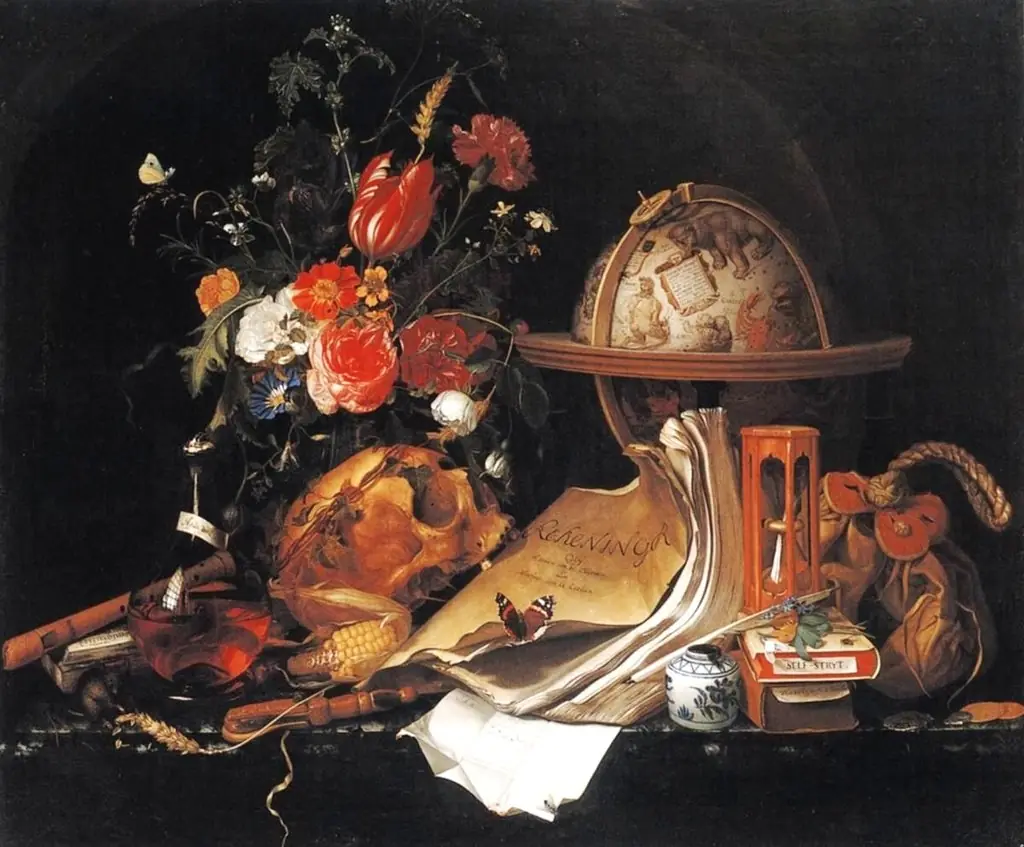
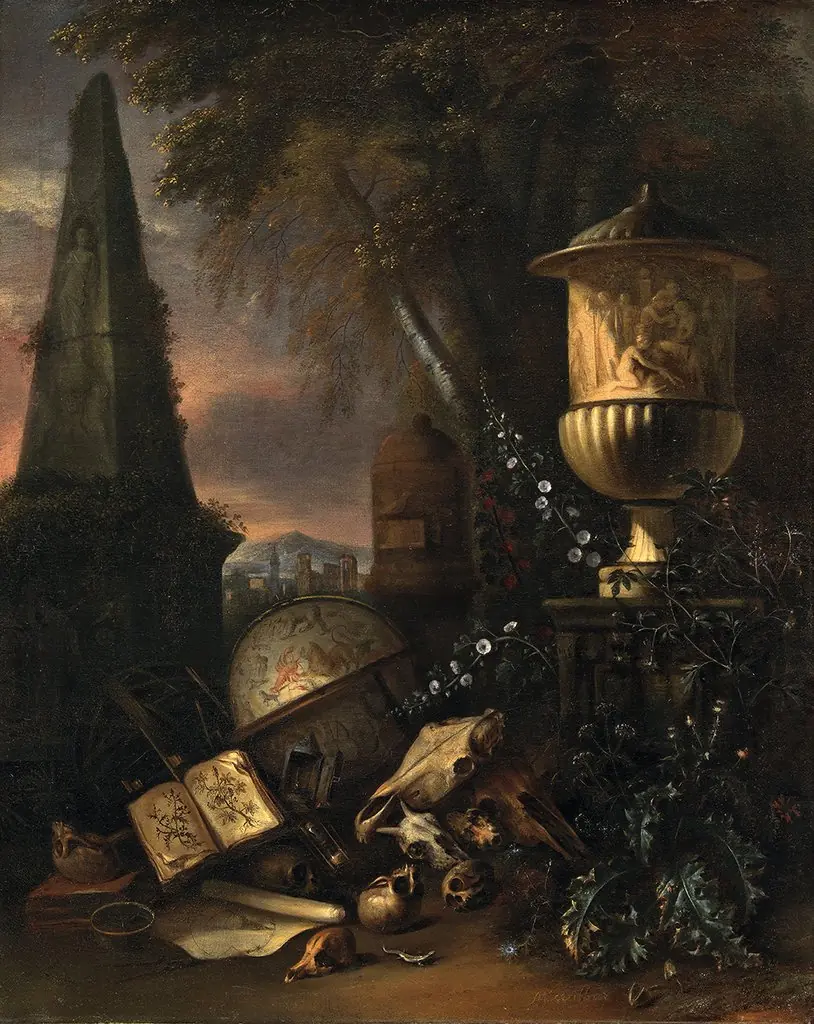
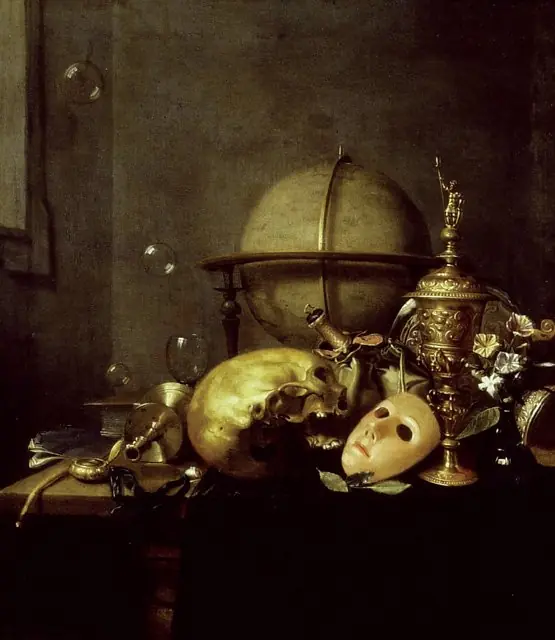
The painting assembles objects—skulls, wilting flowers, extinguished candles, and timepieces—to symbolize the inevitability of death and the futility of earthly pursuits. Each item carries conventional meaning within the vanitas genre: decay, fleeting pleasure, and the passage of time. The arrangement invites quiet contemplation rather than moralizing, reflecting a subdued, introspective tone common in later examples of the type.
Technique & Style
Heintz employs fine brushwork and muted tonalities to render textures with quiet realism: the sheen of glass, the grain of wood, the brittleness of bone. Light falls evenly, avoiding dramatic contrasts, which enhances the somber, meditative mood. The composition is tightly organized, with objects arranged on a plain surface, emphasizing their symbolic weight over decorative flourish.
History & Provenance
The painting entered the collection of the Pinacoteca di Brera in Milan, where it remains today. Its presence there reflects the broader 17th-century circulation of Northern European motifs within Italian collections. While little is documented about its early ownership, its inclusion in a major Italian institution underscores its recognition as a significant example of cross-cultural artistic exchange.
Context
Though created in Venice, the painting draws from Dutch and Flemish vanitas traditions that had spread across Europe by mid-century. Heintz, trained in a German artistic lineage, absorbed these influences while working in a city known for its vibrant still-life market. The work thus bridges Northern symbolism with Italian compositional restraint, illustrating the hybrid nature of Baroque art in cosmopolitan centers.
Legacy
Heintz’s *Vanitas* stands as a quiet testament to the diffusion of Northern European iconography in Southern Europe. It does not represent a radical innovation but rather a thoughtful adaptation of established symbols within a new regional context. The painting contributes to understanding how universal themes of mortality were interpreted through localized artistic languages during the Baroque period.
Artist & collection
Artist
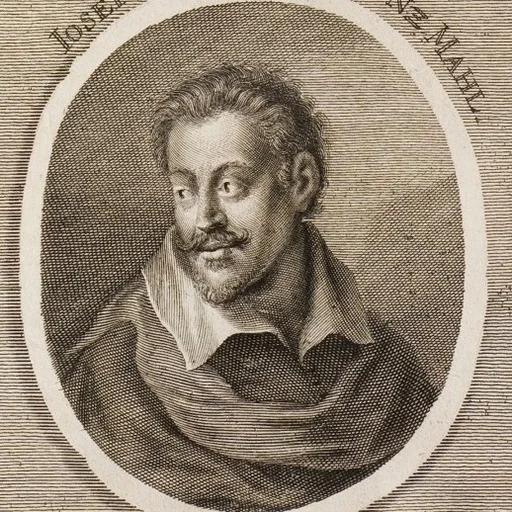
Joseph Heintz the Younger or Joseph Heintz (II) (1600 – 24 September 1678) was a German Baroque painter.