Artwork
Vanitas. Still Life in a Landscape
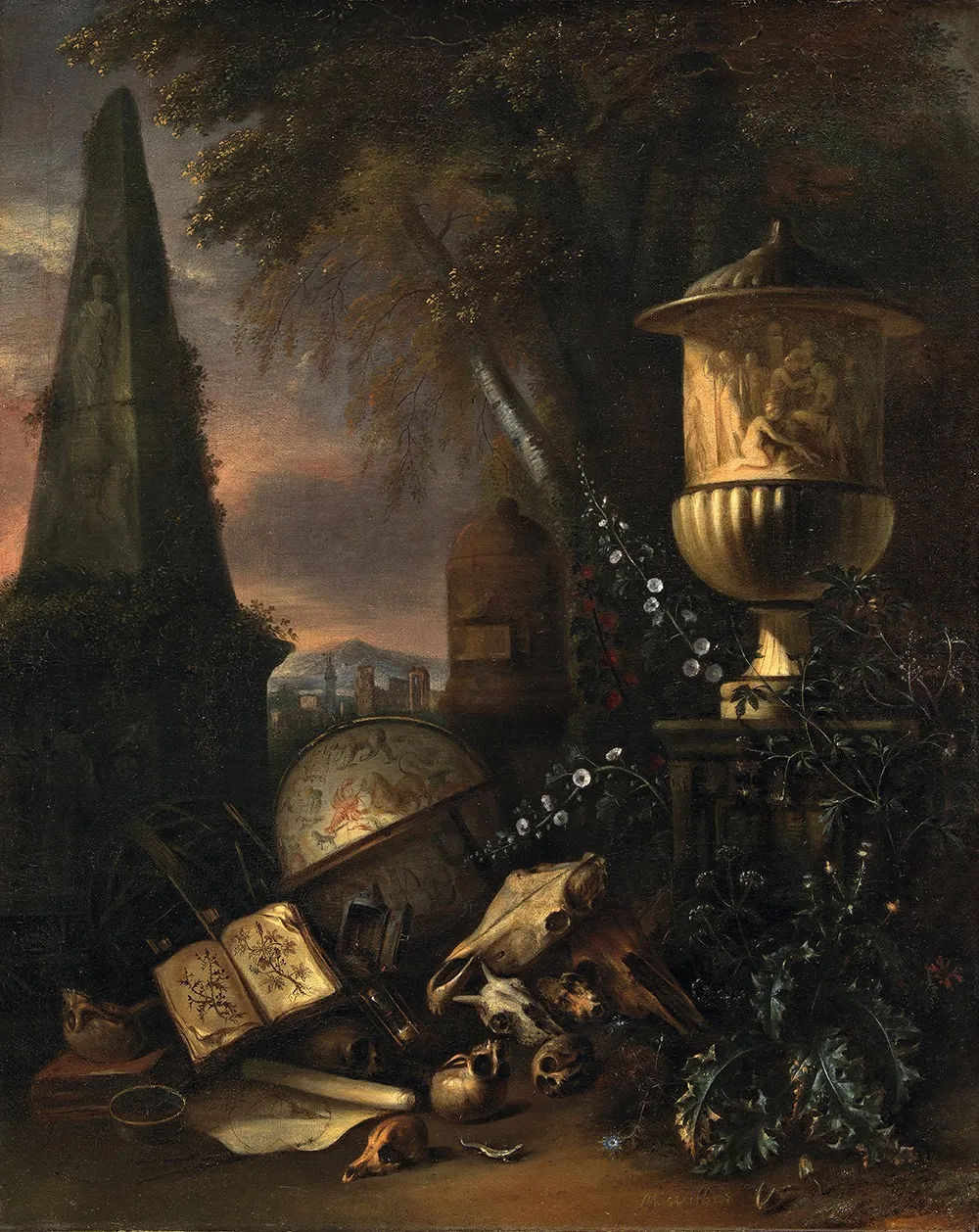
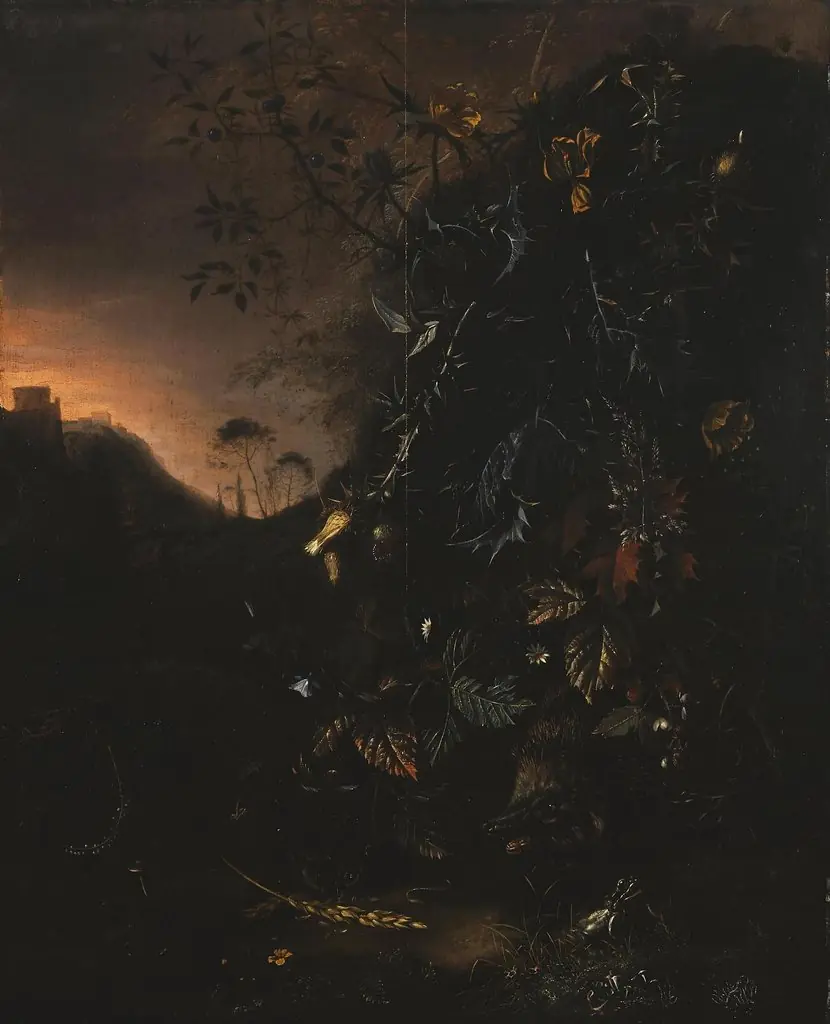
Vanitas. Still Life in a Landscape is an oil painting by the Dutch Golden Age artist Matthias Withoos. It dates from 1675 and is held in the collection of the Statens Museum for Kunst.
About this work
Overview
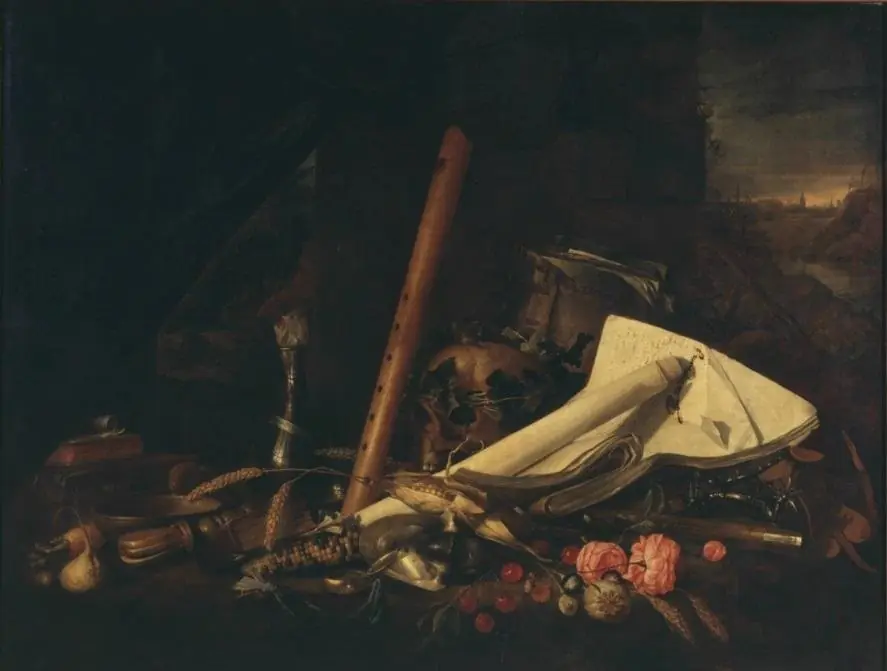
Unlike traditional vanitas compositions confined to interior settings, the scene unfolds outdoors, where symbolic objects rest among foliage and distant hills.
Painted around 1675 by Matthias Withoos, this oil on canvas work merges the conventions of still life with a naturalistic landscape. Unlike traditional vanitas compositions confined to interior settings, the scene unfolds outdoors, where symbolic objects rest among foliage and distant hills. The painting reflects the Dutch Golden Age’s preoccupation with mortality and transience, rendered through meticulous observation of nature and material culture.
Subject & Meaning
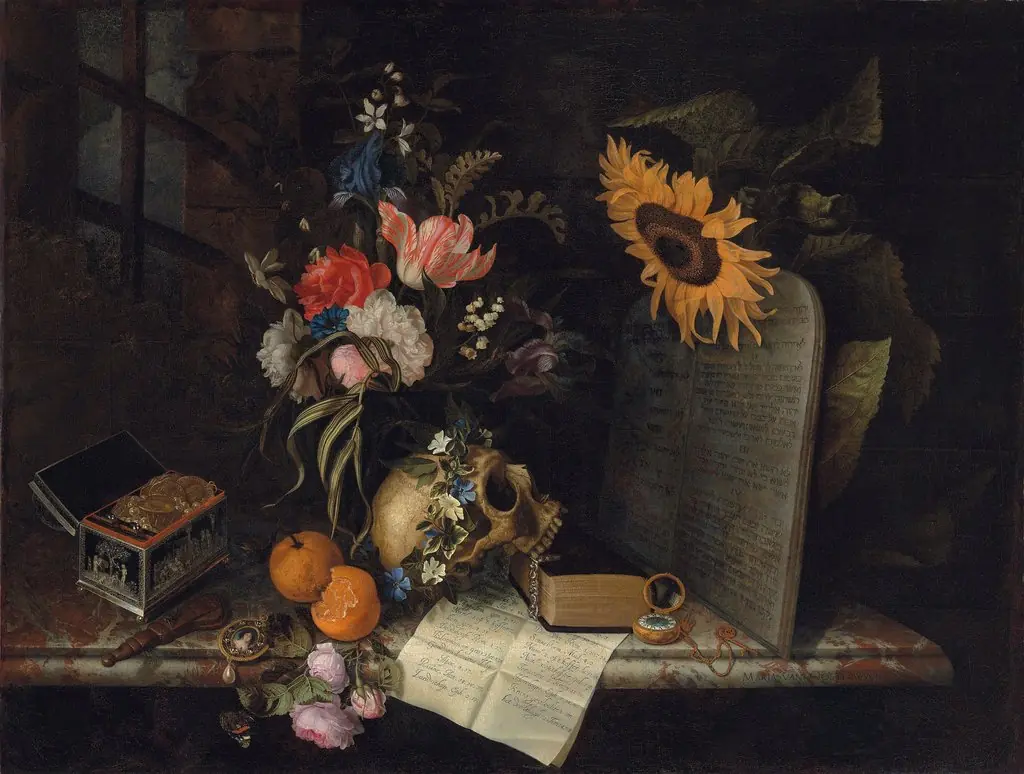
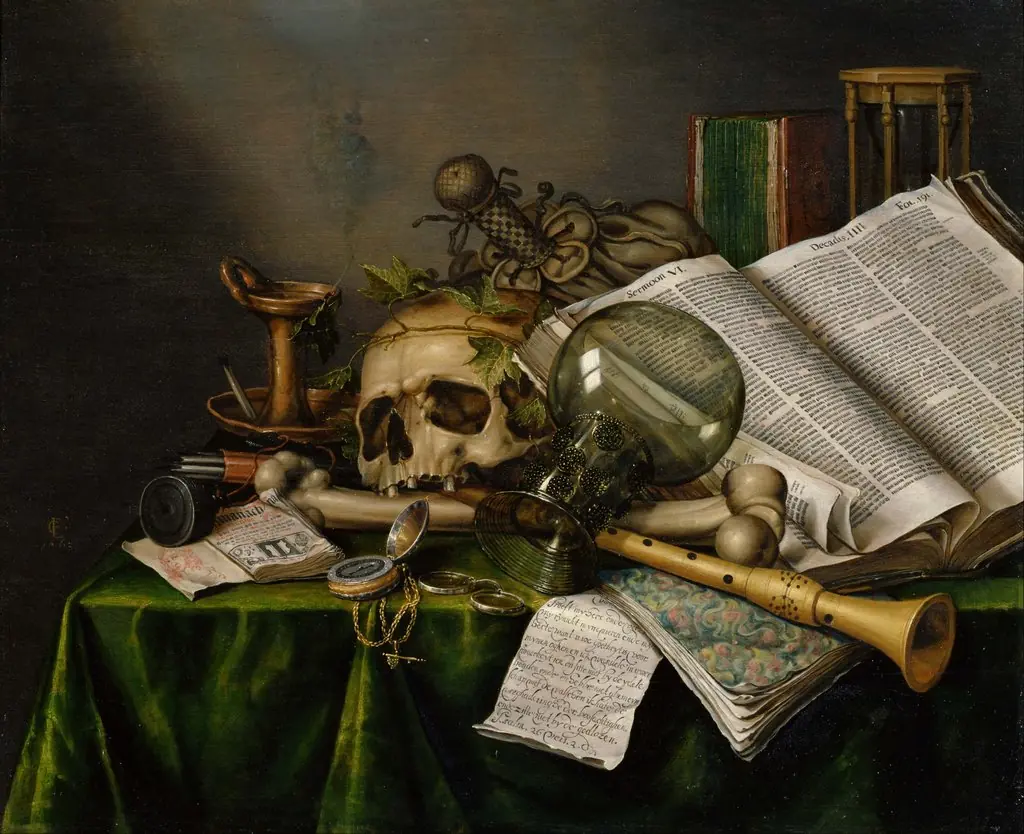
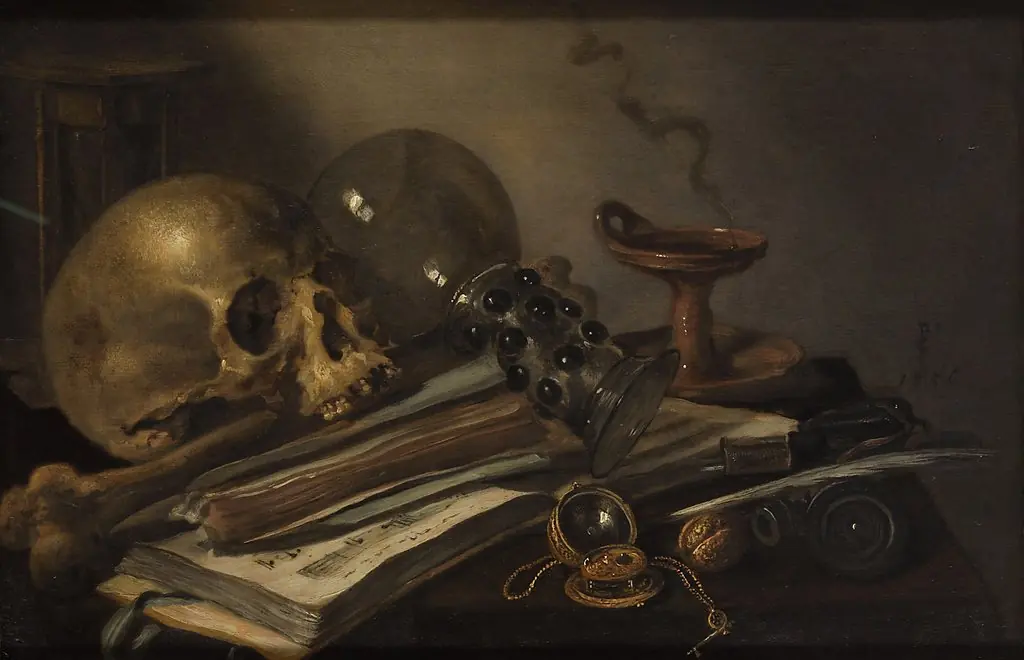
The arrangement includes a skull, extinguished candle, overturned globe, and scattered books—classic emblems of life’s impermanence. These items, placed amid wild grasses and creeping vines, suggest nature’s reclamation of human endeavors. The inclusion of insects and reptiles reinforces the cycle of decay and renewal. The muted tones and selective gold highlights draw attention to fleeting beauty, underscoring the moral message without overt didacticism.
Technique & Style
Withoos employs chiaroscuro to model forms with subtle gradations of light and shadow, lending volume to the objects and enhancing their tactile presence. His brushwork is precise, particularly in rendering textures: the sheen of glass, the grain of wood, the brittle surface of bone. The landscape background is rendered with softer edges, creating spatial depth while keeping the foreground’s symbolic elements in sharp focus.
History & Provenance
The painting has been part of the Statens Museum for Kunst’s collection since at least the 19th century. It was likely acquired during a period of renewed interest in Dutch Golden Age works. While little is documented about its early ownership, its preservation reflects its recognition as a representative example of Withoos’s distinctive synthesis of still life and landscape traditions.
Context
In mid-to-late 17th-century Holland, vanitas themes flourished amid economic prosperity and scientific inquiry. Artists like Withoos responded to growing interest in natural history by incorporating observed specimens into symbolic compositions. The integration of landscape elements distinguished his work from contemporaries, aligning vanitas with the era’s broader fascination with the natural world as both beautiful and transient.
Legacy
Withoos’s blending of naturalistic detail with moral symbolism influenced later Dutch still life painters who experimented with outdoor settings. His approach to vanitas, less theatrical and more contemplative, contributed to a quieter, more introspective strand of the genre. Today, the painting remains a key example of how Dutch artists wove philosophical inquiry into the fabric of everyday observation.
Artist & collection
Artist
Matthias Withoos (1627–1703), also known as Calzetta Bianca and Calzetti, was a Dutch painter of still lifes and city scenes, best known for the details of insects, reptiles and undergrowth in the foreground of his pictures.