Artwork
Flüelen, from the Lake of Lucerne
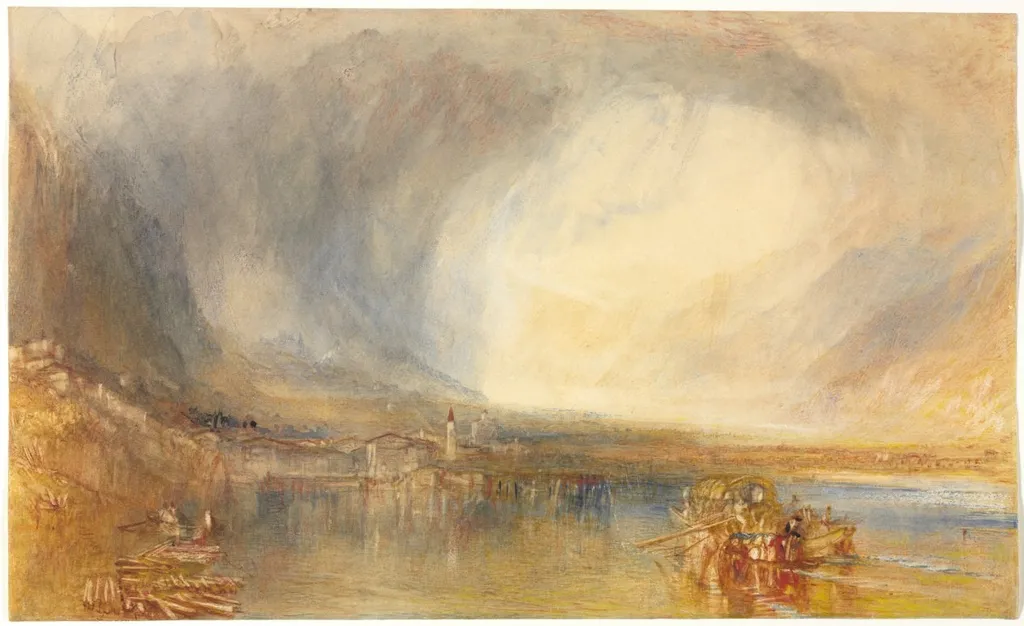
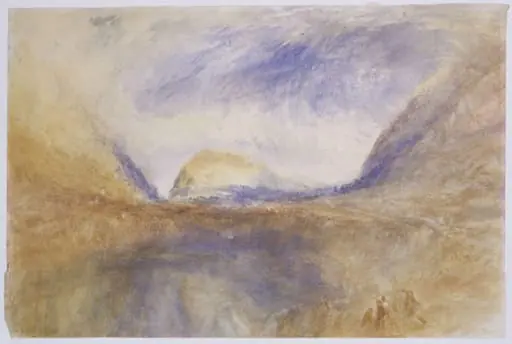
Flüelen, from the Lake of Lucerne is a drawing by the Romanticist artist Joseph Mallord William Turner. It dates from 1845 and is held in the collection of the Cleveland Museum of Art.
About this work
Overview
Created between 1841 and 1845 during Turner’s final Swiss journeys, this watercolor captures Flüelen, a modest lakeside settlement nestled against the Alps.
Created between 1841 and 1845 during Turner’s final Swiss journeys, this watercolor captures Flüelen, a modest lakeside settlement nestled against the Alps. Executed in his later years, the work reflects a refined, atmospheric approach to landscape, where pigment and light merge to evoke mood rather than topographic precision. The piece belongs to a series of highly polished watercolors produced during these annual trips.
Subject & Meaning
Flüelen appears as a quiet cluster of buildings along the shore of Lake Lucerne, its forms softened by a violet-hued mist that blurs land, water, and sky. Tiny human figures move along the waterfront, grounding the scene in daily life amid overwhelming natural scale. The composition suggests a meditation on transience—human activity fleeting against the enduring presence of mountain and lake.
Technique & Style
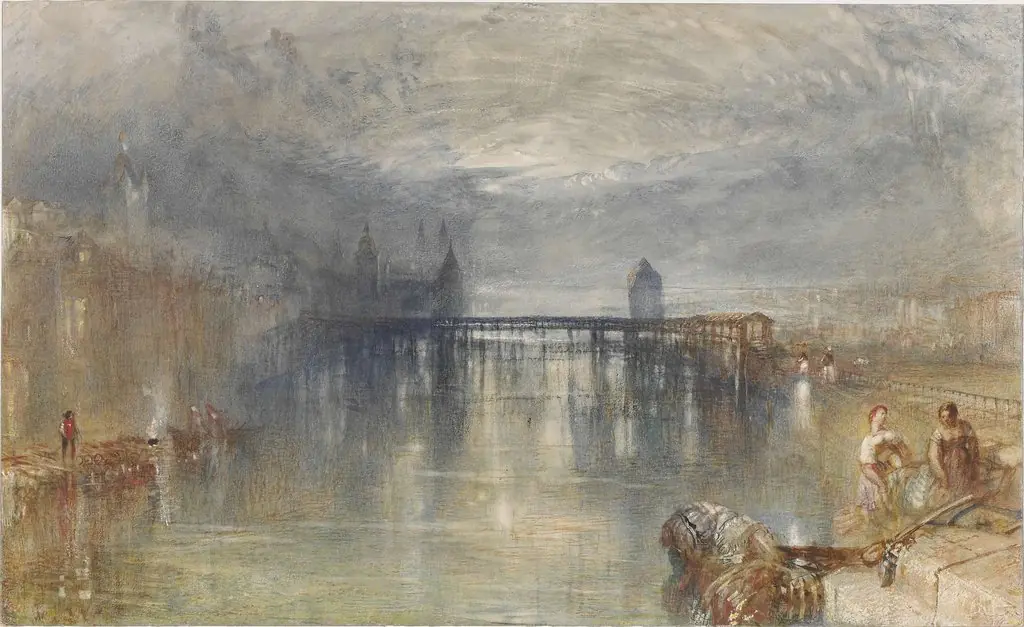
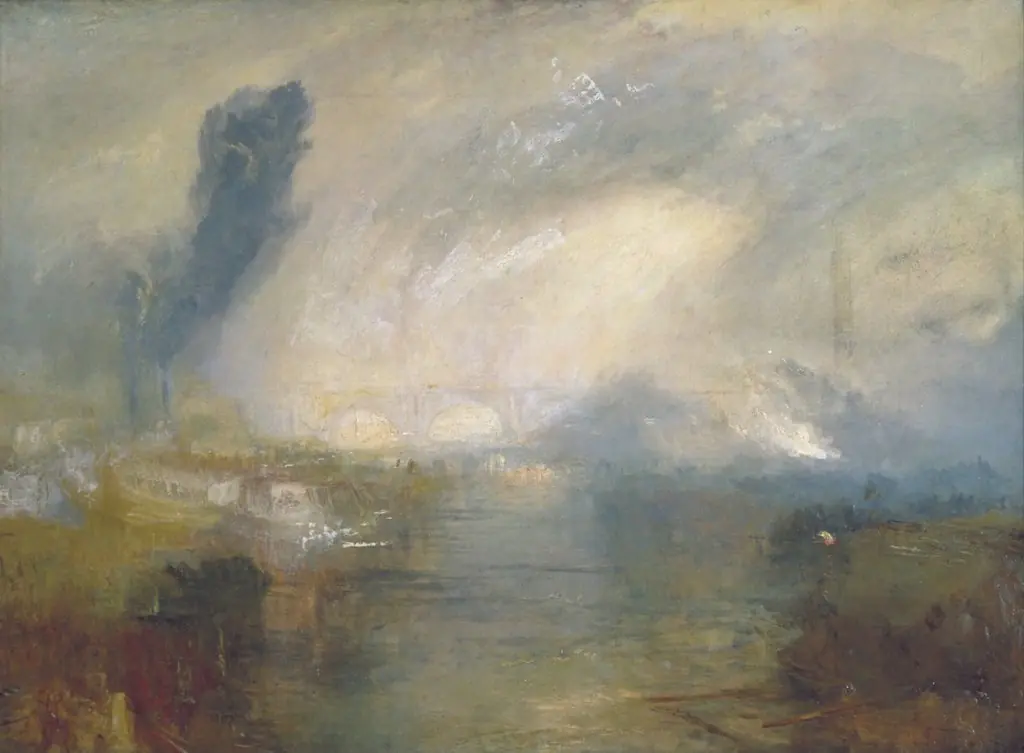
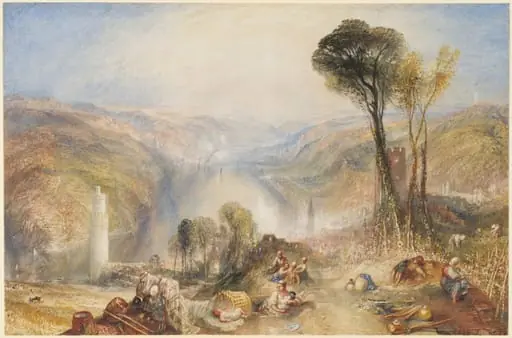
Turner employed watercolor with layered washes and minimal detail to dissolve boundaries between elements. Light is not outlined but emitted, as if rising from the mist itself. Edges dissolve into one another, creating a sense of atmospheric unity. The effect recalls sfumato, though achieved through watercolor’s fluidity rather than oil’s glazing, emphasizing luminosity over definition.
History & Provenance
This drawing emerged from Turner’s repeated visits to Switzerland in the early 1840s, a period when he increasingly turned to watercolor for its immediacy and luminous potential. It was likely made for private circulation or as preparatory material, later entering institutional collections. Its survival reflects Turner’s growing reputation as a pioneer of modern landscape expression.
Context
At the time, Turner stood as England’s leading landscape artist, though his later works often diverged from traditional expectations. His Swiss series challenged conventional topography, favoring emotional resonance over documentary accuracy. These watercolors positioned him at the intersection of Romanticism and emerging modern sensibilities, where perception, not representation, guided the image.
Legacy
Flüelen exemplifies Turner’s late shift toward abstraction through light and atmosphere. His watercolors influenced later generations who sought to capture transient effects over fixed forms. Though not widely exhibited in his lifetime, these works became touchstones for artists exploring the limits of medium and perception in the 19th and 20th centuries.
Artist & collection
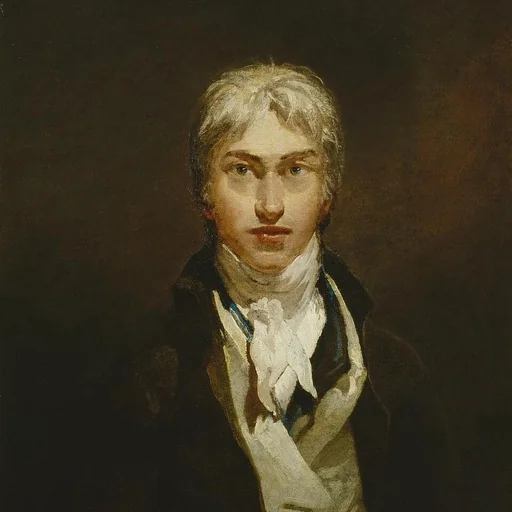
Artist
Joseph Mallord William Turner was born in 1775 at Maiden Lane, Covent Garden, where his father kept a barber and wig-making shop.