Artwork
Liber Studiorum: Mill near the Grand Chartreuse, Dauphiny
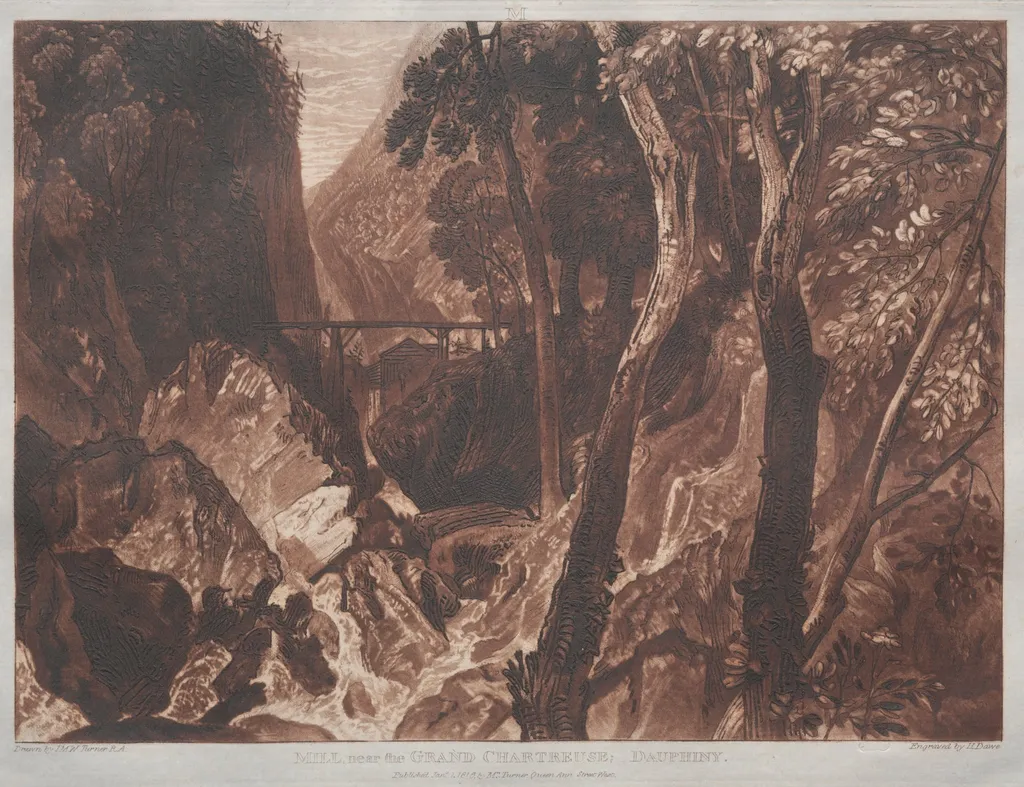
Liber Studiorum: Mill near the Grand Chartreuse, Dauphiny is a print by Joseph Mallord William Turner. It dates from 1823 and is held in the collection of the Cleveland Museum of Art.
About this work
Overview
Turner used the series to articulate a systematic approach to landscape, moving beyond mere topography toward expressive interpretation.
Created around 1823, this print by Joseph Mallord William Turner is one of many in his *Liber Studiorum* series, a curated collection of landscape compositions designed to classify and elevate the genre. Executed in etching and mezzotint, the work captures a quiet mill setting near the Grand Chartreuse monastery in Dauphiny, France. Turner used the series to articulate a systematic approach to landscape, moving beyond mere topography toward expressive interpretation.
Subject & Meaning
The scene portrays a modest mill nestled in a valley beneath the shadow of the Grand Chartreuse, a Carthusian monastery known for its seclusion. Turner emphasizes the harmony between human industry and the natural world, avoiding grandeur in favor of quiet observation. The composition suggests contemplation rather than narrative, aligning with Romantic ideals that valued emotional resonance over literal storytelling.
Technique & Style
Turner combined etching for fine linear detail with mezzotint to achieve subtle tonal gradations, particularly in the sky and mist-laden atmosphere. His handling of light is diffuse and atmospheric, with forms emerging from soft transitions rather than sharp contours. This method prioritizes mood over precision, reflecting his growing interest in the ephemeral qualities of nature and the perceptual effects of light.
History & Provenance
The *Liber Studiorum* was conceived as a publishing project to establish Turner’s legacy as a serious landscape artist. This print was among the first plates issued in the series, circulated in limited editions to collectors and artists. It remained in private hands for much of the 19th century before entering institutional collections, where it now serves as a key example of Turner’s printmaking innovation.
Context
In the early 1820s, Turner was redefining landscape art amid rising academic hierarchies that favored historical subjects. His *Liber Studiorum* responded to this by proposing a taxonomy of landscape types—pastoral, mountainous, marine—each with its own emotional and compositional logic. This print, set in France, reflects his broader travels and engagement with continental scenery beyond the British Isles.
Legacy
Though not widely recognized in his lifetime as revolutionary, Turner’s *Liber Studiorum* later influenced 19th-century artists seeking to break from rigid academic conventions. The atmospheric effects and abstracted forms in this print prefigure concerns later central to Impressionism and modern abstraction. Its quiet intensity and technical experimentation continue to inform discussions on the boundaries of representation in landscape art.
Artist & collection
Artist
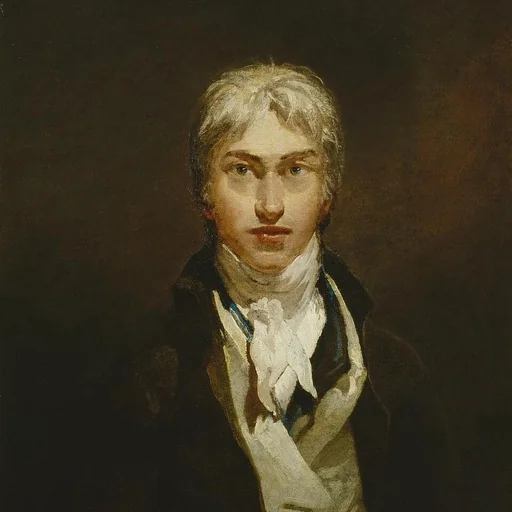
Joseph Mallord William Turner was born in 1775 at Maiden Lane, Covent Garden, where his father kept a barber and wig-making shop.

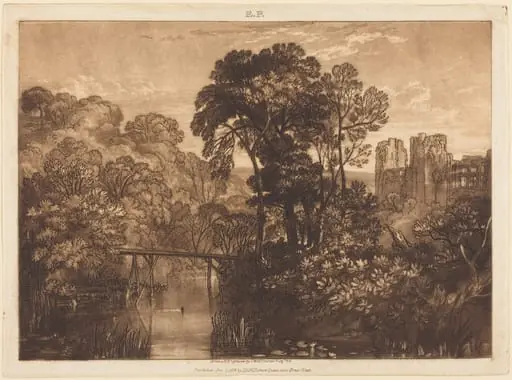 Berry Pomeroy Castle
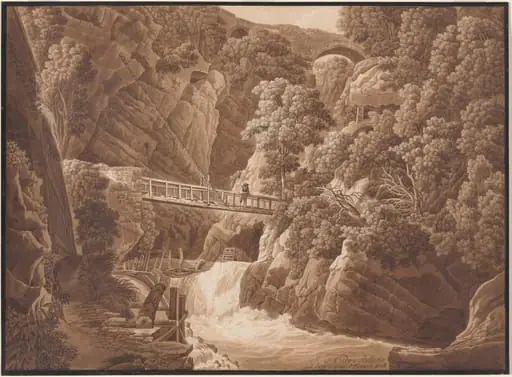 L'Orido a Bellano sul Lago di Como (The Orrido di Bellano near Lake Como)
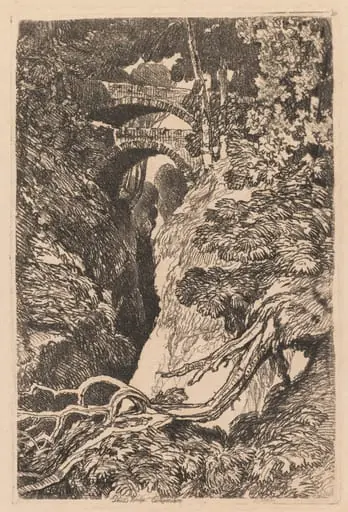 Devil's Bridge, Cardiganshire
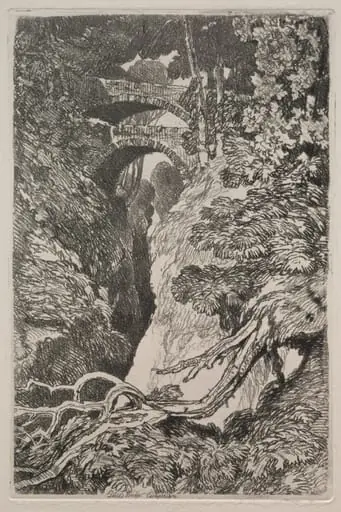 Liber Studiorum: Devil's Bridge, Cardiganshire
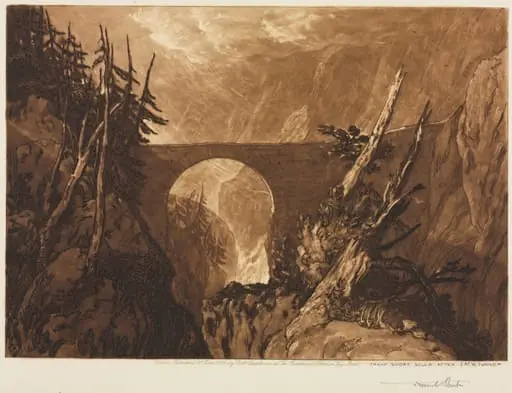 Little Devil's Bridge
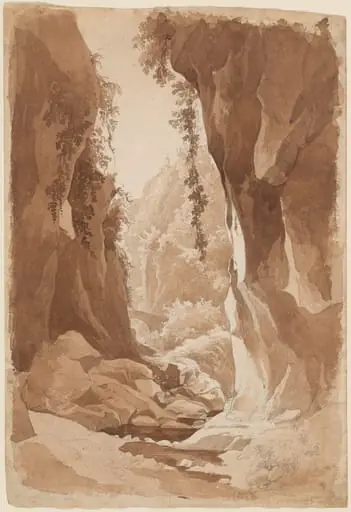 Cliffs Overhanging a River Gorge near Sorrento (recto)
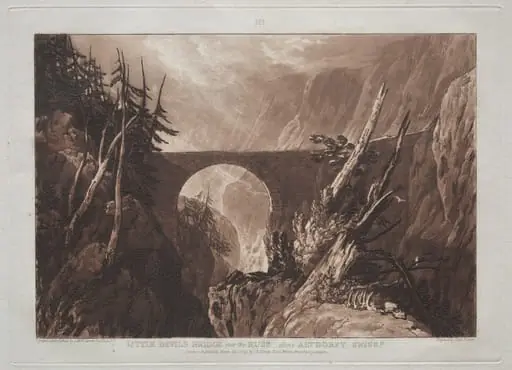 Liber Studiorum: Little Devil's Bridge over the Russ, above Altdorft, Swiss
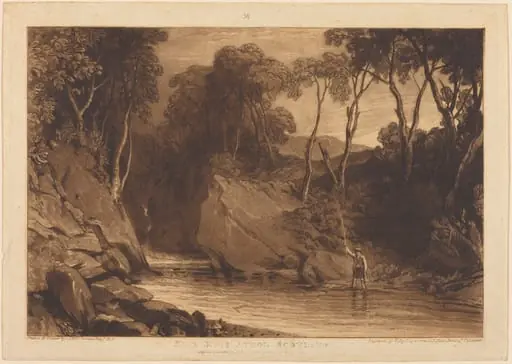 Near Blair Athol