Artwork
Liber Studiorum: Little Devil's Bridge over the Russ, above Altdorft, Swiss
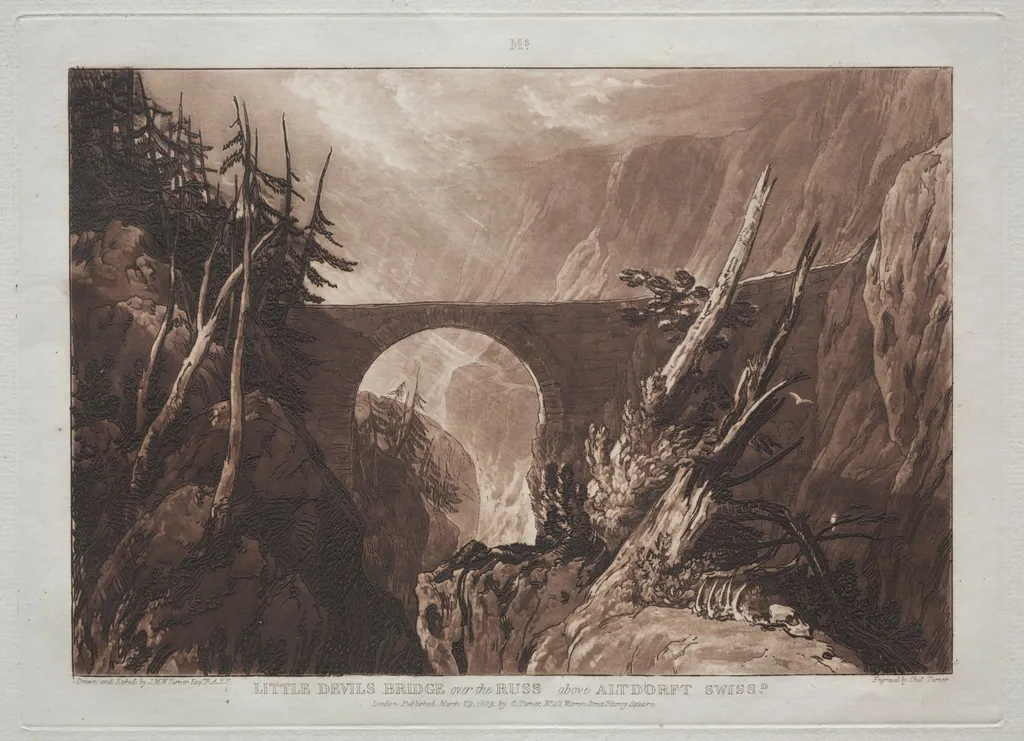
Liber Studiorum: Little Devil's Bridge over the Russ, above Altdorft, Swiss is a print by Joseph Mallord William Turner. It dates from 1823 and is held in the collection of the Cleveland Museum of Art.
About this work
Overview
This piece belongs to the 'Mountainous' type, reflecting Turner’s interest in alpine terrain.
Created around 1823, this print is one of seventy-one plates in Joseph Mallord William Turner’s *Liber Studiorum*, a project intended to classify landscape art into six thematic categories. This piece belongs to the 'Mountainous' type, reflecting Turner’s interest in alpine terrain. Executed as a mezzotint with aquatint, it was produced for an audience of connoisseurs rather than the general public, emphasizing artistic intent over mass appeal.
Subject & Meaning
The print depicts the Little Devil’s Bridge, a narrow stone arch spanning the River Russ near Altdorf in Switzerland. Turner frames the structure within towering cliffs and dense foliage, suggesting human presence as minor against nature’s scale. The composition evokes quiet contemplation rather than drama, aligning with Romantic ideals that valued sublime landscapes as spaces for reflection, not merely spectacle.
Technique & Style
Turner employed mezzotint and aquatint to achieve subtle tonal gradations, capturing the interplay of light and mist across rock and water. The bridge is rendered with precise lines, contrasting with the soft, blurred edges of distant peaks and foliage. Light reflects delicately on the river’s surface, suggesting movement without literal detail. His approach prioritizes atmosphere over topographical accuracy, emphasizing mood through texture and tone.
History & Provenance
Turner began the *Liber Studiorum* in 1807, releasing plates incrementally until 1819, with this print added later in 1823 as a supplement. Originally intended as a comprehensive guide to landscape composition, the series was privately circulated among artists and collectors. The plate was reprinted posthumously, preserving its influence on 19th-century printmaking and landscape aesthetics.
Context
During the early 1820s, Turner was deepening his engagement with Swiss scenery, influenced by his travels through the Alps. The *Liber Studiorum* responded to contemporary debates about the hierarchy of artistic subjects, asserting landscape as worthy of intellectual rigor. Turner’s focus on light and structure aligned with emerging scientific interest in optics and perception, subtly challenging academic conventions of the time.
Legacy
Though not widely known to the public during his lifetime, Turner’s *Liber Studiorum* became a foundational reference for later artists exploring light and abstraction. Its emphasis on atmospheric effect over detail prefigured Impressionist concerns, while its tonal experimentation resonated with 20th-century abstract painters. The series remains a key document in the evolution of modern landscape representation.
Artist & collection
Artist
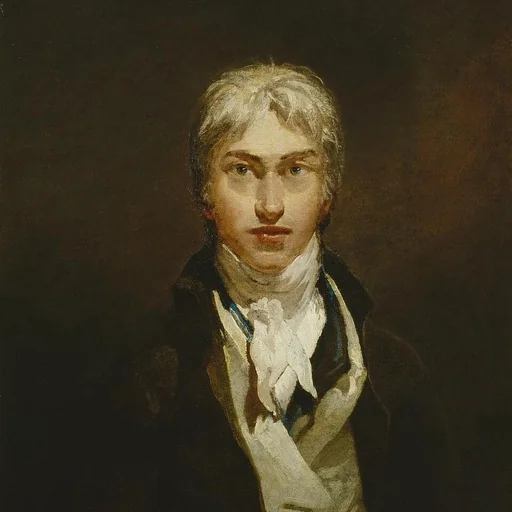
Joseph Mallord William Turner was born in 1775 at Maiden Lane, Covent Garden, where his father kept a barber and wig-making shop.

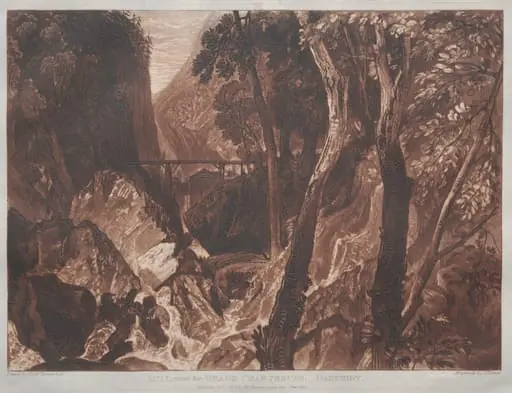 Liber Studiorum: Mill near the Grand Chartreuse, Dauphiny
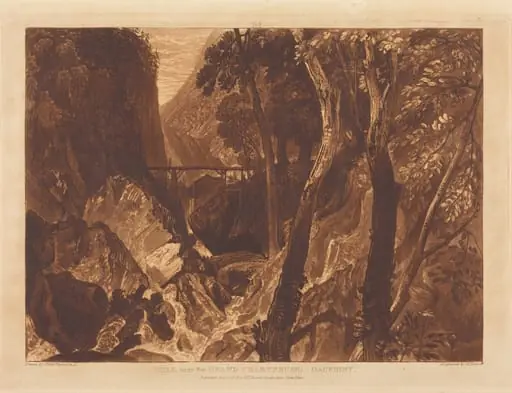 Mill near the Grand Chartreuse
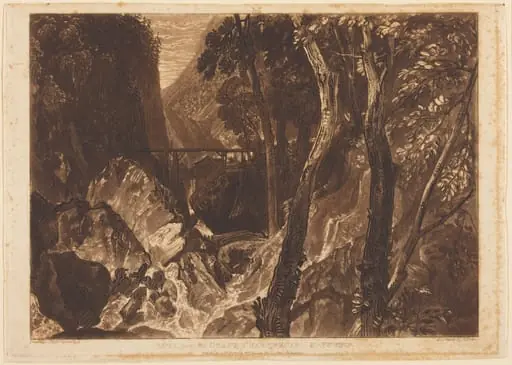 Mill near the Grand Chartreuse
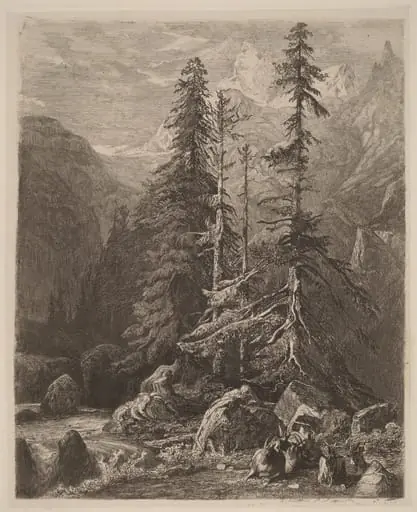 Essais de gravure à l'eau forte par Alexandre Calame, I, pl. 21
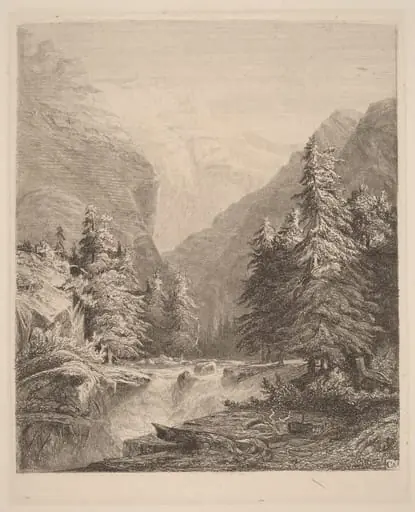 Mountain Waterfall
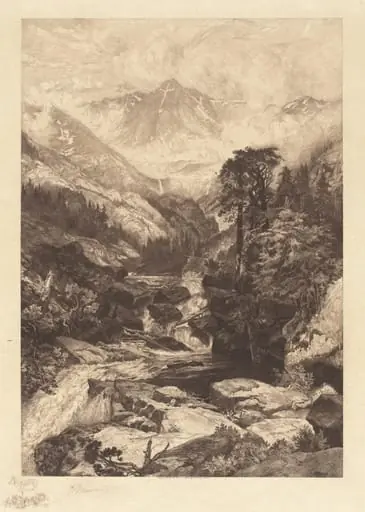 Mountain of the Holy Cross, Colorado
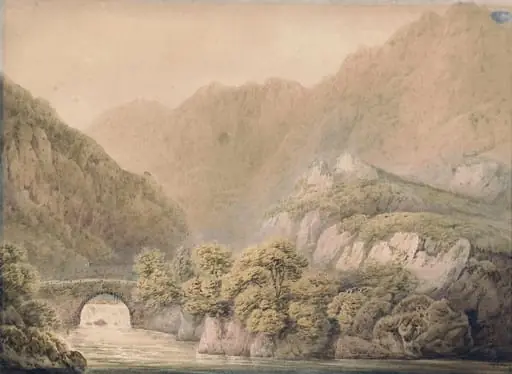 Pont Aberglaslyn, North Wales
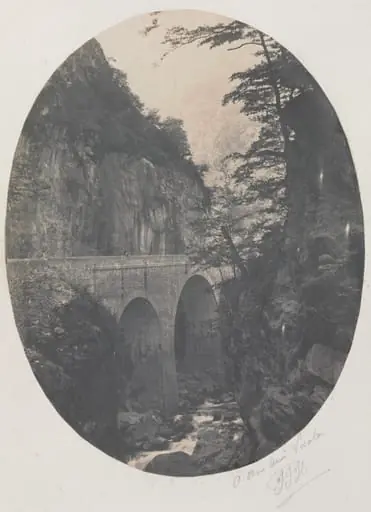 Gorge at Eaux Chaudes, Pyrenees
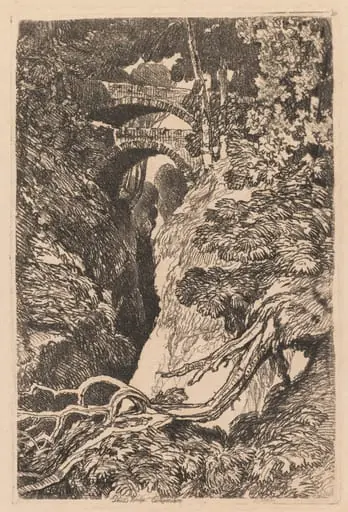 Devil's Bridge, Cardiganshire