Artwork
Lake of Lucerne
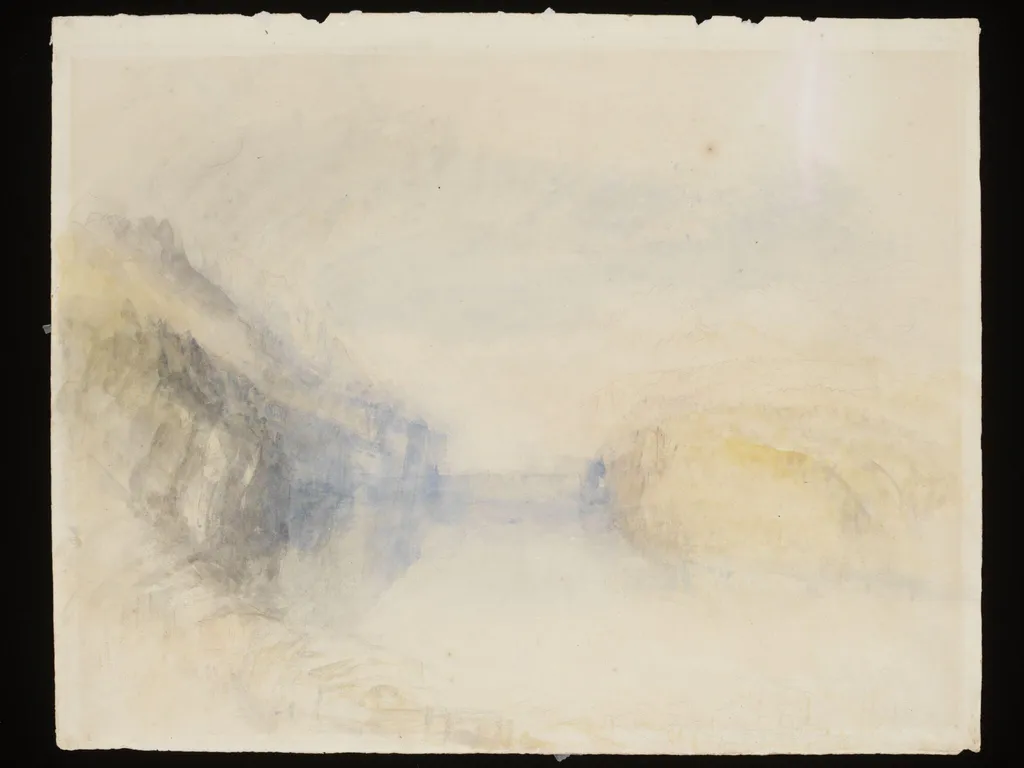
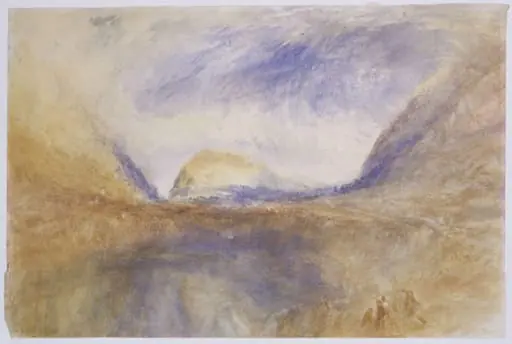
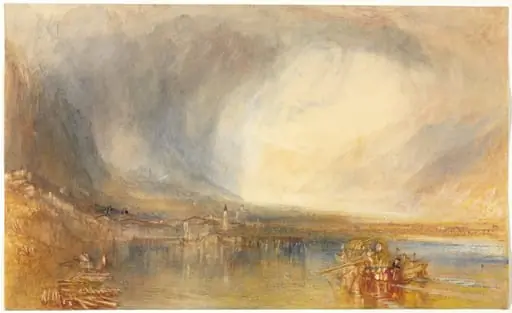
Lake of Lucerne is a watercolor work on paper by Joseph Mallord William Turner. It dates from 1850 and is held in the collection of the Victoria and Albert Museum.
About this work
Overview
Created circa 1850, *Lake of Lucerne* is a watercolour by the English painter J. M. W. Turner. Executed in the later phase of his career, the work belongs to the Romantic tradition while hinting at the looser, more atmospheric concerns that would follow. It is part of the Victoria and Albert Museum’s collection.
Subject & Meaning
The composition depicts the Swiss lake of Lucerne, its broad surface merging with distant hills under a hazy sky. Turner emphasizes the overall feeling of the scene—its quiet expansiveness and the subtle interplay of light and mist—rather than rendering precise topographical details.
Technique & Style
Turner employs a fluid, almost spontaneous handling of pigment, allowing blues, yellows and whites to bleed together. The brushwork is loose, with edges that dissolve into the paper, creating a dreamlike atmosphere. This approach foregrounds colour and mood, characteristic of his late style.
History & Provenance
The watercolour entered the Victoria and Albert Museum’s holdings in the early 20th century, where it has remained on public display. Its acquisition reflects the museum’s commitment to preserving Turner’s later works, which illustrate his evolving artistic concerns.
Context
By the 1850s Turner was moving beyond the dramatic chiaroscuro of his early Romantic landscapes toward a softer, more abstracted vision of nature. *Lake of Lucerne* exemplifies this transition, anticipating later developments in atmospheric painting while retaining the Romantic fascination with sublime scenery.
Artist & collection
Artist
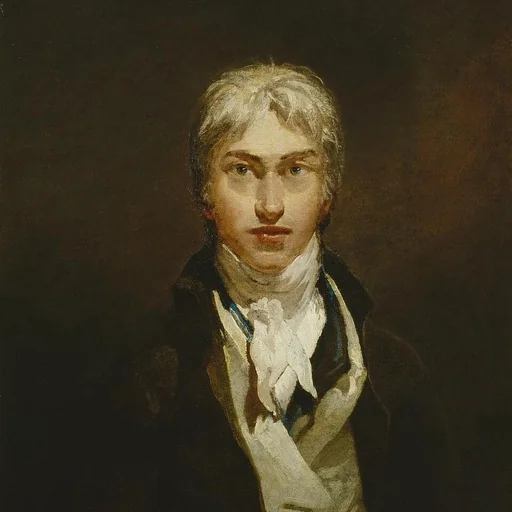
Joseph Mallord William Turner was born in 1775 at Maiden Lane, Covent Garden, where his father kept a barber and wig-making shop.

 Mountainous Landscape
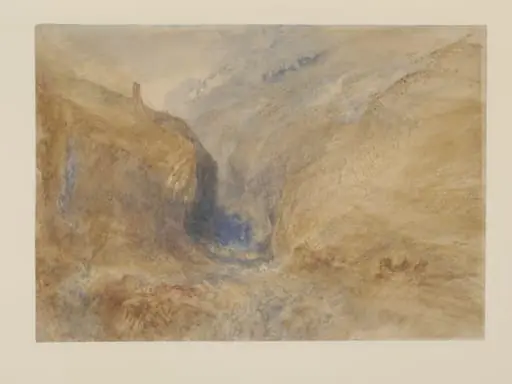 A Swiss Pass
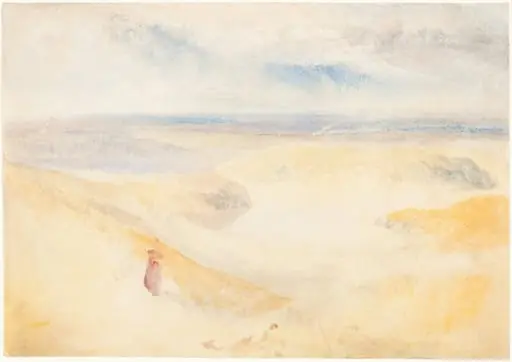 A Yorkshire River
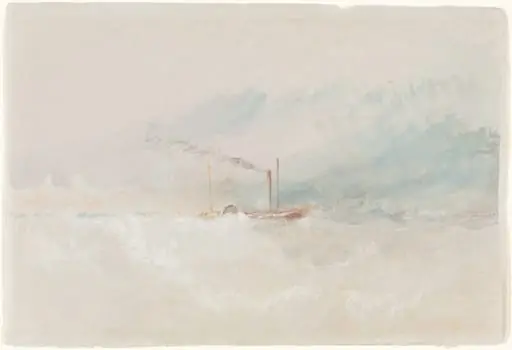 A Packet Boat off Dover
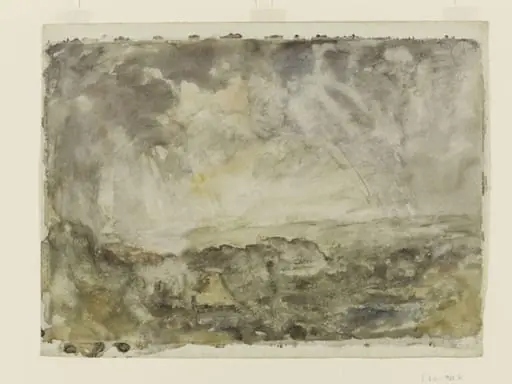 Preliminary sketch for the oil painting 'The Shower, Richmond'
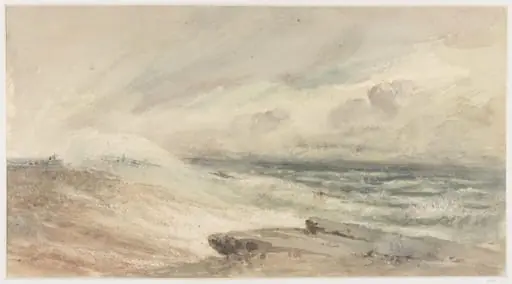 Sea from the Coast
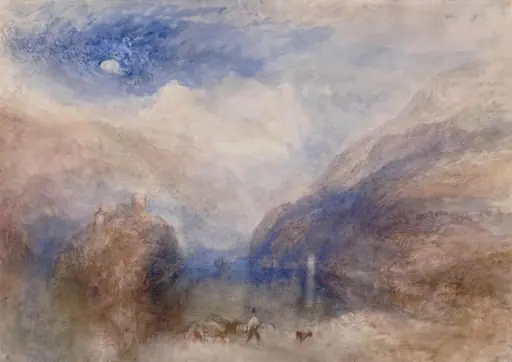 Lauerzersee with the Mythens
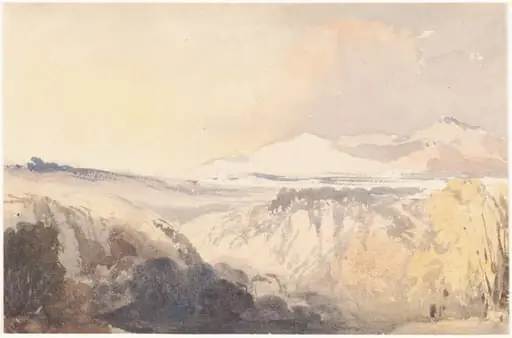 Landscape with a Distant Mountain Range
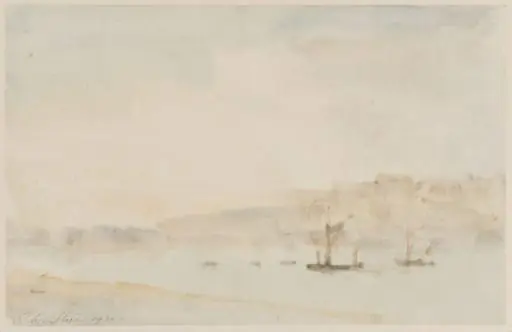 Untitled
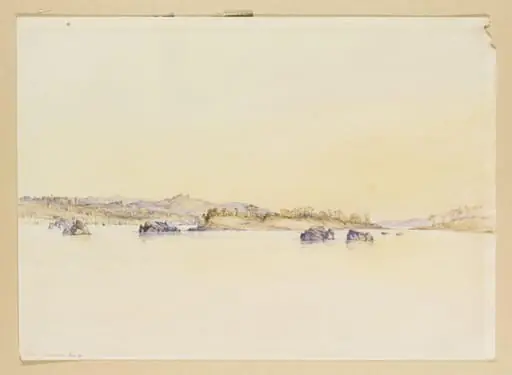 Asouan and Elephantine
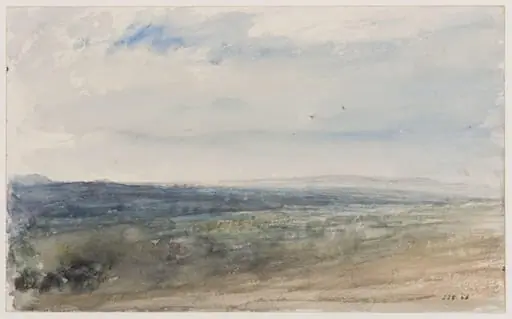 A view of downland country
 Flüelen, from the Lake of Lucerne