Artwork
Architecture of the Middle Ages: Church at Serran, near Gisore
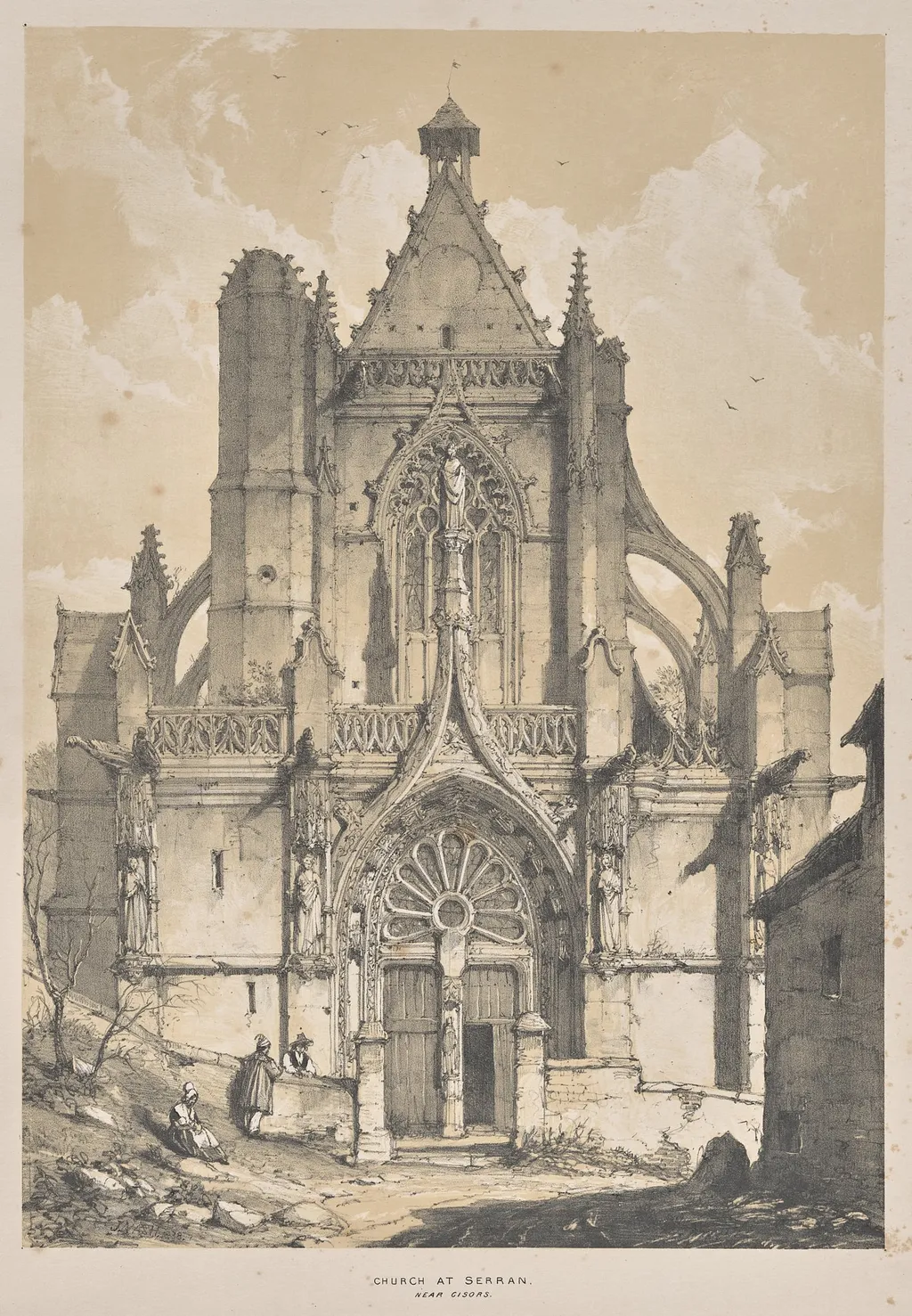
Architecture of the Middle Ages: Church at Serran, near Gisore is a print by the Romanticist artist Joseph Nash. It dates from 1838 and is held in the collection of the Cleveland Museum of Art.
About this work
Overview
It belongs to a series that later expanded into his multi-volume study of historic mansions and ecclesiastical buildings.
Created in 1838 by English artist Joseph Nash, this lithograph depicts a medieval church near Gisore, capturing its weathered state with careful attention to architectural detail. Part of Nash’s broader project to document historic structures, the work reflects his commitment to recording England’s architectural heritage through precise watercolor and lithographic techniques. It belongs to a series that later expanded into his multi-volume study of historic mansions and ecclesiastical buildings.
Subject & Meaning
The church, shown in a state of partial decay, emphasizes the passage of time and the quiet endurance of medieval sacred architecture. Figures near the entrance—standing and seated—scale the ruin, reinforcing its abandonment and human connection to the past. The inclusion of vines and worn stonework suggests nature reclaiming human creation, a theme aligned with 19th-century contemplations on history, memory, and impermanence.
Technique & Style
Nash employed fine-line lithography to render the church’s intricate carvings, pointed arches, and rose window with clarity. His watercolor background adds subtle tonal depth to the stone and foliage, enhancing the sense of age. The composition balances architectural precision with atmospheric detail, avoiding romantic exaggeration in favor of documentary accuracy, characteristic of his methodical approach to historical recording.
History & Provenance
The print emerged during a period of renewed interest in medieval architecture, spurred by antiquarian scholarship and the Gothic Revival. Nash produced it as part of a larger survey commissioned to preserve visual records of structures at risk of neglect or demolition. Though the location 'Serran' may be fictional or misattributed, the work aligns with his documented travels across England and Wales to sketch ecclesiastical ruins.
Context
In the 1830s, artists and scholars increasingly turned to medieval ruins as subjects worthy of study, influenced by Romantic ideals that valued emotion, history, and nature’s reclamation of human works. Nash’s work stood apart by prioritizing factual representation over dramatic effect, contributing to a growing movement that sought to preserve architectural knowledge through systematic illustration rather than imaginative reinterpretation.
Legacy
Nash’s detailed depictions of medieval buildings provided valuable visual references for later historians and restorationists. While not widely celebrated in his lifetime, his publications became essential resources for understanding England’s architectural past. This print exemplifies his role as a transitional figure between antiquarian documentation and the formal study of architectural history in the 19th century.
Artist & collection
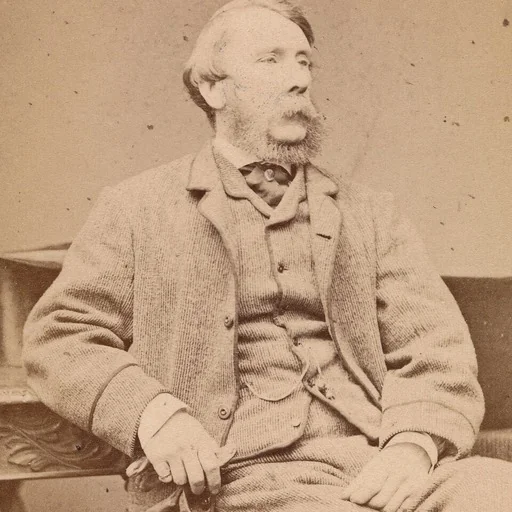
Artist
Joseph Nash (17 December 1809 – 19 December 1878) was an English watercolour painter and lithographer, specialising in historical buildings. His major work was the 4-volume Mansions of England in the Olden Time, published from 1839–49.

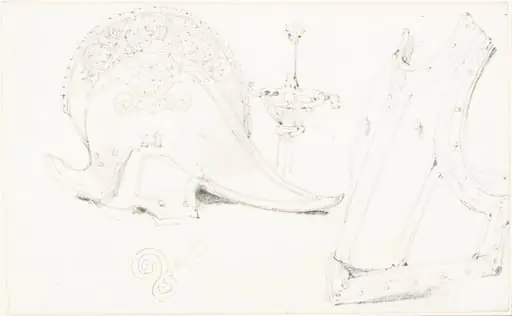 Study of a Helmet, Breastplate, and Rapier
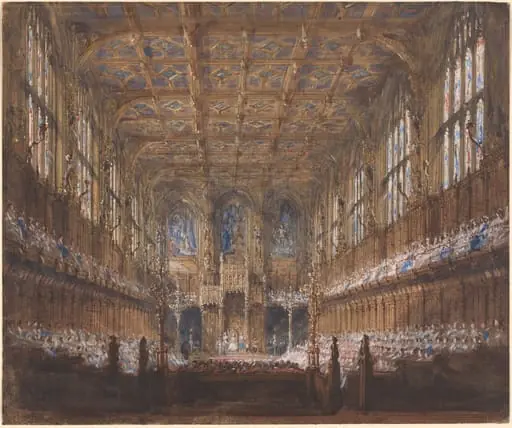 The State Opening of Parliament in the Rebuilt House of Lords
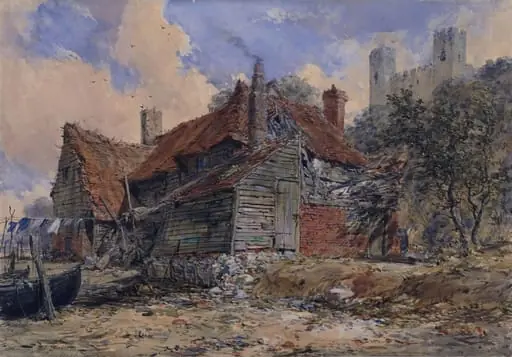 Rochester
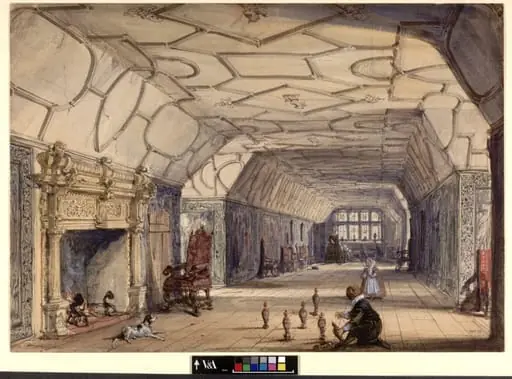 The gallery at Knole House, near Sevenoaks
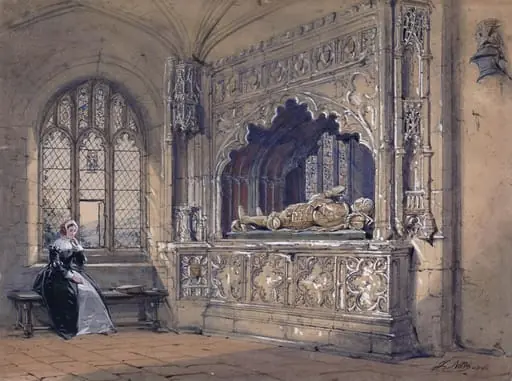 The supposed tomb of Thomas Fiennes, in Herstmonceux Church, Sussex, looking south-east from the North Chapel
 Speke Hall, Lancashire
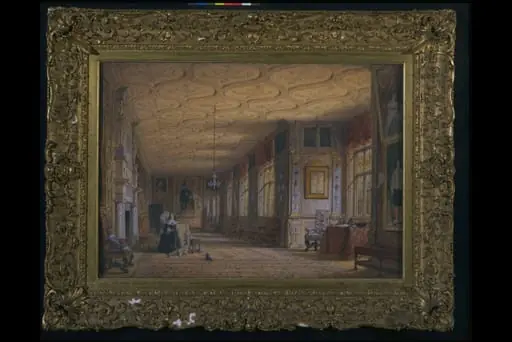 The Cartoon Gallery at Knole
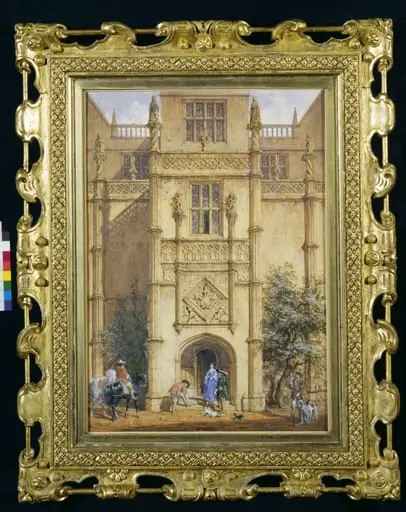 The Porch at Montacute House, Somerset
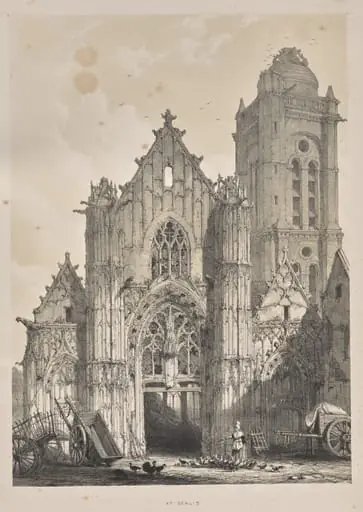 Architecture of the Middle Ages: At Senlis
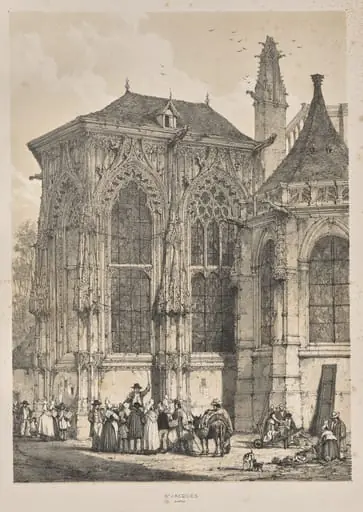 Architecture of the Middle Ages: St. Jacques, Dieppe, East End, Exterior
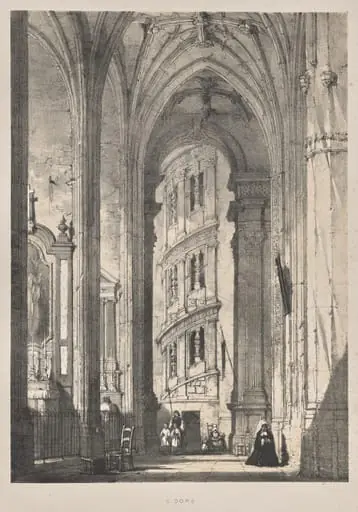 Architecture of the Middle Ages: Church of St. Gisors, Interior
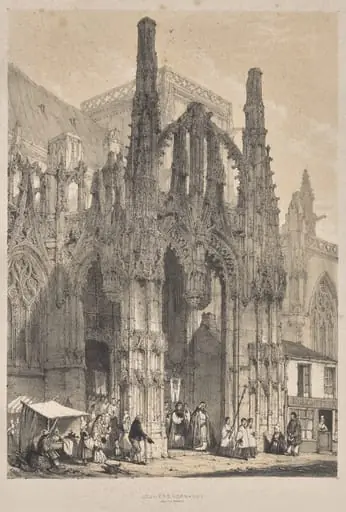 Architecture of the Middle Ages: Louviers, Normandy, South Porch
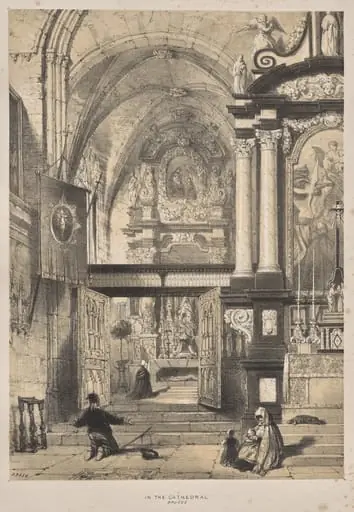 Architecture of the Middle Ages: In the Cathedral, Bruges
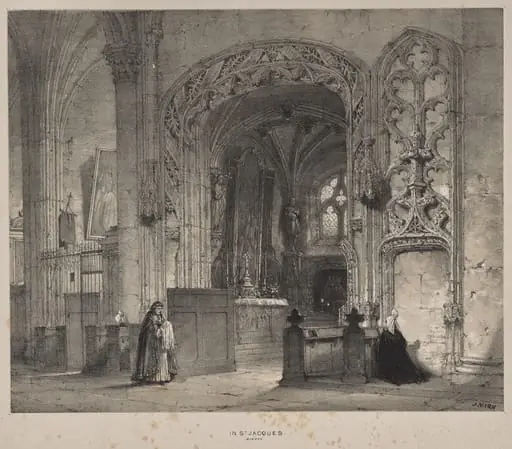 Architecture of the Middle Ages: Chapel in St. Jacques, Dieppe
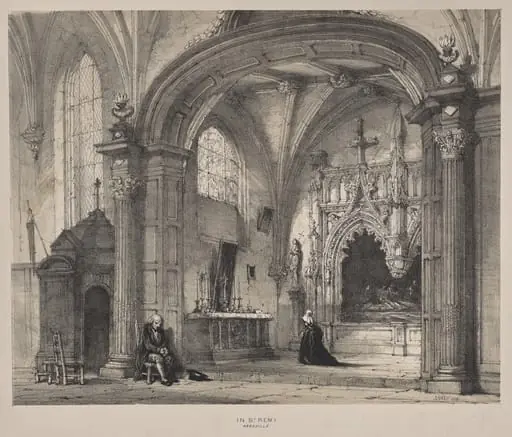 Architecture of the Middle Ages: In St. Remi, Abbeville
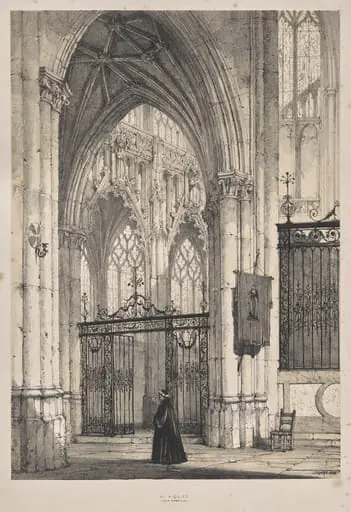 Architecture of the Middle Ages: Church of St. Riquier, near Abbeville