Artwork
The State Opening of Parliament in the Rebuilt House of Lords
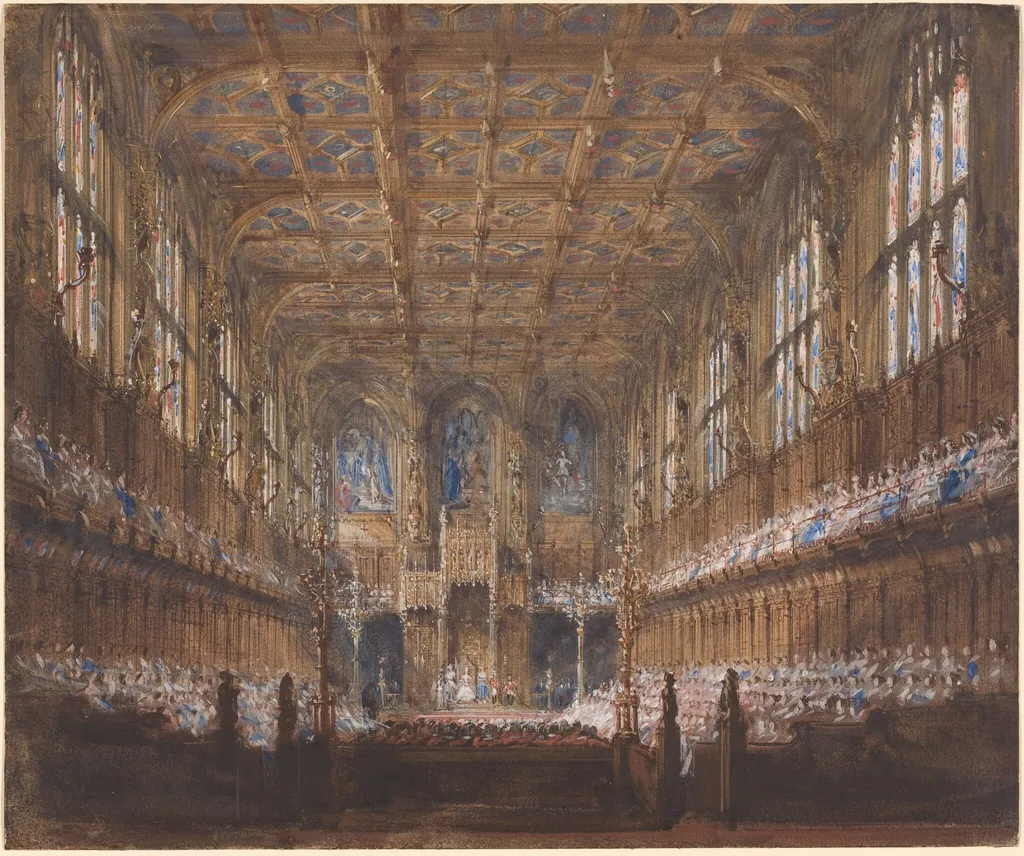
The State Opening of Parliament in the Rebuilt House of Lords is a gouache drawing by the Romanticist artist Joseph Nash. It dates from 1847 and is held in the collection of the National Gallery of Art.
About this work
Overview
Created in 1847, this watercolor and gouache drawing by Joseph Nash depicts the ceremonial reopening of the House of Lords following the 1834 fire.
Created in 1847, this watercolor and gouache drawing by Joseph Nash depicts the ceremonial reopening of the House of Lords following the 1834 fire. Executed on heavy wove paper with graphite underdrawing, the work belongs to a series documenting Britain’s architectural heritage. Nash’s focus on interior spaces and state rituals is evident here, capturing a moment of political ritual within a reconstructed national space.
Subject & Meaning
The scene portrays the State Opening of Parliament, a constitutional ceremony where the monarch formally addresses both Houses. Figures in ceremonial robes and regalia fill the chamber, emphasizing hierarchy and tradition. The presence of the sovereign’s throne and the organized assembly underscores the continuity of governance, even as the building itself had been recently rebuilt, symbolizing resilience and institutional permanence.
Technique & Style
Nash employed watercolor and gouache over graphite to achieve luminous detail and layered texture. Glazing techniques enhanced the glow of gilded surfaces, while controlled brushwork rendered the intricate woodwork of the ceiling and stained-glass windows. Subtle blurring in the crowd suggests movement without disrupting the composition’s order, balancing precision with atmospheric depth.
History & Provenance
The drawing was made shortly after the reconstruction of the Palace of Westminster, which began in 1840. Nash was commissioned to document historic interiors for his publication *Mansions of England in the Olden Time*, though this work stands apart as a record of contemporary ceremonial life. It likely served as a visual archive for a public fascinated by the nation’s evolving political architecture.
Context
In the mid-19th century, Britain was redefining its national identity through architecture and ritual. The rebuilding of Parliament followed a devastating fire and coincided with expanding democratic ideals. Nash’s depiction reflects a society balancing reverence for tradition with the modernization of its institutions, using art to mediate between spectacle and state function.
Legacy
Nash’s work contributed to a growing genre of topographical art that documented public spaces with documentary precision. While not widely exhibited in his lifetime, the drawing remains a valuable record of parliamentary ceremony and interior design in the Victorian era, offering insight into how visual culture reinforced political authority through aesthetic order.
Own this work as a print
Artist & collection
Artist
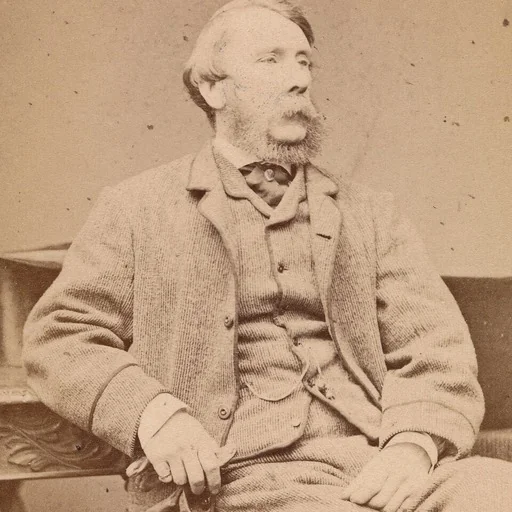
Joseph Nash (17 December 1809 – 19 December 1878) was an English watercolour painter and lithographer, specialising in historical buildings. His major work was the 4-volume Mansions of England in the Olden Time, published from 1839–49.

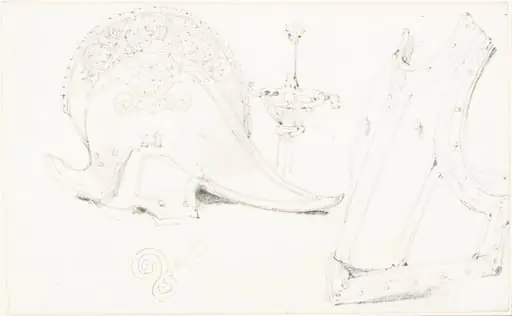 Study of a Helmet, Breastplate, and Rapier
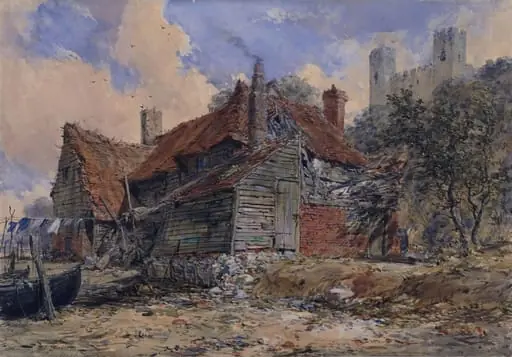 Rochester
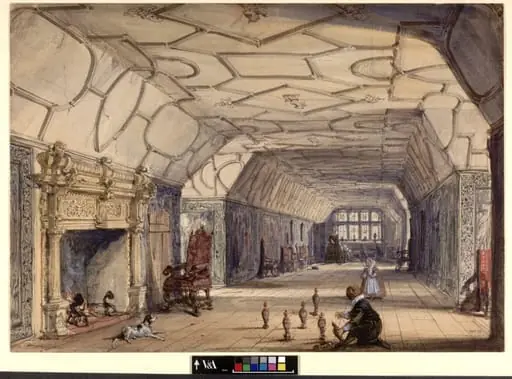 The gallery at Knole House, near Sevenoaks
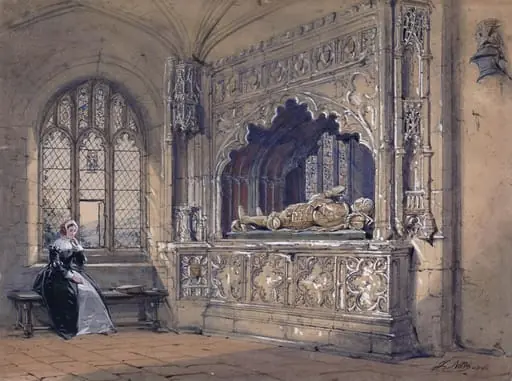 The supposed tomb of Thomas Fiennes, in Herstmonceux Church, Sussex, looking south-east from the North Chapel
 Speke Hall, Lancashire
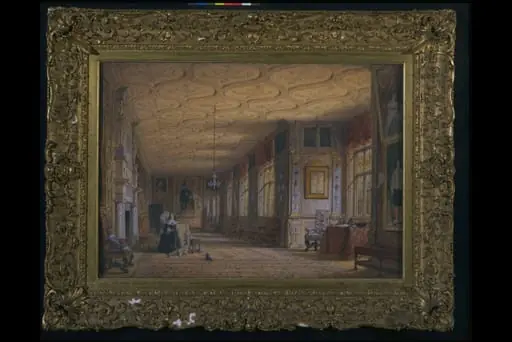 The Cartoon Gallery at Knole
 The Porch at Montacute House, Somerset
 Rouen, St. Etienne
 The Champion of England Entering Westminster Hall
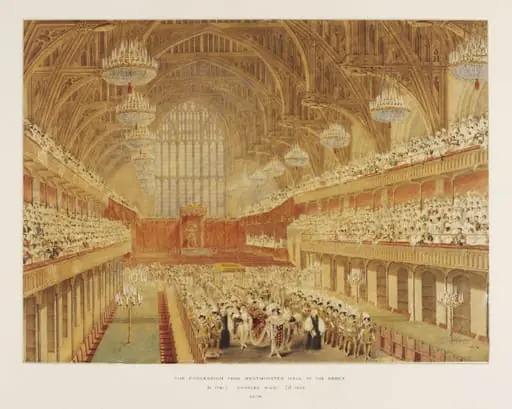 Untitled
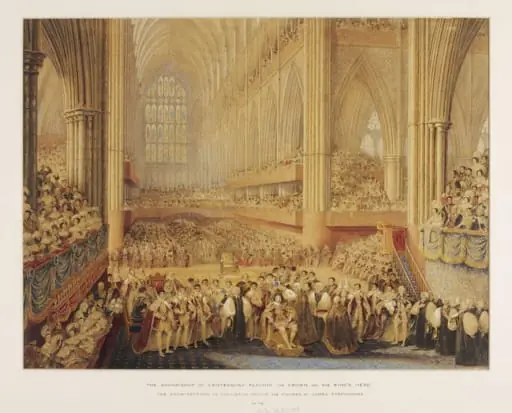 Topographical drawing
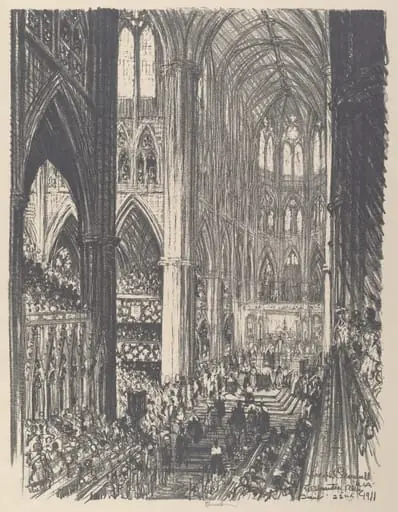 Coronation of King George V and Queen Mary in Westminster Abbey
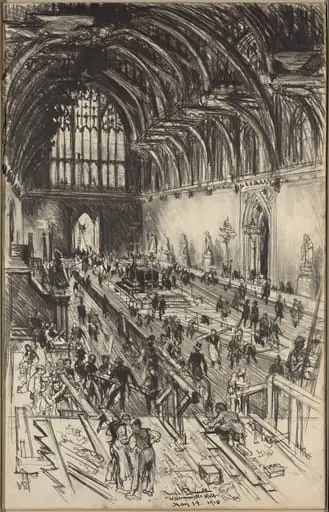 Preparations for the Lying in State of Edward VII
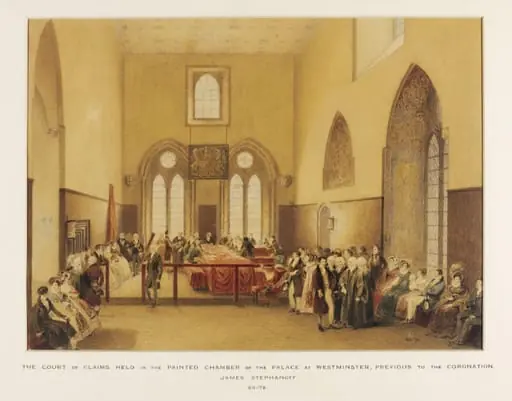 Untitled
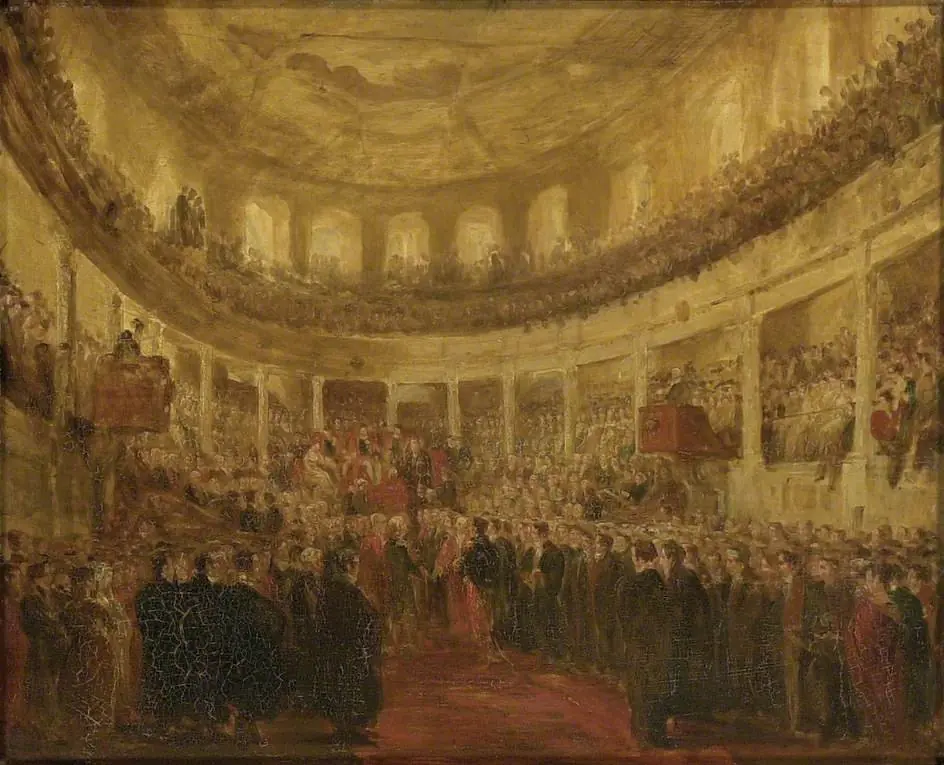 The Conferment of Honorary Degrees on the Allied Sovereigns in the Sheldonian Theatre
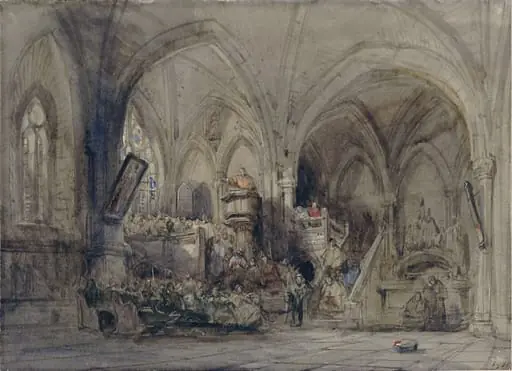 Interior of a church, Spain
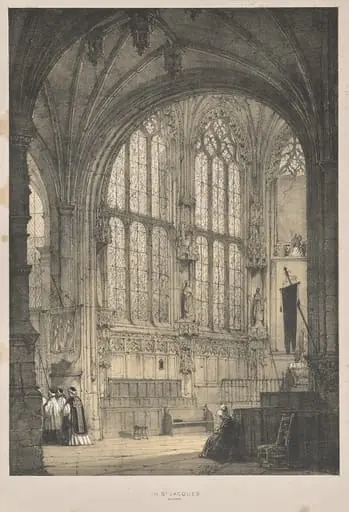 Architecture of the Middle Ages: In St. Jacques, Dieppe, East End, Interior
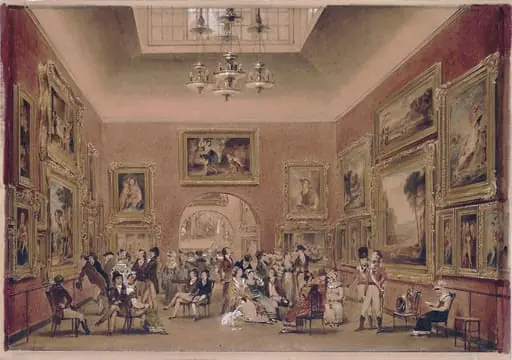 The Interior of the British Institution