Artwork
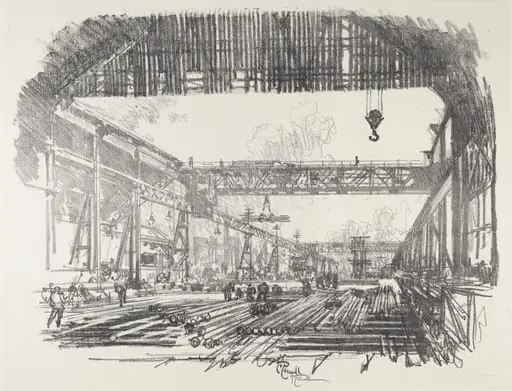
English War Work: Steel Bars for Shells
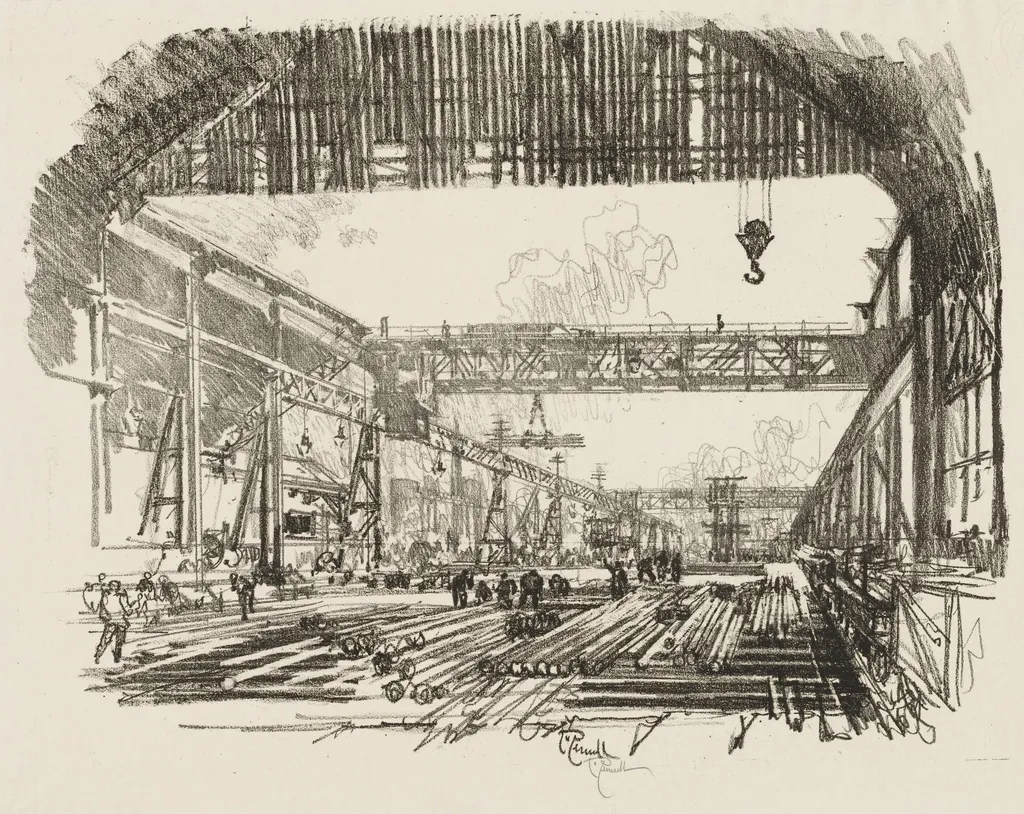
English War Work: Steel Bars for Shells is a print by Joseph Pennell. It dates from 1916 and is held in the collection of the Cleveland Museum of Art.
About this work
The artist focused on the gritty, industrial side of war work, not the fighting itself.
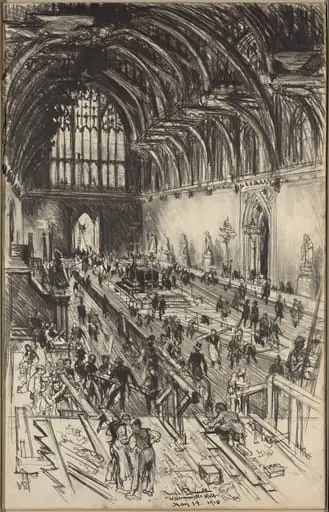
This sketch shows a busy factory floor packed with steel bars and machinery. Workers move around tracks and cranes, lifting heavy metal beams. The top half looks like a storage area with rows of long bars stacked high.
The title says this is about making steel for shells during wartime. The artist focused on the gritty, industrial side of war work, not the fighting itself.
Look up Joseph Pennell (American, 1857–1926) next to see more of his drawings.
Overview
Created in 1916, *English War Work: Steel Bars for Shells* is a lithograph by American artist Joseph Pennell, documenting industrial labor in Britain during the First World War. Pennell, known for his detailed renderings of urban and industrial environments, produced this work as part of a commission to record wartime production. The piece captures the scale and rhythm of factory life, emphasizing machinery and labor over combat, reflecting a broader effort to visualize the home front’s contribution to the war.
Subject & Meaning
The print depicts a steel mill’s interior, where workers handle long bars of raw material destined for shell casings. Rows of stacked metal and overhead cranes suggest mass production under strict organization. Pennell avoids romanticizing war, instead focusing on the physical demands of industrial labor. The absence of soldiers or battle imagery shifts attention to the quiet, relentless effort sustaining the war machine, framing industry as a vital, if unglamorous, front.
Technique & Style
Pennell employed lithography to achieve sharp contrasts and dense tonal layers, emphasizing the weight and texture of metal and machinery. His linework is precise yet energetic, capturing movement among workers and the mechanical rhythm of the factory. Influenced by Whistler’s tonal harmony and Eakins’ realism, he rendered industrial spaces with documentary clarity, avoiding embellishment. The composition’s verticality and crowded perspective convey the overwhelming scale of production.
History & Provenance
Pennell created this work during a 1916 trip to Britain, commissioned by the British government to document wartime industry. He traveled with his wife, writer Elizabeth Robins, documenting factories and shipyards. The print entered The Cleveland Museum of Art’s collection in the 20th century, where it remains part of a broader archive of Pennell’s war-related works. Its preservation reflects early 20th-century efforts to archive industrial history through art.
Context
During World War I, governments increasingly turned to artists to record the war’s logistical dimensions. Pennell’s work aligned with British initiatives to boost morale and demonstrate national industriousness. Unlike propaganda that glorified soldiers, his images honored the laborers sustaining the war effort. His focus on factories mirrored a growing cultural recognition of industrial capacity as central to modern warfare, reshaping how societies viewed their own contributions.
Legacy
Pennell’s *English War Work* contributed to a genre of industrial documentation that influenced later social realist art. His unembellished depictions of labor helped establish the factory as a legitimate subject for fine art. While not widely celebrated in popular memory, his prints remain valuable records of early 20th-century production methods and the quiet heroism of wartime labor, offering a counterpoint to traditional war imagery.
Artist & collection
Artist
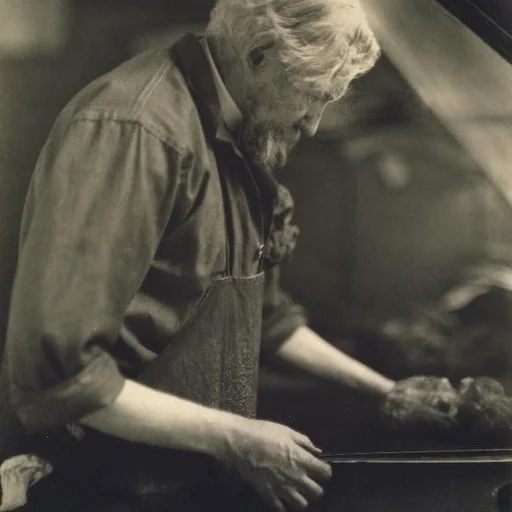
Joseph Pennell (July 4, 1857 – April 23, 1926) was an American draftsman, etcher, lithographer, and illustrator for books and magazines.

 Steel Bars for Shells
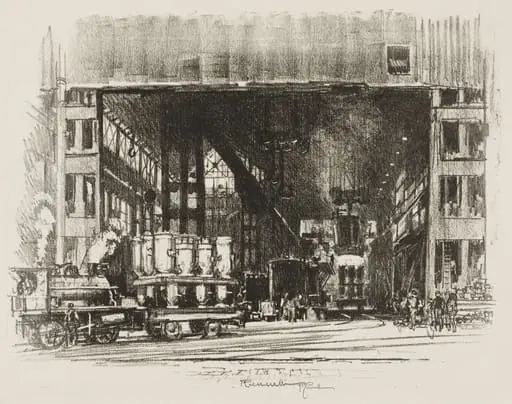 English War Work: The Urns, Casting Big Shells
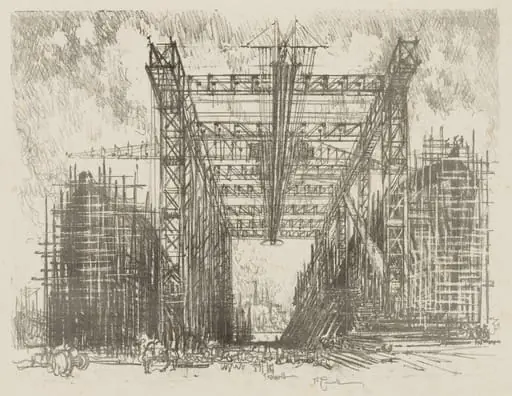 English War Work: The Gantry (A Merchant Shipyard)
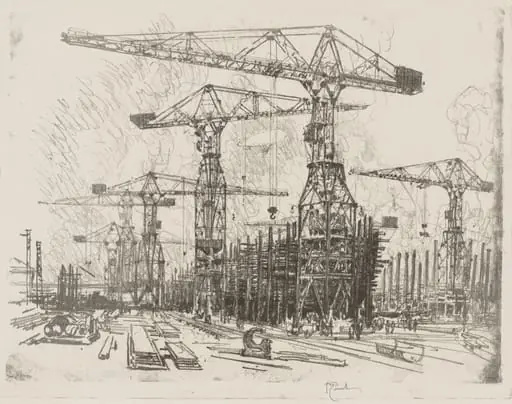 English War Work: The Old Shipyard
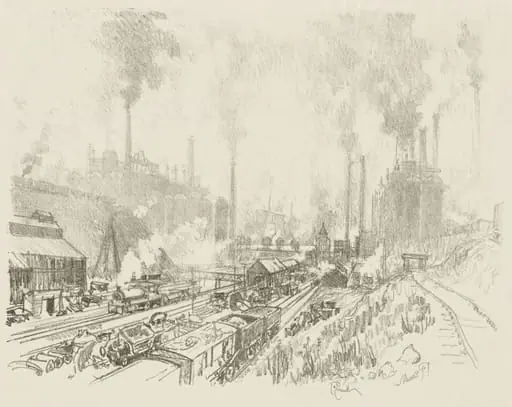 English War Work: In the Land of Iron and Steel
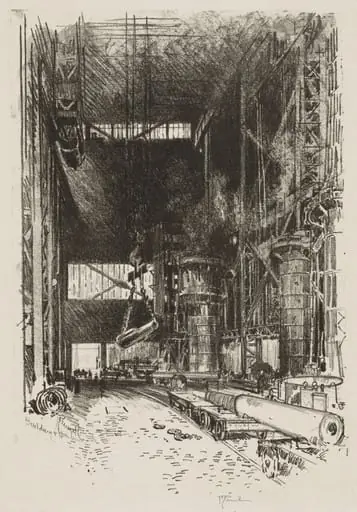 English War Work: The New Gun Pit
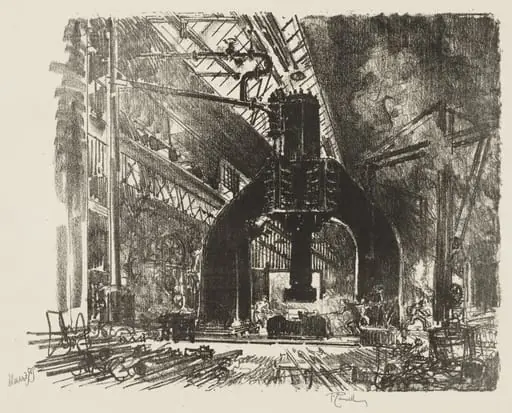 English War Work: The Great Hammer
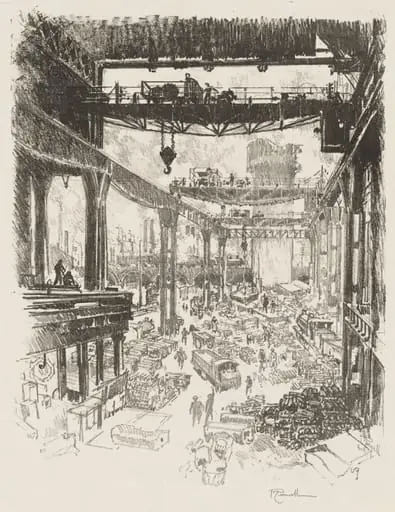 English War Work: The Great Tower, Pig Iron
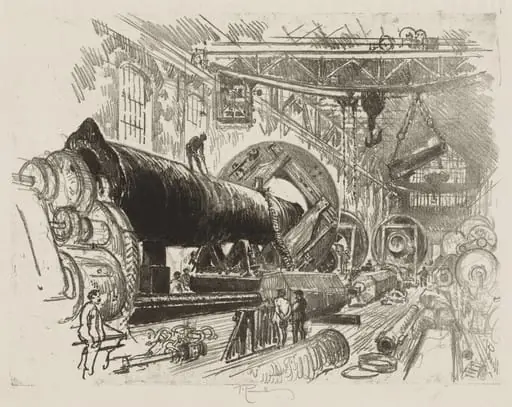 English War Work: Cutting and Turning a Big Gun
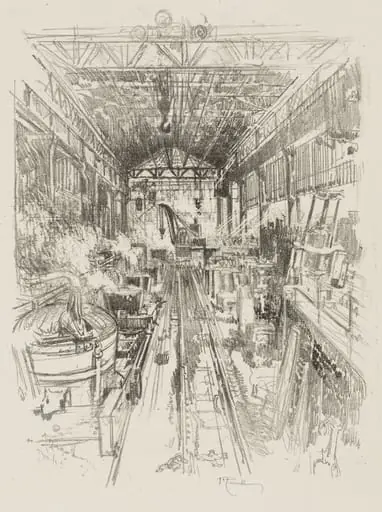 English War Work: The Cauldrons