Artwork
A Calm at a Mediterranean Port
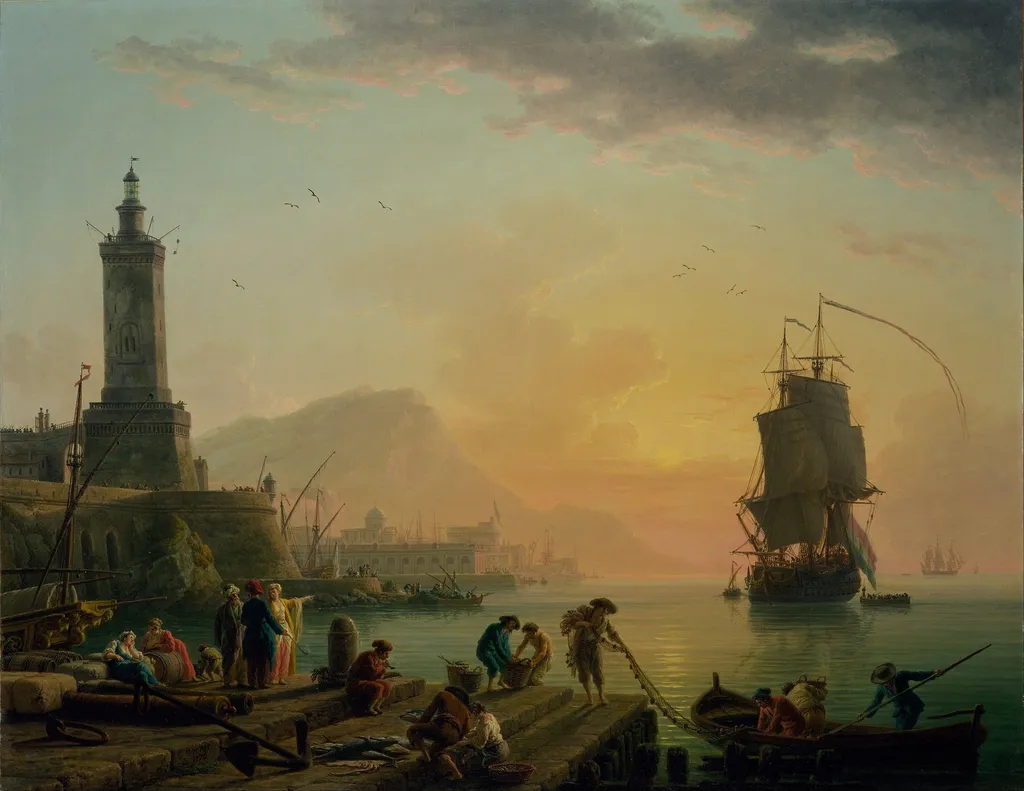
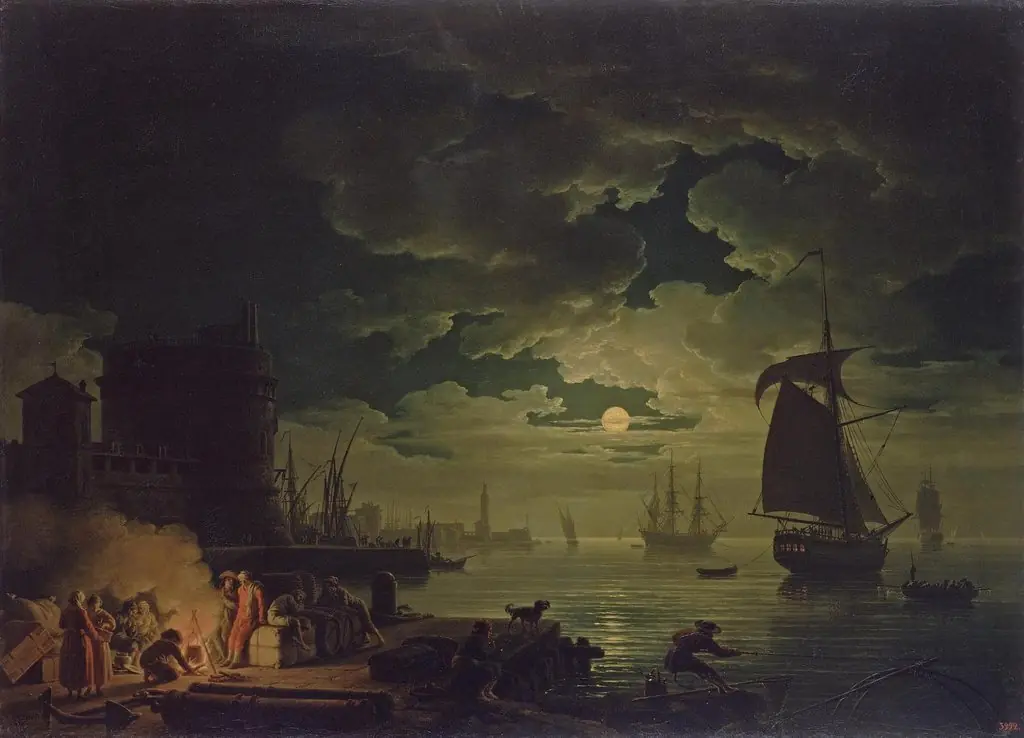
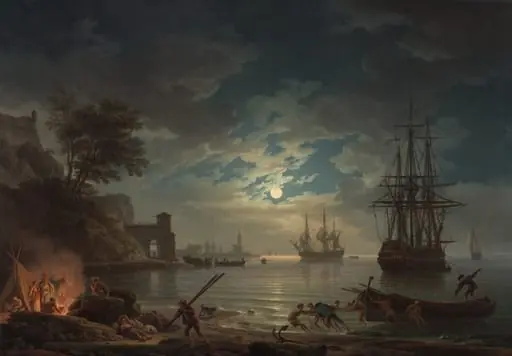
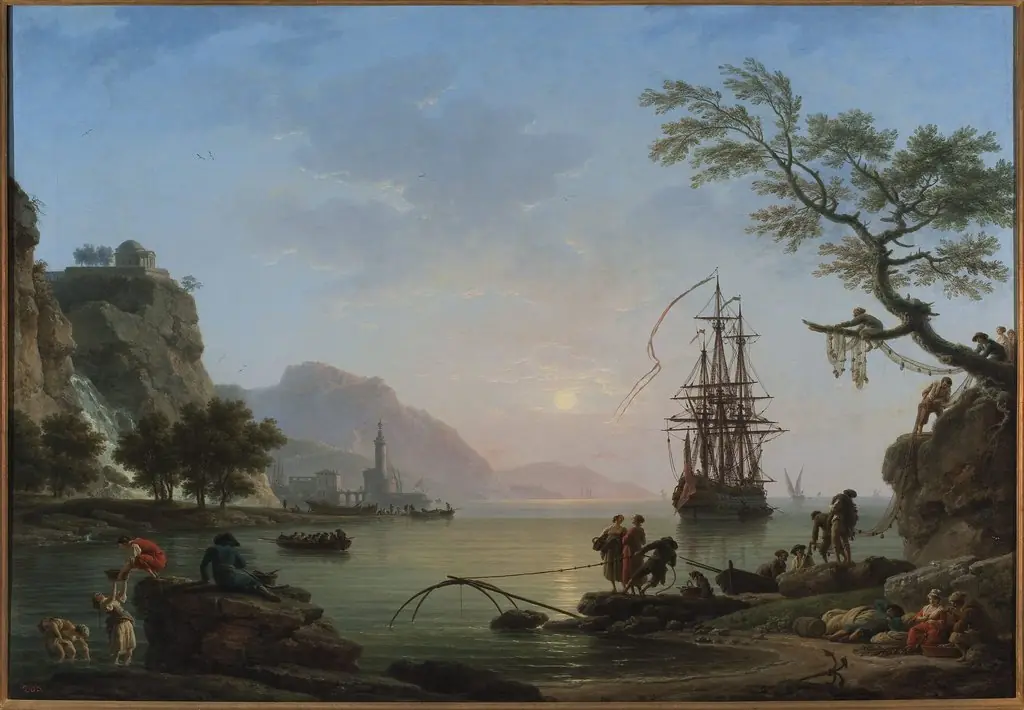
A Calm at a Mediterranean Port is an oil painting by the Rococo painting artist Claude-Joseph Vernet. It dates from 1770 and is held in the collection of the J. Paul Getty Museum.
About this work
Overview
Part of a series of port scenes commissioned for French royalty, the work captures a moment of stillness amid routine maritime activity.
Painted in 1770 by French artist Claude-Joseph Vernet, this oil on canvas depicts a quiet Mediterranean harbor at day’s end. Part of a series of port scenes commissioned for French royalty, the work captures a moment of stillness amid routine maritime activity. It resides today in the collection of the J. Paul Getty Museum, where it exemplifies Vernet’s mastery of atmospheric light and coastal topography.
Subject & Meaning
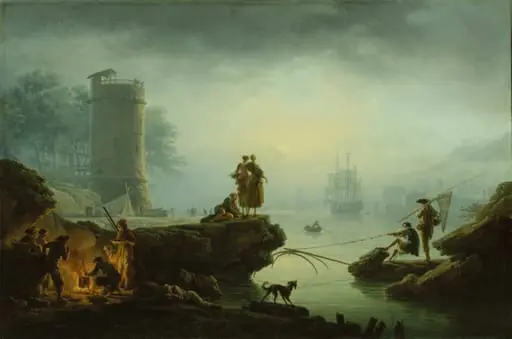
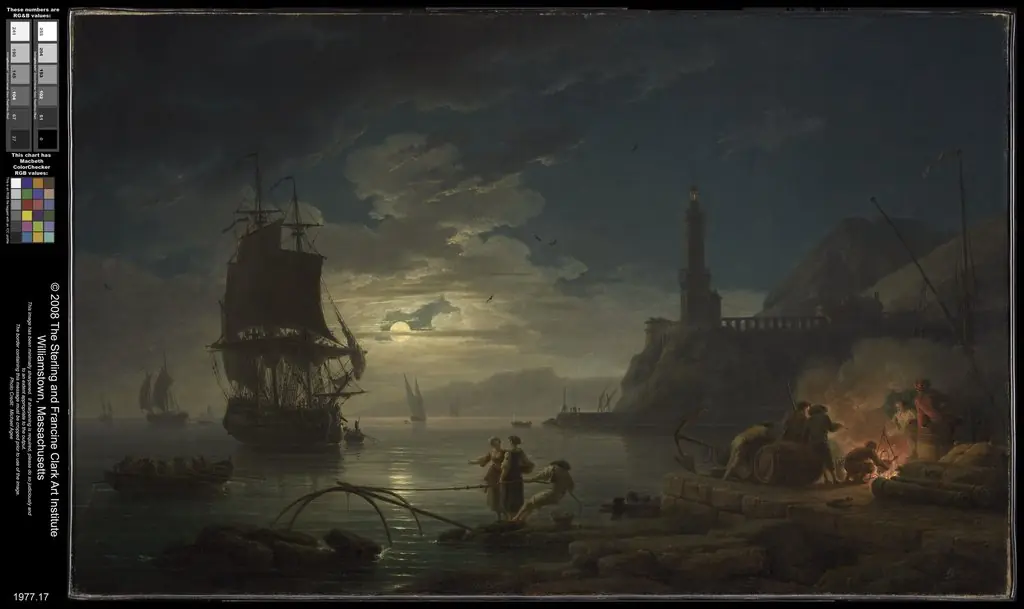
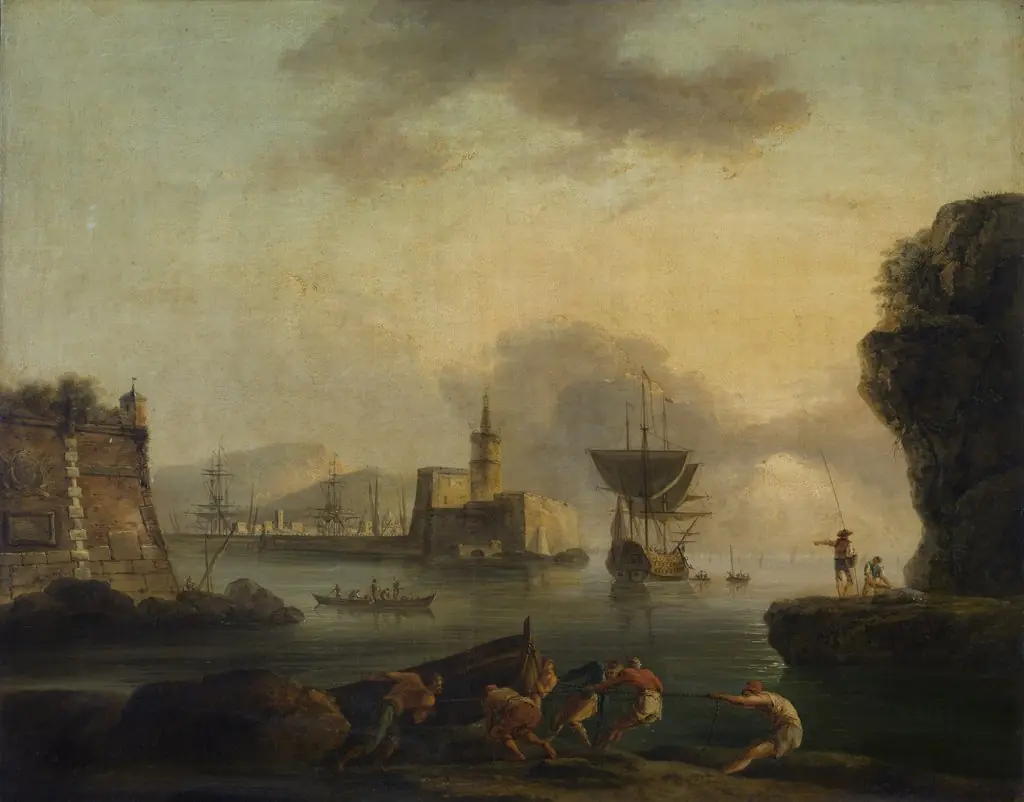
The scene portrays ordinary life in a working port: laborers unload cargo, sailors adjust rigging, and small boats drift near the shore. A distant ship lies at anchor, its sails furled, while a lighthouse rises on the left, signaling safety. No grand narrative is present—instead, the painting elevates the dignity of daily toil, framed by the quiet rhythm of sea and sky.
Technique & Style
Vernet employed layered glazes to achieve subtle shifts in light, particularly in the warm hues of the sunset sky. The brushwork is precise yet unobtrusive, allowing the naturalism of clouds, water, and architecture to dominate. Compositionally, the lighthouse and distant ship create a diagonal rhythm that guides the eye without disrupting the scene’s tranquility.
History & Provenance
Commissioned by Louis XV, the painting belonged to a cycle of twelve harbor views intended to celebrate France’s naval and commercial reach. After passing through private collections in France, it entered the Getty’s holdings in the late 20th century. Vernet’s sons, Carle and Horace, later became painters themselves, continuing his artistic legacy.
Context
Created during the waning years of the Rococo, the work reflects a shift toward observational realism in French landscape painting. While contemporaries favored ornamental elegance, Vernet focused on accurate depictions of light, weather, and maritime architecture, aligning his practice with emerging Enlightenment ideals of empirical observation.
Legacy
Vernet’s harbor scenes influenced later French painters, including those of the Barbizon school, through their emphasis on naturalism and atmospheric detail. Though less celebrated today than his contemporaries, his systematic study of light and sea conditions laid groundwork for 19th-century landscape traditions in Europe.
Own this work as a print
Artist & collection
Artist
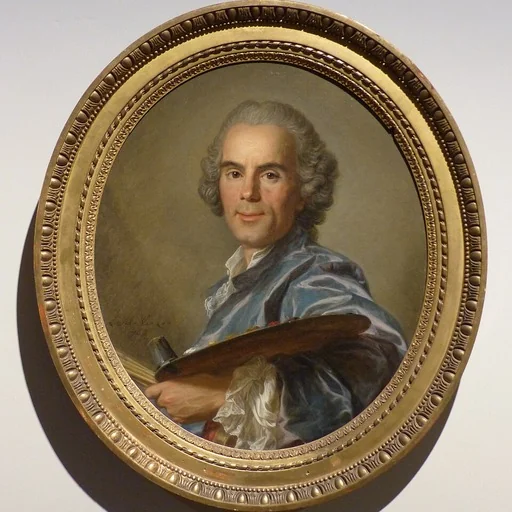
Claude-Joseph Vernet (French pronunciation: ; 14 August 1714 – 3 December 1789) was a French painter. His son Carle Vernet and daughter Marguerite Émilie Chalgrin were also painters.