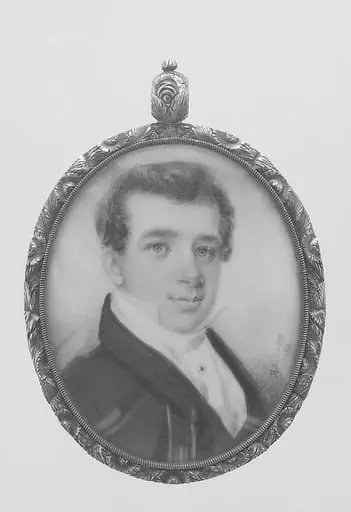
Artwork
Portrait of a Gentleman
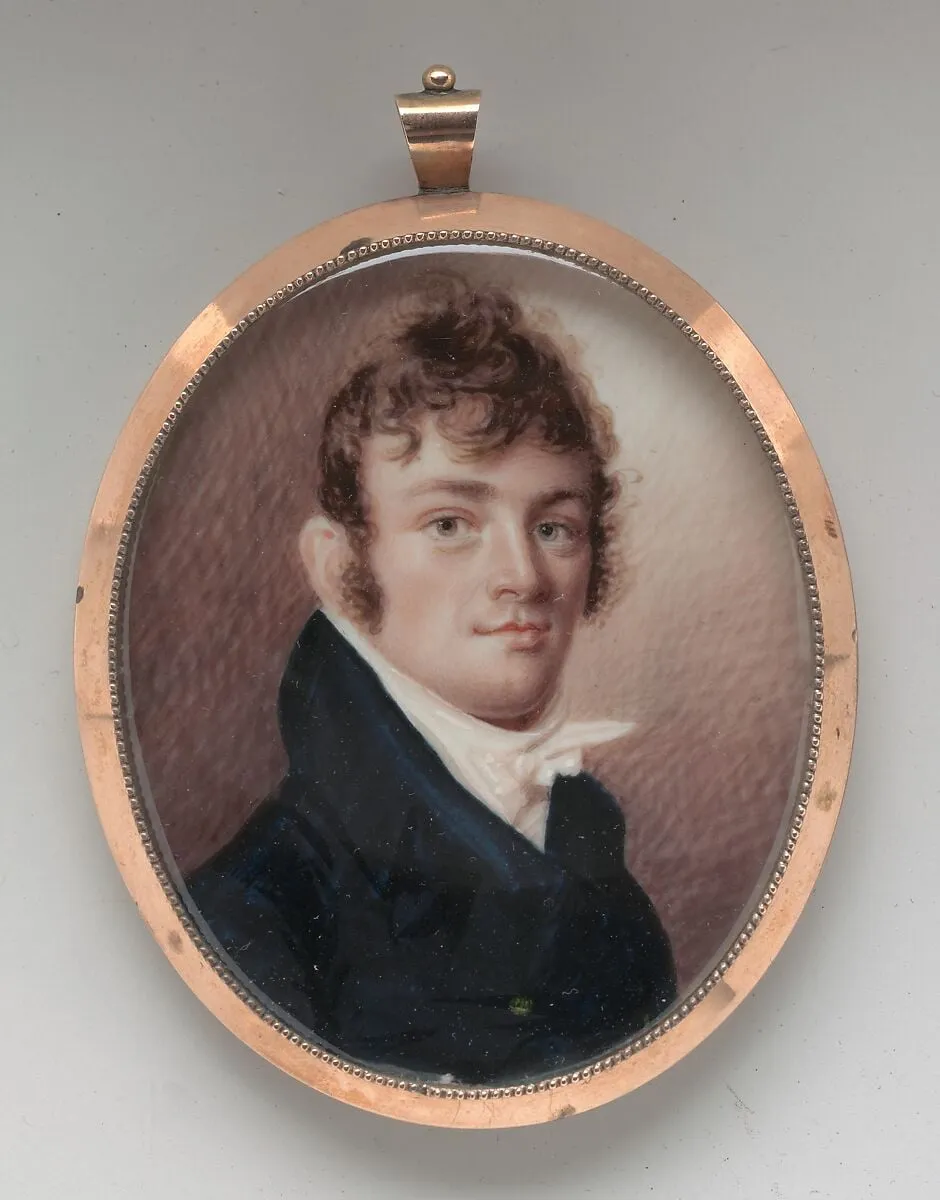
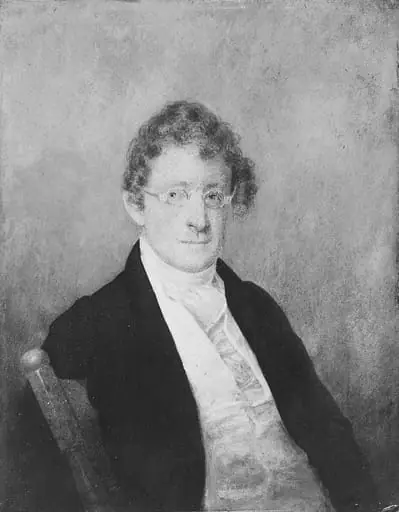
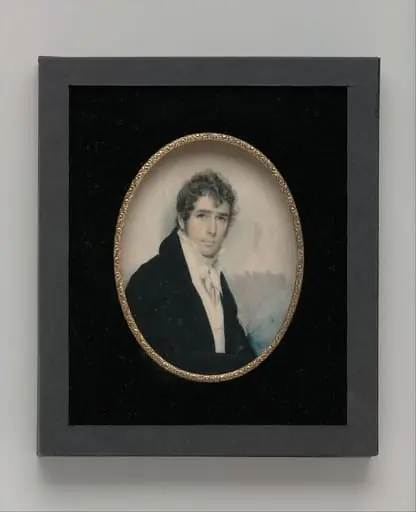
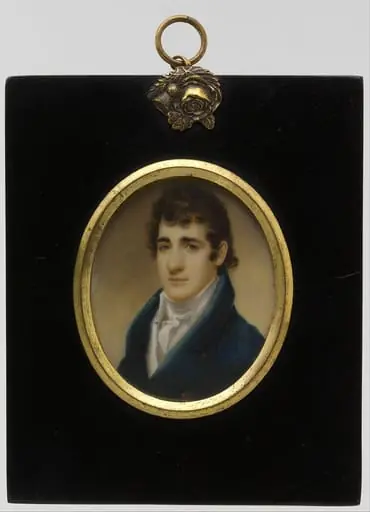
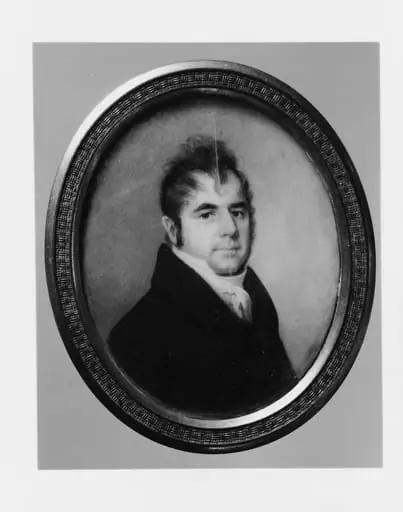
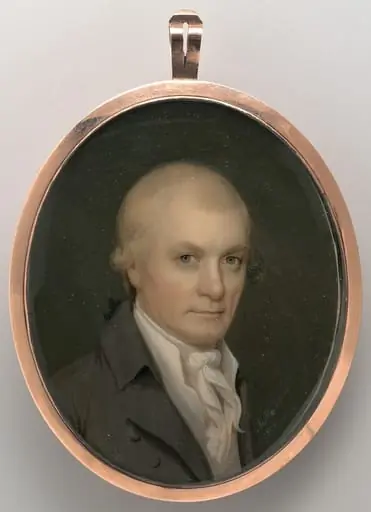
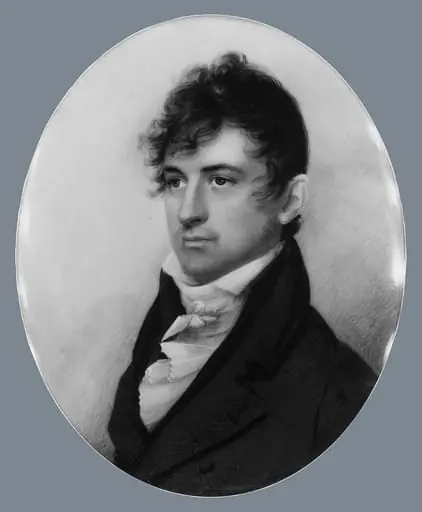
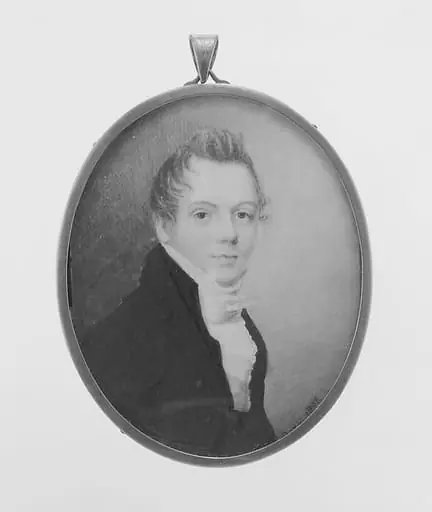
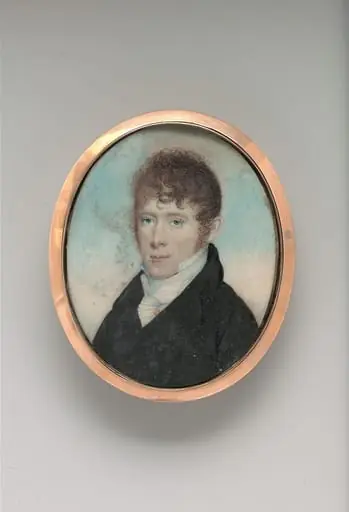
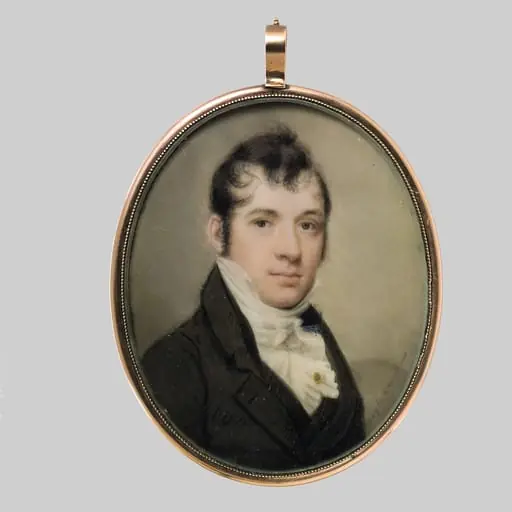
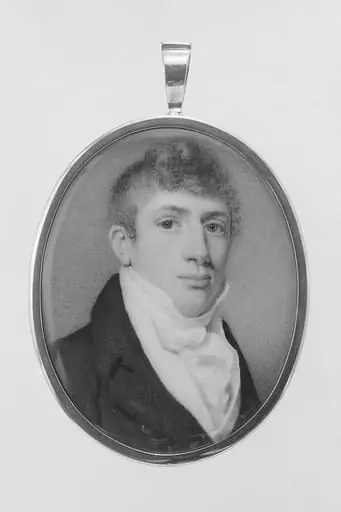
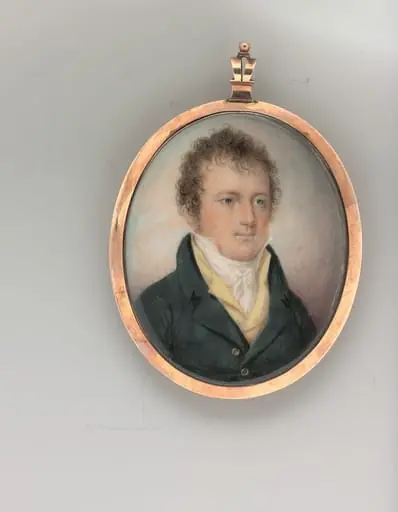
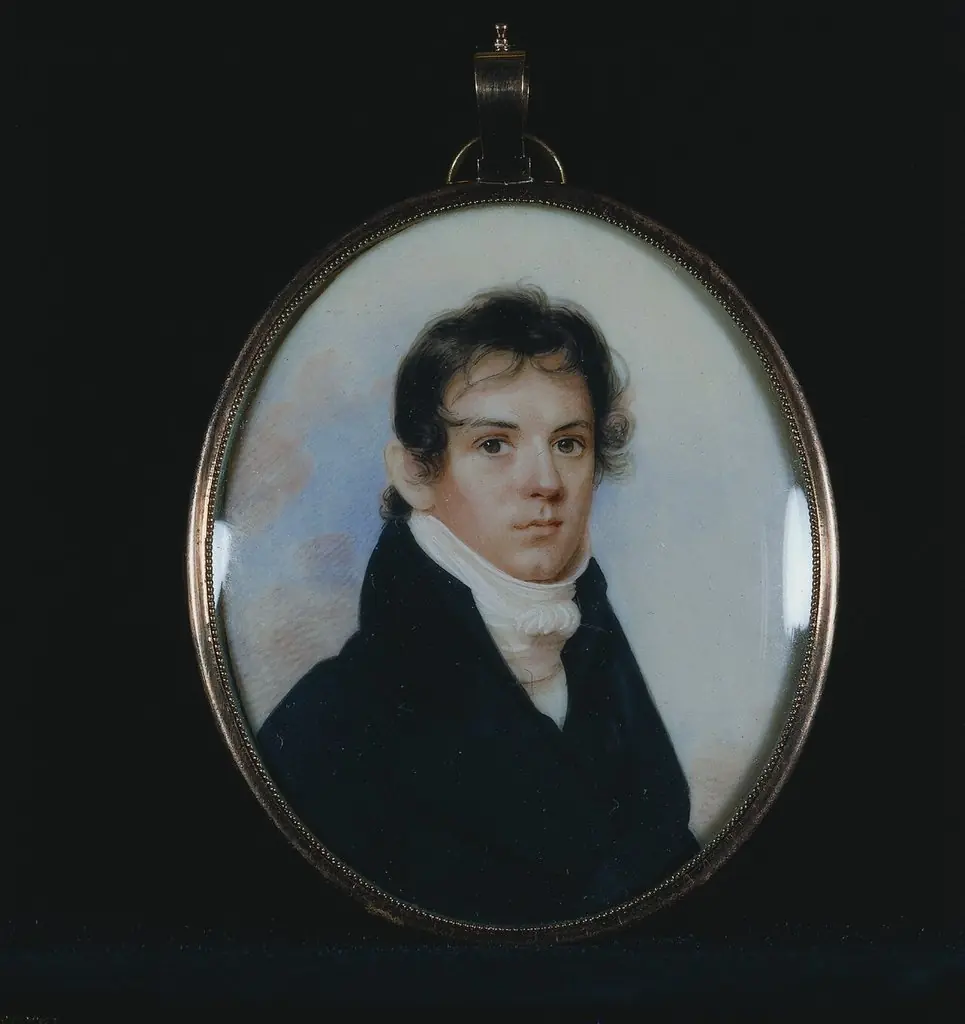
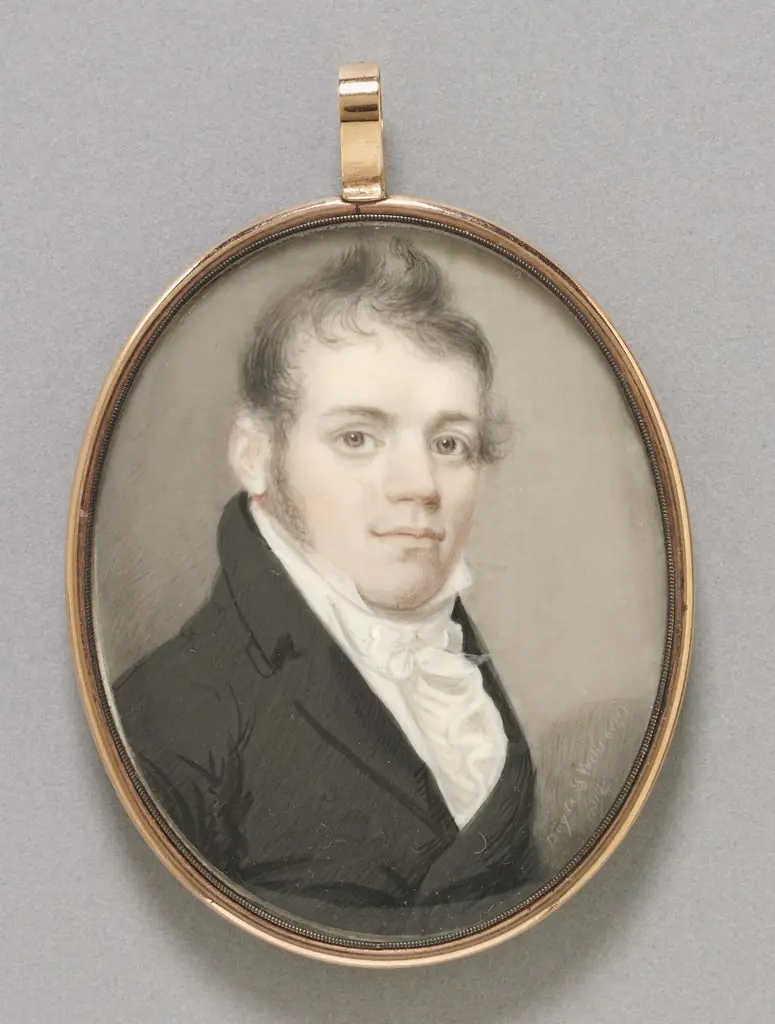
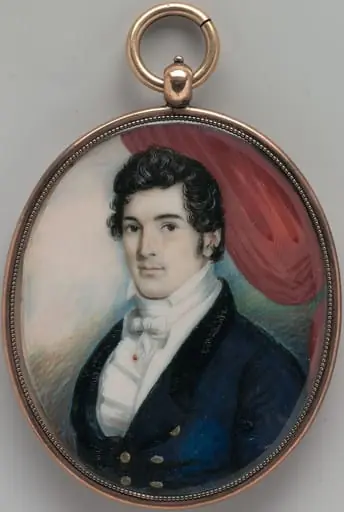
Portrait of a Gentleman is a watercolor painting by the Romanticist artist Joseph Wood. It dates from 1815 and is held in the collection of the Metropolitan Museum of Art.
About this work
Overview
Such miniature works served as intimate personal mementos during the early 19th century, allowing individuals to carry the image of a loved one.
This small-scale watercolor portrait, titled Portrait of a Gentleman, was created by Joseph Wood around 1815. Executed on ivory, it presents a likeness of an unidentified man. Such miniature works served as intimate personal mementos during the early 19th century, allowing individuals to carry the image of a loved one. The artist's skill in this delicate medium is evident in the subtle rendering of the sitter's features.
Subject & Meaning
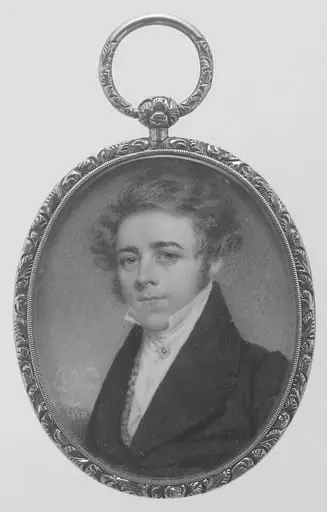
The painting depicts a young man, dressed in a dark coat with a crisp, high collar. His face is illuminated from the side, highlighting his features and a slight, enigmatic smile. The artist employed a plain background, ensuring that the viewer's attention remains entirely on the sitter's expression and attire. These portable portraits were highly valued as personal keepsakes, offering a tangible representation of family members or close acquaintances to be carried or displayed privately.
Technique & Style
Joseph Wood utilized watercolor on ivory, a specialized technique favored by miniaturists of the period. This method involved applying thin, translucent layers of pigment, allowing light to penetrate the ivory substrate and reflect back through the paint. This process imparted a distinctive luminosity, particularly to the depiction of skin, creating a lifelike quality. The technique is closely related to glazing, where transparent layers build depth and richness.
Artist & collection