Artwork
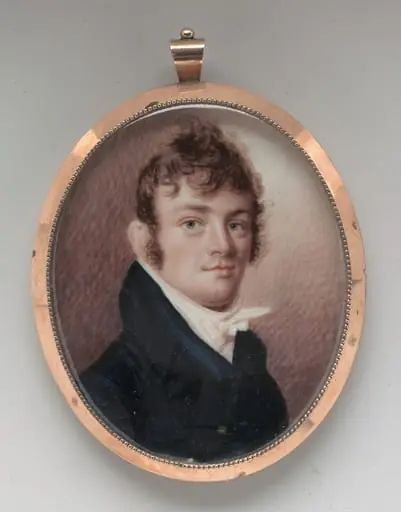
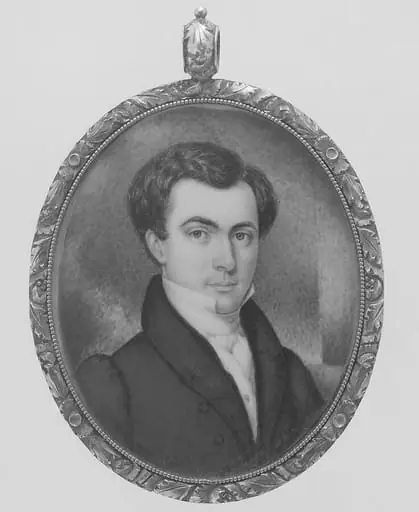
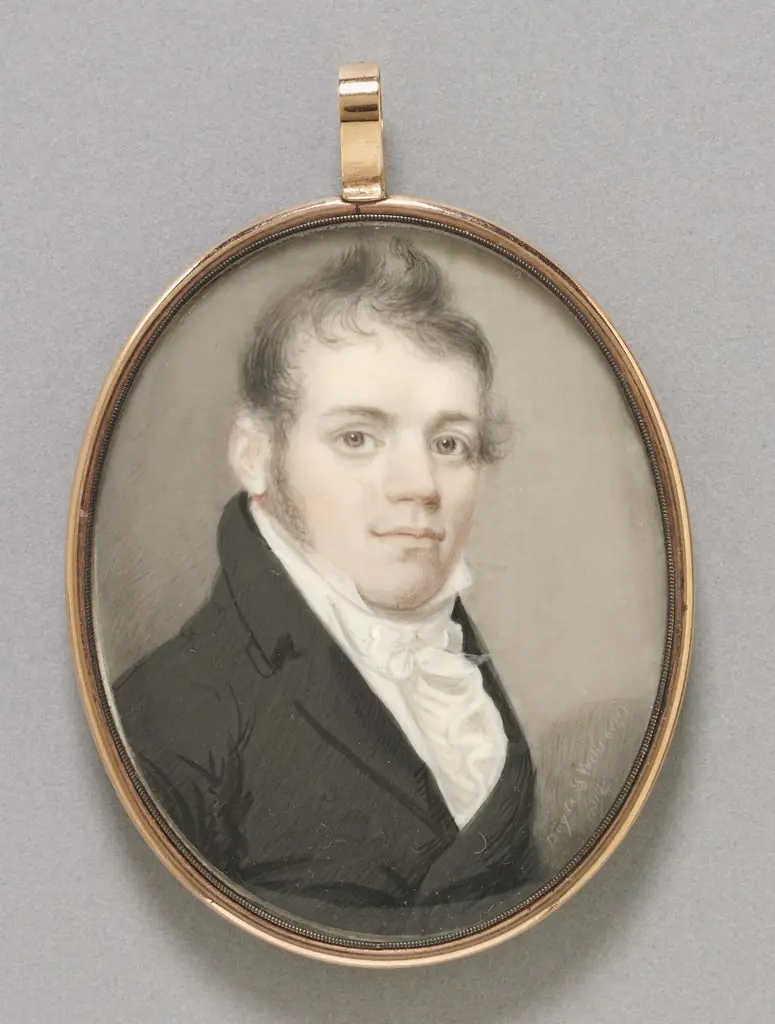
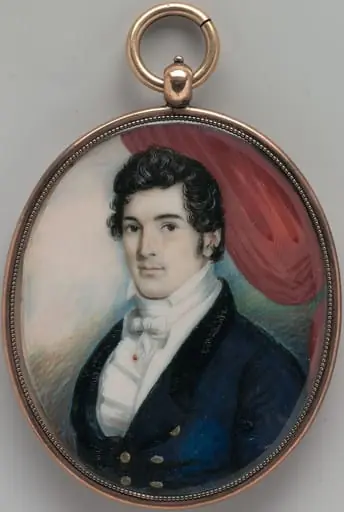
Portrait of a Gentleman
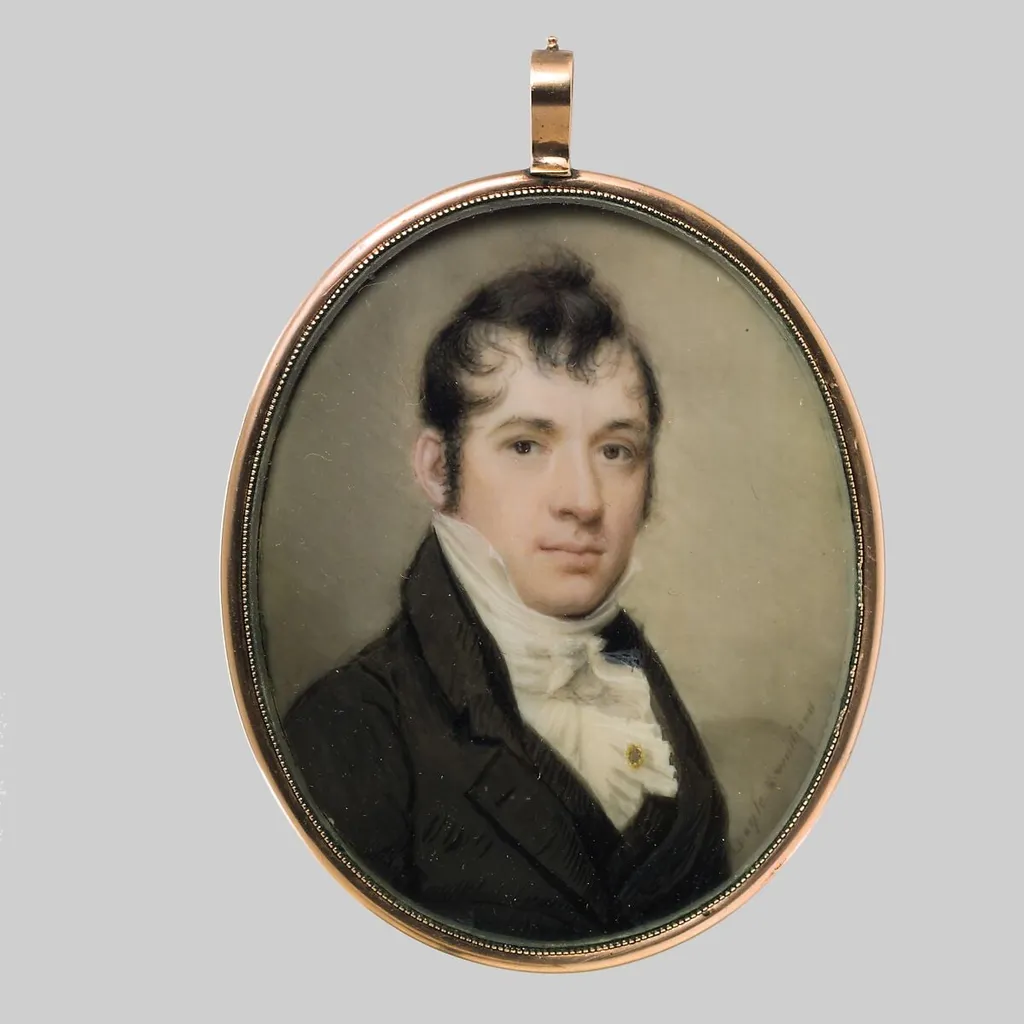
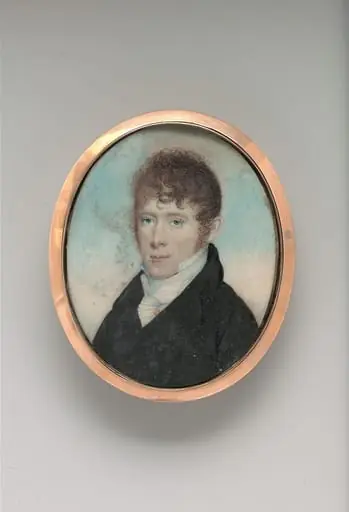
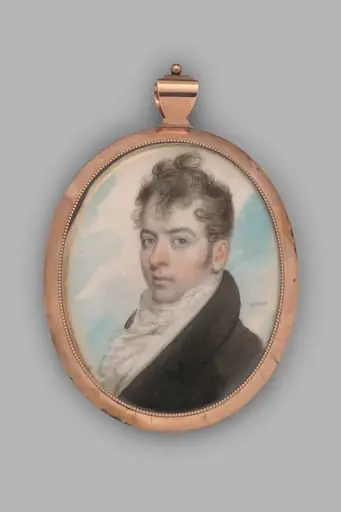
Portrait of a Gentleman is a watercolor painting by the Romanticist artist William M. S. Doyle|Henry Williams. It dates from 1810 and is held in the collection of the Metropolitan Museum of Art.
About this work
Overview
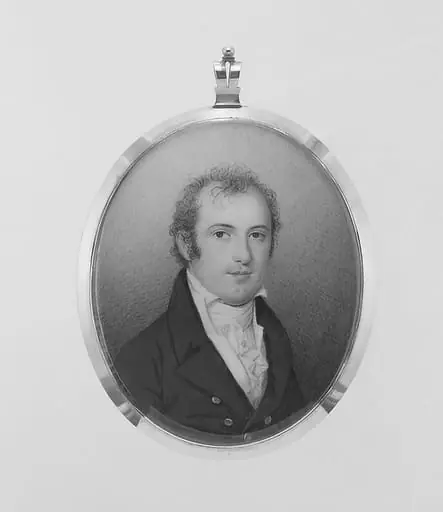
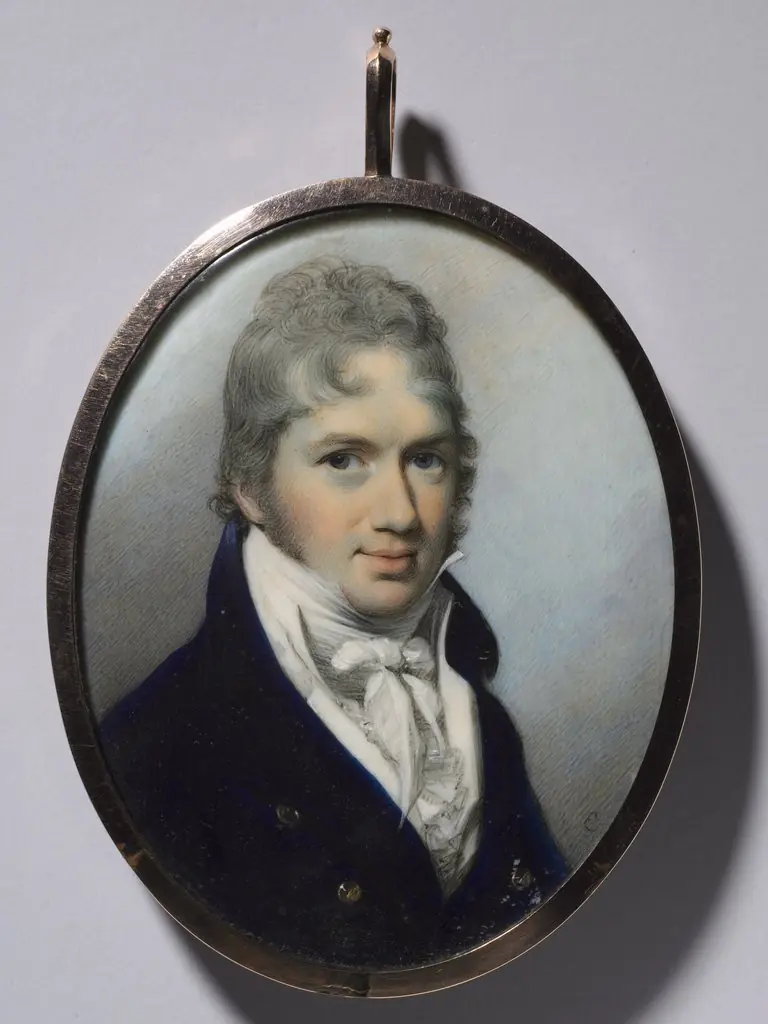
This small-scale work presents a man in a dark coat and white cravat, gazing directly forward with a softly illuminated face.
Portrait of a Gentleman, created by William M. S. Doyle in 1810, is a watercolor miniature painted on ivory. This small-scale work presents a man in a dark coat and white cravat, gazing directly forward with a softly illuminated face. Its diminutive size, smaller than a playing card, indicates its intended function as a personal keepsake, a popular form of portable portraiture during the early 19th century.
Technique & Style
Doyle rendered this portrait using watercolor on ivory, a favored medium for miniatures due to its smooth, luminous surface. The artist meticulously applied thin, translucent layers of pigment, a method known as glazing, to build up subtle gradations of tone. This technique allowed for a realistic depiction of the sitter's skin and the delicate interplay of light, creating a sense of depth and refinement within the small format.
Context
Miniature portraits held significant cultural importance before the widespread availability of photography. These small artworks served as intimate personal objects, often carried or worn as tokens of affection or remembrance, much like modern wallet-sized pictures. Their popularity in America during the early 1800s reflects a desire for portable and personal representations of individuals, particularly among the affluent.
Artist & collection

Artist
William M. S. Doyle|Henry Williams
This guy painted tiny faces the size of a quarter, but he didn’t just shrink life—he made it sharper.