Artwork
Chinese Literatus in an Autumn Landscape
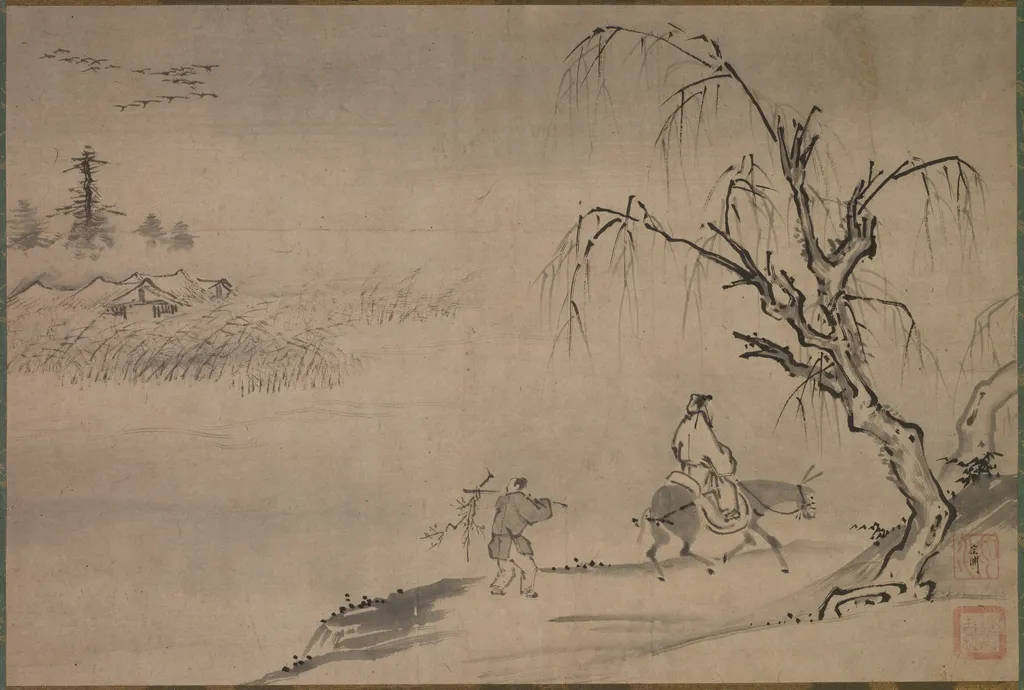
Chinese Literatus in an Autumn Landscape is an unspecified painting by the Ming dynasty painting artist Josui Sōen. It dates from 1494 and is held in the collection of the Cleveland Museum of Art.
About this work
The artist used ink to create simple but expressive lines, focusing on shapes and movement.
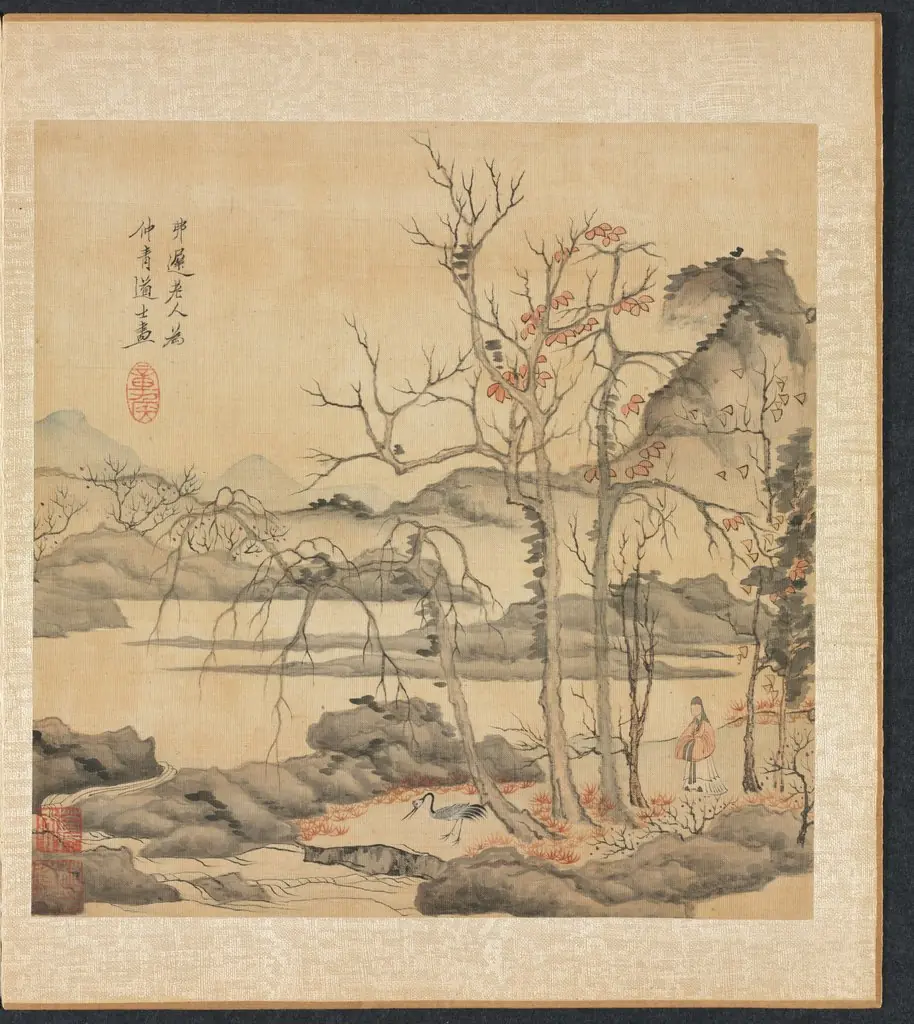
This painting shows a quiet scene in nature. Two men are outside: one walks with a stick, the other rides a donkey. Trees with bare branches and a few birds in the sky suggest it’s autumn. In the background, there’s a small building near hills.
The artist used ink to create simple but expressive lines, focusing on shapes and movement. The donkey’s rider carries a bundle on their back, hinting at travel or work.
Check out Josui Sōen (Japanese, active c. 1489–1500) for more of his work.
Overview
Created in 1494, this ink painting by Josui Sōen depicts a tranquil autumnal landscape. Two figures traverse the scene—one on foot with a walking stick, the other astride a donkey—against a backdrop of leaf‑stripped trees, distant hills, and a modest structure. Sparse birds punctuate the sky, reinforcing the season’s quiet atmosphere.
Subject & Meaning
The work presents a literati figure engaged in travel, a common motif symbolizing scholarly retreat and contemplation in nature. The companion on the donkey, burdened with a bundle, suggests a journey of purpose, perhaps related to study or official duties, while the barren trees emphasize the passage of time and the transitory quality of life.
Technique & Style
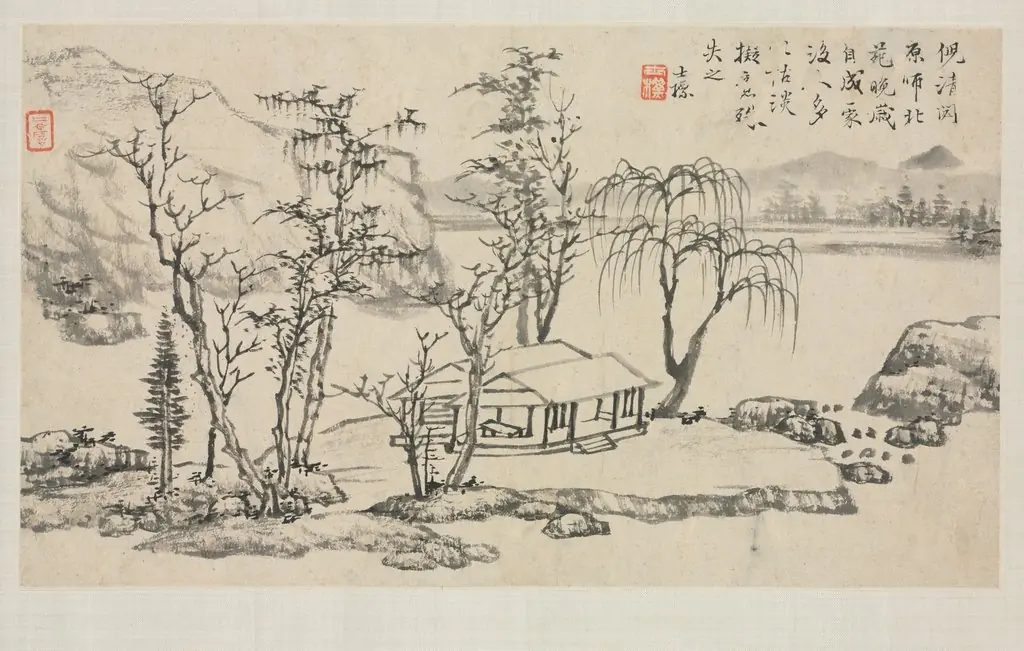
Sōen employs monochrome ink to render the composition with economical, yet expressive brushwork. Lines are rendered in varying thickness, defining forms through suggestion rather than detail. The artist emphasizes contour and movement, allowing the viewer to infer depth and texture from minimal strokes, a hallmark of late‑Muromachi ink painting.
History & Provenance
The painting entered the collection of the Cleveland Museum of Art, where it remains on view. Its provenance prior to acquisition is not extensively documented, but the work is attributed to Sōen, an active Japanese painter between roughly 1489 and 1500, situating it within the late 15th‑century artistic milieu.
Context
During the late Muromachi period, Chinese literati ideals heavily influenced Japanese painters, encouraging depictions of solitary scholars in natural settings. This piece reflects that cross‑cultural exchange, integrating Chinese aesthetic principles with Japanese landscape conventions, and exemplifies the period’s interest in portraying intellectual pursuits amid seasonal change.
Own this work as a print
Artist & collection