Artwork
Untitled
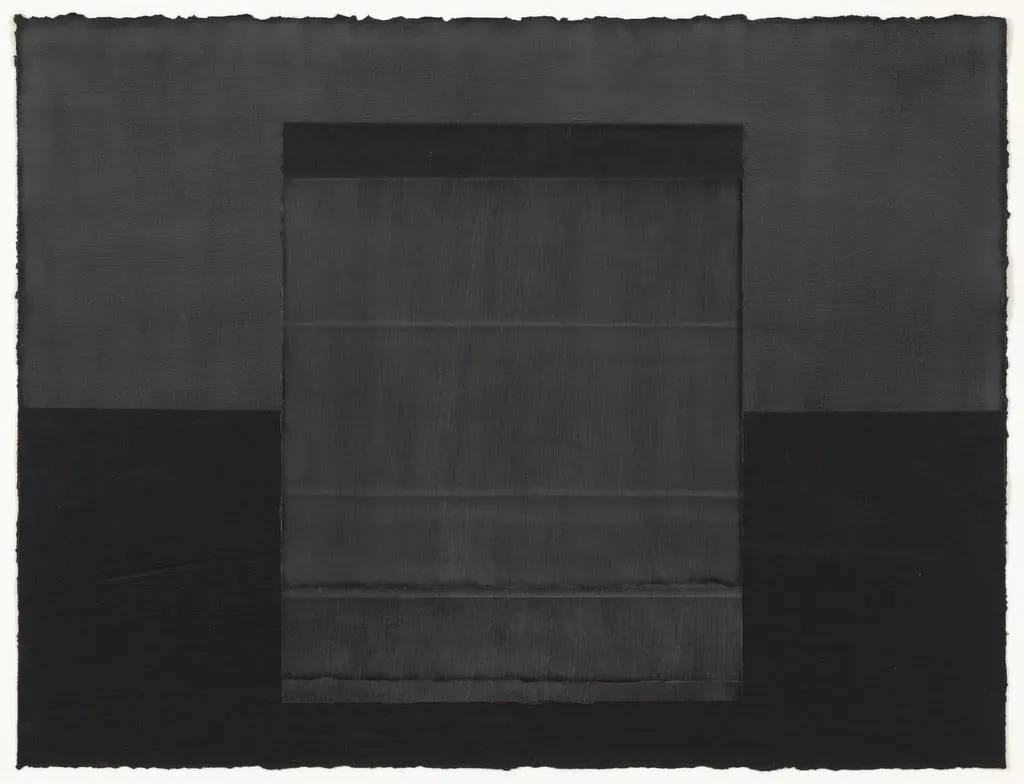
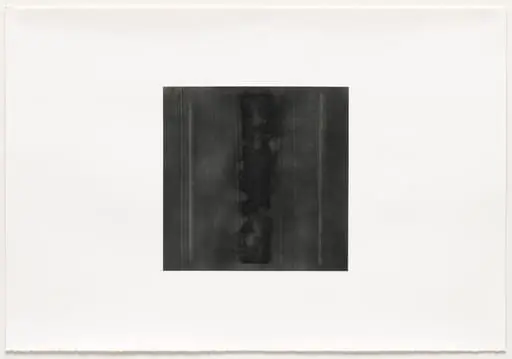
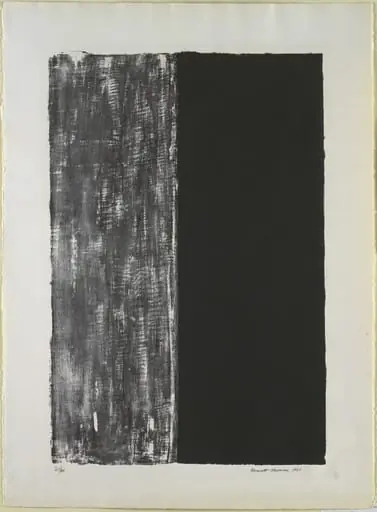
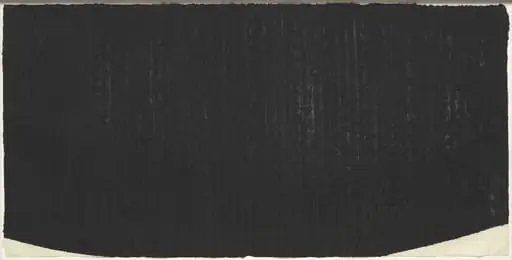
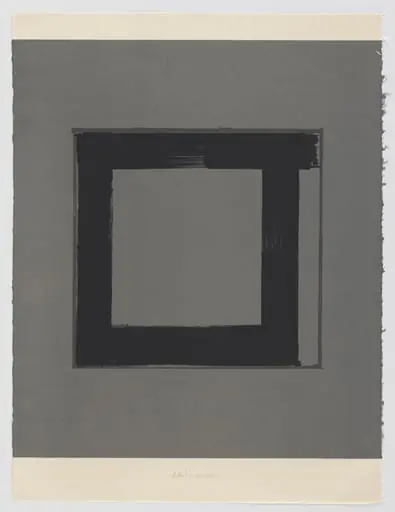
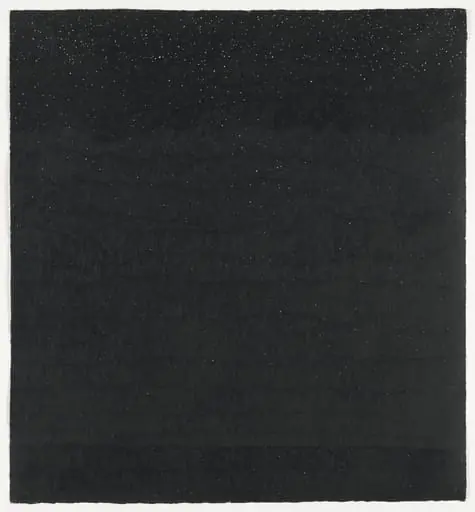
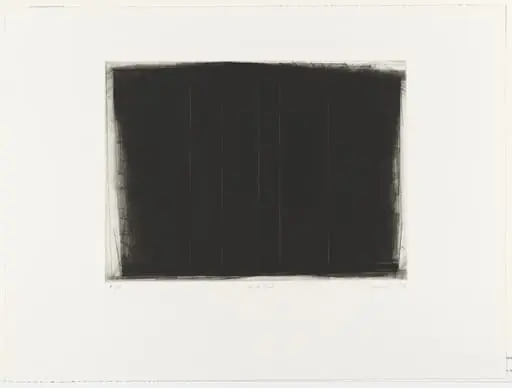
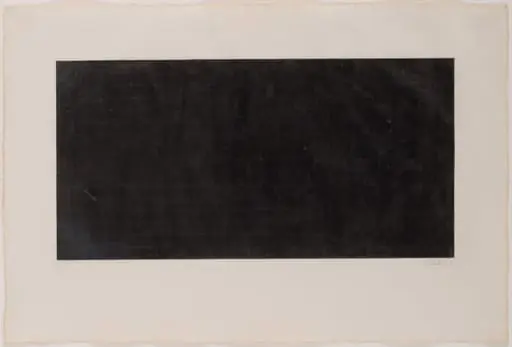
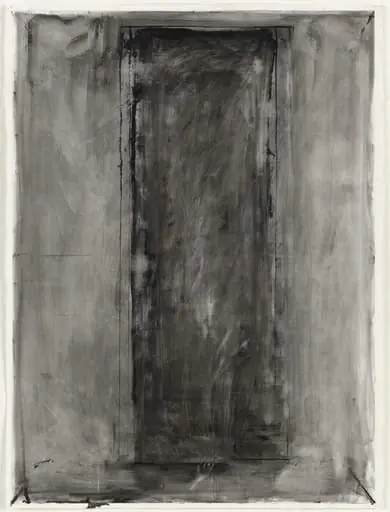
Untitled is a graphite drawing by Joy Jacobs. It dates from 1991 and is held in the collection of the Museum of Modern Art.
About this work
Overview
Created in 1991, this drawing by Joy Jacobs is executed in synthetic polymer paint and graphite on paper.
Created in 1991, this drawing by Joy Jacobs is executed in synthetic polymer paint and graphite on paper. It resides in the collection of The Museum of Modern Art. The composition centers on two nested rectangular forms, with the outer frame marked by a dense, textured edge and the inner rectangle subtly layered with horizontal markings. The palette is restricted to gradations of black and gray, emphasizing tone over color.
Subject & Meaning
The work avoids figurative or symbolic references, instead focusing on spatial relationships and material presence. The nested rectangles suggest containment or framing, while the textured border introduces a sense of physicality. The horizontal lines within the inner form imply depth without perspective, inviting quiet contemplation of surface and structure rather than narrative content.
Technique & Style
Jacobs applied synthetic polymer paint with deliberate, uneven strokes to create a rough, tactile border, contrasting with the smoother, layered application within the inner rectangle. Graphite lines are used sparingly to define subtle horizontal rhythms. The restricted palette and emphasis on texture reflect a minimalist sensibility, prioritizing material behavior and perceptual nuance over expressive gesture.
History & Provenance
The work entered The Museum of Modern Art’s collection shortly after its creation. No public record indicates prior ownership or exhibition history before its acquisition. Its inclusion in the museum’s holdings suggests recognition of its contribution to late 20th-century drawing practices, particularly within contexts exploring abstraction and material restraint.
Context
Made during a period when many artists were re-examining the boundaries of drawing and minimalism, this piece aligns with contemporaneous practices that valued process, monochrome, and reduced form. It reflects broader interests in the physicality of the support and the quiet autonomy of abstract marks, resonating with movements that prioritized perception over representation.
Legacy
Though not widely published or exhibited beyond institutional settings, the work contributes to a quieter lineage of post-minimalist drawing that values subtlety and material presence. It remains a reference point in studies of abstraction in paper-based media, illustrating how restrained means can generate complex visual experiences through texture, scale, and tonal variation.
Artist & collection