Artwork
Adam and Eve
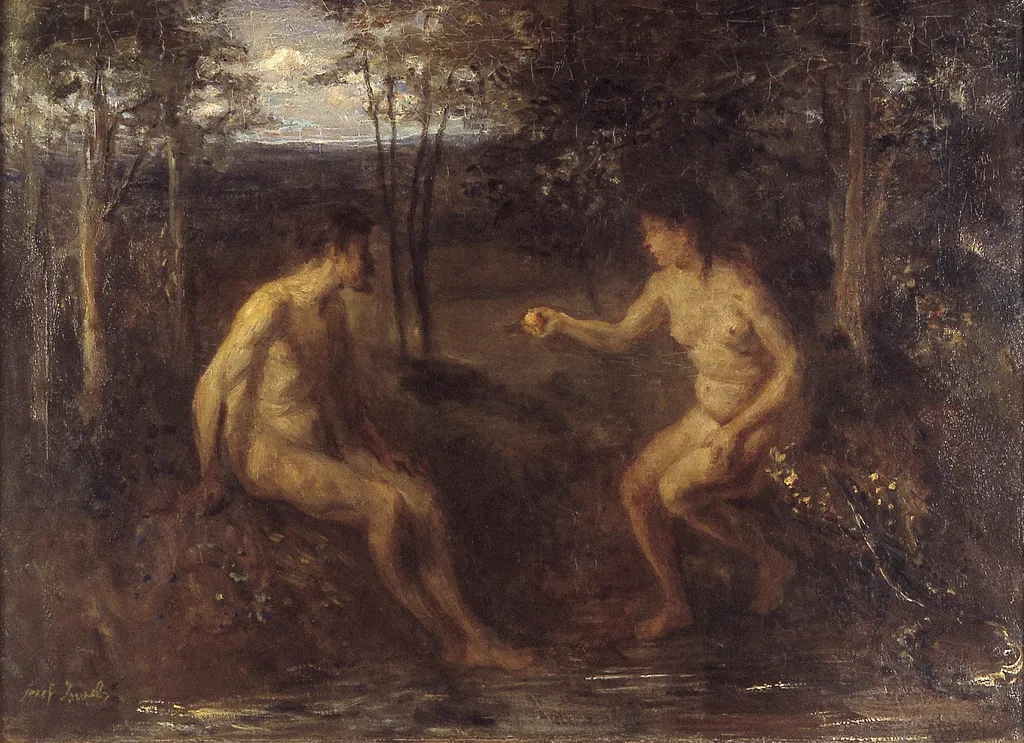
Adam and Eve is an oil painting by the Post-Impressionist artist Jozef Israëls. It dates from 1902 and is held in the collection of the Rijksmuseum.
About this work
Overview
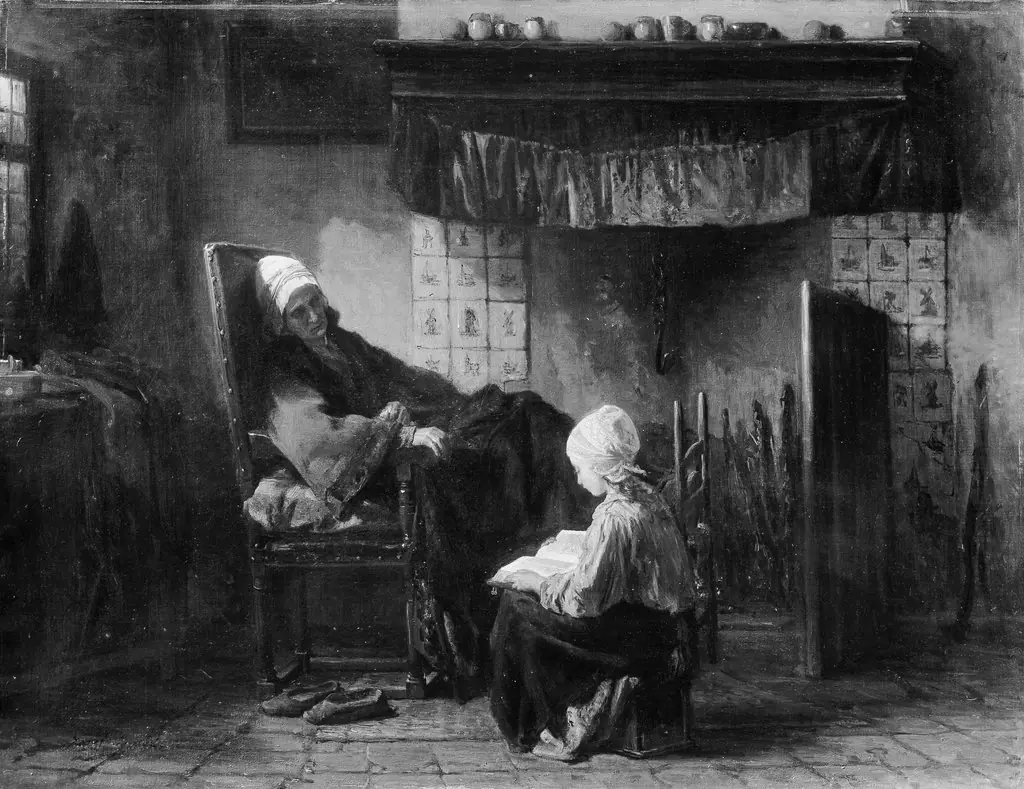
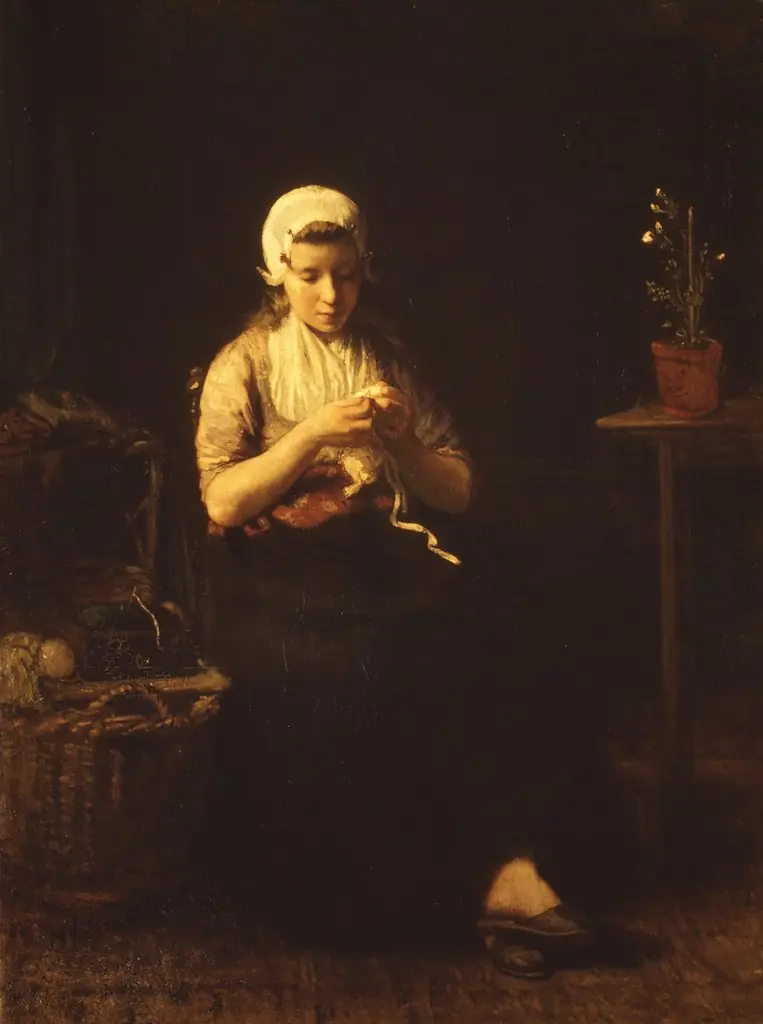
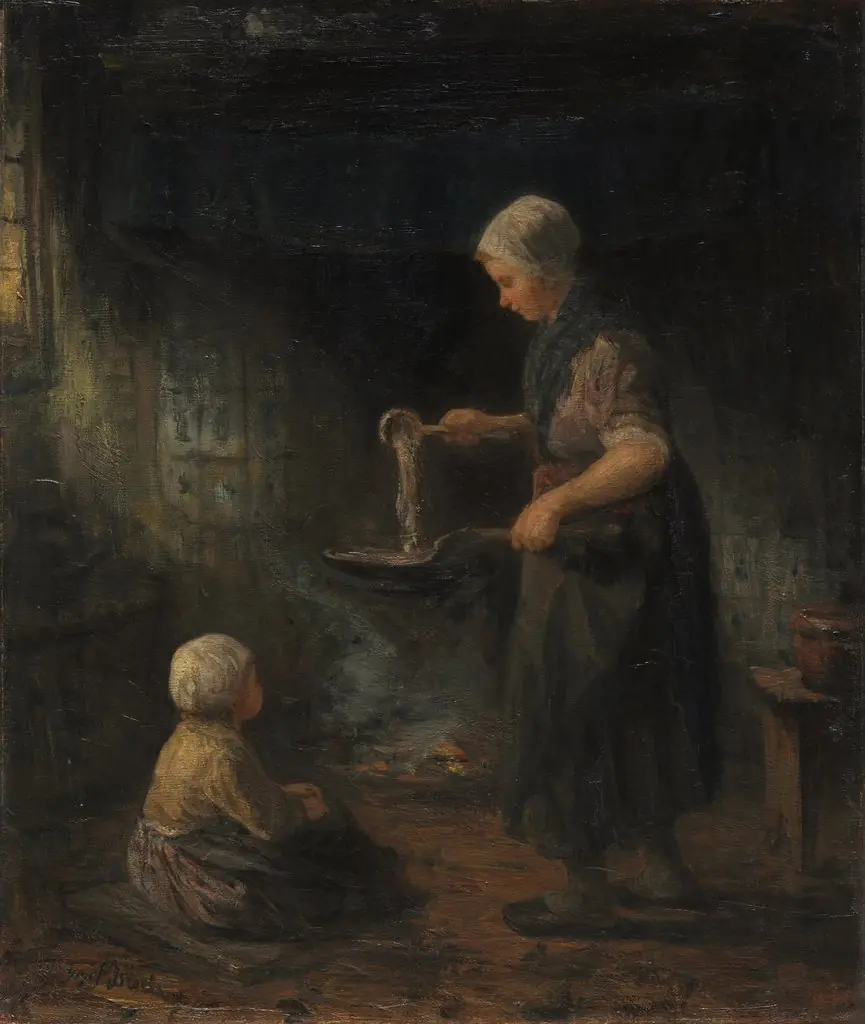
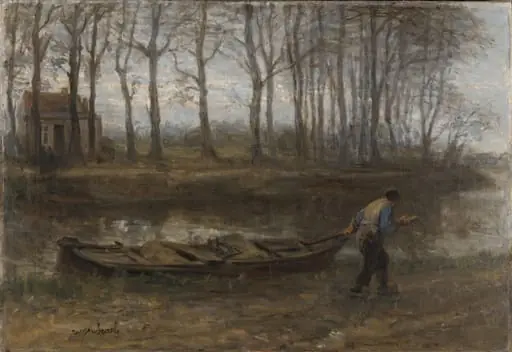
Created in 1902, this oil painting by Jozef Israëls presents a subdued interpretation of the biblical pair Adam and Eve. The canvas resides in the Rijksmuseum’s collection, offering viewers a quiet, nocturnal woodland scene where the two figures occupy the foreground in a contemplative pose.
Subject & Meaning
The work portrays the first humans of Judeo‑Christian tradition, yet it eschews narrative drama for a moment of stillness. One figure sits with a turned back, arms folded on the knees, while the other reaches outward, suggesting an intimate, perhaps reflective interaction rather than the dramatic moment of the Fall.
Technique & Style
Israëls employs a post‑impressionist vocabulary, marked by thick, impasto brushwork that gives the flesh a sculptural texture. The palette is dominated by deep, muted greens and browns, while soft, diffused light creates gentle shadows that merge with the surrounding darkness, enhancing the painting’s atmospheric mood.
History & Provenance
The painting entered the Rijksmuseum’s holdings after the artist’s death, reflecting his status as the most esteemed Dutch painter of the late nineteenth century. Its acquisition underscores the museum’s commitment to representing the Hague School and Israëls’s pivotal role within that movement.
Context
Israëls, a central figure of the Hague School, was known for his realistic depictions of everyday life and landscapes. In this later work, he turns to a biblical theme, applying the same naturalistic sensibility and tonal restraint that characterized his seascapes and genre scenes, thereby integrating sacred subject matter into his established visual language.
Own this work as a print
Artist & collection
Artist
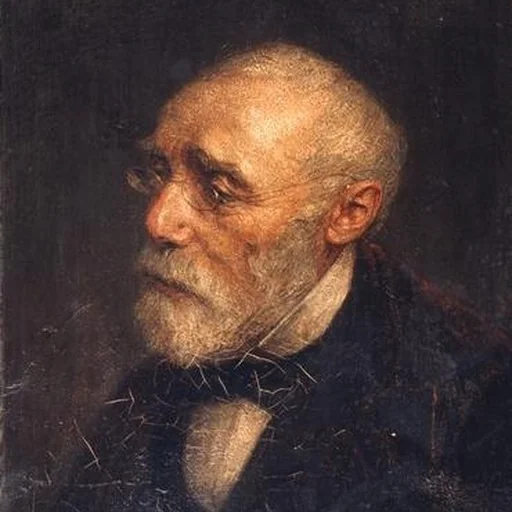
Jozef Israëls (Dutch pronunciation: ; 27 January 1824 – 12 August 1911) was a Dutch painter.