Artwork
De zandschipper
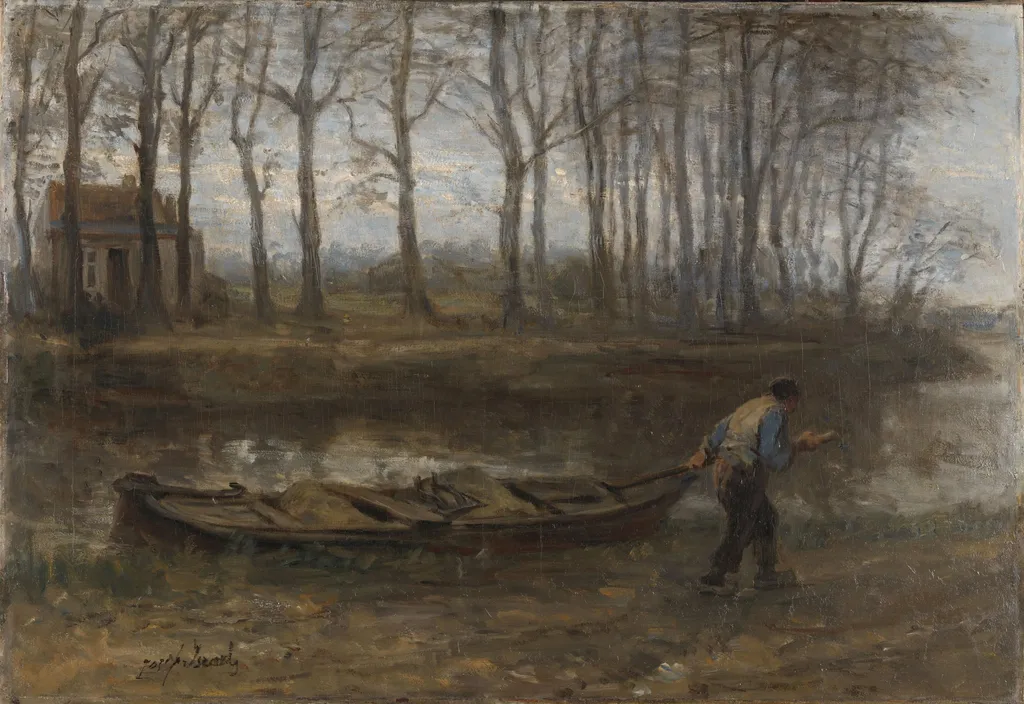
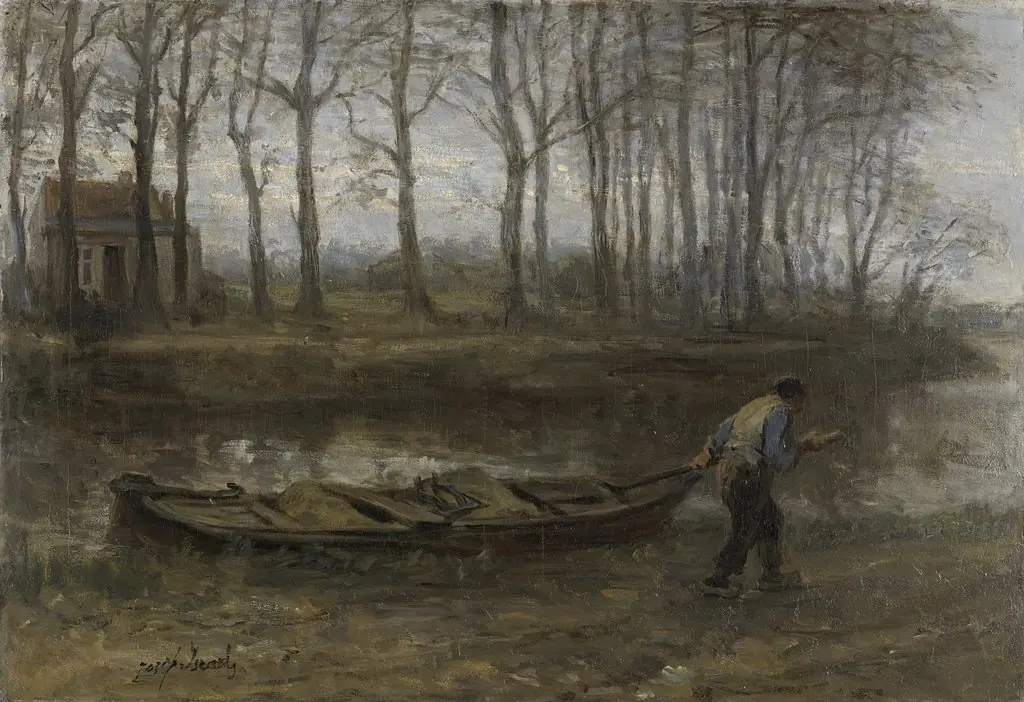
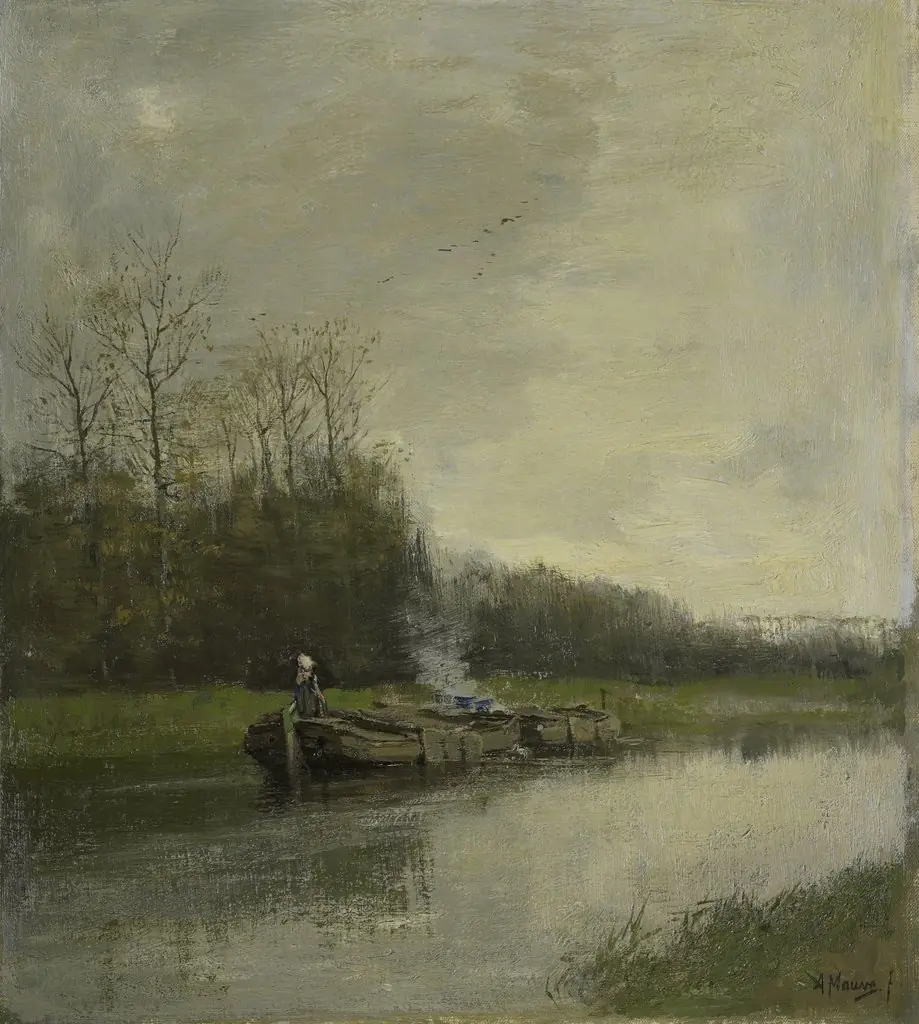
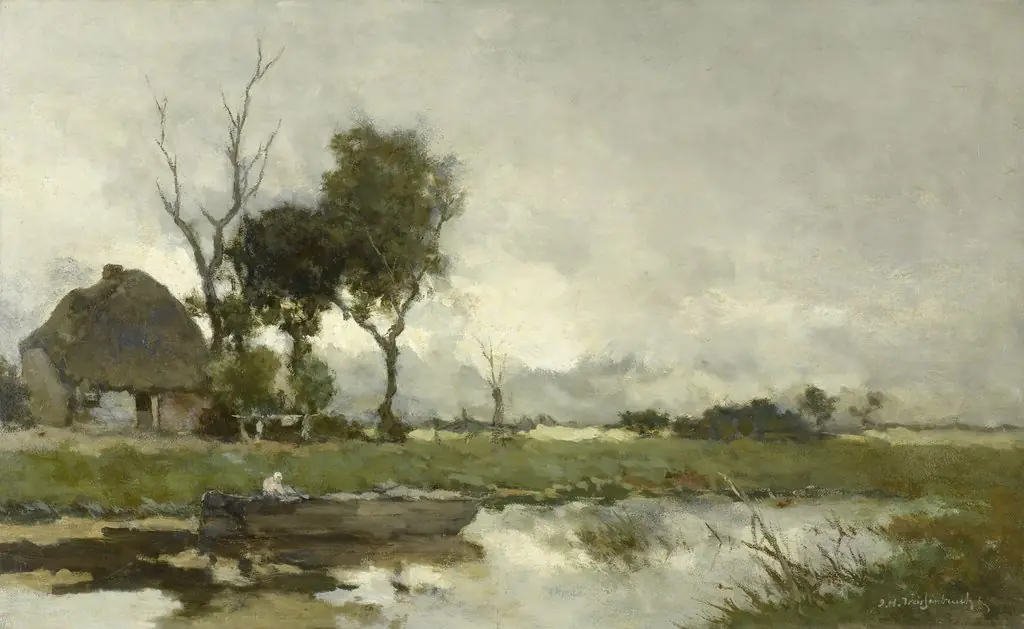
De zandschipper is an unspecified painting by the Hague School artist Jozef Israëls. It dates from 1887 and is held in the collection of the Rijksmuseum.
About this work
Overview
Jozef Israëls painted *De zandschipper* in 1871, depicting a solitary sand‑bargeman shoveling material from a flat‑bottomed boat under a muted, overcast sky. The scene is set on the canal that links The Hague with the seaside town of Scheveningen, where the water lies calm and the distant dunes appear low and subdued.
Subject & Meaning
The work captures a real sand‑transport vessel that regularly moved dune sand to the expanding districts of The Hague. Beyond its literal function, the figure’s labor conveys a broader meditation on the arduous passage of human life, a theme that recurs throughout Israëls’ oeuvre.
Technique & Style
Executed with the restrained palette characteristic of the Hague School, the painting employs soft, blended brushwork to render the sky’s gray veil and the still water’s reflective surface. The composition’s quiet balance and emphasis on everyday activity reflect the group’s realist sensibility.
History & Provenance
After moving into a modern villa on the Koninginnegracht in The Hague, Israëls painted the scene from his own sitting‑room window, observing the daily passage of the sand barges. The piece remained in his private collection before entering public view in the early twentieth century, where it has been exhibited as a representative example of Dutch realist painting.
Context
*De zandschipper* belongs to a period when Dutch artists, especially those of the Hague School, turned ordinary labor scenes into subjects worthy of fine art. By focusing on the mundane yet essential work of sand transport, Israëls aligned his practice with contemporary interests in social realism and the changing urban landscape of The Hague.
Own this work as a print
Artist & collection

Artist
Jozef Israëls (Dutch pronunciation: ; 27 January 1824 – 12 August 1911) was a Dutch painter.