Artwork
Eugenia Martínez Vallejo, desnuda
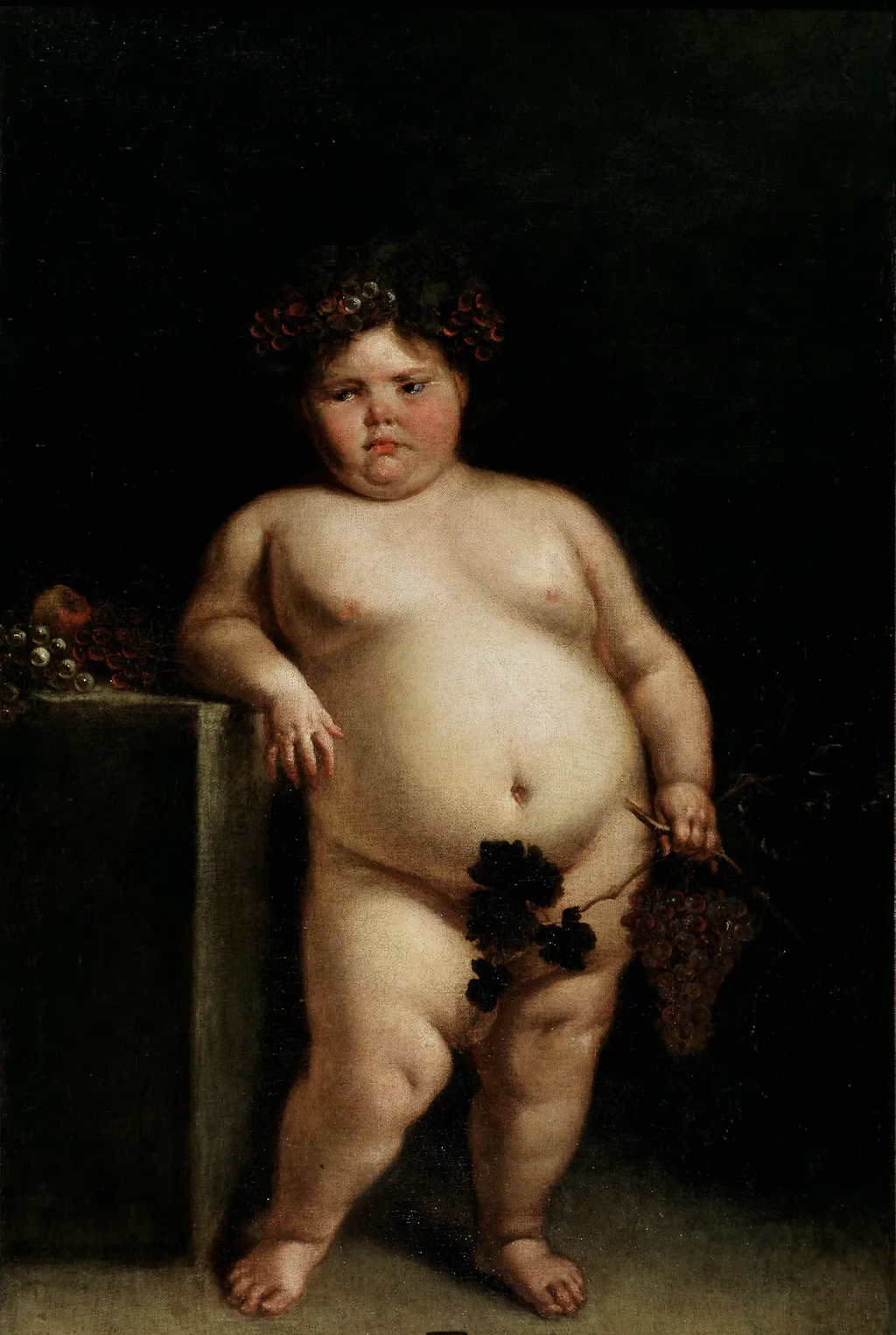
Eugenia Martínez Vallejo, desnuda is an oil painting by the Flemish Baroque painting artist Juan Carreño de Miranda. It is held in the collection of the Museo del Prado.
About this work
Overview
Juan Carreño de Miranda’s oil painting, Eugenia Martínez Vallejo, desnuda, dates from 1690 and is part of the collection at Madrid’s Museo del Prado. The work presents a solitary female figure, nude, positioned centrally and looking directly at the viewer. A dark, subtly graded backdrop recedes behind her, giving the composition a restrained spatial depth.
Subject & Meaning
The inclusion of fruit and the serious expression suggest an allegorical reference to abundance or fertility, common in late‑seventeenth‑century portraiture.
The sitter, identified as Eugenia Martínez Vallejo, stands with confidence, her right hand resting on a low pedestal and her left hand holding a bunch of grapes near her hips. A wreath of grapes and foliage crowns her curly brown hair, while her bare feet touch the ground. The inclusion of fruit and the serious expression suggest an allegorical reference to abundance or fertility, common in late‑seventeenth‑century portraiture.
Technique & Style
Carreño employs a pronounced chiaroscuro, allowing a light source from the left to illuminate the figure’s flesh and the grape motifs, while the surrounding space remains in deep shadow. The brushwork is smooth in the skin tones, contrasting with the more textured rendering of the grapes and the dark background, creating a dramatic yet controlled visual effect.
History & Provenance
Executed in 1690, the painting entered the Spanish royal collections before being transferred to the Museo del Prado, where it remains on display. Documentation links the work to the artist’s later period, reflecting his mature handling of portraiture and his engagement with courtly commissions.
Context
Created during the Baroque era in Spain, the work reflects the period’s fascination with naturalism and dramatic lighting. Carreño de Miranda, a court painter to King Charles II, often blended portraiture with symbolic elements, and this nude portrait aligns with contemporary trends that merged personal likeness with allegorical content.
Own this work as a print
Artist & collection